





Quick Decision Framework
- Who This Is For: Shopify beauty and skincare founders doing $0 to $500K per year who are sourcing or re-sourcing their cosmetic packaging and need a US-based wholesale supplier that works at their scale without punishing them for small order sizes.
- Skip If: You are a high-volume cosmetic brand placing container orders in the thousands of units per SKU. At that scale, you will want a global manufacturer with custom tooling and extended lead times. Cosmetic Packaging Now is built for brands that need speed and flexibility, not maximum volume discounts.
- Key Benefit: Source laboratory-grade cosmetic packaging containers with no minimum order quantity, 48-hour average shipping from Dallas, and per-unit costs starting at $0.70, so you can test new packaging formats without tying up cash or warehouse space.
- What You’ll Need: A Shopify store (or any ecommerce platform), a clear sense of your container format requirements (jars, airless bottles, tubes, pumps), and a basic understanding of your product formulation to match packaging compatibility.
- Time to Complete: 10 minutes to read. Same day to place a test order. 48 hours average to receive it.
Packaging is not the last decision in your product launch. For a cosmetic brand, it is often the first decision that determines whether your formula survives shipping, passes regulatory inspection, and earns a repeat purchase.
What You’ll Learn
- Why the cosmetic packaging supplier decision is more operationally consequential than most beauty founders realize until something goes wrong.
- What makes Cosmetic Packaging Now a genuinely ecommerce-friendly option compared to traditional wholesale suppliers that penalize small and mid-size brands.
- How no minimum order quantity changes the math on cash flow, inventory risk, and product testing for early-stage beauty brands.
- Where Cosmetic Packaging Now fits in your supply chain at different stages of growth, and where it may not be the right fit anymore.
- What questions to ask any cosmetic packaging supplier before you commit, regardless of which one you choose.
The Supplier Decision Most Beauty Founders Get Wrong
Most cosmetic brand founders spend months perfecting their formula and about 48 hours choosing their packaging supplier. That imbalance creates real problems. The wrong supplier does not just cost you money. It costs you time, customer trust, and in some cases regulatory compliance.
The global ecommerce market surpassed $6 trillion in 2026, and beauty and skincare remain among the fastest-growing categories inside that number. At the same time, approximately 2,500 new ecommerce stores launch every single day. The competition for shelf space and customer attention is real, and the brands that win are the ones that have built tight, reliable operations from the beginning.
Packaging sits at the intersection of operations and brand experience. It protects the formula. It communicates the brand. It has to survive shipping, pass customs if you are selling internationally, and meet the regulatory requirements for whatever market you are selling into. For a founder who is doing everything themselves, or a small team operator managing multiple functions, finding a supplier that removes friction from this part of the business is genuinely valuable.
That is the context in which Cosmetic Packaging Now deserves a real look. This is a guest post, and I want to be direct about that upfront. But the reason I am publishing it is because the supplier addresses a real gap in the market for indie and early-stage beauty brands, and the fit is worth explaining honestly, including where it applies and where it does not.
Who Cosmetic Packaging Now Actually Is
Cosmetic Packaging Now is a US-based wholesale distributor of laboratory-grade cosmetic packaging containers, operating out of Dallas, Texas. They have been in business for nearly a decade and serve a range of customers from solo founders working out of home kitchens to established cosmetic brands and manufacturing labs.
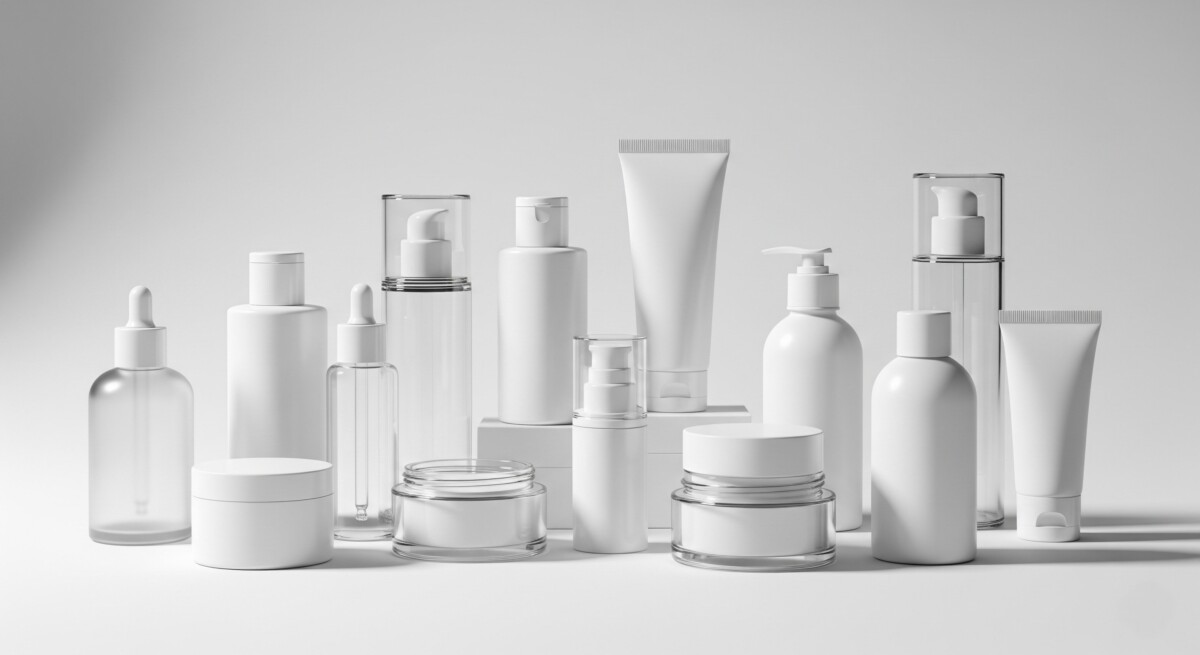
Their catalog spans the core container formats you need for a functional skincare or beauty line: airless pump bottles, jars, tubes, spray bottles, compacts, and related accessories. The word “laboratory-grade” in their positioning is not just marketing language. It refers to the material standards and compatibility testing that ensures their containers work with the formulations going inside them, which matters more than most founders initially realize. A container that reacts with your serum or allows oxidation to degrade your moisturizer is not a packaging problem. It is a product quality problem.
They hold over 320 verified reviews on BirdEye with a consistent five-star rating, with customers repeatedly citing fast shipping and product quality as the standout factors. That is a meaningful signal for a supplier at this price point.
What Makes Cosmetic Packaging Now Ecommerce Friendly
The phrase “ecommerce friendly” gets used loosely. Here is what it actually means in practice for a beauty brand selling on Shopify, and how Cosmetic Packaging Now measures up against each criterion.
No minimum order quantity. This is the most operationally significant feature for early-stage brands. Traditional wholesale suppliers require you to commit to 50, 100, or 500 units per SKU before they will ship. For a founder testing a new product format, that minimum represents real capital risk tied up in inventory you may not sell. Cosmetic Packaging Now ships single units. That means you can order one jar, test your formula in it, photograph it, and send it to a handful of customers before you commit to a larger run. This is consistent with just-in-time inventory principles that reduce carrying costs and improve cash flow, and it is genuinely rare in the cosmetic packaging wholesale space. If you are thinking about managing your inventory the right way from the start, no MOQ is a meaningful structural advantage.
Pricing that works at small scale. Their per-unit pricing starts at $0.70 and most items fall below $1.50. The highest price point in their current catalog is around $2.30. For a brand doing 50 to 200 orders a month, this is a packaging cost that stays manageable without requiring volume commitments you are not ready to make. Compare this to overseas suppliers where the unit economics look better on paper but the minimum order, shipping timeline, and customs complexity often make the math worse in practice for brands under $500K GMV.
48-hour average shipping within the US. Speed matters in ecommerce in a way that it does not in traditional retail. When you run out of a container, you cannot just wait three weeks for a container ship. Cosmetic Packaging Now ships from their Dallas warehouse, and US customers typically receive orders within 48 hours. That turnaround is shorter than the standard 3 to 5 business day window most domestic suppliers quote, and it means you can run leaner on safety stock without the risk of going out of stock mid-campaign. It is worth noting that international shipping is not currently available, so if you are selling primarily outside the US, this is a meaningful limitation to factor in.
Indie brand orientation. Some wholesale suppliers technically accept small orders but make the experience difficult: high per-unit pricing at low quantities, slow customer service response times, or website experiences designed for procurement teams rather than founders. Cosmetic Packaging Now is explicit about serving indie brands and micro-businesses, and their service model reflects that. The customer service team is accessible and knowledgeable, which matters when you have a formulation question or need guidance on container compatibility.
In-house customization. They offer customization of bottles and jars in-house, which removes one step from the production process and shortens the time between ordering and having a branded product ready to sell. For early-stage brands, this is a practical advantage. You are not coordinating between a packaging supplier and a separate print or labeling operation.
For a deeper look at how keeping cosmetics demand in check as you scale connects back to supplier relationships, that piece goes into the inventory and supplier dynamics that affect beauty brands at the growth stage.
Where It Fits in Your Supply Chain (And Where It Does Not)
No supplier is the right fit for every stage of your business, and I want to be honest about this rather than just promoting the upside.
Cosmetic Packaging Now is well-suited for founders who are launching, testing new SKUs, managing tight cash flow, or running a lean operation where speed and flexibility matter more than maximum volume discounts. If you are doing fewer than 500 units per SKU per month and you need a US-based supplier who will ship quickly without a minimum commitment, this is a strong option.
It is less suited for brands that have scaled to the point where custom tooling, proprietary container shapes, or global manufacturing partnerships make more economic sense. At that stage, you are likely working with suppliers like Albea, HCP Packaging, or Quadpack who serve global luxury brands and offer fully custom production runs. The unit economics shift significantly once you are ordering in the thousands, and the customization depth available from global manufacturers goes well beyond what any stock-and-ship domestic supplier can offer.
The other limitation worth naming is the international shipping gap. If your primary customer base is outside the United States, the 48-hour domestic shipping advantage does not apply to you. You will need to factor in international freight, which changes the cost and timeline calculation entirely.
Think of Cosmetic Packaging Now as the right supplier for the zero to $500K stage, with the understanding that you may need to revisit your packaging supply chain as you scale. That is not a knock on them. That is how supply chains are supposed to work: the right partner for the right stage.
Why Packaging Compliance Matters More Than Most Founders Know
There is one dimension of cosmetic packaging that does not get enough attention in most supplier reviews, and it is the one that can create the most serious problems: regulatory compliance.
Cosmetic products sold in the US are regulated under the FDA Modernization of Cosmetics Regulation Act of 2022 (MoCRA), which introduced new requirements for facility registration, product listing, and safety substantiation that many indie brands are still catching up to. In the EU, the Cosmetics Regulation (EC) No 1223/2009 applies, with different labeling, ingredient, and safety documentation requirements. If you are selling into both markets, you are managing two distinct regulatory frameworks simultaneously.
Your packaging is not separate from this compliance picture. Container material compatibility, labeling space requirements, and tamper-evident features all intersect with regulatory requirements depending on your product category and target market. A supplier who provides laboratory-grade containers with documented material standards gives you a foundation to build a compliant product from. A supplier who does not can leave you with a documentation gap when a retailer or regulator asks for proof.
This is one of the reasons the “laboratory-grade” positioning at Cosmetic Packaging Now is worth taking seriously rather than treating as marketing language. Understanding supply chain transparency and product traceability becomes increasingly important as your brand grows and your regulatory exposure increases.
Questions to Ask Any Cosmetic Packaging Supplier Before You Commit
Whether you are evaluating Cosmetic Packaging Now or any other supplier, these are the questions that separate a good supplier decision from a costly one.
What materials are your containers made from, and do you have documentation of material compatibility with common cosmetic formulations? This is not optional for a brand selling on skin. You need to know whether your container will react with your formula, allow oxidation, or leach plasticizers into your product over time.
What is your average lead time from order to delivery, and what does that look like during peak periods? A supplier who ships in 48 hours in January may take 10 days in November. Know the range, not just the average.
Do you offer samples before I commit to a larger order? Any reputable supplier will say yes. If they do not, that tells you something about how they think about the customer relationship.
What is your returns or replacement policy if containers arrive damaged? Fragile containers shipped without adequate protection are a real operational problem. Know the policy before it becomes your problem.
Do you have experience working with brands at my stage? A supplier who primarily serves large manufacturing labs may not have the patience or the service model to support a founder who is placing a $40 test order and asking detailed formulation questions. Fit matters in both directions.
The Honest Summary
Cosmetic Packaging Now is a legitimate, well-reviewed option for indie and early-stage beauty brands that need a US-based packaging supplier who will work with them at small order sizes, ship quickly, and provide laboratory-grade containers at accessible price points.
The no MOQ policy is the standout feature for Shopify beauty founders who are testing, launching, or managing cash flow carefully. The 48-hour average shipping from Dallas is a real operational advantage for US-based brands. The pricing is competitive at the scale where most indie brands are operating.
The limitations are real too: no international shipping, limited deep customization compared to global manufacturers, and a product range that is built for stock-and-ship rather than proprietary design. These are not criticisms. They are honest fit criteria that should inform your decision.
If you are building a beauty brand on Shopify and you are in the zero to $500K range, this supplier is worth evaluating seriously. If you are already past that stage and need custom tooling or global manufacturing, you have likely already outgrown what a domestic stock-and-ship supplier can offer.
The right packaging supplier does not just protect your formula. It protects your margin, your cash flow, and your ability to move fast when the market tells you something is working.
Frequently Asked Questions
What is Cosmetic Packaging Now and who is it best suited for?
Cosmetic Packaging Now is a US-based wholesale distributor of laboratory-grade cosmetic packaging containers, operating out of Dallas, Texas. They specialize in stock containers including airless pump bottles, jars, tubes, and sprays, with no minimum order quantity and 48-hour average domestic shipping. They are best suited for indie beauty brands, Shopify founders, and small to mid-size cosmetic businesses that need flexible ordering without large volume commitments. Brands doing fewer than 500 units per SKU per month will find the most value in their model. High-volume brands placing thousands of units per SKU may find better unit economics with a global manufacturer that offers custom tooling and bulk pricing at scale.
Does Cosmetic Packaging Now have a minimum order quantity?
No. Cosmetic Packaging Now does not require a minimum order quantity, which is one of their most significant advantages for early-stage and indie beauty brands. You can order a single unit to test container compatibility with your formula, photograph it for your store, or send samples to potential customers before committing to a larger inventory purchase. This eliminates the capital risk that comes with traditional wholesale suppliers who require 50 to 500 unit minimums per SKU. For brands managing tight cash flow or testing new product formats, the ability to order exactly what you need when you need it is a meaningful operational advantage that aligns with just-in-time inventory principles.
How fast does Cosmetic Packaging Now ship?
Cosmetic Packaging Now ships from their Dallas, Texas warehouse and averages a 48-hour turnaround for US customers. This is faster than the standard 3 to 5 business day window most domestic suppliers quote. For ecommerce brands that run lean on safety stock, this speed reduces the risk of going out of stock between orders. It is important to note that international shipping is not currently available from Cosmetic Packaging Now, so brands with a primarily non-US customer base will need to factor in international freight costs and timelines when evaluating this supplier. For US-based brands, the domestic shipping speed is a genuine competitive advantage in their supplier category.
What types of cosmetic packaging does Cosmetic Packaging Now carry?
Cosmetic Packaging Now carries a broad range of stock containers suited to skincare, beauty, and personal care brands. Their catalog includes airless pump bottles, acrylic jars, glass bottles, spray bottles, tubes, compacts, and related accessories. They specialize in airless packaging formats, which are particularly valuable for serums and formulations that are sensitive to oxidation or contamination. Their containers are described as laboratory-grade, meaning they are manufactured to standards that ensure material compatibility with common cosmetic formulations. Per-unit pricing starts at $0.70 and most items fall below $1.50, with the highest price point in their current catalog around $2.30. In-house customization of bottles and jars is also available.
When should a cosmetic brand consider switching to a different packaging supplier?
Cosmetic Packaging Now is designed for brands that need speed, flexibility, and accessible pricing without large volume commitments. If your brand has scaled to the point where you are ordering thousands of units per SKU regularly, you may find better unit economics with a global manufacturer that offers custom tooling, proprietary container shapes, and bulk pricing at scale. Suppliers like Albea, HCP Packaging, and Quadpack serve larger cosmetic brands with fully custom production capabilities. The right time to evaluate a supplier transition is when your volume commitments are consistent enough to justify the longer lead times and larger minimum orders that global manufacturers require, and when the cost savings at volume outweigh the flexibility you give up by moving away from a no-MOQ domestic supplier.
