

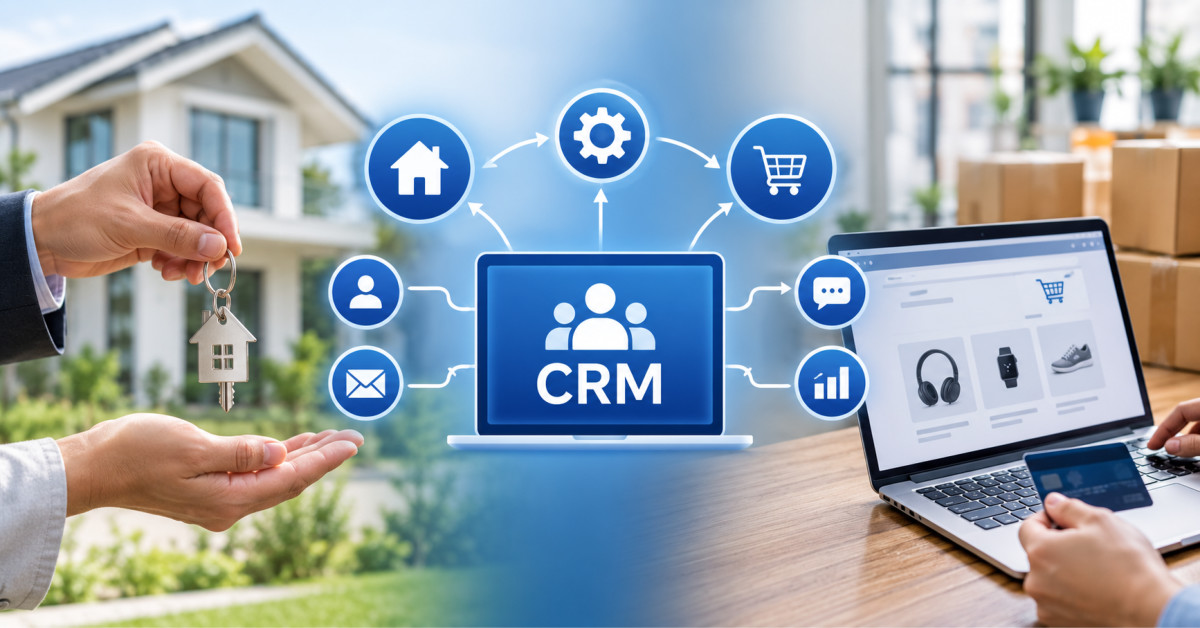
CRM automation helps ecommerce brands and real estate teams respond while buyer intent is still high, then maintain relevant follow-up without relying on manual reminders. The right system connects customer behavior, data hygiene, routing, and timely outreach into one dependable operating workflow.
Automation does not replace relationship building. It protects the moments when a customer is ready to begin one.
The quickest response to a customer is often more important than what they do after. From assisting a family in their search for the next home to operating a fast-paced online business, there are times when you can’t afford to wait too long to sell. Research indicates 78% of home buyers will respond to the first enquiry they receive. However, a lot of companies still require more than four hours to react, allowing the opportunity for others to get in the game first.
That’s why CRM automation has evolved from a nice-to-have feature to a must-have for businesses. It fills the gap between when someone shows up and when the deal closes, and it ensures that nothing falls through the cracks because the person didn’t follow up on an email or something. This reduces manual data entry, inconsistent outreach, and allows businesses to expand without having to recruit a small army to handle the administrative tasks.
Property deals are time-consuming, and there is a lot of paperwork involved, as well as a long decision process. However, the initial contact is always the most critical one that follows. Agents that respond to leads within five minutes of receiving them are much more likely to qualify the lead than are those who wait even 30 minutes. It’s about 100 times more effective to respond within those five minutes, as opposed to later in the day.
It doesn’t end after the first message. Good automation continues to work all the way through the pipeline. The system monitors behaviour as it happens, instead of depending on the agent to be mindful of checking in with a buyer from months ago. Whether it’s a family home or one of the luxury properties in Dubai that you have on your site, the system can send a personal message to them or remind the agent to call them. This means that outreach is not scheduled, but is based on real interest.
The pace of Dubai property transactions is much slower than online retail, where speed and repeat business are the key. Even a few seconds at checkout can be the difference between a sale and no sale. This is where automated flows really come in handy. Welcome emails and abandoned cart reminders are examples of “small” emails that account for almost 41% of all email revenue yet make up a small percentage of email volume.
It’s the timing that makes these flows so effective. An “in stock” message or a cart recovery message is received by a person at the exact moment he or she is ready to purchase. Some 50 percent of those who click on these automated messages end up making a purchase, a rate manual campaigns can’t match. CRM automation integrates seamlessly with platforms like Shopify, ensuring that sales information flows in real time, enabling triggers to activate within milliseconds of a customer’s engagement.
There is one thing that is often overlooked is that contact details can become out of date very quickly. Each year, about 30% of a database is outdated due to people changing jobs, switching emails, or moving house. Allow a list to go unmanaged for two years and almost half of it might be incorrect, resulting in lost sales and damaged email reputation.
Automated hygiene tools eliminate this by verifying information as it’s entered, and removing bounced or inactive contacts over time. Sales reps no longer waste 27% of their time chasing wrong numbers or bad emails, but are only speaking to those who are reachable. The time saved can be sufficient to pay for the software within a few months alone.
There is some administration involved in both real estate and ecommerce that can cause delays. Especially in property, sensitive financial information, listing agreements, and closing paperwork to deal with. With the advent of modern systems, these documents can be created automatically with information already in a client’s profile, reducing errors and ensuring deals move forward to closure.
Security of that data is important as well. A good platform will provide multiple levels of security, such as access control, which allows only the appropriate agent to see a client’s private information, as well as automatic backups and threat monitoring to ensure the business and its clients remain secure.
The most suitable setup is really dependent on the size of your business and your operations.
Simple tools such as TWOZO (free plan) and Wise Agent (for transactions in one place) work best for solo agents or small teams. Follow Up Boss (with a strong focus on lead routing and holding response times accountable) or kvCORE (which includes a complete website in its package) are great options for growing brokerages. Klaviyo is a great option for ecommerce brands because of its extensive integration with Shopify and predictive capabilities, while Omnisend is a decent choice for smaller ecommerce stores that require multichannel marketing. Companies with more complex structures and larger size tend to prefer Salesforce because of its customisation options.
What helps you: Automated triggers can boost conversion rates by almost 5 times over manual outreach. Agents can save 10-15 hours per week by eliminating repetitive tasks. Automated follow-ups continue to reach customers after their initial purchase, and real-time dashboards provide a more accurate and detailed picture of your pipeline.
Be cautious: Be careful not to send too many generic messages, as this may cause people to unsubscribe. Some all-in-one platforms require actual time to learn. But when you have dirty data at the beginning, automation will simply magnify those issues.
The key takeaway is the same, whether you are looking to buy premium homes in Dubai or run an online business. Speed and consistency are the key to winning business, and automation is the key to achieving both at scale. Those companies that are gaining ground now are the ones that are using their CRM as a true business tool, rather than as a back-office application.
The first CRM automation a Shopify store should build is usually an abandoned cart flow with purchase checks, clear timing, and a useful reminder rather than an immediate discount. Start by confirming that the flow exits customers once they buy and that it reflects inventory, shipping, and support realities. After that, build a welcome series and post-purchase sequence. These three workflows create a practical foundation without asking a small team to manage excessive complexity.
A real estate team should aim to acknowledge a new lead immediately and make a meaningful human contact attempt within five minutes when the inquiry is high intent and staffing allows. The widely cited MIT and InsideSales research found materially stronger contact and qualification odds within that window than after 30 minutes. Automation should handle the acknowledgement, routing, and task creation, while a trained agent provides the human response.
CRM automation will feel impersonal only when it sends generic messages without regard for customer context, timing, or consent. Use automation to recognize an action, such as a cart abandonment, repeat purchase, or property inquiry, then deliver information that helps the person take the next step. Keep sensitive decisions, negotiation, complex support, and relationship building with trained people. The automation should make the handoff more informed, not remove the human relationship.
You should review CRM and email marketing data monthly, with automated checks running continuously for bounces, duplicates, invalid formatting, consent changes, and failed integrations. A monthly review gives teams time to inspect unassigned leads, inactive records, suppression rules, and suspicious workflow behavior before issues compound. High-volume brands may need weekly operational checks. The right cadence is the one that catches errors before they trigger a poor customer experience.
A small business should choose an all-in-one CRM platform only when its integrated capabilities solve real operational problems better than simpler connected tools. All-in-one systems can reduce data silos and simplify reporting, but they can also introduce cost and training overhead. Start with the workflows you must run, the data you need to retain, and the channels your customers use. Choose the least complex system that your team can operate consistently and measure confidently.





