


Coca-Cola was the first brand to hook consumers with discounts when it released the very first coupon in 1887, redeemable for a free glass of Coke.
More than a century later, you can still see the psychology behind that very first discount at work online. Receiving discounts releases oxytocin, in turn making shoppers happier—and less likely to abandon their carts.
By 2017, 97% percent of retailers cited discounting as their top pricing strategy, and within the last two years, shoppers’ expectations of receiving a discount has only increased. According to one 2021 survey, 60% of US shoppers say that online discounts have become more important since the onset of the pandemic. Meanwhile, Shopify’s Future of Commerce report found that 52% of consumers are significantly influenced to hit Buy when they’re offered personalized discounts.
The right type of discount can maximize sales, prevent shoppers from abandoning their carts, and entice first-time buyers to try a brand. But using the wrong type of discount can have adverse consequences, including lowered profits and a devalued brand
We’ve put together this guide to help you determine how to offer the right type of discount to the right customers at the right time, including top-performing discount strategies you can start using today.
Table of contents
What works better: discount codes or automatic onsite discounts?
Ultimately, the right approach to discounting hinges on what you sell, the customers you target, and the brand experience you wish to create.
Specifically, will your target market be more inclined to purchase with discounts that appear automatically at checkout? Or might they be more persuaded to buy after receiving a discount code they need to enter during checkout?
Your choice boils down to offering a self-serve discount model (the consumer manually enters a code) or setting up your online store to automatically apply discounts for the shopper.
Discounts can take the form of a fixed value, percentage, or discounts on products, collections, or variants in-store. Importantly, discount codes give you strict control over pricing and promotion:
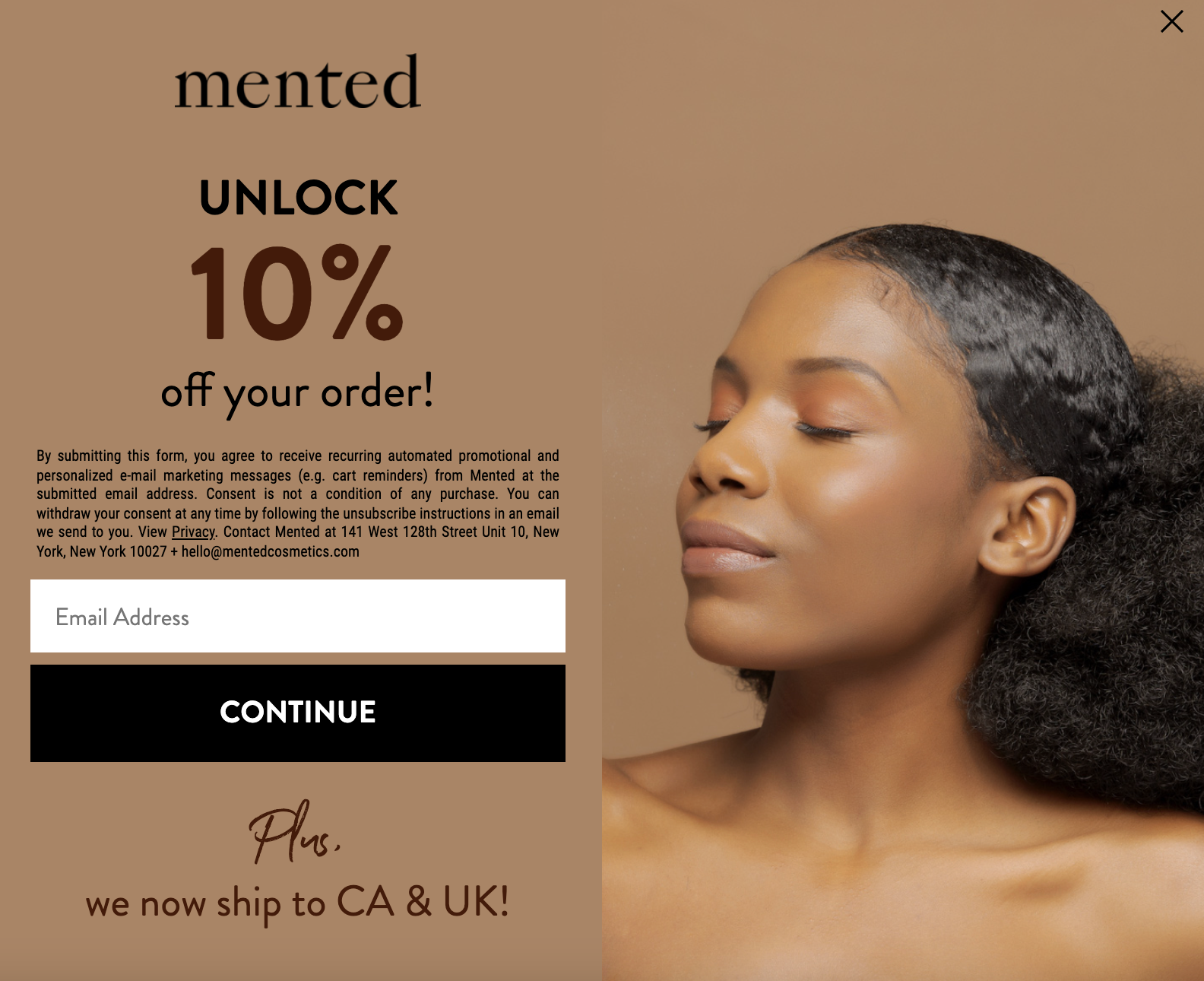
Even better, brands with an omnichannel retail strategy can let customers either redeem their discounts in an online store or in a brick-and-mortar retail location.
Discount codes may be used to:
Out of Print—which sells out-of-print book covers on t-shirts, totes, and accessories—offers a site-wide discount code to first-time shoppers and those leaving who have not yet made a purchase.
“It’s an incentive to make that first purchase,” says Chuck Mazzone, Digital Marketing Director at Out of Print. “But we’d rather shoppers focus their attention on our products instead of doing the math in their head and calculating the final price.”
Investigate whether your commerce platform has native automatic discounting capabilities. You should be able to offer your customers discounts that apply automatically at checkout and in the cart. Create percentage, fixed amount, or buy X, get Y automatic discounts.
Even though discounting is automatic, the rules you set give you plenty of control. For an automatic discount to apply correctly, your customers need to add all eligible items to their carts before they move to checkout.
This includes:
Shopify Plus has built safeguards to prevent discount abuse. Specifically, automatic discounts take precedence over discount codes, meaning customers can’t apply multiple discounts to a single order. Discount codes are unavailable for customers who have an automatic discount applied to their checkout.
Automatic discounting may be used to:
“Offering automatic discounts is much more seamless than sending customers discount codes they have to enter manually,” says Mazzone.
With more and more purchases being made on mobile devices, it’s more difficult to enter a code. The real benefit with automatic discounts is that it does the work for the customer and means they have one less thing to worry about.”
Thousands of brands use Shopify Scripts to automatically apply 13 attractive discounts to increase sales. Similarly, Shopify Plus brands can also use Launchpad to schedule discounts in advance.
The original price is struck out and displayed next to the discounted price and shown everywhere from the product page to the checkout. When the discount period is over, Launchpad automatically rolls back the discount and restores the original pricing.
Besides increasing sales, discounts can discourage consumers from abandoning their online shopping carts. The opportunity to redeem a coupon also motivates consumers new to your brand to make their first purchase. However, pricing psychology, or the strategy behind how you price your products, goes beyond the dollars saved. Discounts are only part of the purchase decision and must be considered with:
With these inputs in mind, marketers can leverage discounts with what’s commonly known as anchoring bias, or our tendency to rely too heavily or anchor on a single piece of information when making a decision. With discounts, marketers aim to anchor consumers to the original, higher price. Introducing a discount, which reduces the price, can cause the consumer to perceive the product as more valuable. If the three aforementioned bulleted inputs allow, marketers may even set product prices artificially high, which can cause consumers to perceive the very same discount as even more valuable.
Black Friday is a prime example of when discounts are prominently displayed. The marketer’s job is to anchor you to the original price: the bigger the discount, the bigger the bargain.
Flash sales offer a discount or promotion for a limited period of time. This drives shoppers’ fear of missing out (FOMO), and the sense of urgency and exclusivity encourages impulse buying.
The anchoring effect can cause consumers to purchase items they don’t need simply because they perceive the bargain they’re getting is too good to pass up.
Careful use of flash sales can allow your brand to control your own peak seasons and product release dates, instead of relying on a few big shopping seasons per year.
Deep-discount sales of short duration (three-hour flash sales seem to be the sweet spot) are effective at increasing traffic, conversion rates, and revenue for short-term wins. When done right, flash sales can increase customer lifetime value as well, for longer term gains.
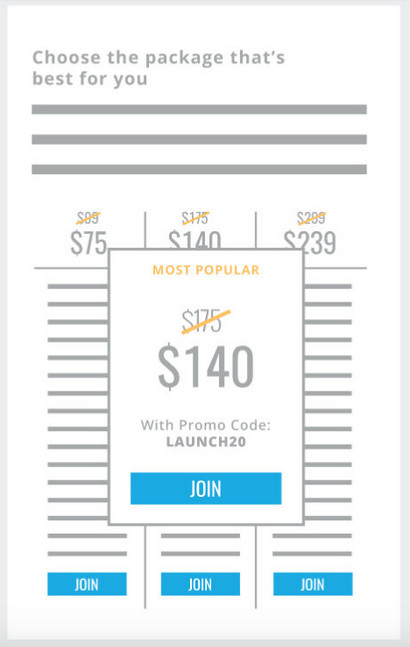
In fact, the anchoring effect can trigger another powerful psychological principle: our desire to seek pleasure and avoid pain. Since passing on a bargain can lead consumers to feel pain, or at minimum forgo the pleasure of experiencing the thrill of a great deal, shoppers are often inclined to complete purchases to avoid the unpleasant feeling of missing out on a deal others are enjoying.
Separately, there’s much debate around the right way to discount different products:
For now, no two target markets are the same. Likewise, neither are any two product catalogues. So split test your discounting tactics and allow the results to drive your strategy.
Potential discounts you can experiment with include:
What’s most likely to work and result in a lift in sales? Below are some of the top-performing discounts Shopify Plus brands use to lift holiday sales and power major campaigns year-round.
Before offering a discount, clearly define what you want to achieve with it. Goals may include:
“Inventory always plays a role when considering whether to discount,” says Mazzone. “We’re always conscientious about inventory levels before discounting. If inventory is low, we don’t discount. That way we don’t sell product we don’t have and disappoint customers.”
With your objective in mind, it’s crucial to segment customers so you can offer discounts (via email, etc.) based on preference or purchase history. Segmenting customers prevents you from sending them an irrelevant discount code. It also saves time and money spent on email or PPC ads directing them to an irrelevant or impersonal promotion.
NOTE: Segmentation may play less of a role depending on your goal (e.g., moving unsold inventory quickly). It may also be less of an emphasis during major campaigns or site-wide holiday sales aimed solely at lifting sales or acquiring new customers.
With a clear goal and customer segments identified, consider experimenting with traditional discounting techniques like bundling, volume, prepayment, and seasonal discounts.
Some of the top-performing discounting strategies Shopify Plus brands are using include:
The popular BOGO discount is one of our top performers. It has also evolved as brands use it creatively to offer multiple freebies or incentives. For example, Hygge Gear, which sells multi-use headbands, uses BOGO discount codes:
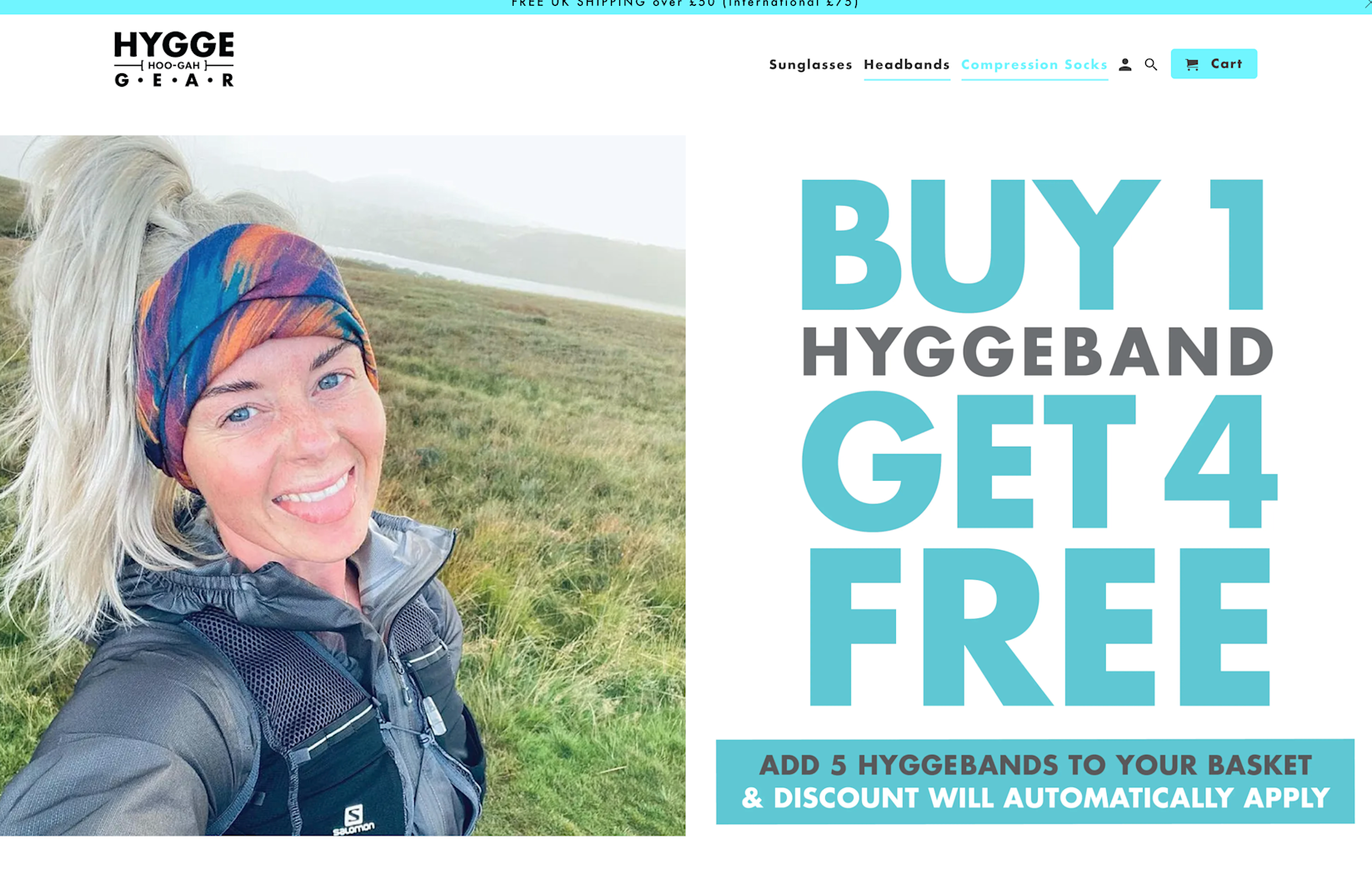
You can mix and match products of your choice, turning them into creative promotions to reward existing customers and boost sales. Buy X, get Y quantity (50% off or one free), shipping, and other discount types all provide more flexibility for building loyalty programs as well. Track your discounts to see which are performing best so you can repeat your biggest successes.
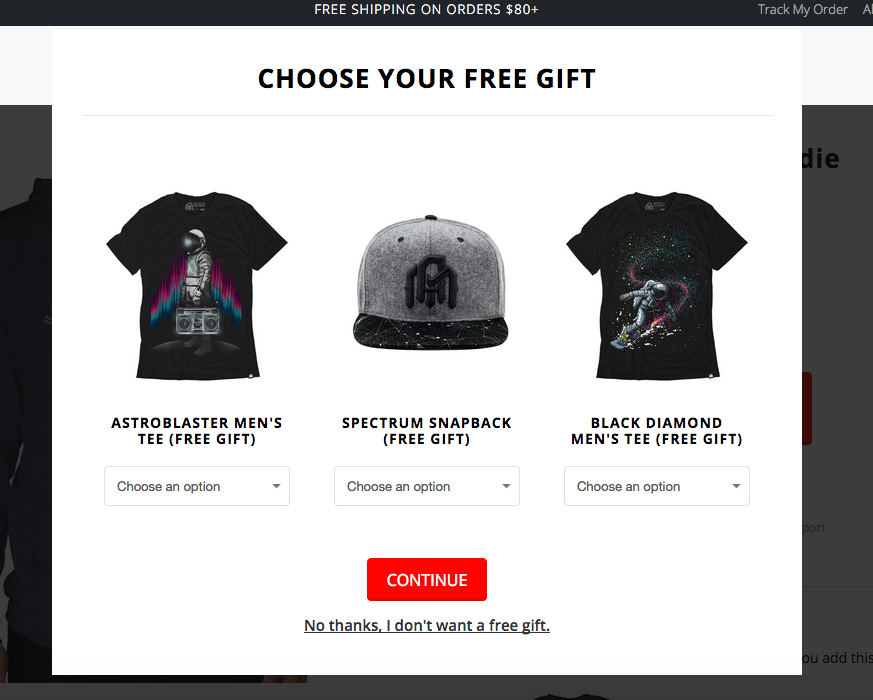
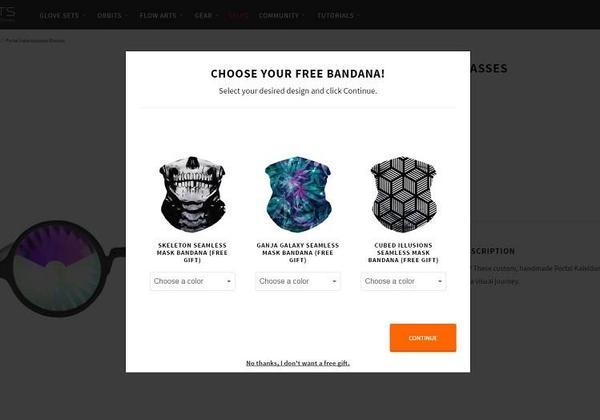
Small, unexpected gifts can be a cost-effective way to convert customers and earn loyalty. For example, club and festival apparel brand INTO THE AM uses a pop-up to automatically offer a free gift to shoppers who add particular items to their carts. Not only is the gift tailored to the item the shopper has added, but the company also lets the customer choose their favorite gift:
The brand’s sister company, Emazing Lights, also adds a free, lightweight item that doesn’t
Acquiring new customers is expensive. Most first-time visitors will leave your site without making a purchase. In fact, it takes a visitor just 13 milliseconds to judge your site, so making a good first impression matters more than ever.
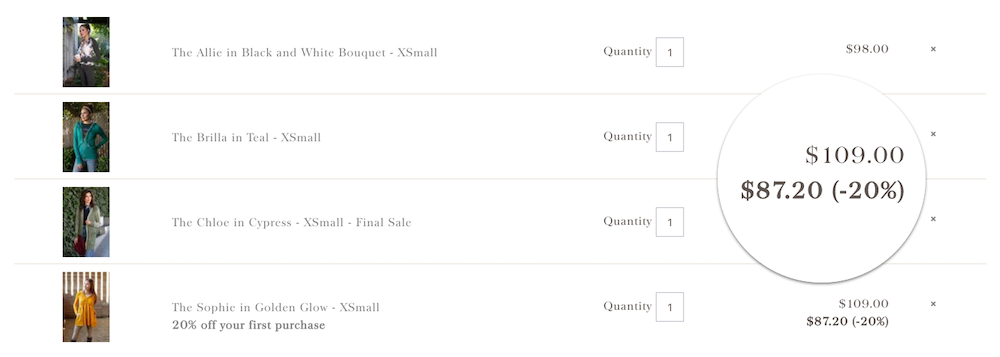
It’s why top-performing brands often offer new shoppers a discount. Evy’s Tree, a luxury hoodie company, wanted to make checking out easier by reducing the number of clicks. So it uses Shopify Scripts to calculate discounts in real-time, automatically excluding sale items and presenting the customer with the lowest price.
Using a bit of JavaScript, you can even call attention to the discounted item so that it might display something like this, all without coupon codes:
Offering discounts to big spenders can actually increase their customer lifetime value. Luxury bedding brand Boll & Branch does this in a variety of ways, including offering new customers a discount on their first purchase, but only if they spend $150 or more:
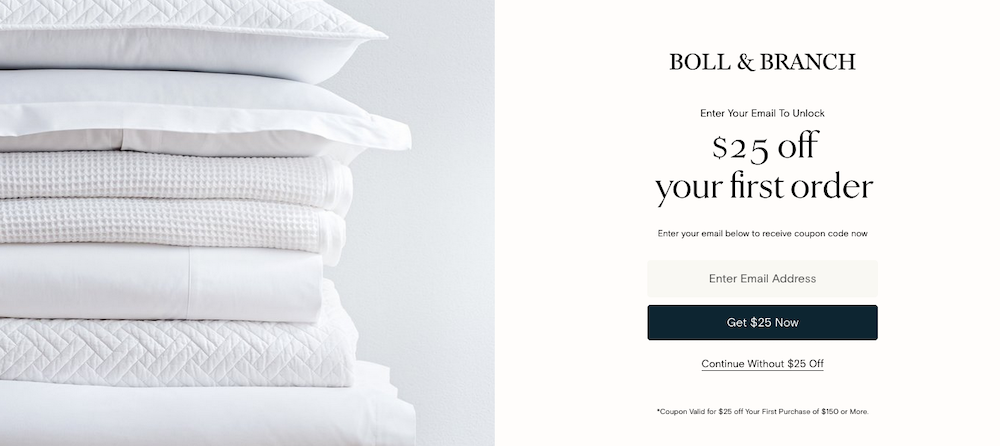
To determine an appropriate spending threshold, calculate your median order value (MOV) or average order value (AOV) and build your tiers accordingly. Establishing a spending threshold above these levels ensures that the discount results in customers adding more items to their carts than they otherwise would have.
With ongoing data and privacy legislation changes—including the phasing out of third-party cookies—building your customer database is now more important than ever.
For years, the go-to method of growing your email list was to show a pop-up to first-time visitors offering a discount code in exchange for their contact info.
But there are creative ways to ensure shoppers remain engaged that can result in higher conversions. For example, Spongellé, a Los Angeles–based personal care product line, worked with Certified Shopify Plus Partner Octane AI to create a “shop quiz.” Customers answered questions about their preferences, which allowed Spongellé to collect key data. Upon completion of the quiz, users were provided with personalized product recommendations, along with a discount code to use.
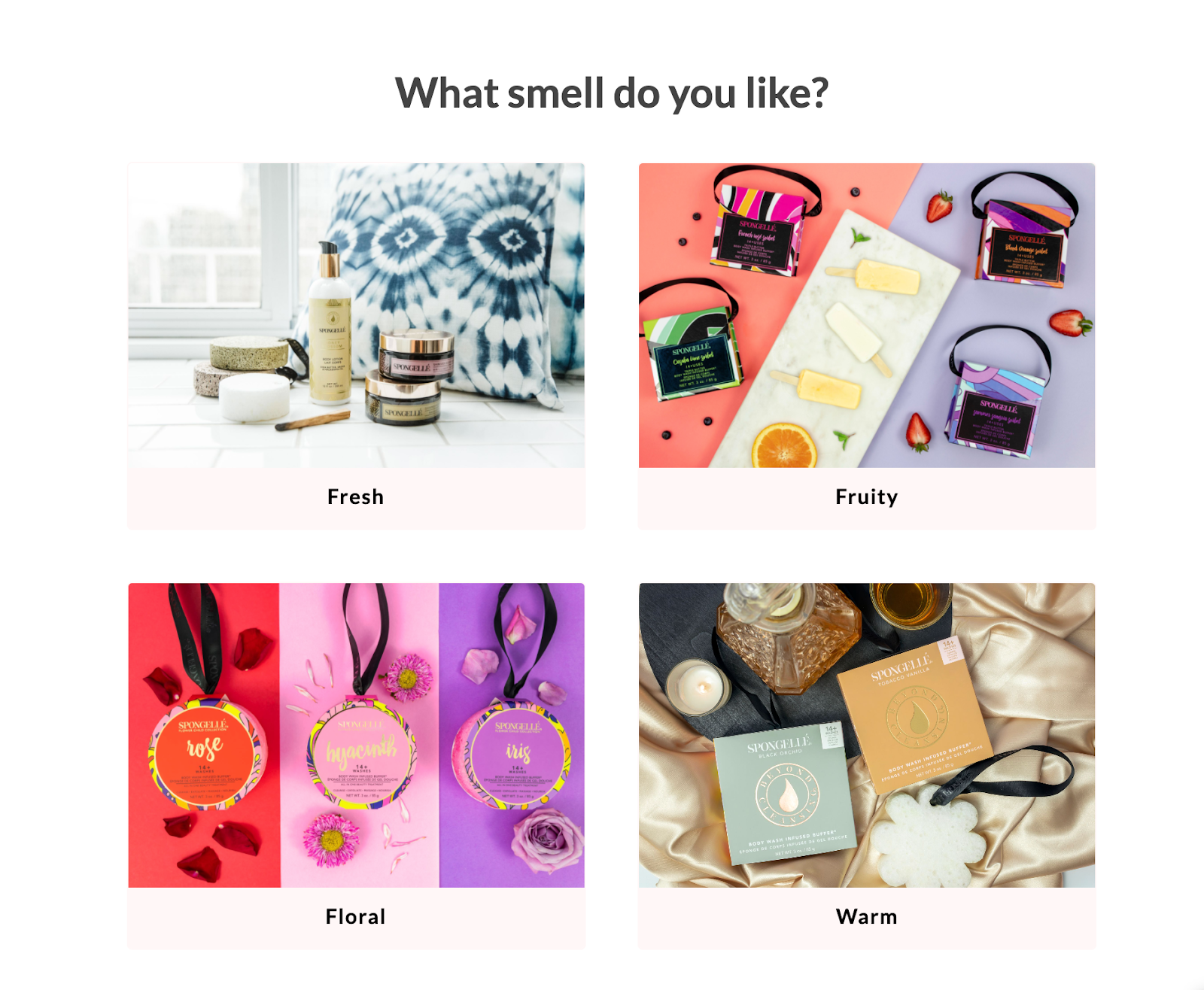
The result? The quiz now accounts for more than 25% of the brand’s revenue, with one-quarter of quiz users sharing their contact information in exchange for the discount.
Serving the right discount to the right shopper at the right time is the ultimate goal. Brands that routinely achieve this goal constantly test different discounts at different times to optimize in time for the holidays.
“We’re constantly experimenting and trying out different discounts,” says Mazzone.
Our goal is to have months of learning under our belt so that when the holidays roll around we have best practices in place. What we’ve learned over the years is that different types of discounts work better at different times of the year.”
Out of Print’s target market of book lovers includes educators and librarians. These customers are targeted in what the company calls major moments, like back to school, National Library Week, or Banned Books Week.
Likewise, Out of Print strategically times BOGO discounts on t-shirts when spring begins. Toward the end of the calendar year, the company offers discounts on smaller items that are perfect holiday stocking stuffers.
Besides timing, Out of Print suggests it’s also crucial to test and optimize how discounts are implemented, what’s discounted, how long discounts run, and how they’re presented.
Out of Print launched predominantly as a t-shirt company. It has since grown to offer totes, socks, mugs, and accessories. With so many categories, shoppers might fall prey to the paradox of choice if offered a storewide discount.
To focus customer attention, Mazzone suggests discounting specific product collections. Out of Print often highlights its Harry Potter, Sesame Street, and Star Wars collections with targeted discounts. Each has become a top seller.
Buyer behavior becomes a key ingredient in discounting success.
For example, while Out of Print has had success offering BOGO discounts on socks, not all consumers buy their socks in single pairs. After analyzing the sale, Mazzone says he learned many customers prefer to purchase their socks in bulk, three to five pairs at a time, and may not be motivated by an online BOGO offer.
Highlighting certain deals during specific times of the year is only part of the equation. Discounts should act as a motivator and result in accelerated or incremental purchases. You’ll undercut your margins if you train customers to wait for a discount. Your promotions will also lack urgency if they’re perceived as open ended.
Out of Print routinely experiments with discount duration. Campaigns aligned with a specific catalyst like Banned Books Week are often more effective when they last a week. Other campaigns promoting a new release often perform better if they last just 48 hours.
A timed discount is another FOMO-based strategy to motivate shoppers to buy immediately. With these discounts it’s all about scarcity and the ticking clock, as the number of discounts available, and/or how steep the discount is, decreases over time.
For example, for the first hour of the sale, the available discount might be 20%, decreasing by 1% every hour for the next 10 to 12 hours until the sale ends. This incentivises consumers to shop early to get the biggest discount on the biggest shopping carts.
Likewise, these sales can be run on volume and set up as a descending scale. Surf brand Rusty used this kind of sale for a one-day sitewide promotion. It offered 10 coupons for 50% off, 20 for 40%, 30 for 30% off, and 50 coupons for 20%. This kind of limited availability of discounts for the first-come, first-served ramps up the urgency for the consumer: Can they be one of the lucky ones who gets the best deal?
Sforce used a similar combination of scarcity and urgency to drive a significant sales increase during the Black Friday Cyber Monday sales period.
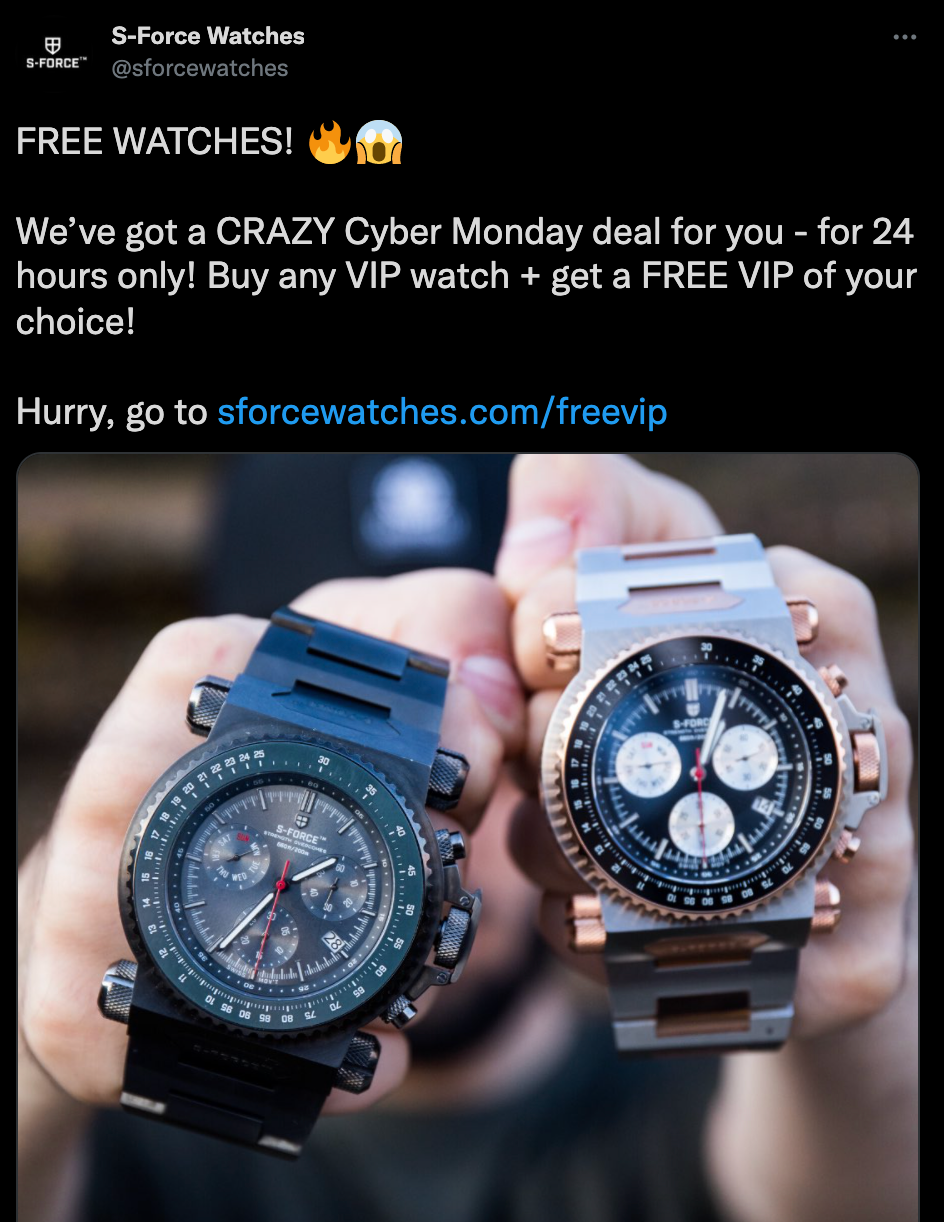
The store decreased the sale percentage it was offering every couple of hours over the four-day sale event. Each product had a countdown timer attached to it which created urgency as customers saw the timer ticking down on the availability of the current discount.
There was also limited stock the business was prepared to sell at each discount tier. This introduced an element of scarcity, as stock was finite within each sales tier, and the merchant made clear to customers how much stock was left for each product during each discount period.
Don’t take sides in the “dollar off versus percentage off” debate. Out of Print uses both based on the segment being targeted. For example, first-time visitors to the site are offered a percentage off discount code. Mazzone suggests consumers not as familiar with the brand’s products or pricing are often more influenced by a large number framed as a percentage. Conversely, repeat customers with a better grasp of the company’s pricing often respond better to dollar off discounts or promotions such as “$20 t-shirts” or “3 t-shirts for $50”.
“Our conversion rates are much higher when we automatically discount versus when we send customers discount codes,” Mazzone says. “It’s a hassle-free checkout for the customer and results in better sales for us.”
Discovering a successful discounting strategy requires experimentation. It also requires a customer-centric approach that includes:
Nearly every brand plans to discount. Not all will invest the time to fine-tune their approach. Those that do will earn customer loyalty and more sales.





