

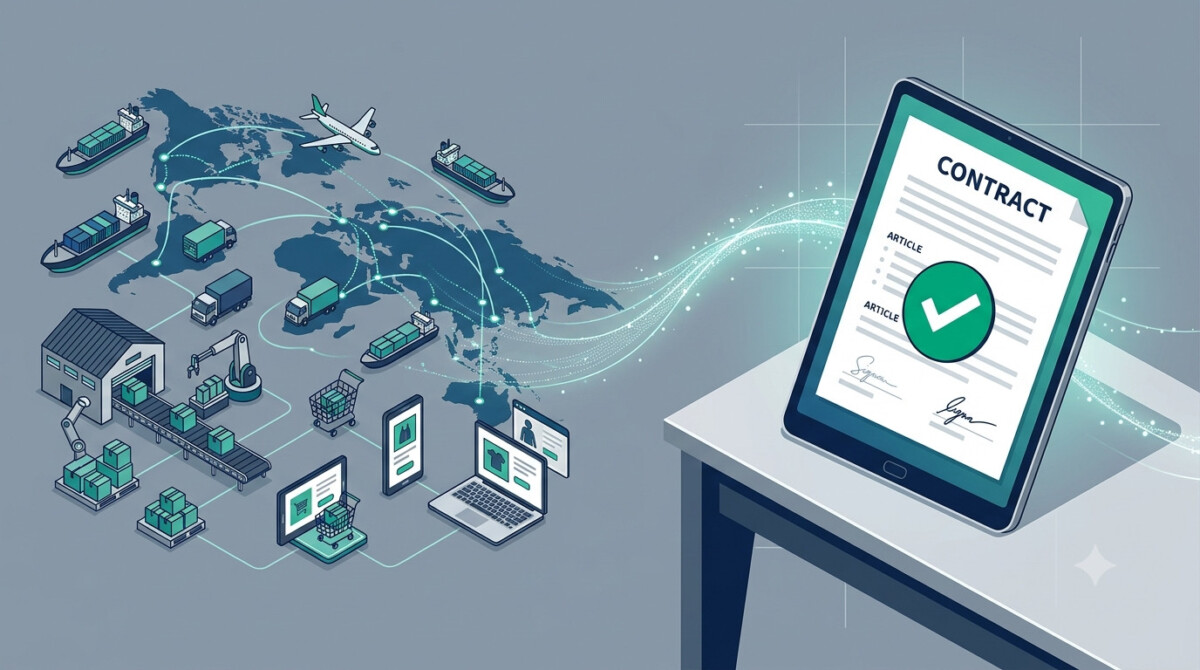
To streamline e-commerce vendor onboarding, standardize your contract stack, move to interactive e-sign workflows, automate reminders, and integrate verified supplier data directly into your commerce platform so new partners go live in days instead of months.
Most seven-figure brands don’t stall because they run out of customers, they stall because their supplier onboarding and contracts can’t keep up with the complexity of their growth.
With revenue in the global e-commerce market projected to reach US$5.05 trillion by 2030, scaling an online brand requires far more than acquiring new customers. Behind every high-performing storefront, whether on Shopify, WooCommerce, or a custom stack, is a network of manufacturers, dropshippers, and wholesale partners.
Yet, while store owners spend thousands optimizing their checkout funnels, their backend operations often rely on fragmented email chains, static PDFs, and manual signature collection.
According to research from TrueCommerce, manual supplier onboarding without automation can stretch up to six months for complex supply chains, leading to delayed product launches, missed inventory cycles, and lost revenue.
Streamlining vendor onboarding and contract management is no longer just an administrative task, it is a critical growth lever. Here is a step-by-step breakdown of how modern e-commerce brands eliminate contract friction and onboard new suppliers in days rather than weeks.
E-commerce vendor onboarding is the structured process of vetting, registering, and legally integrating new manufacturers, wholesalers, or dropship suppliers into your digital retail ecosystem.
[ Vendor Selection ] ➔ [ Document Intake ] ➔ [ Digital Sign-Off ] ➔ [ Platform Integration ]
It is common for growing brands to conflate onboarding with inventory management, but they serve distinct operational roles. While building an effective supplier management system helps oversee long-term vendor performance and inventory flow, the onboarding phase handles the upfront setup:
Establishing a clear onboarding pipeline protects your brand against supply chain liability, intellectual property theft, and chargeback disputes before the first production run begins.
A streamlined onboarding workflow relies on standardized documentation. Before bringing a new supplier, manufacturer, or wholesale distributor into your system, ensure you have these five core agreements executed:
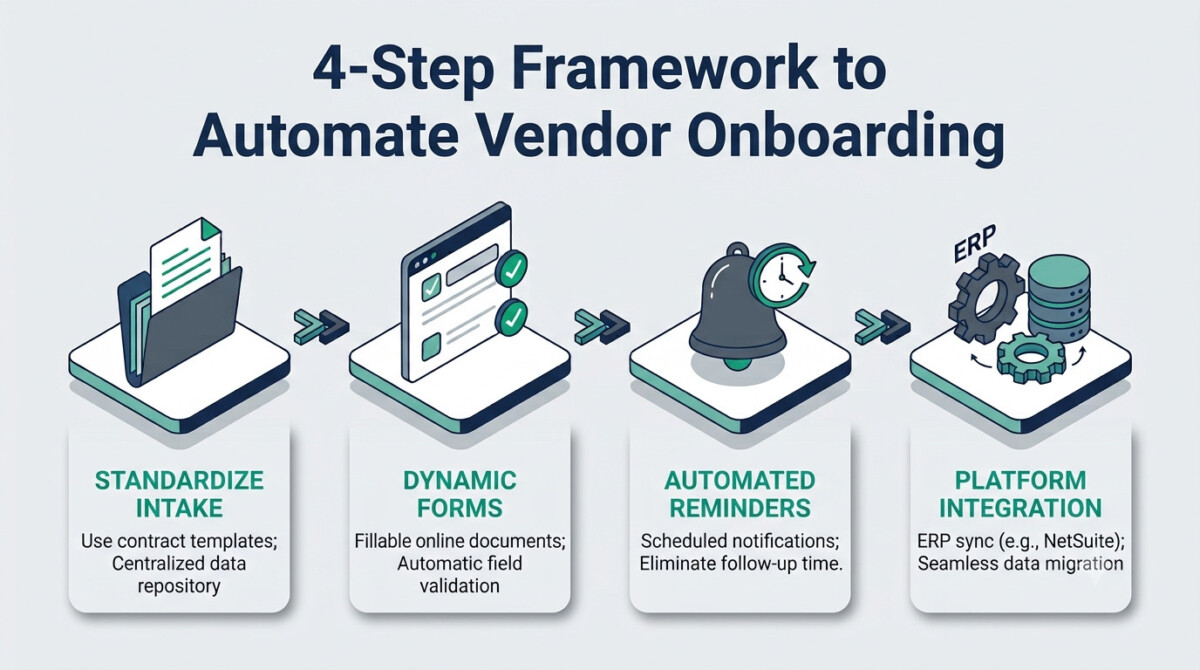
Transitioning from manual paperwork to an automated digital pipeline requires four distinct phases:
Stop sending individual PDFs back and forth over email. Build a central document repository containing pre-approved contract templates for every vendor category (e.g., domestic wholesaler, overseas manufacturer, and influencer ambassador).
Static PDFs create friction because suppliers frequently miss required fields or upload outdated tax forms. Implementing dynamic document and e-signature software allows you to turn static contracts into fillable digital templates.
For instance, a secure e-signature software like Fill enables store owners to convert standard NDAs and vendor agreements into interactive web forms with required fields, live audit trails, and instant mobile-friendly signing. This eliminates missing information and reduces the document turnaround times by up to 80%.
Static PDF Emailing (3-5 Days) ➔ Interactive Digital Forms (Under 10 Minutes)
Contract bottlenecks usually happen during the waiting period. Use document tracking platforms to monitor signature status in real time and set up automated email notifications to prompt vendors when agreements remain unsigned after 48 hours.
Once agreements are executed, seamlessly pass verified vendor contact data, payment details, and tax status into your ERP or e-commerce platform (such as Shopify or NetSuite) to trigger automated purchase orders. Leveraging modern B2B e-commerce platforms allows merchants to integrate vendor profiles directly into their existing digital storefronts and procurement channels.
| Common Friction Point | Operational Impact | The Streamlined Solution
|
|---|---|---|
| Incomplete Tax/Bank Forms | Delays payouts and creates tax compliance risks. | Use dynamic forms with validation rules so forms cannot be submitted incomplete. |
| Ambiguous Quality Claims | High dispute rates over defective inventory. | Attach enforceable SLAs with required sign-off fields directly inside the MSA. |
| Unsecured Signature Trails | Legal vulnerability during business disputes. | Use e-signature platforms with full tamper-evident audit logs and time stamps. |
As B2B supply chains transition toward automated workflows, with operational guides on Ecommerce Fastlane highlighting up to 30% faster order processing times through integrated systems, manual, paper-based vendor onboarding remains a major operational bottleneck.
By standardizing your contract stack and adopting secure document automation tools like Fill, you protect your business, foster stronger supplier partnerships, and get new products to market faster than the competition.
For most e-commerce brands, vendor onboarding should take days or a couple of weeks, not multiple months, once contracts and data capture are standardized and automated.
Manual onboarding processes for complex supply chains can stretch out to six months when every contract, tax form, and bank detail is handled via email and static PDFs. By using centralized templates, interactive forms, and e-signature tools with automated reminders, you can typically reduce onboarding timelines by 60 to 80 percent and activate new vendors much faster.
The best tools for digitizing vendor contracts are secure e-signature and document platforms that support interactive forms, required fields, and tamper-evident audit trails.
Platforms like Fill allow you to convert existing NDAs, MSAs, and tax forms into web-based templates that vendors can complete and sign from any device, while giving your team visibility into who has opened, viewed, and executed each agreement. When choosing a tool, prioritize compliance features, audit logging, integrations with your e-commerce or ERP stack, and support for multiple jurisdictions and document types.
You reduce disputes over product quality by defining specific material, packaging, and defect standards in a formal SLA and requiring pre-production approval sign-offs on samples.
Rather than relying on informal expectations, brands should embed quality thresholds and acceptable error rates into contracts, then ensure both sides sign off on a physical or digital proof before mass production begins. This creates a shared reference point for resolving issues and makes it far easier to enforce chargebacks or remediation when delivered inventory doesn’t match what was approved.
After onboarding, you should sync vendor contact details, payment credentials, tax statuses, quality thresholds, and any custom pricing or lead-time parameters into Shopify or your ERP.
Having this data structured inside your commerce stack allows purchase orders, invoices, and fulfillment rules to reference the same source of truth, which reduces errors and accelerates time-to-first-order with new suppliers. It also makes it easier to track performance by vendor across defect rates, delivery timelines, and margin contributions over time.
Most brands need at least five core agreements per supplier: an MSA, a mutual NDA, a quality and SLA contract, tax and compliance documentation, and pre-production approval sign-off.
Depending on your risk profile and sector, you may also require additional agreements for data protection, warehousing, or co-marketing, but these five form the baseline for a robust, defensible onboarding process. The key is to adapt each template to the vendor’s category and jurisdiction while keeping the workflow as standardized as possible across your supplier base.





