

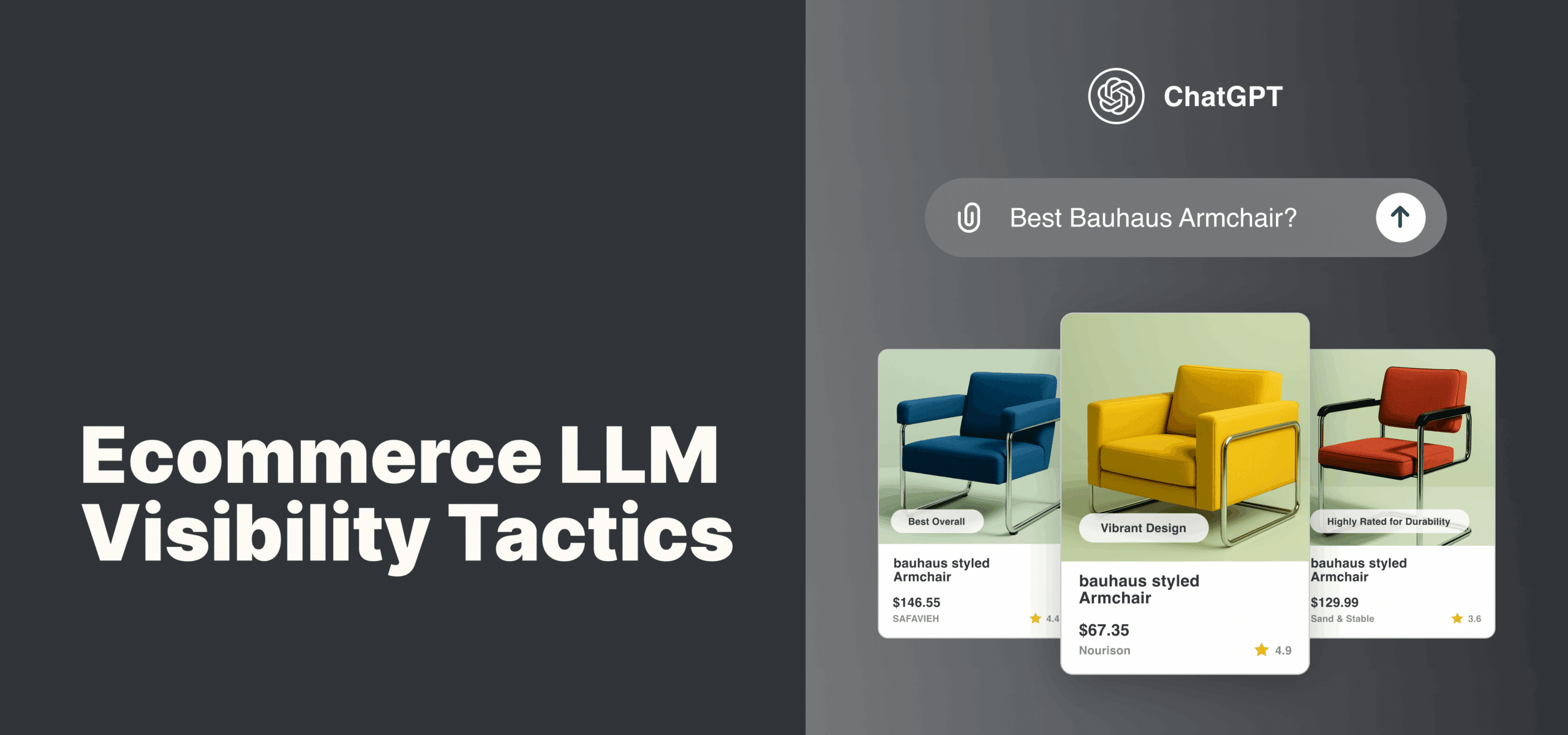
You pour resources into ranking your product pages, but when a shopper asks a conversational AI for recommendations, your brand is nowhere to be found. This invisible gap is the “Empty Digital Shelf.” Bridging it means stepping beyond technical search tweaks and focusing on Generative Engine Optimization (GEO).
Because AI engines build their answers by reading the room—gathering third-party consensus, user-generated content, and influencer validation—your visibility depends on what others say about you off-site.
Let’s explore how aligning your PR and review strategies can place your products front and center in AI-driven discovery.
E-commerce is navigating a significant transition. For years, the traditional search model meant optimizing for a list of blue links. Today, the landscape is shifting toward a conversational experience powered by Large Language Models (LLMs) and advanced AI engines.
Shoppers are moving toward “answer engines,” where they expect immediate, synthesized responses instead of a page of search results. This behavioral shift is substantial. By 2028, $750 billion in U.S. revenue will flow directly through AI-powered search platforms. Furthermore, a growing segment of consumers—nearly 50%—now intentionally seek out generative AI as their primary starting point for product discovery.
This transition introduces the concept of the “Empty Digital Shelf.” When AI systems synthesize the best products for a user’s query and filter your brand out of the resulting summary, you miss a highly valuable touchpoint.
The redistribution of web traffic is already in motion. When AI answers trigger, traditional organic click-through rates for top positions can decrease by up to 61%. Rather than viewing this as a negative, consider the remarkable opportunity it presents.
Shoppers arriving from generative AI sources are exceptionally qualified. Traffic to retail sites from generative AI sources has surged by 4,700%. These visitors spend 45% more time on-site and explore 13% more pages than traditional search visitors. Being cited within an AI summary is highly advantageous, yielding a 35% lift in organic clicks compared to brands that are excluded.
Achieving visibility within AI engines requires a nuanced approach. These platforms do not source information identically. Different Large Language Models require distinct Generative Engine Optimization (GEO) strategies, spanning PR, structured content, and influencer partnerships.
Google Gemini tends to prioritize authoritative, brand-owned content. Currently, 52% of its citations originate directly from the brand’s own domain.
For Gemini, establishing your website as the absolute “Golden Record” is vital. This means ensuring your product pages are rich with structured data, clear schema markup, and comprehensive product attributes. Gemini looks to your direct domain to verify facts before serving them to shoppers in AI Overviews.
In contrast to Gemini, ChatGPT relies heavily on what the broader internet agrees upon. It is a system built on third-party consensus and external validation.
Nearly 48.73% of ChatGPT’s citations are pulled from external consensus and directory sites rather than direct brand domains. This makes user-generated content, dynamic reviews, and digital PR essential for visibility.
As Amit Bachbut, Director of Growth Marketing, notes: “ChatGPT forces marketers to look beyond their own domain. If your PR strategy and customer review ecosystems aren’t actively generating off-site consensus, you simply won’t be recommended by these models.“
Perplexity functions as an expert curator, heavily favoring specialized knowledge and niche authority. Around 24% of its citations are drawn from specialized directories and high-trust external sources.
To gain traction here, influencer marketing and targeted PR placements are highly effective. When trusted voices and specialized publications validate your products, Perplexity absorbs that data, translating it into direct recommendations for high-intent shoppers.
Securing visibility in generative AI environments requires a proactive approach to off-site data. By feeding algorithms the consensus they crave, you establish your brand as the undeniable answer for your product category. Consider implementing these five Generative Engine Optimization strategies to ensure your products consistently appear on the digital shelf.
Reviews act as more than just on-site social proof; they function as dynamic, continuous PR for your brand. AI engines constantly ingest this user-generated content to understand the real-world application, quality, and consensus surrounding your products.
The immediate conversion impact of this content is substantial. Shoppers who actively interact with reviews convert 161% higher than those who simply browse.
Furthermore, velocity is a critical factor for LLMs. Algorithms prefer fresh, recent feedback over stagnant data. Generating just 10 reviews on a product page can create a 53% uplift in conversions. To achieve this consistent review velocity, consider implementing SMS review requests powered via integrations like Klaviyo or Attentive. Meeting customers where they naturally communicate on mobile often yields 66% higher conversion rates for review generation than traditional email outreach.
Generative models are increasingly multi-modal, meaning they process and evaluate visual information alongside text. Influencer content, specifically photos and videos, acts as a powerful, multi-layered trust signal.
When influencers share visual UGC showcasing your products in real-world environments, they provide AI engines with vital context regarding scale, usage, and lifestyle fit. Incorporating these customer and influencer photos across your digital touchpoints lifts purchase likelihood by 137%.
To maximize this impact, guide your influencer partners to craft highly detailed, attribute-rich captions. Instead of generic praise, ask them to highlight specific product features, use cases, and personal experiences. This structured approach helps algorithms map your product to niche, conversational search queries.
As the Agentic Commerce Protocol (ACP) becomes standard, data readiness is essential for any brand aiming for high LLM visibility. Algorithms seek out authoritative sources to construct a “Golden Record”—a definitive, verified profile of your product.
You can construct this record by seamlessly combining external PR mentions, such as industry awards or certifications, with structured data on your product pages. Striving for 99.9% attribute completion in your product feeds results in up to 4x higher visibility in AI-driven shopping recommendations. Every verified detail reduces the algorithm’s uncertainty, increasing the likelihood that your brand is selected as the primary answer.
Consumers query AI engines using natural, human language rather than isolated keywords. They search for “best moisturizer for sensitive skin in winter” rather than just “moisturizer.” These nuanced phrases form what we call Conversational Commerce Fields.
Your best resource for populating these fields is your own customer base. You can utilize AI-powered smart prompts during the review collection process to gently guide customers into elaborating on these specific, high-value topics. Actively prompting for this level of detail makes your brand 4x more likely to capture the long-tail conversational data that LLMs rely upon.
Mira Talisman, Growth CRO Team Lead, emphasizes this strategy: “Generative engines rely on specific, long-tail context. By guiding your customers to mention exact use cases and product attributes in their reviews, you organically create the conversational data AI algorithms are actively searching for.”
Algorithms do not simply summarize facts; they assess overall sentiment. Occasionally, AI systems experience “Perception Drift,” where they disproportionately highlight negative product aspects if that information is highly concentrated in specific forums or articles.
Certain AI engines, particularly those deeply integrated into primary search platforms, surface critical product summaries or limitations nearly 19% of the time when queries occur close to the point of purchase.
To mitigate this, brands should actively manage their reputation by generating an overwhelming consensus of positive, factual UGC. Proactively syndicating positive reviews and partnering with influencers helps dilute negative sentiment, ensuring the algorithm builds its summary from a foundation of satisfied customer experiences.
Successfully placing your product on the AI-curated digital shelf is only the first step. The ultimate goal is ensuring that the transition from the AI engine’s recommendation to your storefront results in a seamless, high-converting experience.
Traffic generated by LLMs is fundamentally different from traditional search traffic. These shoppers have already engaged in a dialogue with an AI assistant to narrow down their options. Because specialized shopping models boast a 52% accuracy rate on handling complex, multi-layered queries, the visitors arriving at your site are highly qualified.
They expect your product page to instantly mirror the specific attributes and promises highlighted by the AI engine. Providing clear, easily accessible customer reviews and visual UGC on your product pages instantly validates the AI’s recommendation, bridging the trust gap and reducing friction on the path to purchase.
Sustaining your presence in AI recommendations requires a continuous flow of fresh data. A stagnant review profile can quickly lead to a loss of visibility as algorithms favor brands with more recent, active consensus.
This is where a strategically designed loyalty program becomes invaluable. By establishing tier-based structures that reward customers for leaving detailed, photo-rich reviews or engaging in brand advocacy, you create a self-sustaining data engine.
Eli Weiss, VP Retention Advocacy, explains: “Loyalty is no longer just about driving the next transaction. It is about actively incentivizing the continuous creation of fresh, detailed user-generated content that feeds directly into the Generative Engine Optimization loop.“
A well-structured loyalty program ensures your brand continually produces the exact trust signals LLMs require to keep your products prominently displayed on the digital shelf.
To actively secure your presence on the digital shelf, consider utilizing a comprehensive platform like Yotpo. Yotpo Reviews provides the necessary syndication network, AI-powered smart prompts, and Google partnership integrations to continuously feed high-quality, structured data directly into AI engines.
When combined with Yotpo Loyalty, you can create the incentive structures needed to generate a constant stream of fresh, attribute-rich user-generated content at scale. Furthermore, by leveraging SMS Review Requests powered through seamless integrations with providers like Klaviyo or Attentive, you can effectively capture the high-velocity, off-site consensus that modern algorithms demand.
The transition from traditional search to conversational AI discovery is an exciting opportunity for brands willing to adapt. Securing e-commerce LLM visibility is no longer about chasing the latest algorithm update; it is about establishing undeniable trust and consensus across the digital landscape.
By proactively embracing Generative Engine Optimization (GEO) and aligning your influencer and UGC strategies, you can transform the “Empty Digital Shelf” into your most powerful conversion channel. Start building your brand’s AI-ready data foundation today, and position your products exactly where tomorrow’s highest-intent shoppers are already looking.
Generative Engine Optimization (GEO) is the strategic practice of tailoring your brand’s content, product data, and off-site signals so that Large Language Models (LLMs) and AI engines actively retrieve and recommend your products. Unlike traditional SEO, which focuses on keyword matching to rank blue links on a search results page, GEO focuses on building semantic authority and third-party consensus.
As Amit Bachbut, Director of Growth Marketing, notes: “Generative Engine Optimization is about shaping the information environment. It shifts the focus from simply ranking for keywords to establishing a multi-layered ecosystem of trust, ensuring that AI agents confidently cite your products as the definitive answer.“
Failing to appear in AI-generated summaries directly harms your conversion rates by excluding your brand from the highest-intent discovery channels available today. LLM-referred visitors demonstrate a remarkable 2.69% engagement rate, which ranks as the second-highest across all e-commerce channels, beating traditional paid social and organic search. Furthermore, brands that successfully capture a citation within AI summaries experience a 35% lift in organic clicks compared to those left off the shelf.
AI engines prioritize customer reviews because they are inherently programmed to seek out consensus and verify claims. A brand-written product description is viewed by an algorithm as a first-party claim, whereas thousands of detailed customer reviews act as verified, third-party corroboration.
Shoppers heavily rely on this consensus as well; consumers who interact with reviews convert 161% higher than those who do not. The volume and specificity found in user-generated content provide the nuanced, situational data that LLMs need to answer complex, personalized shopping queries accurately.
Optimizing for agentic shopping assistants requires shifting from basic inventory feeds to highly structured, attribute-rich data profiles. You must utilize detailed schema markup (JSON-LD) to clearly define elements like dimensions, materials, real-time pricing, and specific use cases.
Striving for 99.9% attribute completion across your product feeds results in up to 4x higher visibility in AI-driven shopping recommendations. If an AI agent finds your product data ambiguous or incomplete, it will bypass your brand in favor of a competitor with clearer specifications.
Different AI models utilize distinct weighting systems for their citations. Google Gemini tends to favor authoritative, direct-source information, pulling approximately 52% of its citations directly from the brand’s own domain.
In contrast, ChatGPT operates much more on an ecosystem of external validation, drawing nearly 49% of its e-commerce citations from third-party consensus, niche directories, and review aggregators. This divergence means brands must balance on-site technical perfection (for Gemini) with robust off-site PR and UGC strategies (for ChatGPT).
Yes. Modern AI engines are multimodal, meaning they process, analyze, and extract context from images and videos just as effectively as text. When influencers share visual user-generated content demonstrating your products in real-world scenarios, it provides critical visual data to AI crawlers. Incorporating these verified customer photos lifts purchase likelihood by 137%. Furthermore, having influencers include highly specific, attribute-rich captions helps algorithms map your visual content to exact consumer queries.
AI search models thrive on “data freshness” to prevent hallucination and ensure accurate recommendations. A stagnant data feed signals to the algorithm that the product information may be obsolete. Therefore, updates should be continuous, particularly regarding real-time inventory and fresh user reviews. Simply generating 10 recent reviews on a product page creates a 53% uplift in conversion potential. Consider utilizing SMS Review Requests powered by integrations like Klaviyo to maintain this velocity, as SMS yields 66% higher conversion for review collection than email alone.
Conversational Commerce Fields refer to the natural, long-tail phrases that shoppers type into AI engines—such as “best durable hiking boot for wide feet in the snow”—as opposed to traditional, short-tail keywords. The most effective way to create and own these fields is by encouraging your customers to use them naturally in their reviews.
Utilizing AI-powered smart prompts during your review collection process gently guides buyers to mention specific use cases, making your brand 4x more likely to capture these high-value, conversational topics for LLM ingestion.
AI systems can sometimes suffer from “Perception Drift,” disproportionately weighting negative commentary if it is concentrated in heavily crawled forums. Some AI engines highlight critical product limitations nearly 19% of the time on queries close to the point of purchase.
To mitigate this, brands must actively dilute negative sentiment by fostering an overwhelming volume of positive, verified user-generated content. A proactive review syndication strategy combined with strategic PR placements ensures that the AI’s consensus baseline remains overwhelmingly positive.
When a shopper queries an AI engine for a generic, unbranded solution (e.g., “what is the best organic baby formula?”), the algorithm cannot rely on a single brand’s homepage. It must look to the broader internet to determine the safest, most popular, and most effective option.
Davis Belcher, Content Marketing Manager, clarifies: “When an AI engine evaluates an unbranded query, it relies entirely on the aggregated consensus of the internet. Without strong PR, robust influencer partnerships, and high-volume reviews, your product simply lacks the trust signals required to win the recommendation.“






