

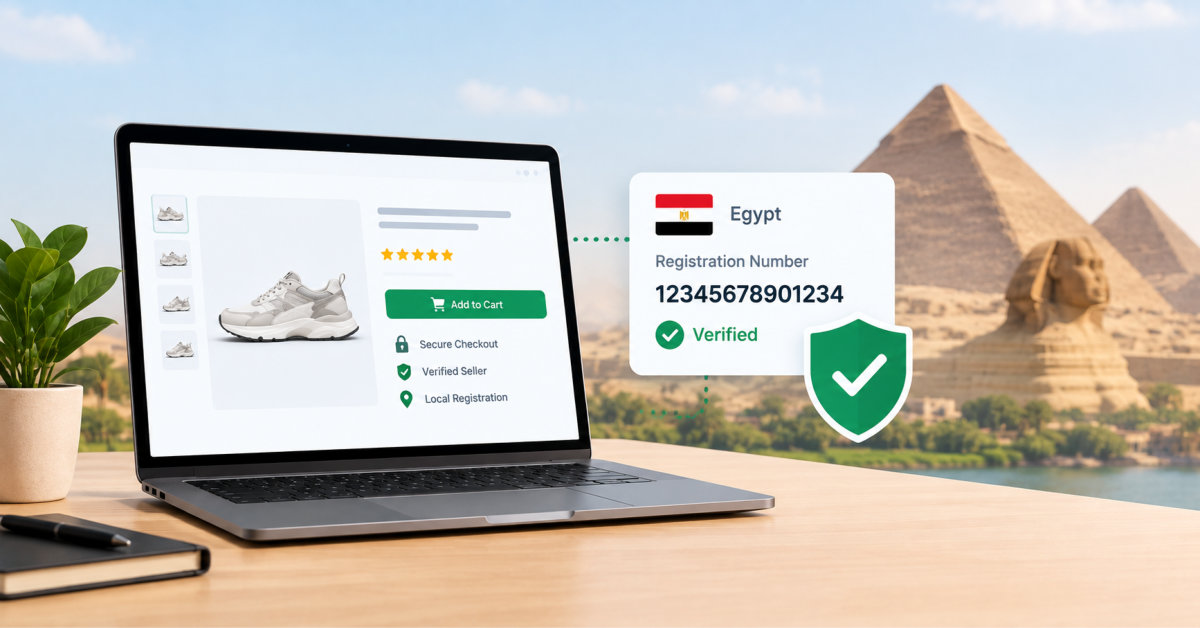
Egyptian businesses should treat phone verification as a compliant identity and communications workflow, not a shortcut through disposable numbers: use registered sender identities, obtain lawful consent, monitor delivery, and keep each customer’s verified contact data secure and auditable.
Verification is not a line-item technical feature. It is the moment when a customer decides whether your business feels trustworthy enough to continue.
Egypt’s digital economy is expanding fast. From fintech and e-commerce to SaaS and online services, businesses are onboarding more users than ever. Yet a common bottleneck remains: verification. When potential customers can’t verify their accounts quickly and reliably, conversion drops and support costs rise. The solution many successful companies use is persistent, reusable registration numbers—virtual phone numbers that maintain long-term validation capabilities and work across multiple services.
This article explains why reliable registration numbers matter in Egypt’s market and how Egyptian businesses can use them to strengthen user trust and operational performance.
Phone verification is a standard part of onboarding worldwide. However, in Egypt, traditional SMS verification often faces hurdles:
In markets with high mobile adoption like Egypt, these issues have measurable impacts on growth and retention.
Unlike temporary SMS numbers, persistent registration numbers are stable, reusable phone numbers designed to support:
They act as dedicated verification endpoints and communication channels, allowing businesses to maintain consistent contact points with users.
You can explore reliable options for these numbers at https://africavirtualnumbers.com/number-for-registration/.
Using virtual numbers with Egyptian country codes enhances both trust and delivery success. When users see a number with an Egyptian prefix, it:
Egypt-specific virtual numbers and their availability can be found at https://africavirtualnumbers.com/country/egypt/.
For businesses targeting Egyptian customers, this local presentation significantly improves engagement metrics.
Persistent, reliable numbers reduce failed verification attempts. This directly increases the number of users who complete account setup and start using services.
For example, an Egyptian fintech platform that transitioned from temporary SMS lines to persistent registration numbers saw measurable reduction in drop-off during signup, attributed to improved delivery and reduced friction.
Verification failures often convert into support cases. When numbers deliver consistently and accept re-verification, support teams spend less time on account recovery and more on value-added interactions.
Many platforms and marketplaces enforce strict verification rules. Temporary SMS numbers get blocked or rejected after initial use. Persistent numbers, on the other hand, maintain reputation and deliver consistently across sessions and services, reducing repetitive errors.
Verified accounts backed by persistent phone numbers reduce fraudulent signups. This is especially important in sectors like digital finance and online marketplaces, where trust is foundational.
Choose true registration numbers.Not all virtual numbers are equal. Prioritize those designed for repeated verification and long-term use.
Use local prefixes.Egyptian country codes signal legitimacy and improve delivery.
Monitor performance.Track delivery rates and user success to optimize your verification workflow.
Integrate with backend systems.Tie verification logs to analytics, CRM, and fraud detection tools for end-to-end visibility.
In Egypt’s competitive digital landscape, verification failure represents lost users and operational inefficiency. The right solution is reliable, persistent registration numbers that work repeatedly across platforms and are perceived as local by users. These numbers increase trust, improve conversion, reduce support costs, and strengthen fraud defenses.
An Egyptian business can use virtual phone numbers for customer verification only when the number type, provider arrangement, messaging flow, customer consent, and intended use comply with applicable telecom, privacy, and platform requirements. The safest use case is a documented business communication or verification workflow involving real customers or authorized employees. Before adopting a provider, confirm whether numbers are dedicated, how they are assigned, whether they support transactional SMS, how sender identity is registered, and whether the target service permits that verification method. Do not use virtual numbers to evade account-verification, anti-fraud, or identity requirements set by another platform.
Phone numbers can be personal data under Egyptian law when they relate to an identified or identifiable person, particularly when linked to an account, purchase history, device, address, or other customer information. Egypt’s Personal Data Protection Law No. 151 of 2020 regulates electronic collection, storage, processing, transfer, and other uses of personal data. Businesses should define why they collect a phone number, rely on an appropriate legal basis, provide clear privacy information, limit access, secure verification logs, and retain the data only as long as necessary for the stated purpose and applicable legal requirements.
You can reduce OTP verification failures for Egyptian customers by using a compliant messaging provider, registering your sender identity, validating phone-number formatting, writing recognizable messages, monitoring carrier-level delivery, and offering a secure recovery path for customers who cannot receive a code. Measure the complete funnel from code request to completed account action, not just the number of messages sent. Investigate high retry rates, delayed delivery, incorrect formatting, and support tickets by carrier or region. For higher-risk use cases, offer a risk-based fallback such as authenticated email, in-app verification, or support-led identity recovery rather than weakening account security.
A local Egyptian phone number does not guarantee better SMS delivery because delivery depends on carrier routing, sender registration, message compliance, provider quality, handset status, network conditions, and the customer’s control of the number. A local number may feel more familiar to a customer in certain contexts, but it should not be treated as a substitute for a compliant, tested messaging program. Businesses should test delivery time, completion rate, retries, and support contacts across real customer segments before making a broad claim about performance. Clear sender identification and trustworthy message content are often as important as the visible number.
SMS verification is not enough to prevent fraud in fintech or e-commerce because it proves only that someone can receive a code at a phone number at a particular moment. It does not independently establish that the user is legitimate, authorized, or low risk. Use phone verification alongside rate limits, device and velocity signals, email verification, payment-risk checks, suspicious-behavior detection, account-age rules, and step-up authentication for higher-risk actions. A layered approach protects legitimate customers from unnecessary friction while applying stronger controls where account takeover, payment fraud, or synthetic-account risk is elevated.




