

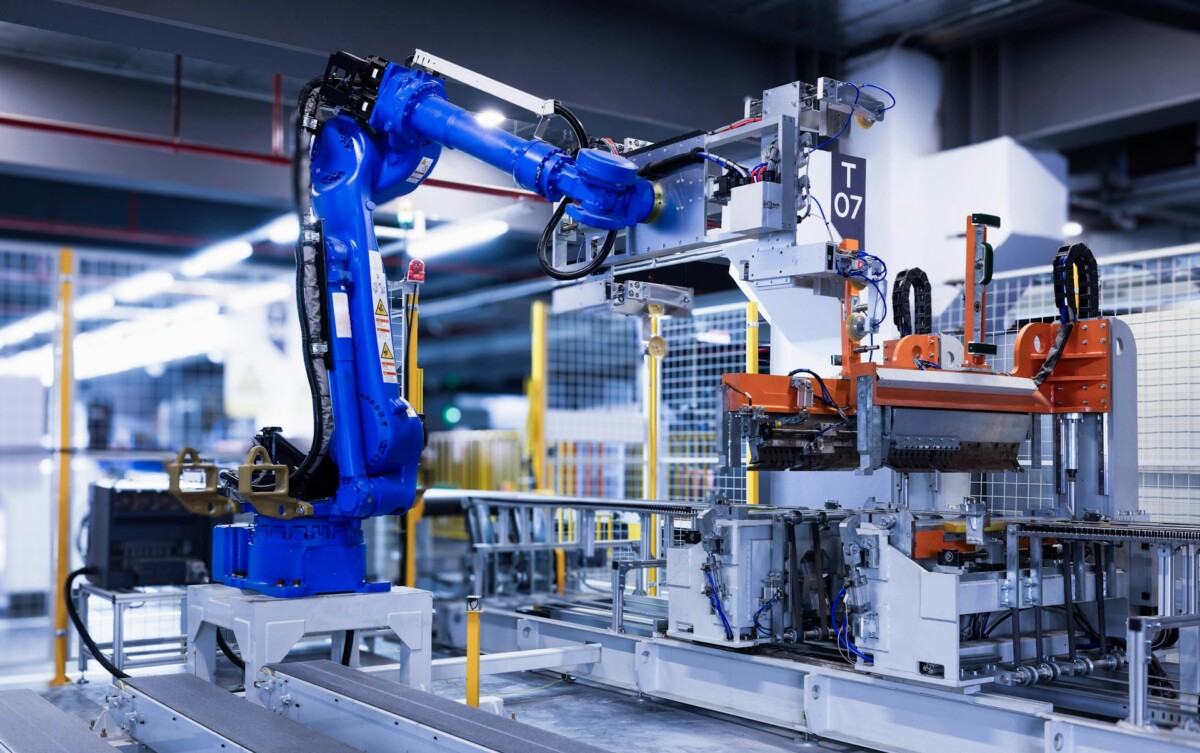
According to a Prologis survey, 89% of companies experienced energy-related disruptions to their operations in the past year – yet fewer than one in three currently have backup power systems in place. The robots are ready. The grid is not.
In the push to meet sub-24-hour delivery windows, the modern fulfillment center has transformed into a high-tech ecosystem. Automated Storage and Retrieval Systems (AS/RS), Autonomous Mobile Robots (AMRs), and high-speed conveyor networks have replaced manual picking. While this shift toward automation significantly increases throughput, it also introduces a new and invisible vulnerability: total dependence on the electrical grid.
When an operation is manual, a temporary power glitch is an inconvenience. When an operation is automated, a transient spike or a minor grounding fault can bring the entire facility to a grinding halt. As e-commerce operators scale their physical infrastructure, the reliability of the electrical backend is no longer just a facility concern; it is a mission-critical business priority.
In a high-volume fulfillment environment, downtime is calculated in seconds, not hours. If a sorting system loses power during a peak shift, the ripple effect is felt across the entire supply chain. Missed carrier pickups lead to SLA penalties, customer service backlogs, and, ultimately, lost lifetime value from frustrated shoppers.
However, the cost of an electrical failure is not just the lost time; it is the potential damage to the hardware itself. Modern warehouse robots and control systems rely on sensitive microprocessors and variable frequency drives (VFDs). These components are highly susceptible to power quality issues, including harmonics, voltage sags, and transient surges. Without robust protection, a single electrical event can damage the circuit boards of an entire fleet of robots, leading to weeks of lead time for specialized replacement parts.
The more complex a warehouse’s electrical system becomes, the higher the risk of a phase-to-ground fault. This occurs when an energized conductor touches a grounded surface, such as a motor housing or conveyor frame. In a poorly protected system, this can result in an uncontrolled surge of energy that causes equipment damage or creates safety risks for the human staff still working on the floor.
To mitigate this, engineers use resistive components to limit fault currents to manageable levels. By integrating Neutral Grounding Resistors (NGRs) into the facility’s power distribution system, operators can control the magnitude of a fault current instead of allowing it to ripple through the entire building. In high-resistance grounding configurations, an NGR can help the system remain operational during certain single-line-to-ground faults while alerting maintenance teams to investigate and isolate the issue.
Because these components must perform under demanding industrial conditions, material quality and system design matter. Specialized manufacturers such as MegaResistors produce NGRs and resistive components for heavy-duty environments where thermal capacity, enclosure durability, and resistance stability are critical. For automated warehouses, that reliability matters because one poorly controlled fault can interrupt conveyors, robotic fleets, and the systems that keep orders moving.
This controlled approach helps prevent a minor electrical issue from becoming a site-wide outage.
Reliability is not something you hope for during a crisis; it is something you prove during commissioning. As e-commerce giants and 3PLs build out massive new fulfillment centers, they often integrate on-site power generation, such as diesel backup generators or solar-plus-storage microgrids, to insulate themselves from utility instability.
However, a backup generator that has not been tested under full load is a liability, not a safety net. This is where resistive load banks become essential. Load banks simulate the actual electrical demand of the warehouse, allowing facility managers to verify that their backup systems, UPS units, and switchgear can handle a sudden transfer of power. By stress-testing the infrastructure before the first package ever moves down the line, operators ensure that their redundant systems will actually perform when the primary grid fails.
Automation relies heavily on rapid acceleration and deceleration. AMRs and high-speed sorters are constantly starting and stopping. This mechanical movement generates “regenerative” energy, which is electrical power that flows backward from the motors into the system. If this energy has nowhere to go, it creates an overvoltage condition that can trigger a system shutdown or damage the VFDs.
Dynamic braking resistors are the solution to this energy feedback problem. They act as a pressure relief valve, safely dissipating excess regenerative energy as heat. In an automated warehouse where hundreds of motors are stopping and starting every minute, these resistive components are essential for maintaining the smooth, continuous flow of electricity that keeps the robotic fleet in motion.
Power protection components are easy to overlook because they often sit quietly in the background until something goes wrong. That silence can create a false sense of security. In automated fulfillment centers, these devices still operate in demanding conditions, from frequent braking cycles to heat, dust, vibration, and occasional fault events. If a resistor bank, enclosure, or connection degrades over time, the failure may only become obvious during the exact moment the system needs protection most.
That is why inspection and monitoring should be built into the facility’s predictive maintenance plan. Teams should routinely check resistor banks, verify electrical connections, inspect enclosures for dust or heat damage, and track thermal performance during scheduled maintenance windows. For braking resistors, monitoring temperature and duty cycle patterns can reveal whether the system is being pushed beyond its intended limits. For NGRs, resistance checks and continuity monitoring help confirm that the grounding path remains reliable.
Modern monitoring systems can add another layer of protection by detecting changes in resistance, temperature, or continuity before they turn into failures. Instead of discovering a weakened component during an emergency shutdown, teams can fix it during planned maintenance. In a warehouse where every stalled conveyor creates a domino effect, that kind of early warning is not just technical housekeeping. It is uptime insurance.
In the e-commerce world, much of the innovation spotlight is focused on AI-driven inventory forecasting and last-mile drone delivery. While those technologies are impressive, they are entirely dependent on the physical stability of the warehouse.
Investing in high-quality power protection, from NGRs that prevent equipment damage to load banks that guarantee backup readiness, is a defensive play that pays dividends in long-term resilience. As fulfillment centers become more autonomous, the gap between “operational” and “offline” becomes thinner. The brands that win the logistics war will be the ones that prioritize the reliability of their electrical foundations as much as the speed of their software.
Automated fulfillment is a marvel of modern engineering, but it is also a fragile one. As you scale your operations and lean harder into robotic systems, remember that even the most advanced AMR is just a paperweight without stable, protected power. By addressing electrical vulnerabilities early through robust fault protection and rigorous testing, you ensure that your growth remains uninterrupted regardless of what is happening on the grid.
Electrical reliability matters because automated warehouses depend on powered systems for nearly every core function, including conveyors, robots, sensors, controls, and backup systems. When power quality slips, even briefly, the impact can spread across the facility, causing downtime, damaged equipment, missed shipments, and SLA failures. In a manual warehouse, a glitch is annoying. In an automated warehouse, it can stop the whole operation.
A Neutral Grounding Resistor helps control fault current during a ground fault event. Instead of allowing a large surge of current to travel through the electrical system, it limits the fault to a manageable level. That reduces equipment damage, improves safety, and helps the facility stay operational while maintenance teams isolate the issue. In automated environments, that protection is especially valuable because a single fault can affect robots, conveyors, and control systems at the same time.
Load banks let operators test backup power systems under realistic conditions before they are needed in an emergency. They simulate the warehouse’s real electrical load so facility teams can confirm that generators, UPS units, and switchgear will perform properly during a power interruption. Without that testing, backup systems may look ready on paper but fail when the building actually needs them. That makes load banks a critical part of commissioning and ongoing resilience planning.
Braking resistors dissipate regenerative energy that is created when motors slow down. In automated warehouses, AMRs, sorters, and conveyors constantly accelerate and decelerate, which creates excess energy that has to go somewhere. If it is not managed properly, it can trigger overvoltage conditions or shutdowns. Braking resistors protect the drivetrain and keep the system stable during repetitive motion cycles.
Electrical protection components should be inspected on a regular maintenance schedule, with closer attention in high-usage environments or facilities that run near capacity. Teams should check thermal performance, resistance values, enclosure condition, and connections during scheduled downtime. The goal is to catch degradation before it becomes a failure. In an automated warehouse, proactive inspection is far cheaper than recovering from an unplanned outage.





