


If you’re involved in email marketing, chances are you’re not particularly fond of delving into data and crunching numbers. That’s where email marketing scores come into play—a convenient metric that provides a quick snapshot of your campaign performance. Below, you’ll find a list of scores worth considering.
Table of Contents
1: Email Deliverability Score
2: Email Engagement Score
3: Email Content Score
4: Sender Reputation Score
5: Email Spam Score
6: Email Lead Scoring
7: Email List Quality Score
8: NEW: Ecommerce Email Score
Email scoring generally refers to methods used to evaluate various aspects of email campaigns or the characteristics of email recipients.
Luckily scoring applications do the hard work of data analysis to generate a score metric. All you need to do is understand what the different scores actually mean.
That’s why I’ve put together this complete guide to email marketing scores. Which includes:
Treat this post as your one-stop shop to tackle email marketing scores like a pro by knowing every and any email marketing metric you’ll ever need.
Get your FREE Ecommerce Email Score!
Unlock the hidden revenue potential of your email marketing:
Request to join the Beta Program.

An email deliverability score is a metric used to assess the likelihood of an email reaching the recipient’s inbox as opposed to being marked as spam or bouncing back. It evaluates the effectiveness of your email campaigns in terms of successfully delivering emails to your target audience. This score is influenced by a variety of factors:
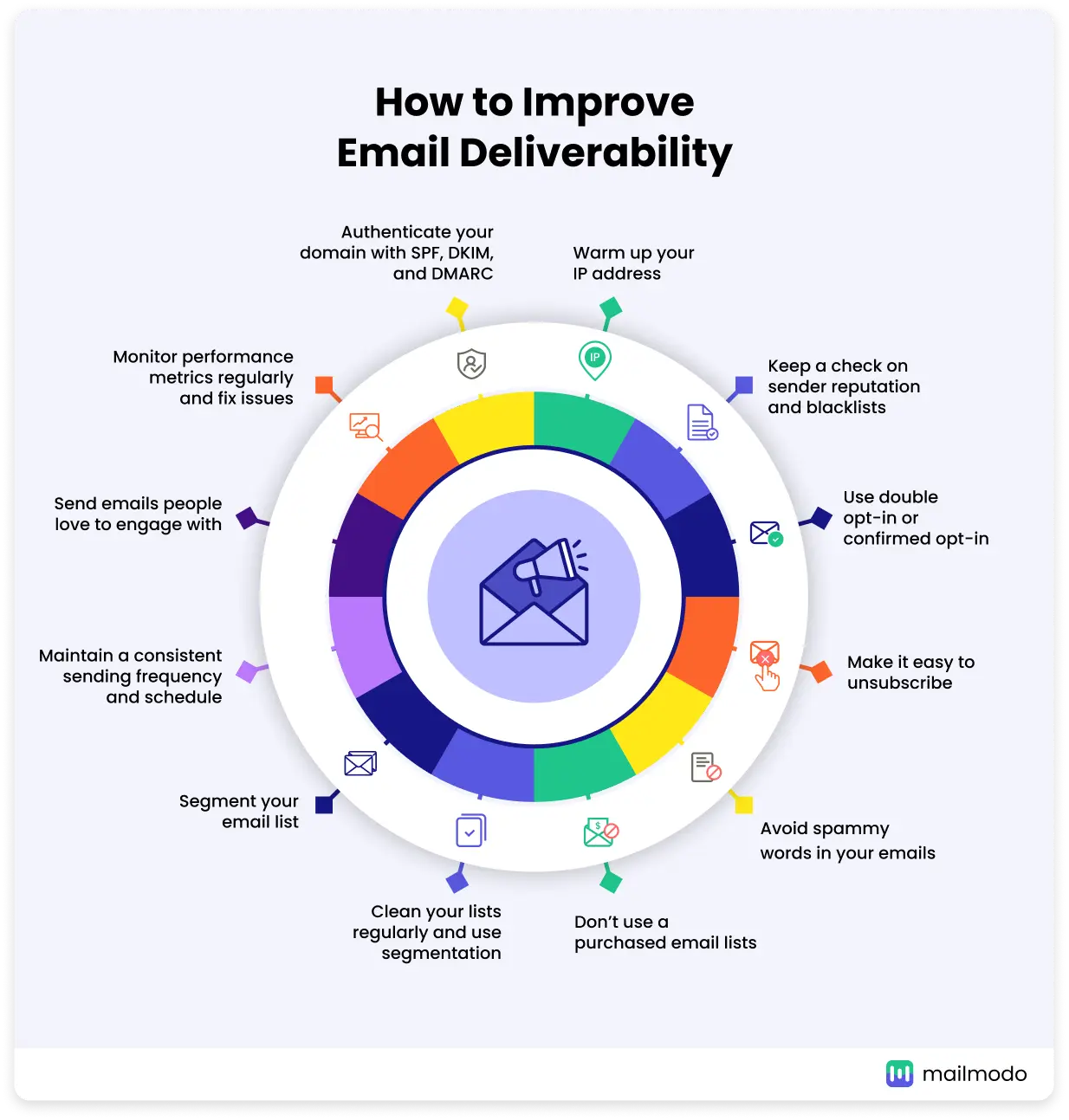
Image source: Mailmodo
Maintaining a high deliverability score is crucial for the long-term success of your email marketing campaigns.
The email deliverability score is crucial for any email marketing campaign because it directly influences whether your emails reach the inbox of your recipients or get filtered into the spam folder. Here’s why it’s so important:
Overall, managing and optimizing your email deliverability score is fundamental to the success of your email marketing strategy (see Salesforce email deliverability guide).
It requires ongoing attention to elements like list hygiene, content quality, and adhering to best email practices to avoid spam filters. This score is not just a number—it’s a reflection of the health and effectiveness of your email marketing operations.
A good email deliverability rate is typically considered to be around 95% or higher. This means that 95% of your emails successfully reach the recipients’ inboxes without being flagged as spam or bouncing back. Here’s a breakdown of why this rate is considered good:
Remember, even though 95% is ideal, the actual “good” rate can vary based on industry standards, the nature of your email campaigns, and the sensitivity of your audience to email communications.
Here are some key strategies to enhance email deliverability:
Implementing these practices will not only improve your email deliverability score but also enhance the overall effectiveness of your email marketing campaigns.
For a deeper understanding of email deliverability scores and how to optimize them for eCommerce sites, here are some articles that provide comprehensive insights:
Each of these articles provides valuable tips and strategies to ensure your eCommerce email marketing efforts are not only compliant with regulations but also effectively optimized for maximum deliverability and engagement.
An email engagement score is a metric used to measure how recipients interact with your email campaigns. It is a critical indicator of the effectiveness of your email marketing efforts, reflecting how engaging and relevant your content is to your audience. Here are the key components that typically contribute to an email engagement score:

Image source: Email On Acid
Focusing on these areas can help ensure your emails capture and hold your audience’s interest, driving better overall engagement.
The email engagement score is highly important in email marketing for several reasons:
Overall, maintaining a high email engagement score is vital for the success of your email marketing strategy. It not only helps in securing better deliverability but also in building and nurturing relationships with your audience, ultimately impacting your business’s bottom line positively.
A “good” email engagement score can vary significantly depending on the industry, audience, and type of content, but there are some general benchmarks you can use to gauge the performance of your email campaigns:
Improving these metrics often involves refining your email content to be more targeted and engaging, segmenting your audience to ensure content relevance, and optimizing your email sending times for when your audience is most likely to engage. Remember, the definition of “good” can vary, so it’s important to benchmark against your own past performance and industry averages to set realistic goals.
Improving your email engagement score involves a combination of strategies aimed at enhancing the relevance, timing, and quality of your emails. Here are some actionable steps:
By implementing these strategies, you can enhance the effectiveness of your email campaigns and boost your email engagement score. Each step helps ensure that your emails not only reach your audience but also resonate with them, encouraging more meaningful interactions.
Each of these articles provides valuable information on measuring and improving email engagement, which is critical for successful email marketing campaigns.
An email content score is a metric used to assess the quality and effectiveness of the content within an email. This score helps marketers and businesses evaluate how well their email content is likely to perform in terms of engaging recipients and prompting them to take action. Here are some factors that typically influence an email content score:

Image source: Mailmunch
Optimizing email content based on these scores can significantly improve the effectiveness of email marketing campaigns.
The email content score is extremely important in email marketing for several key reasons:
Overall, a good email content score helps ensure that your emails are effective at engaging recipients, which is essential for achieving the goals of any email marketing strategy, whether they be nurturing leads, driving sales, or building brand awareness.
The concept of an “email content score” typically refers to a qualitative assessment of email content effectiveness based on various criteria. However, the definition of what constitutes a “good” score can vary depending on the specific scoring system or tool being used. In general, a good email content score would be one that indicates the email is likely to engage recipients and achieve the desired outcomes, such as opens, clicks, and conversions.
A few factors that might influence a good score include:
Tools like Mailchimp or HubSpot often provide analytics and feedback that can indirectly inform you about the effectiveness of your content, which can be interpreted as a content score. For a more direct assessment, content optimization tools such as CoSchedule’s Email Subject Line Tester or tools that analyze readability and engagement can provide scores based on specific criteria.
Ultimately, the specific number that defines a good email content score will depend on the metrics and thresholds established by the scoring tool you are using. Consistently reviewing these scores and adapting your email content based on the insights provided can help improve your email marketing effectiveness.
Improving your email content score involves enhancing various aspects of your email to make it more engaging, relevant, and effective. Here are several strategies to help you boost the effectiveness of your email content:
By implementing these strategies, you can create more effective and engaging email content, thereby improving your overall content score and the success of your email marketing campaigns.
These articles provide valuable insights and practical tools that can help you improve the quality and effectiveness of your email content, thereby boosting your email engagement scores.
The Email Sender Reputation Score is a critical metric used by Internet Service Providers (ISPs) and email services to determine the trustworthiness of an email sender. This score influences whether your emails will end up in recipients’ inboxes or spam folders.
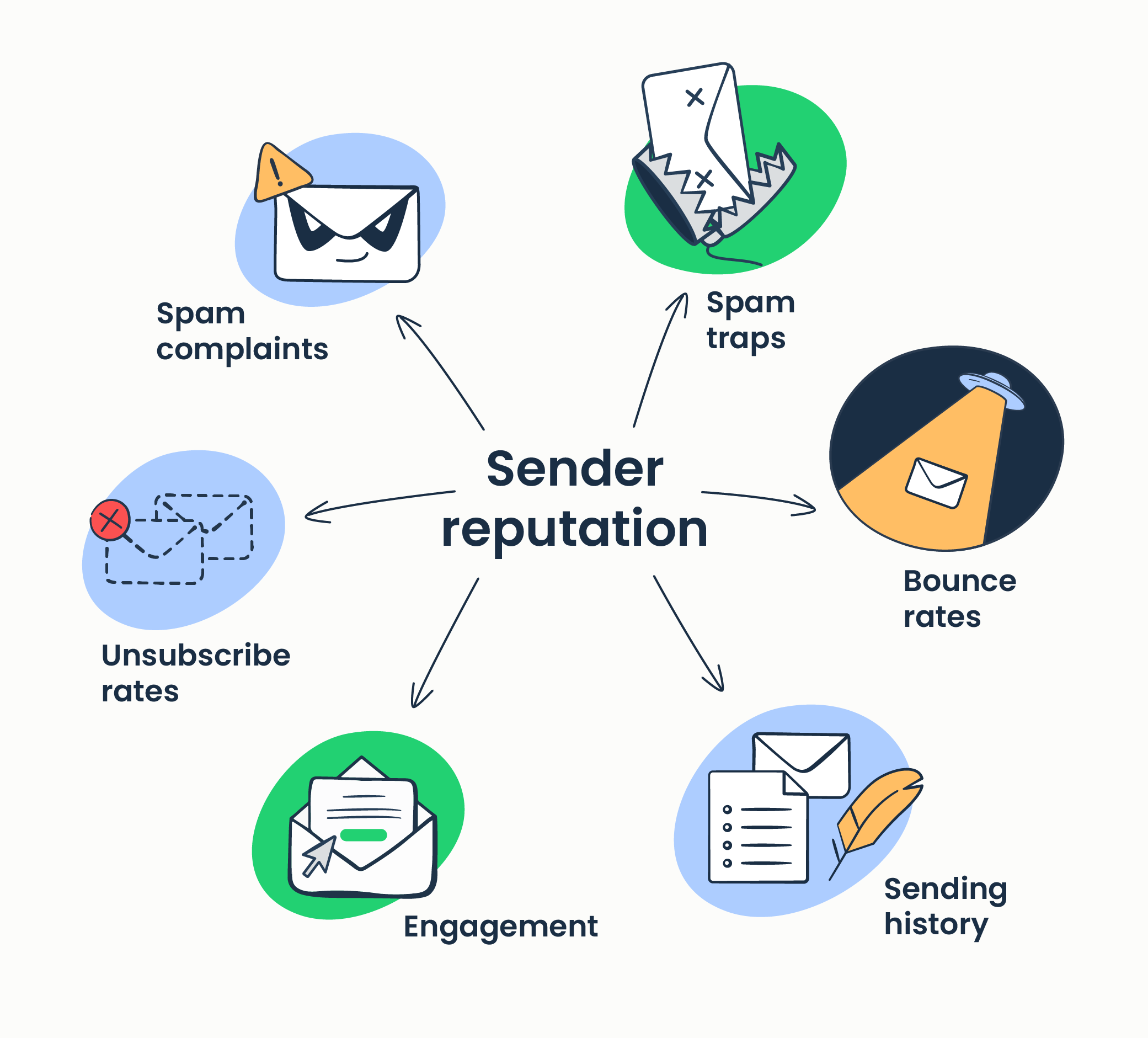
Image source: Mailtrap
The email sender reputation score is extremely important in the realm of email marketing because it directly impacts the deliverability of your emails. Here’s why it matters:
A good email sender reputation score generally indicates that your emails are likely to be delivered to your recipients’ inboxes rather than being filtered into spam folders. Here’s what typically constitutes a good score:
Improving or maintaining a good email sender reputation involves practicing consistent email hygiene, monitoring your email analytics closely, and adhering to best practices for email engagement and compliance. This ensures that your communications are both effective and well-received by your audience.
Here are specific articles that provide insights into understanding and improving your Email Sender Reputation Score:
These articles will help you understand the concept of email sender reputation scores, why they matter, and how you can work on improving your own to ensure your emails consistently reach your audience.
An email spam score is a metric used to evaluate whether an email is likely to be perceived as spam by email servers and filtering systems. This score is determined by analyzing various elements of an email, such as its content, formatting, the reputation of the sender, and the presence of specific triggers known to be associated with spam:

Image source: Moz
Tools like SpamAssassin provide a score that predicts the likelihood of an email being considered spam by email filters. Lower scores mean lower chances of being marked as spam.
The email spam score is a critical metric in email marketing, influencing whether your emails reach the inbox or end up in the spam folder. Here’s why it’s important:
Improving your email spam score involves adhering to best practices like using a double opt-in process, maintaining a clean email list, avoiding spam-trigger words in your content, and ensuring your emails are balanced with text and images. Regularly testing your emails before sending them out can also help manage your spam score effectively, ensuring better deliverability and engagement.
A good spam score is one that is low enough to ensure that your emails are not flagged as spam and make it to the recipient’s inbox. While the specific threshold can vary depending on the spam filtering system, generally:
Improving your email spam score is essential for ensuring that your messages reach the inbox and not the spam folder. Here are some effective strategies to help reduce your email spam score:
By following these strategies, you can significantly improve your email spam score, enhancing both the deliverability and effectiveness of your email marketing campaigns.
The terms “email deliverability score” and “spam score” refer to different aspects of email marketing performance, each addressing a specific area of email management and optimization. Understanding the distinction between these two scores is key for effectively managing email campaigns:
Key Differences:
Both scores are crucial, and optimizing them involves different strategies. For deliverability, maintaining a good sender reputation and adhering to best email practices are key, whereas for spam score, focusing on content quality and avoiding spam triggers are essential. Balancing these aspects helps ensure that your emails reach your audience effectively and engage them without interruptions.
Here are specific articles that provide insights into understanding and improving your Email Sender Reputation Score:
These articles will help you understand the concept of email sender reputation scores, why they matter, and how you can work on improving your own to ensure your emails consistently reach your audience.
Ecommerce email lead scoring is a specialized application of lead scoring tailored for e-commerce businesses. It involves assigning scores to leads (potential customers) based on their interactions with email marketing campaigns, and their overall behavior on the ecommerce website. This scoring helps prioritize leads based on their likelihood of converting into paying customers.
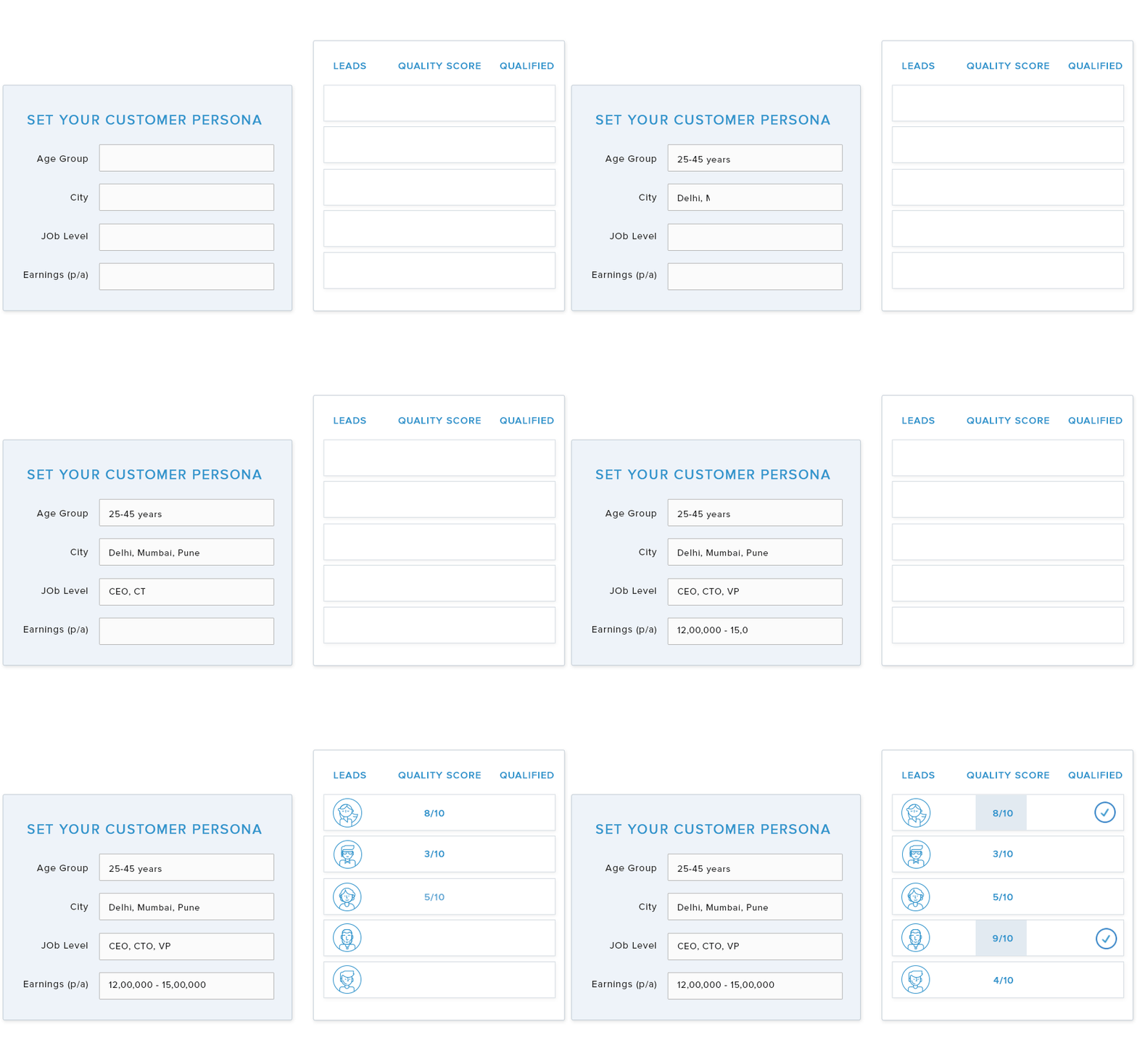
Image source: Leadsquared
This process leverages both the direct engagement metrics from email marketing and the broader interaction data from website behaviors, creating a comprehensive view of each lead’s potential value.
The importance of e-commerce email lead scoring cannot be overstated, especially in an environment where personalization and targeted marketing are key to converting browsers into buyers. Here are several reasons why e-commerce email lead scoring is crucial:
In essence, e-commerce email lead scoring is a powerful tool that enables businesses to make data-driven decisions, enhancing both the efficiency and effectiveness of marketing campaigns. This strategic approach is vital in today’s competitive online marketplace, where capturing and maintaining consumer attention is key to business success.
Determining what constitutes a “good” e-commerce email lead score depends on several factors, including the specifics of your scoring system, your industry benchmarks, and the particular goals of your marketing and sales efforts. However, the general aim is to categorize leads in a way that accurately reflects their likelihood to convert, allowing your team to prioritize and tailor interactions effectively.
To define what a good lead score is, you first need a lead scoring model. This model will typically involve:
In a typical scoring system:
A “good” e-commerce email lead score should ideally reflect a lead’s readiness to make a purchase or take a significant action towards purchasing. By continually refining your lead scoring model and understanding the behaviors that correlate with sales, you can more effectively identify and nurture potential customers.
Improving your e-commerce email lead score involves refining the ways you engage with, segment, and nurture potential customers through your email campaigns. Here’s how you can enhance your lead scoring to better identify and convert prospects:
By implementing these strategies, you can enhance your e-commerce email lead scoring system, making it a more effective tool for prioritizing and converting leads into customers
Here are specific articles that provide insights into e-commerce email lead scoring and how to implement it effectively:
These resources will provide you with a comprehensive understanding of how to develop and utilize a lead scoring system tailored for the e-commerce sector, enhancing both your marketing strategies and customer interaction efforts.
An Email List Quality Score is a metric used to evaluate the health and effectiveness of an email list. This score assesses various attributes of the list, such as the accuracy of email addresses, the engagement level of subscribers, and the overall likelihood of emails reaching the inbox. The purpose of this score is to help marketers and organizations identify potential issues with their email list and optimize their email marketing strategies for better performance.

Image source: GetResponse
The quality score of an e-commerce email list is crucial for several key reasons that directly
Maintaining a high email list quality score is not just about improving immediate marketing outcomes; it’s also about sustaining long-term relationships with customers, ensuring compliance with laws, and protecting your brand’s reputation. Effective management and regular maintenance of your email list are therefore critical.
A “good” ecommerce email list quality score generally indicates that the list is healthy, active, and likely to produce strong engagement and conversion rates. However, unlike metrics like deliverability or open rates, there isn’t a universally standard numerical score for email list quality across different platforms or tools. Instead, the quality of an email list can be assessed based on several key indicators:
Improving your ecommerce email list quality score involves regular maintenance and strategic management, including cleaning the list of inactive or unresponsive subscribers, ensuring all new subscribers are properly opted in, and continually optimizing email content based on subscriber behavior and feedback.
Improving your e-commerce email list quality score is crucial for maximizing the effectiveness of your email marketing campaigns. Here are some targeted strategies to enhance the health and responsiveness of your email list:
By implementing these strategies, you can improve the quality of your e-commerce email list, ensuring higher engagement rates, better deliverability, and ultimately, more effective email marketing campaigns.
Here are specific articles that delve into aspects of maintaining and assessing the quality of an email list, which is crucial for effective email marketing:
These resources offer valuable insights into how you can improve and sustain the quality of your email list, which in turn can enhance your overall email marketing strategy by increasing deliverability and engagement.
An “Ecommerce Email Score” is a metric used to evaluate the effectiveness of email marketing campaigns specifically in the e-commerce sector. This score helps businesses assess how well their email strategies are working in terms of driving sales, engaging customers, and building loyalty.
The score is typically calculated based on a variety of factors, each of which reflects different aspects of email campaign performance.

Image source: Obviyo
– Emphasizing the importance of utilizing ecommerce metrics to shape email marketing – strategies.
– Enabling email marketers to measure and influence ecommerce outcomes throughout the entire customer lifecycle.
– Embodying the essence of the product-led growth method adopted by leading online brands.
Revenue per Contact: This metric assesses whether email contacts are finding and purchasing products of interest. A higher revenue per contact significantly boosts the Ecommerce Email Score.
Sessions per Contact: This represents the average number of visits an email shopper makes to an online store following a single email click-through. More sessions per email suggest greater relevance of the email campaign to the targeted list, positively impacting the overall score.
Landing Page – Views per Session: This measures the average number of pages viewed after arriving at an email landing page. It serves as an indirect indicator of the landing page’s appeal and relevance to the audience.
Landing Page – Revenue per View: A crucial metric for e-commerce, this reflects the average revenue generated per page view originating from an email landing page. High revenue per view directly measures the
Product View Share: This metric evaluates the relevance of products featured in the email campaign. A higher score is preferable, indicating well-chosen, relevant product selections.
Revenue per Session: This measures the revenue rate per email shopper session. Higher rates indicate that the email campaigns are effectively capitalizing on the email list’s revenue potential.
Average Order Value: This calculates the average order value generated by email shoppers, directly reflecting the financial effectiveness of an email campaign.
The Ecommerce Email Score is extremely important in assessing the effectiveness of email marketing strategies within an e-commerce context. Here are the key reasons why this metric is crucial:
Overall, the Ecommerce Email Score is a vital metric that helps businesses evaluate the
A “good” ecommerce email score varies based on several factors including industry standards, the specific metrics used to calculate the score, and the goals of your email campaigns. However, there are general benchmarks you can consider to gauge the effectiveness of your ecommerce email strategies:
A good ecommerce email score is one that combines these metrics to reflect high engagement, strong conversion rates, and overall effective email marketing practices. Regularly monitoring these benchmarks and adjusting your strategies based on the results can help maintain or improve your email score, thereby maximizing the success of your ecommerce campaigns.
Improving your e-commerce email score involves optimizing various aspects of your email marketing strategy to enhance deliverability, engagement, and conversions. Here are some effective strategies to help you boost your e-commerce email score:
By implementing these strategies, you can improve your e-commerce email score, which in turn will help enhance the overall effectiveness of your email marketing efforts, driving more sales and strengthening customer relationships.
Here are specific articles related to ecommerce email marketing strategies and scoring, which provide insights into improving your ecommerce email score and overall email marketing effectiveness:
These articles provide valuable insights into effective email marketing strategies tailored specifically for ecommerce, helping you improve not only your email score but also the overall performance of your marketing efforts.
Get your FREE Ecommerce Email Score!
Unlock the hidden revenue potential of your email marketing:
Request to join the Beta Program.
Ecommerce email marketing scores are essential tools for assessing the effectiveness of your email campaigns. They provide crucial insights into various metrics such as deliverability, open rates, click-through rates, and conversion rates, which collectively reflect the health and
By continually monitoring and improving these scores, businesses can enhance the precision and effectiveness of their marketing efforts, leading to higher engagement, increased conversions, and ultimately, boosted revenue.
Emphasizing the need and value of these scores helps businesses recognize the direct correlation between optimized email marketing practices and successful e-commerce outcomes.
In a competitive digital marketplace, understanding and improving your email marketing scores is not just beneficial—it’s imperative for staying ahead and achieving sustained growth.
The post Email Marketing Scores appeared first on Obviyo.





