Most Etsy sellers don’t fail because they lack effort. They plateau because they lack a system. The difference between a store stuck at $2,000 per month and one growing past $10,000 is almost always structural, not motivational.
Most Etsy sellers don’t fail because they lack effort, they plateau because they lack a scalable system. Sustainable success on Etsy comes from structure, not luck. It requires a repeatable framework that connects product research, listing optimization, marketing, advertising, and performance analysis into one scalable growth engine. In this guide, we’ll break down that system step by step.
After working with hundreds of Etsy sellers, I’ve noticed a consistent pattern: most stores don’t fail, they stall. They reach a revenue level, often between $1,000 and $5,000 per month, and then growth slows.
The problem isn’t effort. It’s the lack of a systematic approach.
Many stores rely on trending products, lucky keyword rankings, ad spikes, or seasonal demand. Without a structured framework, growth becomes unstable and drops when conditions change.
Products are launched without validated demand. Listings are rarely optimized again. Ads run without clear profit targets. Key metrics like conversion rate and ROAS are not consistently tracked.
Etsy’s marketplace has become significantly more competitive. What worked three years ago, basic SEO and decent photos, is no longer enough.
Today, scaling requires understanding four core drivers:
Without aligning these elements into a cohesive system, most stores hit a ceiling. They become operationally busy but strategically stagnant.
Most Etsy sellers start with what they like. Scalable sellers start with what the market wants.
Product research is not about inspiration, it’s about validation. Before investing time in design, sourcing, or branding, you need structured confirmation that demand, margins, and positioning make sense.
Product discovery is the process of identifying opportunities worth validating.
This stage is not about choosing a final product. It’s about generating qualified ideas.
Effective discovery sources include:
The goal is to create a shortlist of potential product angles that show early signs of demand and repeat sales behavior.
Avoid products that rely purely on trends unless you can execute quickly. Sustainable growth is built on repeatable demand, not viral spikes.
Once you’ve shortlisted ideas, the next step is structured validation.
Every Etsy product lives and dies by search intent.
Identify three core keywords that clearly describe:
These keywords will later shape your listing structure, SEO positioning, and ad targeting. If you cannot clearly define search intent, the product is not yet validated.
Once your core keywords are defined, the next step is objective demand validation. This is where data replaces assumptions.
There are two practical validation methods:
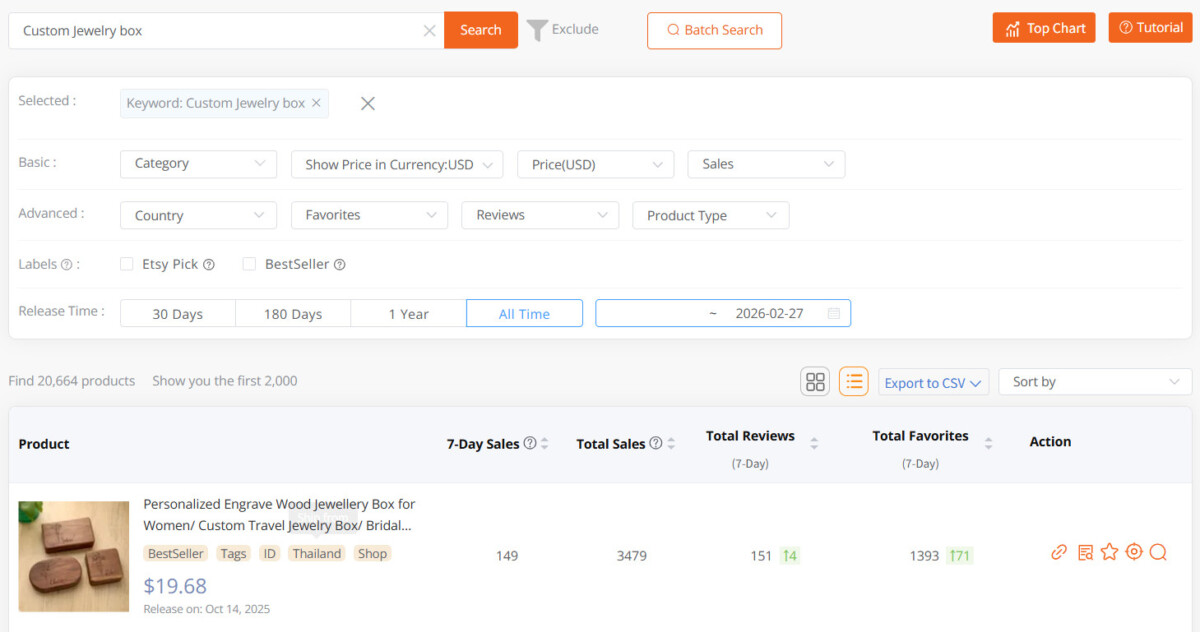
Search your core keyword in EHunt Product Database. If the combined monthly sales of top-performing listings exceed 1,000 units, this indicates proven and active market demand.
The key insight here is aggregation. A single strong seller may reflect brand advantage. But multiple listings generating meaningful volume signals broader demand within the niche.
Use a keyword analytics tool to analyze your core search term. If the keyword shows more than 1,000 monthly favorites, it suggests consistent buyer interest and purchase intent.
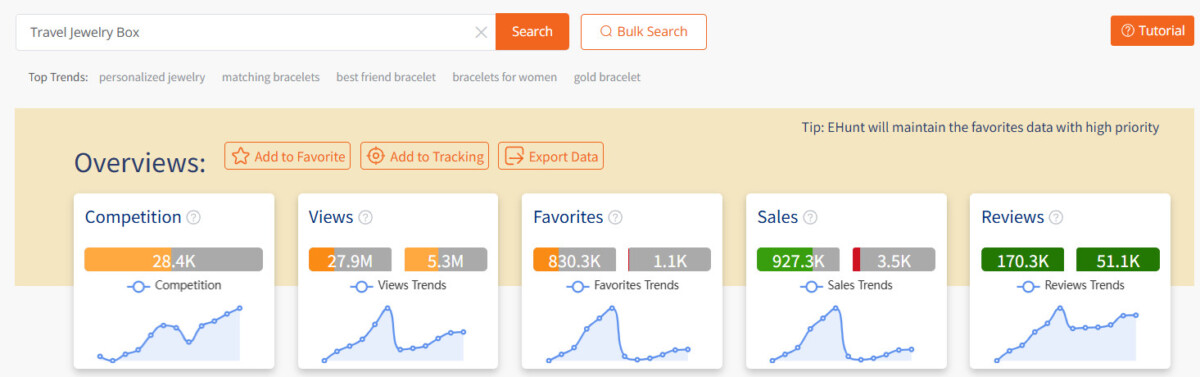
Favorites are especially valuable because they indicate consideration behavior — users are not just browsing, they are bookmarking products for potential purchase.
When both product-level sales data and keyword-level engagement metrics confirm demand, the opportunity shifts from speculative to validated.
There are two straightforward indicators to assess competition:
Search your core keyword directly on Etsy and observe the total number of results displayed.
A very high result count signals heavy saturation, meaning your listing will compete against thousands of similar products. Lower result volume suggests a narrower field and potentially better visibility for new entrants.
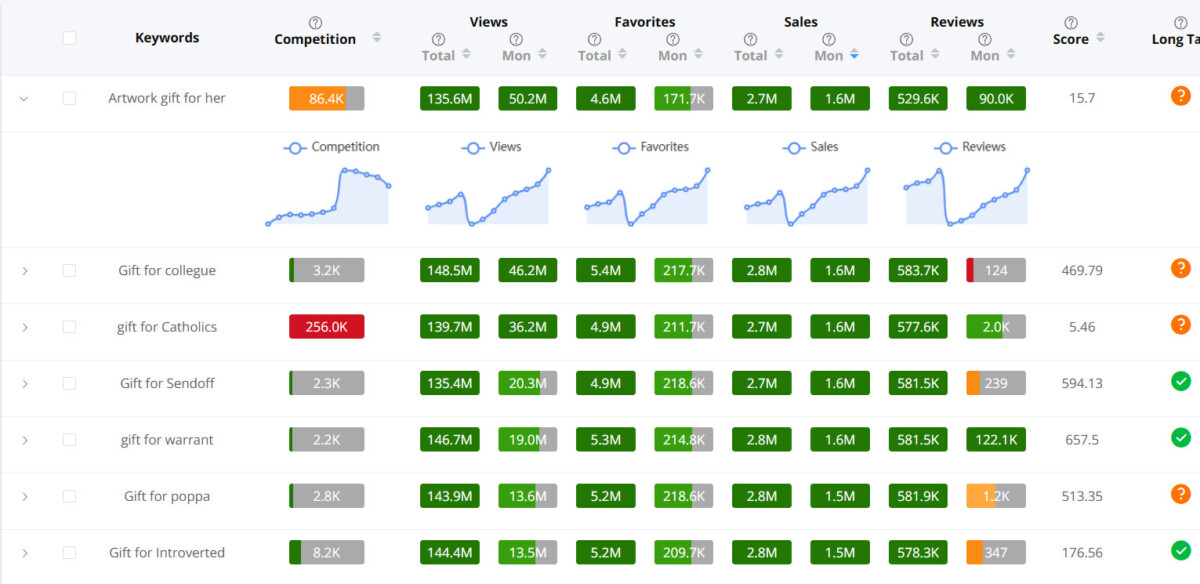
Next, analyze the keyword using a research tool such as EHunt.
If the keyword is marked green in the competition indicator, it typically signals lower competitive pressure. That means fewer optimized listings are aggressively targeting the term, creating room for new sellers to rank and gain traction.
Before committing to development, conduct a quick supplier check on major sourcing platforms. Review the unit price range, minimum order quantity, and basic customization requirements to estimate upfront procurement cost and production difficulty. If costs are already high or development complexity is significant, the product may not be suitable for scalable testing at this stage.
Before moving forward, understand the product beyond surface demand.
These are the things you need to know thoroughly before listing your products:
Reading reviews is especially valuable. Customers reveal what they love, what they complain about, and what competitors fail to deliver.
This knowledge becomes your differentiation advantage.
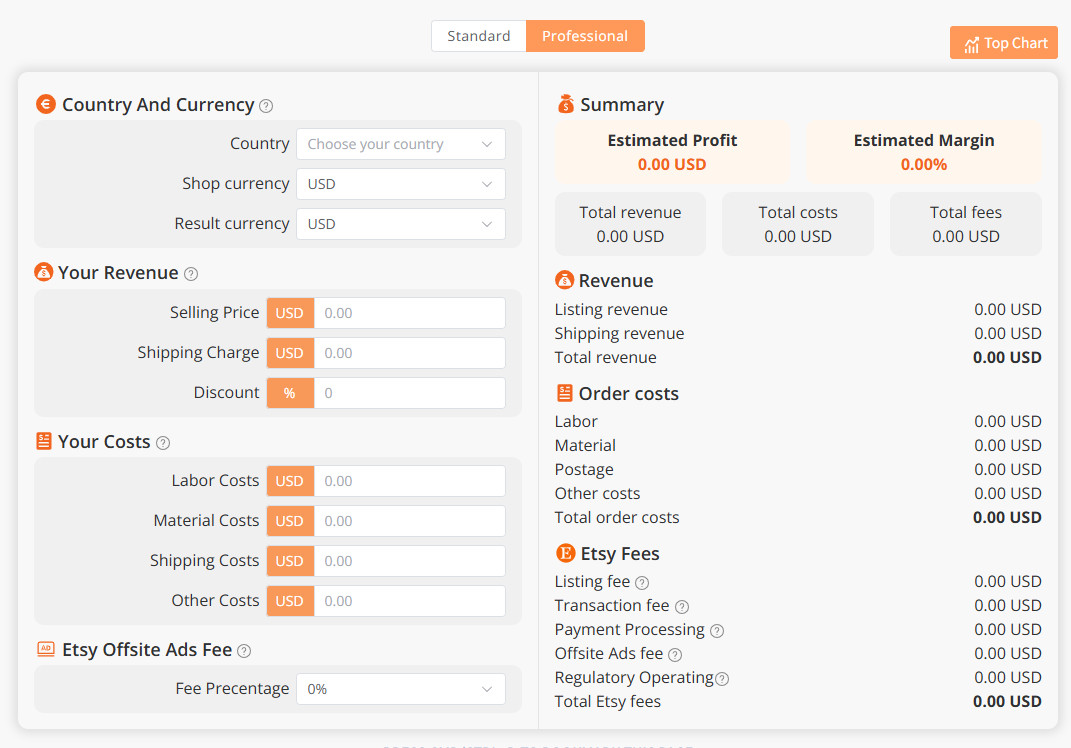
Revenue is vanity. Profit is survival.
Calculate:
A practical way to streamline this process is by using EHunt profit calculator, which allows you to simulate fees, pricing, and ad costs to estimate net profit in advance.
If margins cannot support paid traffic and operational scaling, the product is not viable for long-term growth, regardless of demand strength.
A validated product still fails without reliable supply.
Evaluate suppliers based on:
Test samples whenever possible. Poor quality control destroys long-term growth, especially on Etsy where reviews heavily influence ranking. Scalable Etsy sellers treat supplier relationships as strategic assets, not transactional vendors.
A successful Etsy business starts with validation, not guesswork. When demand is confirmed, competition is understood, margins are calculated, and supply is feasible, risk is significantly reduced. With this foundation in place, the next stages become far more predictable and effective.
Listing optimization turns visibility into clicks. Even with validated demand, products won’t convert if they aren’t structured to rank. Etsy matches queries to listing fields, so every element must enhance relevance and appeal.
Your item title is the most important ranking signal for Etsy search. Place the most relevant keywords at the beginning, describing exactly what the item is, its core attributes, and primary use. Keep it natural, concise, and free of keyword stuffing, as Etsy uses the title for matching queries and generating the listing URL.
Your description should communicate warmth and authenticity. It’s your opportunity to show care, craftsmanship, and a genuine commitment to your customers.
Ecommerce is visual. Buyers can’t touch the product, so images drive both CTR and conversion. Make visuals a core competitive advantage.
Clear, eye-catching, better than competitors. Use expressive models or pets, strong contrast colors, and a 4:3 ratio for search display.
9:16 ratio, logical sequence, and 1–2 text overlays highlighting key features, size, or attributes.
Etsy’s 15-second listing video is a key conversion driver.
Compared to images, videos feel more authentic and realistic, helping buyers better understand the product.
Use dynamic shots and real-life scenes to demonstrate usage, scale, and details.
Keep it concise, highlight core features, and ensure the product is clearly visible throughout.
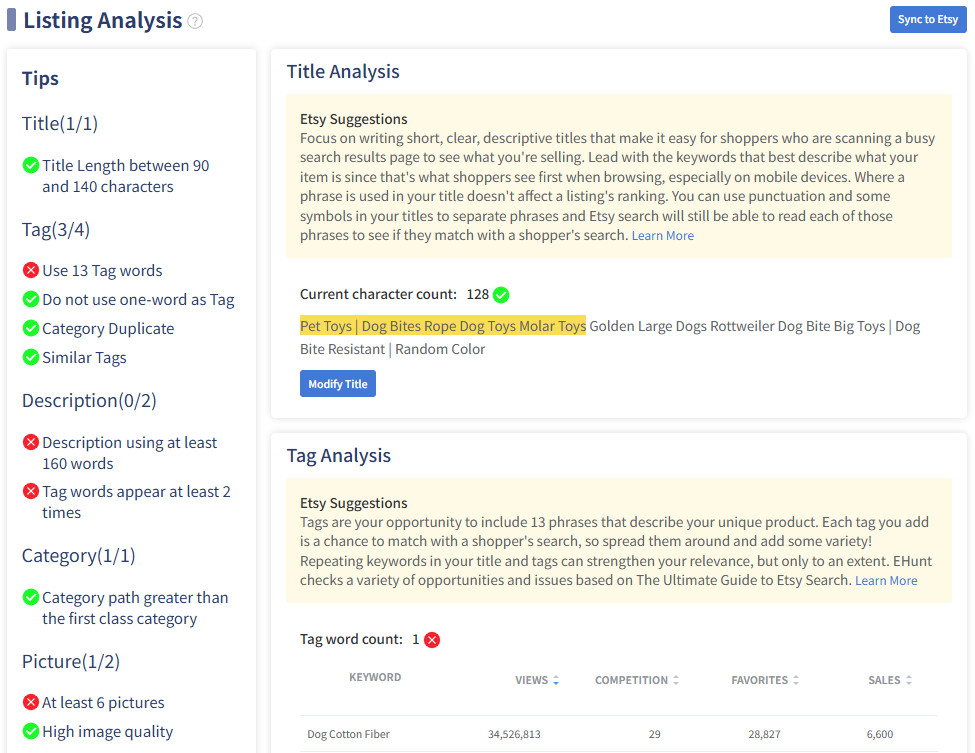
An even simpler method is using the EHunt Listing Optimization Tool. After connecting your shop, it analyzes your listings, highlights improvement areas, and lets you update and sync changes to Etsy in one click.
Etsy ads include Onsite Ads and Offsite Ads. Since Etsy traffic is largely passive, ads should amplify optimized listings, not fix weak ones. Always optimize products and listings first, then use ads to scale.
Low spend usually means low visibility. New products have lower ranking weight, leading to fewer impressions and clicks. New shops with limited reviews often see lower CTR. Because Etsy charges per click, weak engagement results in under-delivery. Consistent sales improve listing weight, which gradually improves ad performance.
Keep ad spend around 10% of total revenue. Exceeding this requires strict profit tracking.
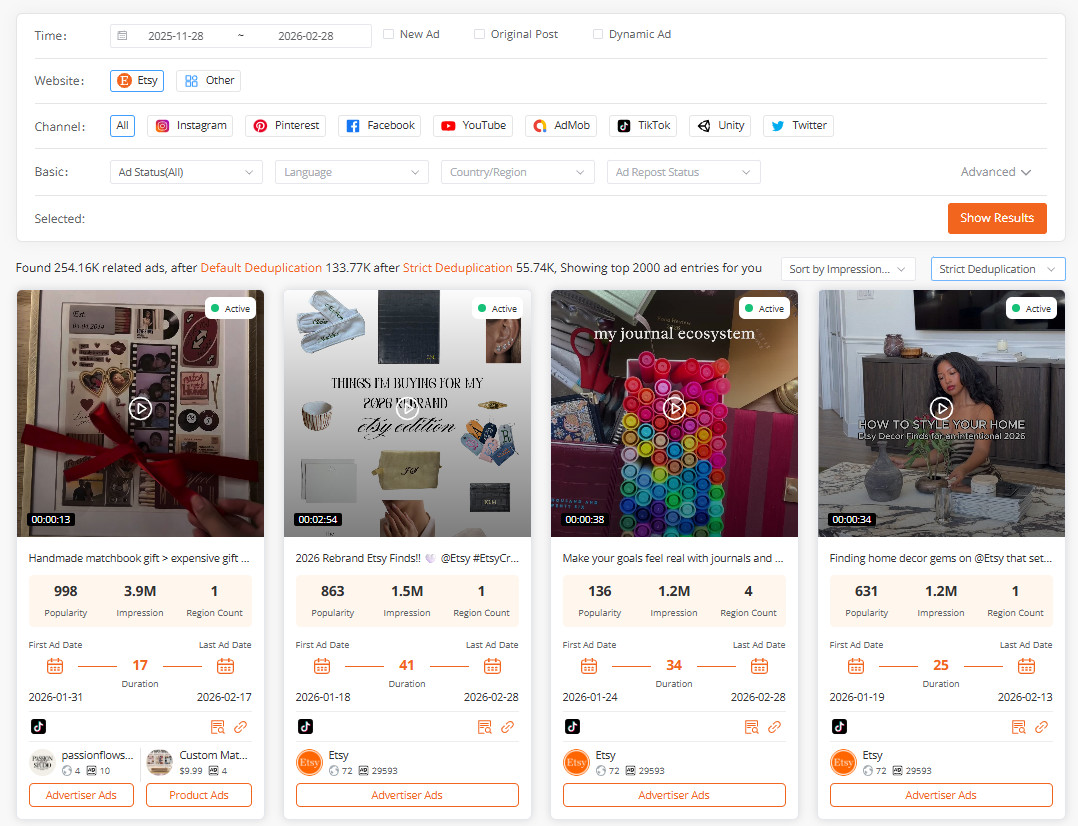
Tools like EHunt Offsite Ads Analysis make it easier to track competitors’ offsite ad placements and adjust your external traffic strategy accordingly.
Limited-time promotions can help increase conversions and create urgency, especially during product launches or seasonal campaigns. Etsy tools like sales and coupons can encourage buyers who are already considering a purchase to act faster.
However, promotions should be used sparingly. Over-discounting can reduce perceived value and train buyers to wait for lower prices. Use promotions selectively to support key moments such as launches, holidays, or inventory goals.
Sustainable Etsy growth depends on continuous improvement, not one-time optimization. After launching products, refining listings, and scaling with ads, the key is tracking performance data and turning it into actionable insights.
Monitor metrics such as conversion rate, click-through rate, profitability, and ad efficiency. Use this data to refine keywords, improve visuals, adjust pricing, and optimize ad allocation. When research, optimization, and advertising are connected through a consistent feedback loop, growth becomes structured, measurable, and repeatable.
Etsy growth is not about isolated tactics, but about building a connected system. When demand validation, listing optimization, advertising, discounts and data feedback work together, growth becomes structured and repeatable. Tools like EHunt can make this process more efficient. Consistency and measurement are the real foundations of long-term success.
Views without orders usually indicate a conversion issue, not a traffic problem. Common reasons include unclear product positioning, weak images, uncompetitive pricing, lack of reviews, or mismatched keywords attracting the wrong audience.
You shouldn’t change titles randomly or too frequently. Update them only when data shows low impressions or poor performance. Give each change enough time to collect results, and base adjustments on keyword research rather than guesswork.
Yes, reviews strongly influence sales. They build trust, improve click-through and conversion rates, and can indirectly support search performance. For new shops especially, even a small number of positive reviews can significantly increase buyer confidence.
Ads usually don’t convert because the listing isn’t strong enough. Common issues include weak images, unclear value, uncompetitive pricing, poor reviews, or targeting the wrong keywords. Ads bring traffic, but conversion depends on how compelling and trustworthy your listing is.