Live chat answers questions. WhatsApp closes deals. The difference is not the speed of the reply. It is where the conversation lives after the customer closes the browser tab.
Most Shopify brands treat live chat as a support channel. A customer asks about shipping. You reply. They say “thanks” — and vanish. The conversation dies inside your dashboard. You never see them again.
Here’s what smart brands are realizing: the best place to sell isn’t your website chat widget. It’s WhatsApp and Instagram.
Why? Because customers already live there. They check these apps 20+ times a day. A message on WhatsApp feels personal, not transactional. And unlike a browser tab that closes forever, WhatsApp conversations stay open — which means you can follow up, nurture, and actually close.
This article walks you through why moving from live chat to WhatsApp/Instagram is the single biggest opportunity for Shopify brands right now — and how Dealism helps you turn casual questions into confirmed orders.
Now compare that to WhatsApp or Instagram.

When a customer messages you there, they’re not using a “support widget.” They’re messaging you from the same app where they talk to friends and family. The channel carries inherent trust.
And the numbers are undeniable:
But the real advantage isn’t just metrics — it’s structure.
WhatsApp conversations don’t end when the browser closes. They live on the customer’s phone, right next to their personal messages. That means you can:
A customer asks about a product and hesitates. Two days later, you can send: “Hey, you were asking about the leather bag — just a heads-up, we have two left. Want me to hold one?” That’s not spam. That’s service.
Email flows convert at 2–5%. WhatsApp flows consistently hit 10–25%. That’s the difference between a struggling store and a thriving one.
Sales conversations aren’t sprints. Customers often need 3–5 touchpoints before buying. WhatsApp gives you the space to nurture without being pushy.
Let’s be honest. Live chat feels productive. Your team answers questions quickly. Metrics look good. But look closer.
A customer lands on your product page. They open the chat. “Do you have this in medium?” Your agent says yes. Customer says “thanks” — and leaves. No purchase. No follow-up possible. The lead is gone.
Live chat is reactive. It waits for questions. It doesn’t drive action. Once the customer closes that browser tab, the connection is severed. Your team can’t reach back out. You can’t send a gentle reminder two days later. You can’t build a relationship.
And for customers? Live chat feels like a kiosk. It’s purely transactional. There’s no ongoing conversation, no trust, no path from “just browsing” to “ready to buy.”
The numbers tell the story. Global cart abandonment sits at over 70%. Live chat recovers some of that — maybe 15–30% — but what about the rest? Those are lost sales walking out the door.
You don’t need a massive technical overhaul. Here’s how smart brands make the shift:
Step 1: Add a WhatsApp chat widget to your Shopify store. Give customers the option to continue the conversation on WhatsApp instead of a dead-end live chat window.
Step 2: Automate the basics. Abandoned cart reminders, order confirmations, shipping updates — these should run on autopilot. Don’t waste human time on repetitive messages.
Step 3: Use an AI sales agent for real conversations. Not all chats are simple FAQs. A customer comparing two products, hesitating on price, or asking for a recommendation needs intelligence, not scripts. That’s where a platform like Dealism comes in.
Step 4: Train it to sound like you. Feed Dealism your past chats, product PDFs, FAQs. It learns your voice — your phrasing, your tone, your objection-handling style. It doesn’t sound like a robot. It sounds like your best salesperson.
Step 5: Let AI handle the heavy lifting while your team focuses on closing. Dealism handles the initial qualification, the follow-ups, the routine questions. Your team only steps in for the complex, high-value conversations. Everyone wins.
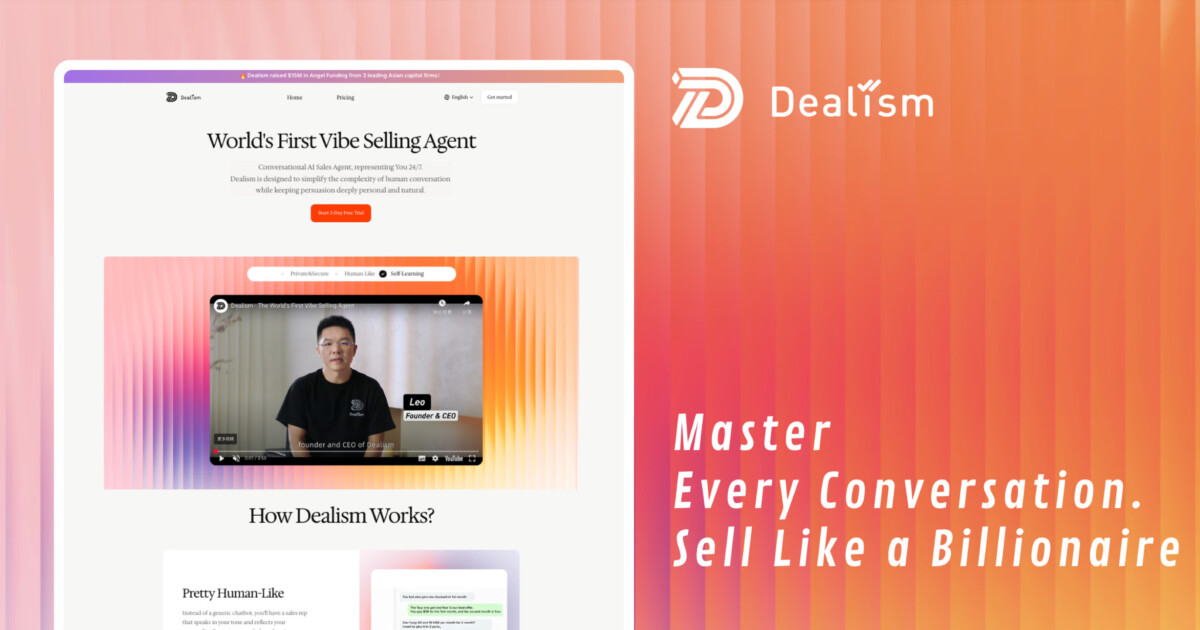
Most WhatsApp tools were built with a “CRM mindset.” They log chats. They tag leads. They send broadcasts. They treat conversations as data to be stored — not opportunities to be seized.
Dealism was built differently.
It’s a conversation-first AI sales agent. Here’s what that means in practice:
The result isn’t faster replies. It’s better conversations — conversations that move from “just looking” to “I’ll take it.”
Live chat solved one problem: customers had questions and no one to answer them. But e-commerce has moved on. Customers now expect relationships, not just responses. They expect to be understood, not just processed.
WhatsApp and Instagram offer something live chat never can: a permanent, trust-based channel where conversations breathe, evolve, and eventually close.
The brands winning today aren’t the ones with the fastest chat response times. They’re the ones who move conversations off their website and into the apps customers already love. They’re the ones who use AI not to replace humans, but to make every conversation more human.
From live chat to closed deals. From questions to conversations. From browsers to buyers.
Ready to move your Shopify conversations out of the live chat trap? Let Dealism turns casual questions into confirmed sales.
WhatsApp conversations convert better than live chat for Shopify stores because the channel is persistent rather than session-bound. When a customer closes a browser tab, a live chat conversation ends permanently. A WhatsApp conversation stays on the customer’s phone and can be continued or followed up days later. WhatsApp also carries inherent personal trust because customers use it to communicate with friends and family, not just brands. The combination of persistence and trust produces open rates of 98%, click-through rates of 45 to 60%, and cart recovery rates of 10 to 25%, compared to email’s 20% open rate and 2 to 5% cart recovery.
Shopify merchants need three layers to run WhatsApp sales conversations effectively: a WhatsApp Business account or WhatsApp Business API connection, a chat widget that gives customers the option to move from the website to WhatsApp, and an automation layer for high-volume routine messages like abandoned cart reminders and order updates. Tools like SuperLemon, Tidio, and Klaviyo’s WhatsApp integration handle the widget and automation layers for most Shopify merchants. For merchants who want AI-powered conversation handling beyond basic automation, platforms like Dealism, Gorgias, or Intercom’s Fin AI agent add the intelligence layer on top of the WhatsApp channel.
A standard chatbot reads for keywords and returns scripted responses. An AI sales agent trained on the merchant’s actual conversations reads for intent and responds with context-aware replies that move the conversation toward a purchase decision. When a customer says “too expensive,” a keyword-based chatbot offers a discount. An intent-aware AI agent may respond with value framing specific to that product and customer segment, which is often more effective. The best AI sales agents also learn from merchant feedback over time, adjusting their responses when the merchant edits a reply, so the agent’s objection-handling improves with every interaction rather than staying static.
WhatsApp Business is a free app designed for small businesses managing conversations manually. It supports a single user, basic automated replies, and a product catalogue, but it does not support automation at scale, multi-agent access, or integration with Shopify or third-party tools. The WhatsApp Business API is designed for businesses that need to send automated messages at volume, integrate WhatsApp with their CRM or helpdesk, and support multiple agents in the same inbox. Most Shopify merchants running meaningful WhatsApp sales and support operations need the API, which is accessed through a WhatsApp Business Solution Provider rather than directly from Meta.
The right tool depends on the merchant’s current infrastructure and conversation volume. Tidio is the most accessible entry point for earlier-stage merchants who want to add WhatsApp chat and basic AI responses without a significant setup investment. Gorgias is the strongest option for merchants who already use it as their primary helpdesk and want to add WhatsApp as an additional channel within an existing workflow. Intercom’s Fin AI agent is best suited for brands with higher conversation volumes and more complex product catalogues that need enterprise-grade AI conversation handling. Dealism is differentiated by its sales-first orientation and the self-learning mechanism that refines responses based on merchant feedback over time, making it the most relevant option for merchants whose primary goal is converting conversations into purchases rather than deflecting support tickets.