

Screen time is at an all-time high, and people are craving something the digital world can’t give them: real, in-person connection. That desire extends into how they shop.
The brands pulling ahead in retail are creating destinations that customers go out of their way to visit. They’re using brick and mortar as a canvas for brand expression, dreaming up IRL experiences that blur the line between retail and entertainment.
Creating these experiences is easy when your tech stack is built for it. Shopify POS is flexible enough to connect your most ambitious in-store ideas to the same system that powers your online business—inventory, customer data, rewards, all of it. You don’t need a massive budget or a custom tech stack. Whether you run a single-location boutique or are scaling across cities, you can build retail experiences that feel personal and run seamlessly behind the scenes.
Here’s how merchants are turning their retail spaces into games, challenges, and experiences their customers can’t stop talking about—and what you’ll need to build your own.
With Shopify POS, you can start with the wildest idea you have and trust that the tech can make it real.
You get all the basics you need to sell in the real world, like tap to pay, inventory management, and printed receipts.
But the real magic comes from POS UI Extensions, which allow you to extend the tech far beyond the essentials . Connect a loyalty program, integrate with a back-of-house fulfillment system—or build something no one’s ever seen before.
That last category is why we’re here.
You know your customers and your brand best, so there’s no one better than you to come up with experiences that will resonate. We’ll share some examples that are deeply connected to the brands that made them, but these key factors are applicable to everyone:
Keep these in mind as you think about experiences that will speak to your customers.
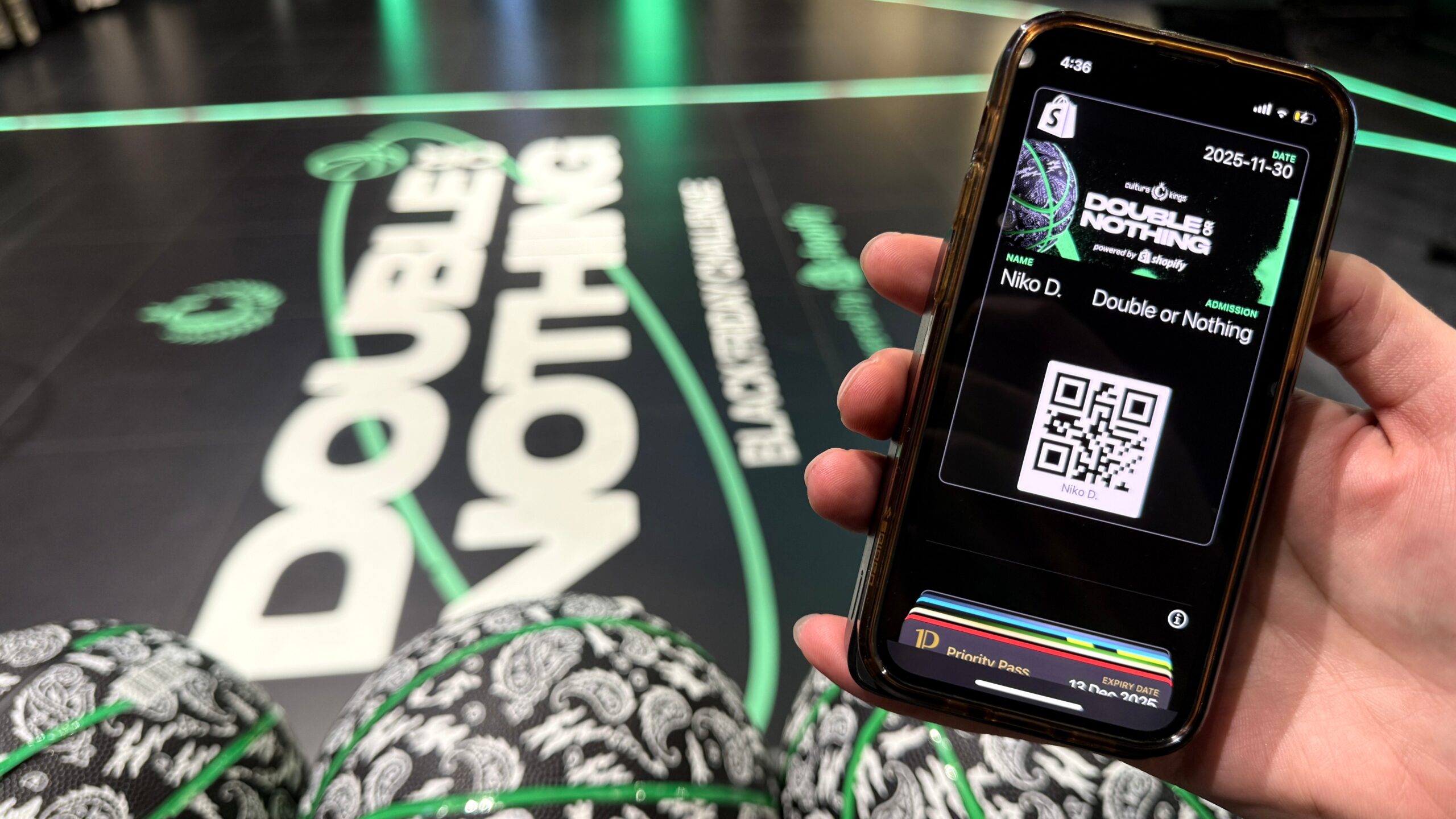
Culture Kings created a “Double or Nothing” challenge that rewarded customers with a chance to turn their basketball skills into a shopping spree.

After a customer made a qualifying purchase, Shopify POS generated a wallet pass that became their ticket to the game.

They scanned their pass on the court, and earned store credit for each basket they made. After every successful hoop, they could walk away with what they earned or press their luck to double it on the next shot.
The “scorekeeper” was an iPad integrated directly with the Culture Kings’ Shopify store, and the customer’s record was updated with the store credit they earned.

When it was time to redeem store credit, Shopify POS scanned the customer’s wallet pass and applied what they earned. Customers created priceless memories, and it was an engaging experience for everyone involved.
During marathon weekend in NYC, Endorphins Running created a “Pay with your Pace” challenge.

Endorphins challenged visitors to choose their running pace and then prove they could maintain it on a treadmill for 30 seconds.
They created a truly gamified experience by turning a treadmill into essentially a video game input. As people ran, they saw their pace appear on a speedometer-like interface. Run at your chosen pace, and earn store credit. Go too fast or too slow, no dice.
When it was all done, participants got a printed receipt they could scan at checkout to use their earned credit.
We’ve laid out two examples of real-world gamified activations, but the point is that there are infinite options for experiences you could create.
Let’s dream up another hypothetical example. Imagine you’re a sporting goods store that stocks Major League Baseball merchandise representing a variety of teams. You want to incentivize customers to pick up some gear to rep their favorite team but also add some fun to it.
Your store could create an activation that dynamically awards a 10% discount to customers who purchase a product from a team that is actively playing a game AND in the lead.
For example, you’re in a store on a night the Pittsburgh Pirates play the Washington Nationals. If you purchase a new Pirates cap and the Pirates are in the lead at checkout time, you automatically get a 10% discount.

We’re going to jump into some technical details now, but in reality we’ve already landed on the important parts: the story and customer experience.
Assumptions:
Using the above, we could create two things:
Digital Display

The digital display would be a Hydrogen web app that’s shown on a large screen in store. The display’s main purpose is to make customers aware of the experience, show live scores, and showcase products based on those scores. It’s purely visual and doesn’t actually create discounts or handle business logic. In short, it needs to:
POS UI Extension
The POS UI Extension is where everything comes together to actually make the activation happen.

We can create a Home screen tile that handles everything automatically.
Our POS UI Extension will use the Cart API to continuously monitor items in the customer’s cart. Whenever something is added to the cart, it will:
What is great about the POS UI Extension is that this is all automatic. The sales associate just adds the item as normal and all of this happens without any further input.

As seen in the screenshot above, as soon as the item is added to the cart, we automatically check if it meets all of the criteria and apply the discount.
This is innovative retail tech in action—but to the customer, it’s pure magic.
These examples are just the beginning. POS UI Extensions let you build on top of everything Shopify already handles—inventory, checkout, customer data—so you can create one-of-a-kind experiences.
Your customers are looking for a reason to walk through your doors. This is how you give them one.





