
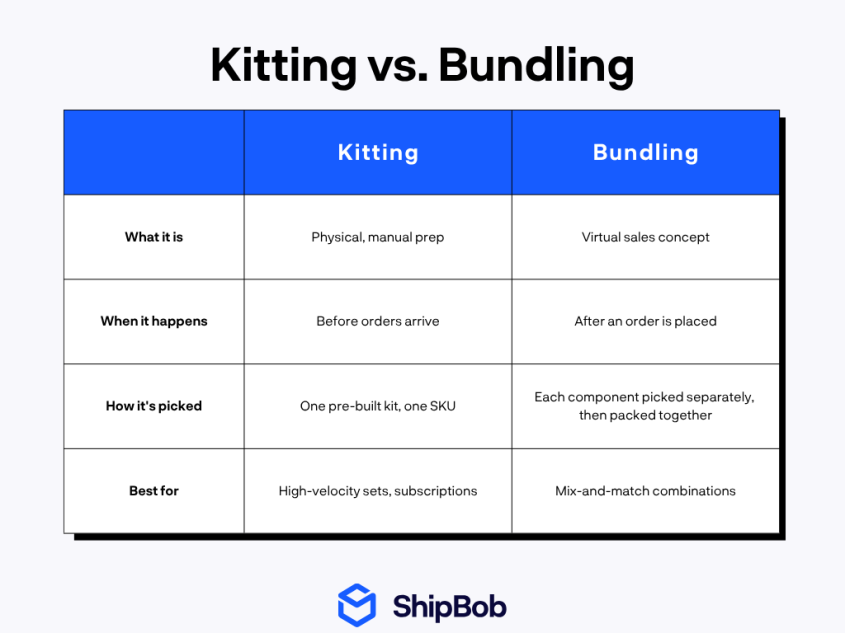
Kitting is the fulfillment process of pre-assembling multiple SKUs into one shippable unit with its own SKU and barcode. Pre-build kits when the set ships in volume and rarely changes. Use virtual bundling when those components also sell individually.
On July 12, 2026 the arithmetic behind every kit changed. USPS dropped its dimensional weight divisor to match UPS and FedEx, which means the same box you shipped last summer now bills roughly 19 percent heavier. Kitting just became a packaging decision with a price tag attached.
Here is the pattern I watched play out repeatedly during my years at Shopify. A brand doing $80K a month decides that holiday gift sets are the play. They order 2,000 custom boxes, block off a weekend, and build 800 kits in the garage. By February they have sold 310 of them, they are sitting on 490 sets of frozen inventory, and the components inside those boxes are the same components they now cannot sell individually on their own product pages.
Nothing about that decision was stupid. The kits looked great, the unboxing was genuinely better, and the AOV on the ones that sold was real. The mistake was timing. They pre-built before they knew the demand curve, which is the single most common way kitting goes wrong at the $500K to $2M stage.
Kitting is a small corner of order fulfillment, and it is one of the few places where a modest operational decision has a direct, traceable effect on labor cost, shipping cost, and cash position at the same time. That is why it is worth getting right rather than guessing at.
Kitting is the fulfillment process of grouping several individual SKUs into one pre-assembled unit that carries its own SKU and barcode, and is then stored, picked, packed, and shipped as a single item. In plain operational terms, you are preparing inventory ahead of demand so it is ready to sell and ship as one product.
The scope varies more than most operators expect. At the light end, kitting can mean unwrapping a unit from its manufacturer packaging, inspecting it, and applying a sticker so the item reaches its final pickable form. That is still kitting, and at 5,000 units it is still several days of labor. At the heavier end, it means gathering four or five components, folding a custom box, inserting dividers, arranging the contents to a photographed spec, and barcoding the finished unit. Gift sets, starter kits, promotional kits, product-and-accessory pairs, seasonal sets, and subscription boxes all live here.
You will also see the term “full kitting,” which is shorthand for fulfillment kitting. It describes the same activity, not a deeper tier of service. Do not let a 3PL price it as though it were something different.
Kitting is not assembly, and the distinction matters when you are reading a fulfillment contract. Assembly changes the product itself, the way building a chair from parts changes what the parts are. Kitting applies final touches to items that are already finished. Most 3PLs, ShipBob included, handle kitting and explicitly do not handle product assembly. If your product requires assembly, you are looking for a contract manufacturer, not a fulfillment partner, and confusing the two costs you a quarter.
Bundling is a merchandising decision and kitting is the operational one, and the difference is entirely about when the box gets built. A bundle is picked item by item after a customer buys. A kit is built before any order exists and sits on the shelf as finished goods. Same customer-facing offer, completely different balance sheet.
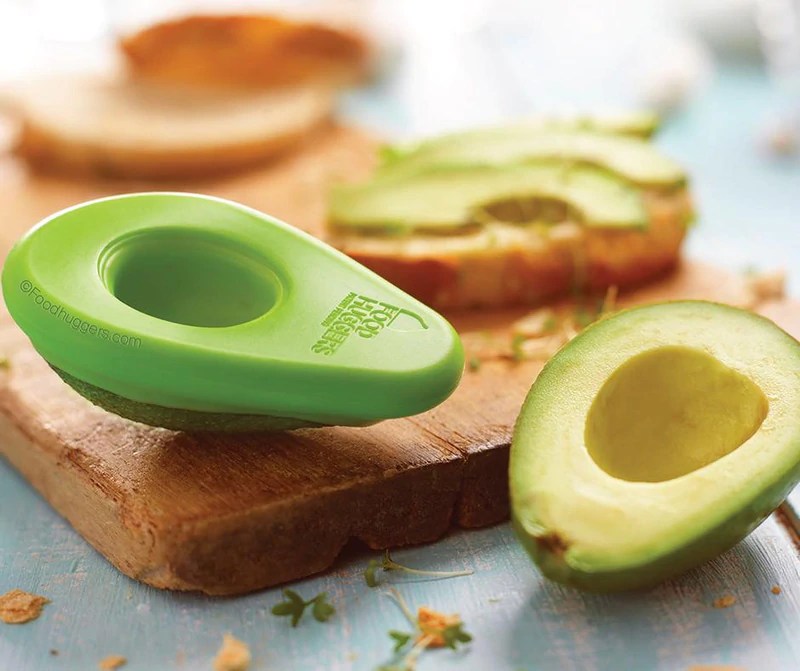
Reusable food storage brand Food Huggers sells a set of Hugger Bags customers can buy as one offering rather than adding each size to the cart individually. That set can ship as a pre-built kit or as a virtual bundle. The shopper cannot tell the difference. Your inventory system absolutely can.


If you are still deciding whether the set should exist at all, that is a merchandising question rather than a fulfillment one, and the case for it is covered in our breakdown of how Shopify bundles drive average order value increases. Settle the offer first. Then come back and decide how it gets built.
Kitting saves labor on every order and shipping cost on every parcel, and it charges you for both up front in build labor and frozen inventory. The savings are real. They are just not free, and vendor content on this topic rarely says the second part out loud.
On labor, the arithmetic is simple. A four-component order requires four picks across four locations. A pre-built kit requires one. At 1,200 kit orders a month, you have removed 3,600 pick events from your operation. Pre-building also creates a natural quality checkpoint, because each kit is built to a documented spec, inspected, and barcoded before it ever reaches the pick line. Problems like a supplier forgetting to bag or label a unit surface during the build rather than in a customer’s hands.
On shipping, 2026 changed the math. USPS dropped its dimensional weight divisor from 166 to 139 on July 12, 2026, raising billable weight by roughly 19 percent on any package over 1,728 cubic inches. UPS and FedEx now round every fractional inch up to the next whole inch before applying their divisor, so a side measuring 12.2 inches bills as 13. Consolidating four items into one right-sized box instead of shipping two parcels is now worth measurably more than it was a year ago, and an oversized kit box is now punished harder than it was.
Kitting also standardizes what every customer receives, which is hard to achieve when each order is assembled from scratch. Wellness brand Bloom ships in branded boxes with mailer inserts and marketing materials so every delivery lands the same way.



Building a kit follows four steps, and step three is where roughly 80 percent of the cost and all of the risk live. The process looks different for every brand, but the sequence does not change.
First, decide the contents. Group by theme, by use case, or by what your order data already shows customers buying together. A candle brand selling make-your-own kits needs wax, fragrance, coloring, and wicks in every box, and the temptation is always to add a fifth item that raises perceived value and quietly raises build labor by 25 percent.
Second, assign the kit its own unique SKU and enter it into your inventory system so sales and stock counts track the way they would for any single-item product. Skipping this step is how brands end up with phantom kit SKUs their warehouse cannot actually find.
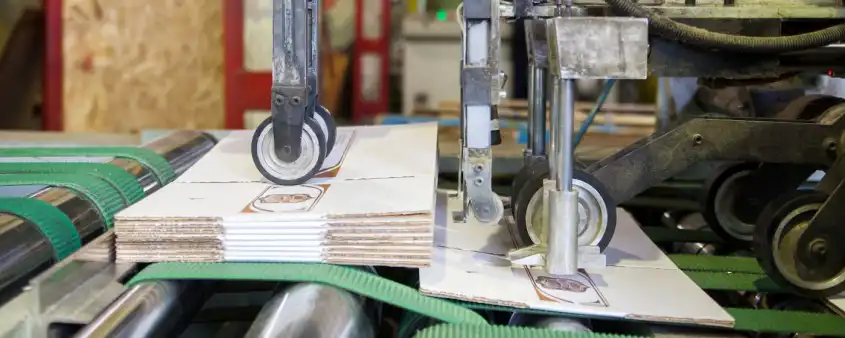
Third, build. Staff gather components, prepare each one, and place them into the designated box following documented instructions. The finished kit receives a barcode and its kit SKU label, then a quick inspection confirms every component is present and packed to spec before it moves into storage. Barcode scanning at receiving, assembly, storage, and pick is what keeps the right components in every kit once you are past a few hundred units.
Fourth, list the kit for sale. From there, incoming orders pull the pre-built kit from its single storage location, send it to packing, and label it for shipping.

Kitting happens at four distinct points in the supply chain, and choosing the wrong one is usually a stage mismatch rather than a knowledge gap. Warehouse kitting is the most common and maps to what most people mean by the term. Components arrive, get staged in a dedicated kitting area, and are built into finished kits against a work order, then barcoded and stored shelf-ready. Brands lean on it for high-velocity SKUs and seasonal promotions where the same set ships repeatedly.
Manufacturing kitting happens before finished inventory ever reaches you. Material kitting means your manufacturer groups finished pieces into one package to send onward, while internal kitting groups parts to speed production on the line. It is usually the cheapest per unit and the least flexible, which makes it a fit for simple, high-volume kits whose contents will not change for at least two quarters.
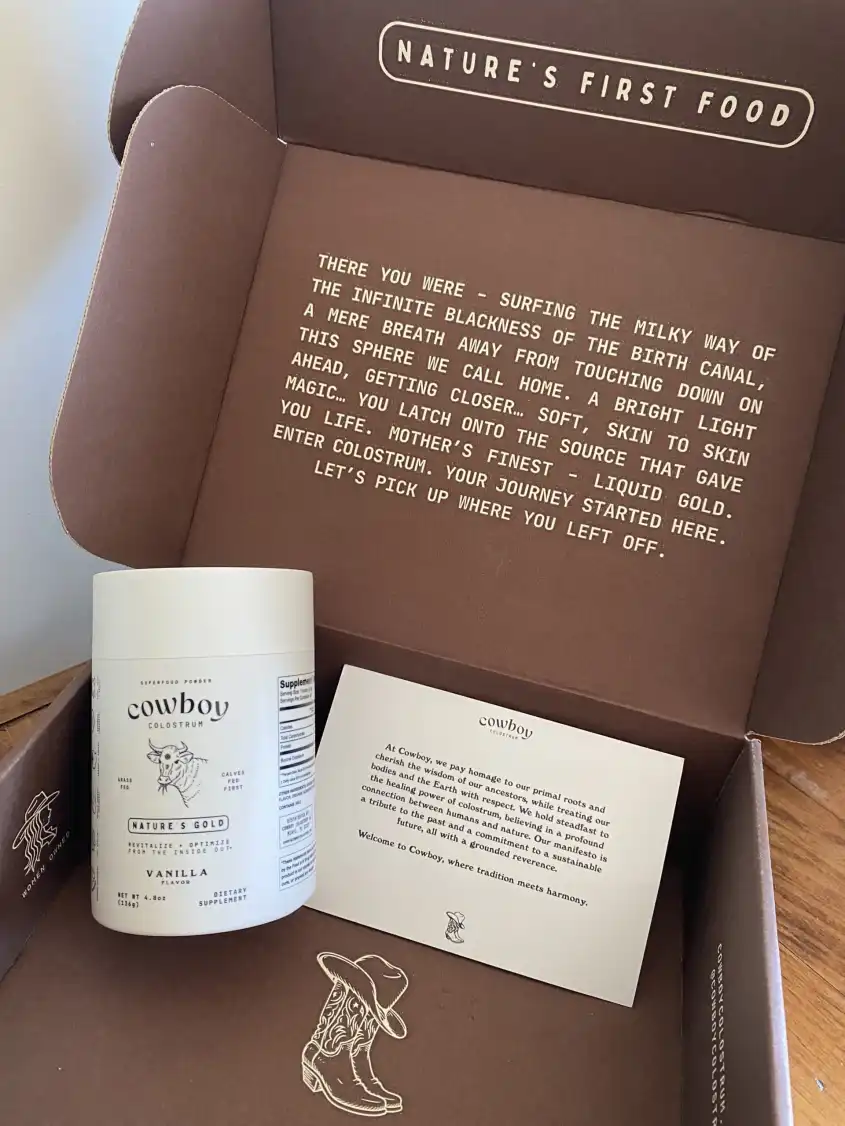
Subscription boxes are the strongest case for pre-building, because contents rarely vary between customers and the shipment repeats on a known schedule. Cowboy Colostrum uses kitting for exactly this reason. If you are earlier in that journey, the mechanics of launching a Shopify subscription box cover the app and configuration decisions that sit upstream of the fulfillment choice.


On-demand kitting is build-your-own. The customer selects from standalone SKUs and the personalized set is assembled after checkout. It carries zero inventory risk and the highest per-order labor, which is the trade-off worth making while you are still learning what customers want together. Brands that treat subscriptions as a core growth system rather than a side feature, a pattern covered in our look at how subscription brands build retention systems, tend to move from on-demand to pre-built only once the reorder data justifies it.
Channel-specific kitting becomes mandatory the moment the same product ships through more than one storefront with different packing requirements. A DTC order, an Amazon FBA shipment, a TikTok Shop order, and a retail purchase order each carry their own expectations. Retail buyers in particular often require specific case-pack configurations before they will accept a shipment at all.
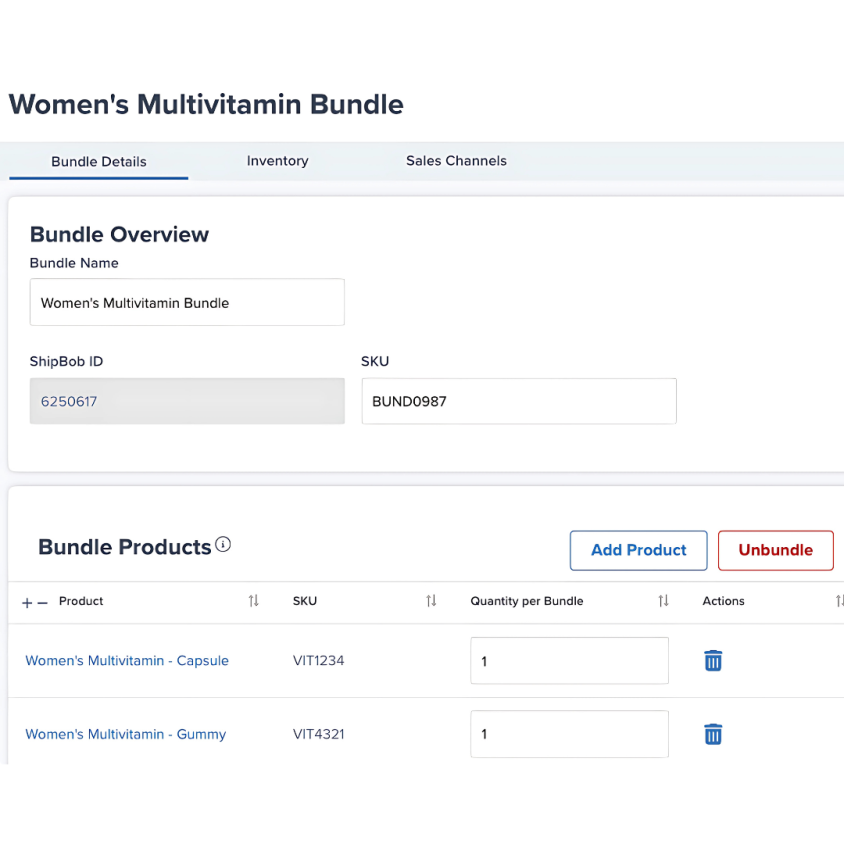
The genuinely difficult version is selling the same component SKUs individually on one channel and inside kits on another. Component-level stock has to decrement accurately across every channel simultaneously, and this is the point where a spreadsheet stops being a viable system. Virtual bundling handles it by grouping component SKUs under a parent SKU as a container, so inventory stays unified, the picking algorithm identifies the right components at order time, and reorder notifications fire on both the component and the kit SKU.
De-kitting work orders are the release valve. If demand shifts and a channel needs those components individually again, previously built kits get broken back into individual inventory. Ask about de-kitting fees before you commit to a kitting run, because that number is what determines how expensive a wrong guess actually is.
Worth being precise about terminology here, because it drives real decisions. Selling on Shopify, Amazon, and TikTok Shop with separate inventory pools is multichannel. Unifying stock, customer data, and experience across all of them is omnichannel, and the difference between multichannel and omnichannel operations is exactly the difference between four kitting configurations you manage manually and one you manage systematically.
Kitting fails on inventory accuracy far more often than it fails on packing, and this is the part most brands underestimate until it costs them a peak season. When the same SKU sells on its own, inside a kit, across marketplaces, and through B2B, component-level stock has to decrement in real time everywhere at once.
The failure mode is specific and unforgiving. A single stockout on one component makes an entire kit unfulfillable even when every other item in it is sitting on the shelf. A four-component kit is four times as exposed to a supplier delay as any single product, and the exposure is not obvious from a dashboard that shows the kit SKU as in stock.
This is the argument for keeping parent SKU and component SKU relationships explicit in whatever system you run, whether that is Shopify’s native bundles, Simple Bundles, or your 3PL’s virtual bundling layer. Inventory accuracy is the line between kitting that scales cleanly and kitting that produces customer-facing oversells during your highest-revenue week of the year.
If you are under $500K and running fewer than 20 SKUs, real-time component-level sync inside Shopify is probably enough. Past roughly $2M or once you are live on three or more channels, you want the sync happening at the fulfillment layer rather than the storefront layer, because the storefront is not where the oversell originates.
Four signals tell you in-house kitting has run its course: order volume climbing faster than your team can prep, seasonal spikes that overwhelm available labor, error rates creeping up as SKU count grows, and physical space constraints in your own facility. Any two of those together and the math has already turned.
The broader trend supports outsourcing at scale. Shopify’s fulfillment research cites NTT Data’s finding that 87 percent of shippers increased their use of outsourced logistics, with 82 percent saying those partnerships improved customer experience. That does not mean outsourcing is right for you at your volume. It means the infrastructure to do it well now exists at more price points than it did five years ago.
Cost depends on labor per unit, component count, packaging complexity, and whether units need inspection. Shipping stays variable based on weight, dimensions, destination, and service level. Request a custom quote rather than estimating, and ask every provider to model your total cost at current volume and at double current volume. The gap between those two numbers tells you how the pricing is really structured.
ShipBob is one credible option here and not the only one. ShipMonk is frequently the stronger fit for subscription boxes and heavily customized packaging. Simpl Fulfillment suits growing brands that want transparent, predictable pricing without complexity. Red Stag Fulfillment is built for heavy, fragile, or high-value products where accuracy guarantees matter more than network breadth. Our comparison of five 3PL providers by merchant stage works through where each one actually fits.
ShipBob runs kitting as a work order system inside the same platform that handles ongoing DTC, marketplace, and B2B fulfillment, which is its main structural advantage over stitching a prep vendor onto a separate 3PL. You define the contents and quantity, submit the request in the dashboard, and generate a price estimate before committing. Standard work orders of up to 500 kits carry a published turnaround of 2 to 3 business days, extended when components are missing.
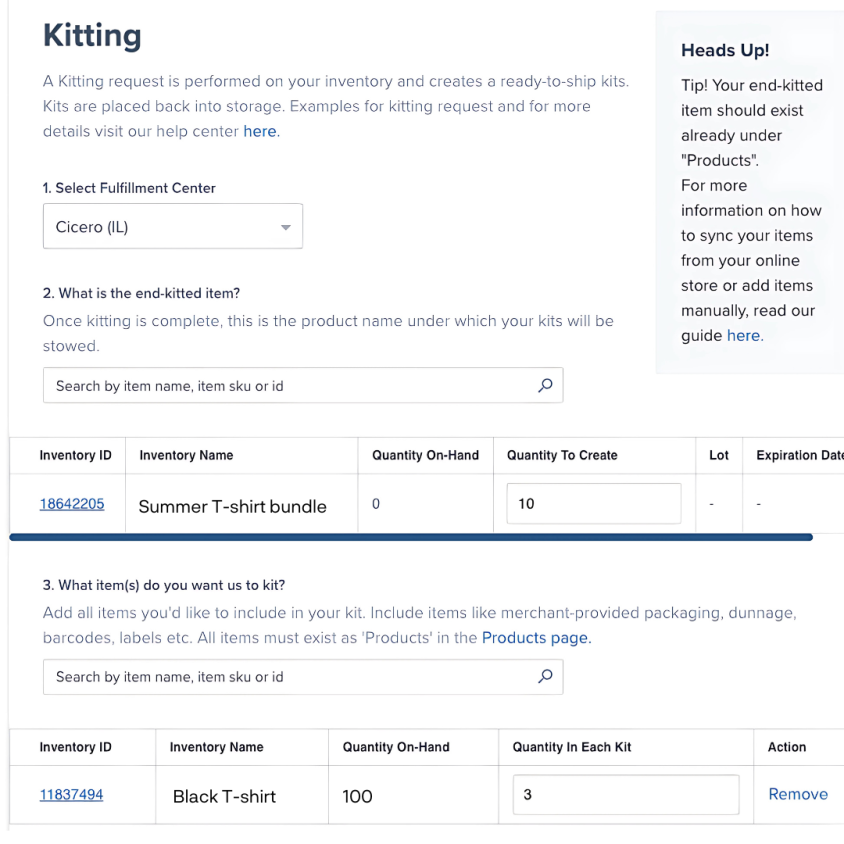
The work orders cover the involved tasks, including folding custom boxes, inserting dividers, and barcoding units. Virtual bundling and de-kitting work orders round out the toolkit for brands that need to move between selling components individually and selling them as sets without rebuilding inventory from scratch each time.
On the experience side, the Customization Suite connects kitting to branded packaging. Brands supply their own boxes, poly mailers, and dunnage, which ShipBob stores as unique SKUs, then apply SKU-level packaging rules, on-demand gift notes, and marketing inserts. A partnership with packaging maker Arka gives brands a direct path to branded boxes. Custom kitting and printed gift notes carry additional cost, so treat the unboxing upgrade as a line item you justify rather than a default.
For quality control, you can upload reference photos showing how a kit should be arranged, review packed kit and pallet photos, and edit or duplicate work orders as kits evolve. Warehouse staff work from a visual guide showing optimal item positioning inside the box.


The right kitting decision is almost always a stage decision, and the failure mode is running ahead of your own data. If you are under $500K, sell the set as a virtual bundle first. Let three to six months of order data tell you which combination actually moves before you pay anyone to build 800 boxes.
Between $500K and $2M, pre-build only the sets that have proven demand and stable contents, and keep everything experimental on virtual bundling. This is the stage where premature complexity does the most damage, and kitting is a textbook example of a good practice applied one stage too early.
Above $2M or across three or more channels, kitting stops being optional and becomes an efficiency requirement, particularly with dimensional weight pricing where it now sits. At that point the question is no longer whether to kit but whether your component-level inventory sync can survive it.
The test is not whether a kit looks better on your product page. It is whether you would still build 500 of them if you had to write the inventory cheque this morning.
Kitting in ecommerce is the process of combining individual SKUs into a single finished unit that ships as one item with its own SKU and barcode. It ranges from light prep work, like unwrapping a unit from manufacturer packaging and applying a label, to full assembly of several products into a branded box. The defining characteristic is that the work happens before an order arrives, not after. That timing is what separates kitting from bundling and what determines whether the inventory sits on your balance sheet as finished goods or as individual components.
Kitting applies final touches to products that are already finished or groups several finished items into one offering, while assembly builds or changes the product itself. Placing a candle, a wick trimmer, and a matchbox into a gift box is kitting. Building the candle from wax and wick is assembly. The distinction matters commercially because most fulfillment providers, ShipBob included, handle kitting and explicitly do not handle product assembly. If your product requires assembly, that work belongs with a contract manufacturer, and assuming your 3PL will cover it is a common and expensive scoping error.
Pre-kit when a set ships in high volume and its contents rarely change, because building ahead saves the most labor exactly where the same work would otherwise repeat hundreds of times. Use virtual bundling when the components also sell individually, when the mix varies by sales channel, or when you would rather not tie up working capital in pre-built kits that may not sell through. For most brands under $2M, virtual bundling first and pre-kitting second is the lower-risk sequence, because it lets order data rather than optimism decide which sets are worth building.
Kitting cost depends on labor per unit, how many components go into each kit, packaging complexity, and whether units require inspection, so most providers quote it per project rather than publishing a rate card. ShipBob’s standard kitting work orders of up to 500 kits carry a 2 to 3 business-day turnaround, extended when components are missing at the facility. Shipping costs remain separately variable based on weight, dimensions, destination, and service level. Ask any provider to model total cost at your current volume and at double it, since the gap between those figures reveals how the pricing structure actually behaves as you grow.
Returned kits are inspected on arrival, and if the components are still sellable, a de-kitting work order breaks them back into individual inventory with stock reconciled at the component level. This is why de-kitting fees deserve attention before you commit to a large kitting run. A brand that pre-builds 800 kits and later needs those components back for individual sale pays twice, once to build and once to unbuild. Confirm the de-kitting rate and the turnaround alongside the kitting quote, because that number is what determines the real cost of a demand forecast that turns out wrong.
Track assembly accuracy rate, cost per kit, order-to-ship speed, labor hours per kit, error rate, and work order turnaround time as your core set. Add sell-through rate on pre-built kits and average days of inventory held in kit form, since those two reveal the cash cost that the operational metrics hide entirely. A kitting program with excellent accuracy and 90 percent of units still sitting on the shelf at month four is not working, whatever the fulfillment dashboard says. Review the full set monthly and compare it against what the same volume cost you before kitting.
Manufacturer kitting works best for simple, high-volume kits whose contents will not change for at least two quarters, and it is usually cheaper per unit. A fulfillment partner is the better fit when you need flexibility: pre-kitting and de-kitting on demand, virtual bundling, channel-specific packaging, or quick changes to what goes in the box. The decision comes down to how confident you are in the kit’s composition twelve months out. If the answer is very confident, take the manufacturing savings. If there is any doubt, pay for the flexibility.
This article originally appeared on ShipBob and is available here for further discovery.