There’s a theory in food sociology that the price a cuisine commands in America has less to do with quality than with how the country judges the immigrants who brought it here.
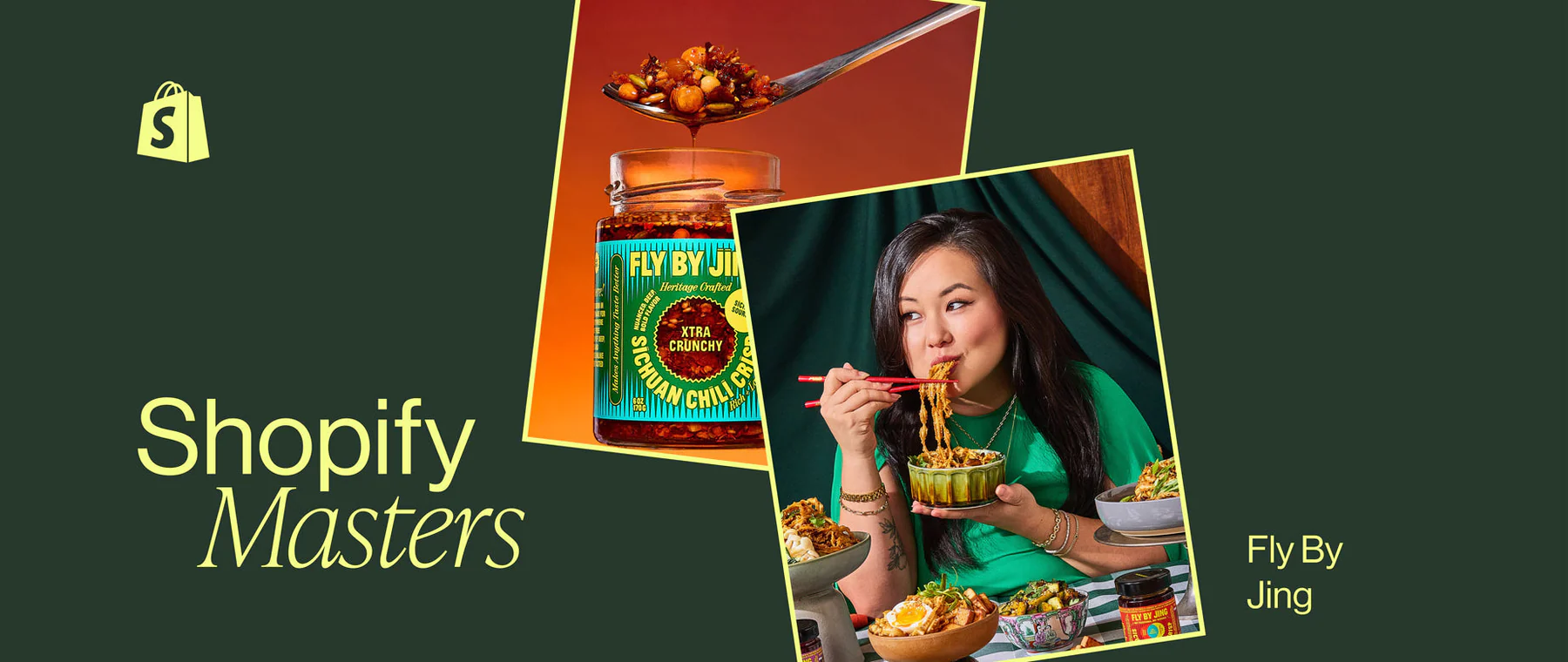
A hundred years ago, Italian food was cheap and dismissed. Today, a plate of pasta can command as much as $40 at restaurants. Chinese food—one of the most complex, regionally diverse culinary traditions on the planet—is still fighting that perception. Jing Gao built Fly By Jing to change it. What started as a blog about Chinese food culture turned into food tours, then a restaurant, then an underground supper club, then a Kickstarter campaign that became one of the most-funded food projects on the platform.
Today, Fly By Jing’s chili crisps, sauces, and noodles are in 12,000 stores including Target, Walmart, and Whole Foods. Here, Jing shares the decade-long path from cultural rediscovery to a brand that’s reshaping how America eats.
On the identity erasure that eventually became a business:
I was born in Chengdu, the capital of Sichuan province—the food capital of China. Every family makes their own chili crisp. You don’t buy it. They put their own accent on it. We always had it in the fridge, and it was part of every meal.
But my dad was a professor, so we moved constantly: Germany, England, Austria, eventually Canada. A different country almost every year, usually a different language. I was often the only Asian kid. You never want to be the odd one out, so pretty early on I learned to blend in.
I don’t think I appreciated the toll that had on me. It was just the norm. But when I went back to China in my early 20s to study abroad, I was shocked by how modern and dynamic it was. I’d become so removed from it—we’d only visit family in the summer. Being in Beijing and Shanghai, I fell in love with the energy. And, surprisingly, food became the vehicle for reconnecting with my roots and figuring out my identity.

On the decade it took to find the product:
It started as curiosity. Beijing has these provincial government offices where officials from all over China would bring in chefs from their hometowns and operate restaurants open to the public. You could eat dozens of wildly diverse cuisines in one city. That was my first lesson—how diverse Chinese cuisine actually is. In the West, it’s flattened into one thing. In China, it’s like a continent where every region is a different country.
I had a friend who ran food tours, so I started leading them, which got me deeper into the history and heritage behind the food. I started a blog, one of the few about Chinese food culture in English. Then I quit my tech job without a plan, met a business partner, and opened a fast-casual restaurant in Shanghai. It did well, won awards, but we had a falling out and parted ways.
After that, I moved back to Chengdu and apprenticed under one of the most famous master chefs in China. He had this deep respect for ingredients; he’d go on sourcing trips for the highest-quality peppers and fermented bean pastes. That’s when I learned how much ingredients affect flavor, and that the best stuff was rare and almost never made it to the West. I started cooking my own version of modern Sichuan food and launched an underground supper club called Fly By Jing, named after the “fly restaurants” I grew up with—these bare-bones, family-run, hole-in-the-walls so delicious they attract people like flies.
I was pre-batching sauces to travel with to pop-ups around the world, and the reactions were universal. People’s eyes would pop wide open. “Oh my God, what is this?” No matter where I was. That’s when I started thinking about how to make these flavors more accessible.
On the gap she couldn’t unsee at Expo West:
In 2018, I went to Expo West—the largest natural food trade show. It’s massive, across several convention halls, thousands of brands. Buyers from Whole Foods, Target, all of them. I spent three or four days sampling everything, and at the end I had this strange craving for Asian food. Then I realized: I hadn’t encountered a single Asian flavor the entire week.
Not only were there barely any Asian food brands, the buyers and the whole ecosystem lacked diversity too. And the industry reports I was reading showed that spicy flavors and multicultural cuisines were where the growth was. The few Asian brands that existed lived in Chinese grocery stores and were loaded with preservatives and artificial flavors to hit a cheap price point. There was nothing in between—nothing that took the quality of what I was making in China and brought it to the American market at scale. That observation was the beginning, but it still took a long time to figure out production, supply chain, and how to maintain quality while scaling up.

On why she priced her chili crisp at three times the competition:
Mass-produced chili oil might have three or four ingredients, and one of them is artificial flavoring. Our chili crisp—the same recipe since the beginning—has 18 ingredients. The umami and depth come from layers and layers of real ingredients, plus fermented components that you can’t replicate without time. You can’t compare a small business to the economies of scale of a billion-dollar conglomerate.
But there was resistance, because for the longest time, people were used to seeing Chinese food only in that mass-produced, low-price format. Chinese companies were told that Americans would not accept Chinese food that cost more than $2. So of course nothing of quality went into it.
There’s a sociology professor at NYU who wrote a book called The Ethnic Restaurateur, and he put forth this theory about why certain cuisines cost so much less than others. Why do we go to a French restaurant and expect to pay top dollar, but go to a Chinese restaurant and expect it to be cheap? He calls it the “hierarchy of taste”—and that hierarchy is determined by the judgment of the socioeconomic status of the immigrants who brought those cuisines to America.
But it’s a dynamic hierarchy. A hundred years ago, Italian cuisine was looked down upon. Today you pay $40 for a plate of pasta. These things change with migratory patterns and shifts in socioeconomic status. Through brands like ours, we’re part of that change. What I was really introducing was a new paradigm: that Chinese food, Chinese culture, Chinese people have value that is worth paying for.
On turning trolls into proof of concept:
We faced a lot of resistance throughout the whole journey, but there was definitely a crescendo around COVID. Anti-Asian sentiment was high, and a lot of it was directed at us—a brand that makes Chinese food, made in China. There was a New York Times article about how women entrepreneurs get trolled more online, and we were one of the examples.
My team has always taken a pretty lighthearted approach to it. We became sort of famous for trolling back our trolls. Sometimes we didn’t even have to; our customers would do it for us in the comments. There’s one that stands out. A guy wrote, “You can make chili oil for 12¢. You don’t have to buy this crap.” And a customer responded, “You can also make ketchup at home. I don’t see you giving Heinz a hard time.”
That’s what happens when your mission and values are so clear that your customers can articulate them for you. You don’t have to fight every battle on your own.

On making the unfamiliar feel easy:
The majority of Americans still have no idea what we do or what to do with our products. There’s a lot of education involved. But we’ve never brought people into the culture through preaching or saying you have to learn Sichuan cuisine to enjoy this sauce. We try to meet people where they are: How do you eat today? How can this fit into your life?
So, put it on your eggs in the morning, your pizza, your tacos, even ice cream. When we first launched, we did pop-ups with ice cream shops across the country just to show people that this hot sauce can go on ice cream. When they saw that, they were shocked, but it jogged their imagination. “OK, what else can I put this on?” That approachability is what’s given us the growth.
I recently went to Expo West again. We have a big booth now. On my first visit, I wandered the halls alone and didn’t see a single Asian brand. Today it’s completely different—countless Asian brands: Chinese, Korean, Vietnamese. Over the years, a lot of those founders have come to us and said they were inspired to start their brands because of Fly By Jing. That visibility matters. We’re all rising tides lifting all boats, and together we’re changing the way America eats.
Hear more from Jing on Shopify Masters, including the manila envelope disaster that nearly ended the business before it started, how a COVID-era supply chain collapse turned into a loyalty-building exercise, and the Kristen Bell moment on Nobody Wants This that sold out the brand’s sweatshirt three times over.