

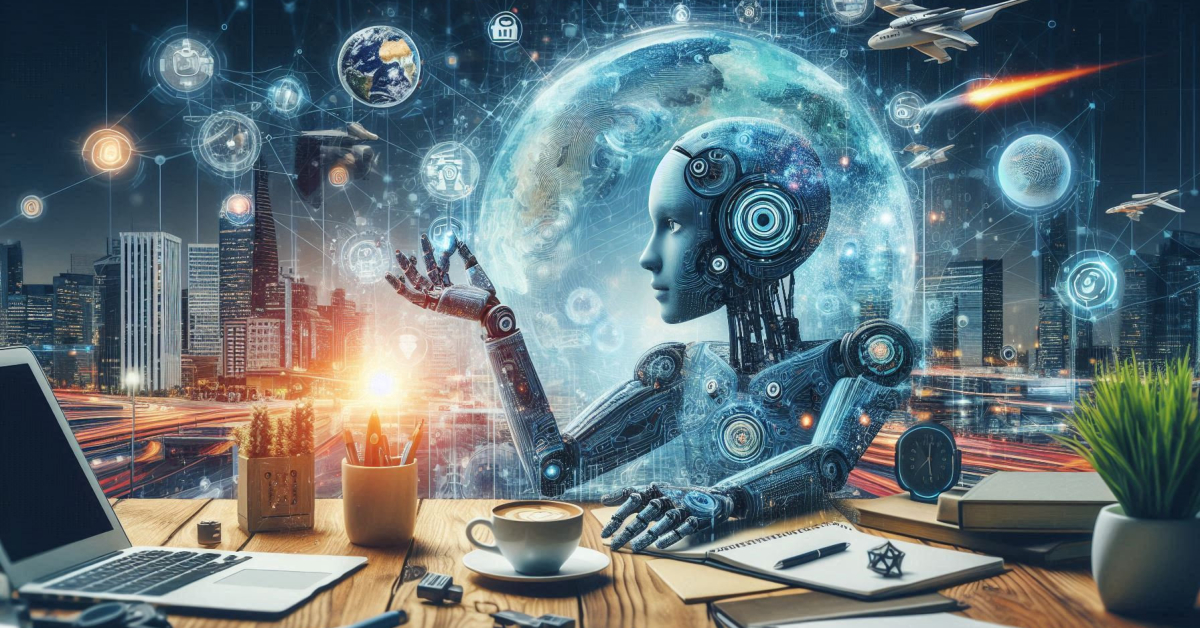
There was a time when we used to see the concept of Artificial Intelligence (AI) in science fiction movies.
Now, it has become a material reality and merged seamlessly into our daily lives, workplaces, and even our personal habits.
When you unlock your phone with facial recognition or receive tailored recommendations on Netflix, know that AI is at play.
In this blog, we’ll thoroughly discuss how AI is shaping our modern world and where it’s taking us next.
Here is how artificial intelligence is changing the world around us:
We may not have noticed it enough, but AI has quietly become our invisible assistant.
Virtual assistants, such as Siri, Alexa, and Google Assistant, have simplified our daily routines. They set our alarms, manage projects, manage schedules, and control our smart home devices with just a voice command.
In smart homes, AI technology is automating lighting, temperature, and security, learning from our habits to create personalised comfort.
This is such strong proof that even the smallest household choices are being shaped by intelligent machines.
The healthcare industry is also one of the sectors that has experienced the effects of AI technology. The machine learning models are now able to analyse medical images with much higher speed and, in most instances, even show more productivity than human experts.
AI greatly helps physicians in a number of activities, including forecasting heart diseases and diagnosing cancer at an early stage. In addition, it aids them in diagnosis and treatment planning as well.
Wearable AI-driven health gadgets are also now available. They track vital signs in real time and notify users of abnormalities before they develop into emergencies.
The use of AI-based data analytics in hospitals to handle patient volumes, resource optimisation, and outbreak forecasting also helps to save time, money, and most importantly, lives.
As you know, self-driving cars were once considered a fantasy. Today, they’re running on roads being tested across cities worldwide. AI enables vehicles to interpret traffic patterns, recognise pedestrians, and make split-second decisions.
Tesla’s Autopilot, Google’s Waymo, and other autonomous systems rely heavily on deep learning to ensure safer and smarter travel.
Not only cars, but AI also influences public transportation. Predictive analytics optimises routes, reduces congestion, and improves fuel efficiency. Moreover, ride-sharing platforms like Uber, Bolt, and Freenow use AI algorithms to match riders and drivers efficiently.
Artificial Intelligence technology has also revolutionised how businesses operate. It is providing significant help in streamlining processes, enhancing customer experiences, and driving data-based decisions.
Chatbots powered by natural language processing handle millions of customer queries around the clock, cutting response times drastically.
In marketing, AI tools analyse customer behaviour to create hyper-personalised campaigns. Predictive analytics help companies forecast demand, manage inventory, and reduce waste.
The integration of AI into customer relationship management (CRM) systems also provides deeper insights, allowing businesses to build stronger relationships and retain loyal customers.
Education is also evolving tremendously, thanks to AI. Learning platforms like Duolingo, Coursera, and Khan Academy use AI to tailor content to cater to each student’s learning pace and style. Intelligent tutoring systems can pinpoint where a learner struggles and adjust lessons accordingly.
AI also assists teachers in automating grading, tracking student progress, and identifying at-risk students early. This results in an exponentially more personalised and data-driven education system, where no student is left behind.
If you don’t know, AI technology has also redefined the future of the workplace. Automation tools handle repetitive administrative tasks. They free employees to focus on creativity and strategy.
For example, AI scheduling systems can automatically coordinate meetings based on calendars, availability, and priorities.
In industries like finance and manufacturing, robots and algorithms analyse large data sets to detect fraud, monitor performance, and predict equipment failures before they happen. This capability saves billions in maintenance and downtime costs every year.
AI has also remarkably led to the opening of new career paths, such as AI ethics officers, machine learning engineers, and prompt designers, highlighting how the technology not only replaces certain jobs but also creates entirely new fields of opportunity.
Surprisingly, AI has also made its mark in creative industries. Musicians use AI assistance to compose melodies, visual artists collaborate with AI tools to generate new art styles, and writers employ AI to brainstorm ideas or edit dissertation drafts.
Tools like ChatGPT, DALL-E, and Midjourney are examples of how human creativity and artificial intelligence can work together to push artistic boundaries.
Along with the arts, AI has also impacted film and game production. It accelerates animation, improves graphics, and automates tedious post-production tasks, making creative workflows faster and more efficient than ever.
While technology is evolving, so are cyber threats. However, AI is proving to be the robust forefront of digital defence. AI-powered security systems analyse patterns of behaviour to detect suspicious activity in real time. They can identify malware, phishing attempts, or data breaches faster than human analysts.
AI and cybersecurity are fused together to ensure that, as digital threats evolve, our defences evolve faster.
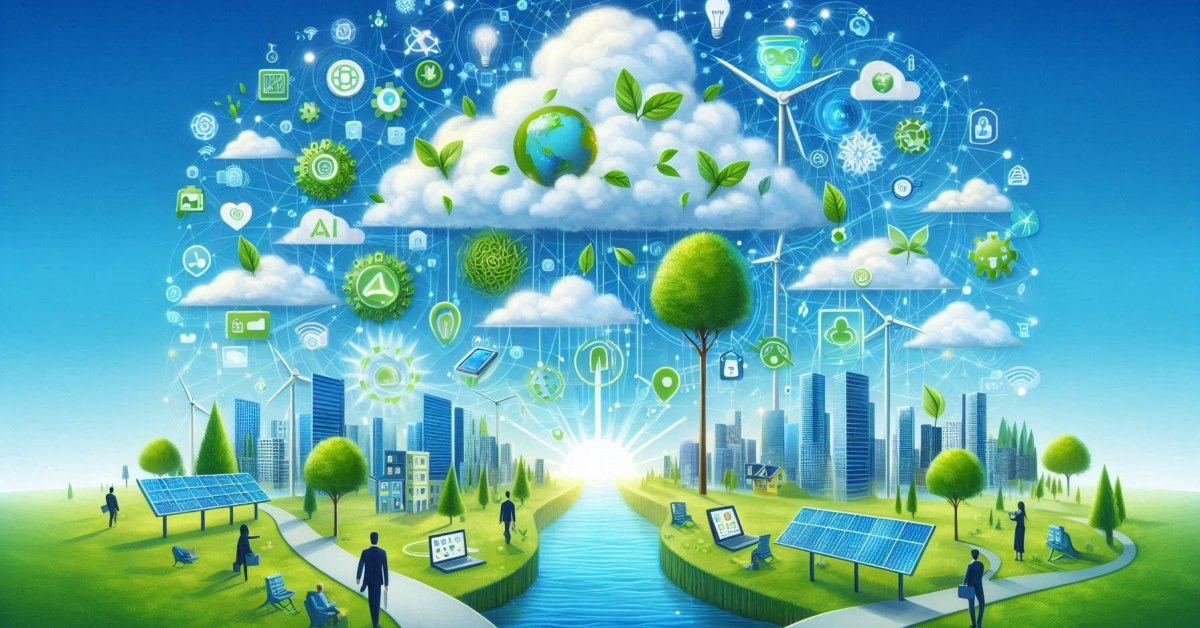
Many are suspicious regarding the role of Artificial Intelligence in the environment and climate change. While many scientific technologies negatively impact the environment, AI plays a critical role in combating climate change and promoting sustainability.
Smart energy grids use AI to balance supply and demand, reducing waste and improving efficiency.
Farmers use AI-driven drones and sensors to monitor soil conditions, optimise irrigation, and reduce pesticide use.
In urban planning, AI models predict pollution levels, manage waste systems, and design eco-friendly infrastructure.
While AI technology offers various incredible benefits, it also raises serious ethical and social questions, such as:
For this purpose, experts urge the ethical and transparent development of AI systems. Regulation, education, and awareness can play a significant role in balancing innovation with responsibility.
Moreover, one must consult professional coursework writing help to stay clear of ethical concerns in assignments, essays, and papers.
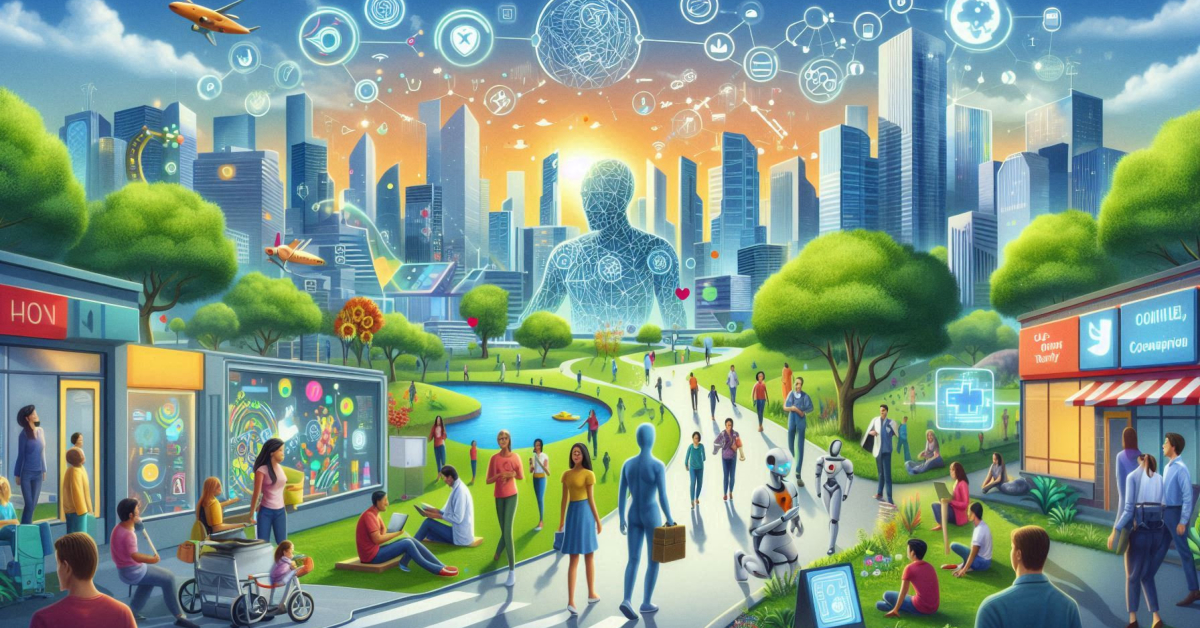
Since the rise of AI technology, many people are wondering whether it will replace humans or not. The answer is that AI is not replacing humans; it is complementing human potential. As AI continues to evolve, collaboration between humans and AI systems can drive exponential progress in every sector.
Know that the world that AI is building isn’t where intelligence is artificial. In fact, it’s a world where it is shared.
AI systems work by using algorithms to learn from large amounts of data, identify patterns, and then use those patterns to make predictions or decisions.
AI is helping doctors and medical professionals detect various heart issues and cancer prior to any serious stage. It also assists them in making efficient diagnoses and treatment plans.
The main challenges that arise when using AI are biased or distorted results, as the systems are trained on past data and information.





