

Turn followers into customers
Spotify pays artists about $0.003 to $0.005 per stream, meaning a million streams generates roughly $3,000 to $5,000.
But that’s only part of the picture. Let’s break down Spotify royalties, how artists get paid per stream, and what streaming revenue really looks like. We’ll also cover smarter ways to grow your income beyond just streaming revenue.
This post may contain affiliate links, which means we may earn a commission if you make a purchase through those links. This comes at no additional cost to you.
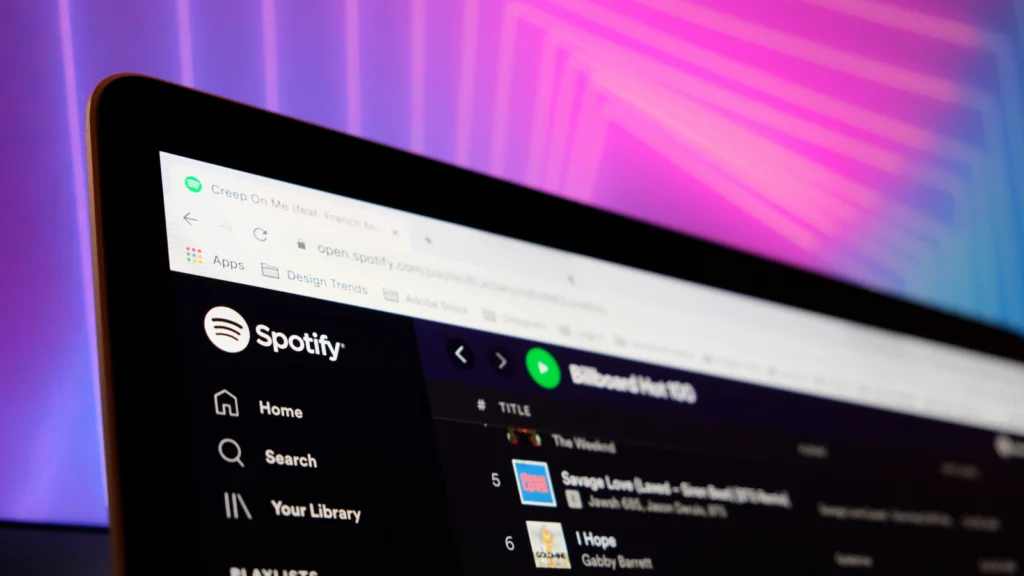
Through Spotify for Artists, artists earn $0.003 to $0.005 per stream on average. As a rough benchmark, one million streams generates around $3,000 to $5,000 in streaming revenue before any splits with labels or distributors.
However, there’s no fixed Spotify pay-per-stream rate. Actual earnings depend on factors like the listeners’ country and subscription plan, and the artist’s agreement with record labels or a music distributor. Use a Spotify royalty calculator to estimate your potential payouts.
Each stream contributes to streaming royalties, which fall into two main types:
Spotify calculates royalties based on total streaming revenue from two sources: advertising and Spotify Premium subscriptions.
After deducting taxes, payment processing, billing fees, and sales commissions, the platform arrives at its net revenue. Spotify then allocates payouts based on streamshare – your share of total streams on the platform – rather than a fixed Spotify pay-per-stream rate.
For example, if your music generates 1% of total Spotify streams in a country, your rights holders receive 1% of the recording royalties distributed in that market. This means your Spotify royalties depend on how your total streams compare to overall platform activity, not just how many streams you have.
Final royalty payments vary based on listener location, subscription plans (free vs Spotify Premium listeners), and overall streaming activity across the music streaming platform.
Important to note: since April 2024, tracks must reach at least 1,000 streams in the previous 12 months before they generate recording royalties. Revenue from tracks below this threshold gets redistributed to qualifying tracks. According to Spotify, 99.5% of all streams are from qualifying tracks – the policy primarily affects noise uploads, bot content, and low-engagement tracks.
Spotify uses a pro-rata model – it doesn’t pay a fixed amount per stream. Instead, it distributes earnings based on:
This works out to roughly a 70/30 split, with about 70% going to artists and rights holders and 30% to Spotify. In 2025 alone, Spotify paid more than $11 billion to the music industry, making it the highest-paying music streaming service globally.
Based on an estimated average payout of around $0.004 per stream, here’s how much Spotify’s most-streamed artists have earned from lead and featured tracks:
These figures reflect total playcounts built over time, showing cumulative success across years of releases and consistent streaming. Also, keep in mind that they represent gross streaming revenue, not what artists take home, as earnings are split with record labels, publishers, distributors, and other rights holders.
But what about new and independent artists without billions of streams? A single trending track can change everything. As you build a dedicated fanbase, grow your Spotify revenue through playlist placements, algorithmic picks, and reaching new listeners organically.
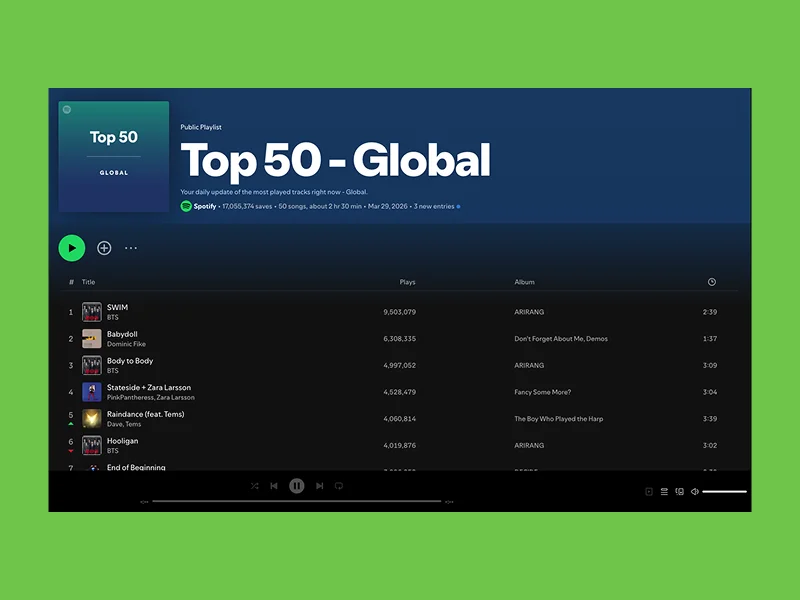
Sombr, for example, broke into the Top 50 Global chart with over 2 million streams on his track “12 to 12.” That’s roughly $8,000 in streaming royalties before splits. He’s since blown up in popularity, showing how fast recording royalties can grow once a track takes off.
Sign up for Printify to create and sell merch.
Spotify streams don’t just generate royalties. They help grow your visibility, attract new listeners, and build long-term income streams.
Behind the scenes, Spotify pays rights holders, not artists directly. Record labels, distributors, and publishers take their share and pass the rest on based on your agreement. That’s why you’ll need a music distributor to get your tracks on the platform and collect streaming royalties for you.
Luckily, there are many Spotify-approved distributors to choose from. Some popular options that help independent artists sign up for Spotify for Artists include:
When comparing music streaming platforms, audience size and payout models matter most. More users can mean more streams, but not all streaming services pay artists the same.
Here’s how Spotify compares to other streaming services when it comes to artist earnings, streaming revenue, and growth potential.
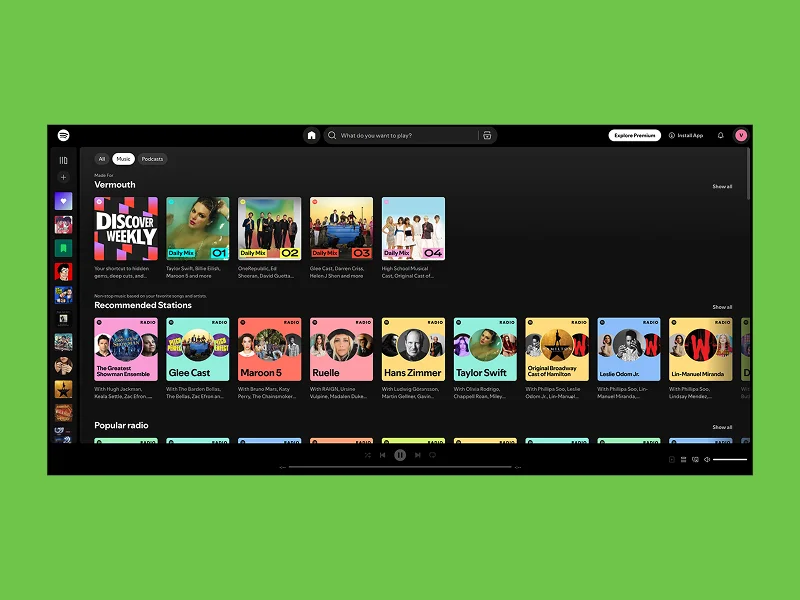
Spotify remains the leading music streaming platform, making it one of the best places to grow your music career and streaming income. As of Q4 2025, Spotify reached 751 million monthly active users, including 290 million paid subscribers.
Spotify’s recommendation algorithm and editorial playlists help emerging Spotify artists gain traction, increase total streams, and build a dedicated fanbase over time.
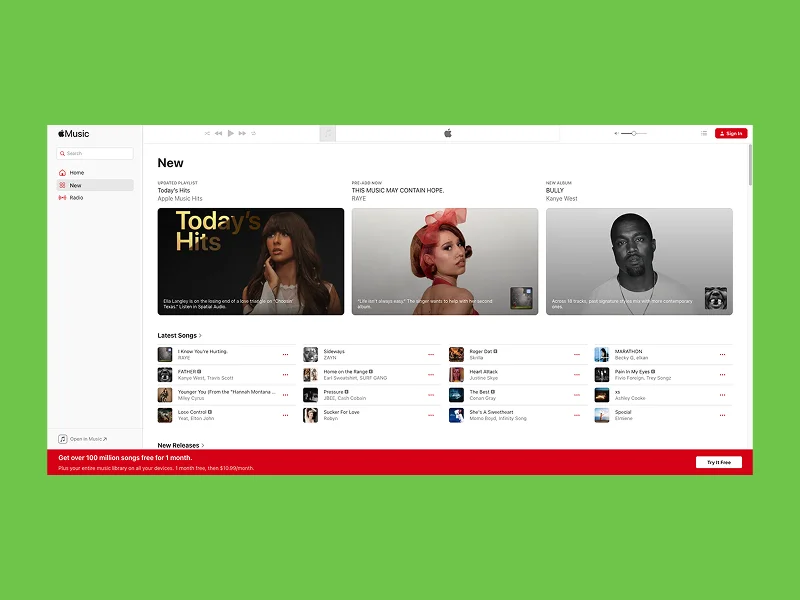
Apple Music stands out for its higher average payout per stream, which can lead to stronger streaming revenue with fewer streams. It also offers a premium listening experience with lossless and Spatial Audio.
Through Apple Music for Artists, creators get access to tools like GarageBand and Logic Pro, along with analytics, customizable artist profiles, and pre-add features to build early buzz.
However, Apple Music leans on editorial curation over algorithmic discovery. Artists can’t submit music directly to editors and must rely on distributors or labels to pitch releases, so choosing the right distribution partner can make a big difference early on.
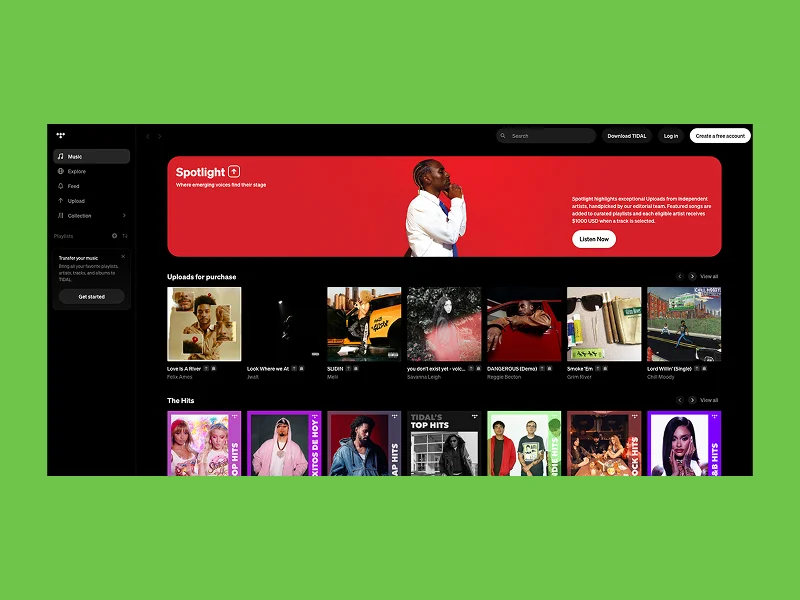
TIDAL Artist offers one of the highest pay-per-stream rates, making it a strong option for maximizing streaming revenue. It’s known for high-fidelity (Hi-Fi) audio and DJ extension for hardware and software integration.
Since TIDAL doesn’t offer free accounts and focuses on paid subscriptions, it has a smaller listener base than other streaming platforms. Its recommendation system also gets mixed reviews, which can limit discovery and slow artist growth.
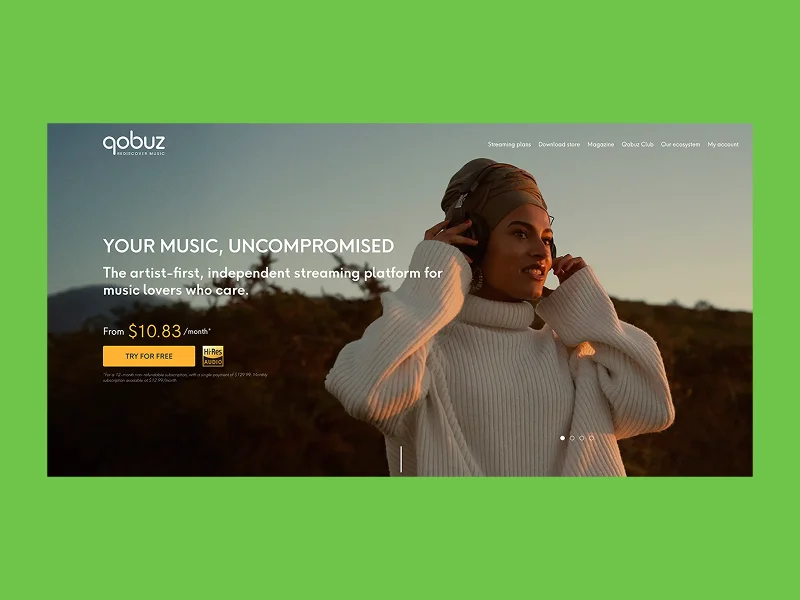
Qobuz focuses on a curation-first experience, highlighting newcomers and niche genres through editorial picks rather than algorithm-driven discovery. Its lack of music video features and dated interface make it less popular among younger listeners.
However, if you want to build a more engaged audience that values sound quality and deeper music exploration, this streaming platform is worth considering.
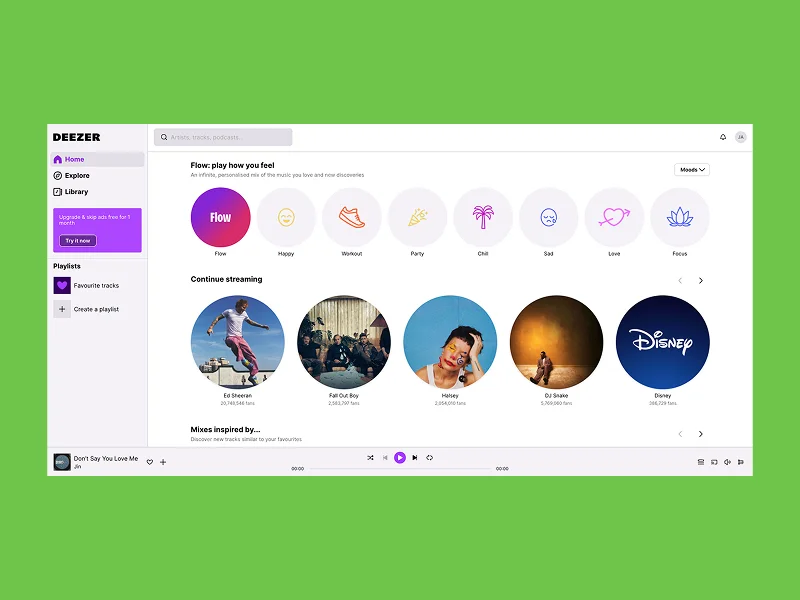
Deezer combines an ad-supported model with paid plans for ad-free listening, offline playback, and cross-device use. It’s available in 185+ countries, though it has the biggest presence in its origin country, France.
Its recommendations rely on listening habits – likes, skips, and repeat plays – to surface new music.
Deezer for Creators runs an artist-centric model, where artists with at least 1,000 streams from 500 unique listeners per month get a boost – their streams count double in royalty calculations. This makes it a better fit for artists who already have some traction and want to expand their reach.
Spotify can help you build your audience, but music royalties alone usually aren’t enough. Most artists earn money by stacking different income streams and building a brand around their music.
Here are some popular ways emerging Spotify artists earn money beyond streaming and subscription revenue.
Selling Spotify merch is one of the easiest ways to turn listeners into customers. Whether it’s t-shirts, hoodies, or posters, custom merch helps you monetize your audience and strengthen your brand.
With Spotify-Shopify integration, you can connect your store and display products directly on your artist profile. For fulfillment, Printify is one of the best print-on-demand sites for artists to get started with and integrates easily with Shopify.
Design and sell custom products with no upfront cost, no inventory, and no risk. It’s free to start, and you only pay when an order comes in.
Read how independent singer-songwriter Arielle built a new revenue stream with Printify.
Stay connected with fans while creating a passive income stream by documenting your journey as an artist. Share updates, behind-the-scenes content, or tips from your music career, then monetize your blog through different methods.Most artists earn through ad revenue, affiliate links, sponsored posts, or subscription-based content. The platform you choose will determine your options, but beginner-friendly tools like Medium and Substack make it easy to get started.
Printify integrates with top eCommerce platforms that also support blogging, such as Shopify, Woo (via WordPress), and Squarespace. Combine merch sales with blogging to build multiple income streams in one place.
Podcasting is a great way to expand your presence beyond music. With Spotify for Creators, you can stay on the same platform while reaching new listeners – a smart marketing effort for emerging artists.
Earn money through ad revenue, sponsorships, and cross-publishing on other streaming platforms. With the right strategy, podcasting can be a serious money-maker in the long run.
Selling CDs and vinyl records still works, especially if you have a dedicated fanbase. Some music distributors offer built-in options to help with production and distribution. Alternatively, sell independently in small batches or create limited drops to build exclusivity and boost demand.
Explore more ways to make money as an artist through our separate guide.
Growing your Spotify streams takes consistency, smart promotion, and a solid understanding of how the platform works. Here’s how to reach more listeners and grow your streaming income.
Whether you’re an indie artist or part of a label, don’t rely on Spotify alone. Share your releases on social media, YouTube, and your website to reach more listeners. Use tools like Spotify Ads Manager and tailor your content to match your audience’s listening habits.
Claim and update your Spotify for Artists profile with a strong bio, visuals, and links. Use pre-save campaigns to build momentum before launch and drive early stream counts, which can help the algorithm pick up your track.
Playlists are one of the fastest ways to increase Spotify streams. Pitch unreleased tracks to Spotify’s editorial playlists, create your own playlists, and collaborate with independent curators to reach new audiences and grow your monthly listeners.
Regular releases keep you visible and signal activity to the algorithm. It doesn’t always have to be new material – remixes, acoustic versions, or live cuts of existing tracks help maintain momentum and attract more streams over time.
Fake streams or bots might seem like a shortcut, but they can hurt your stream counts and lead to penalties. Instead, focus on building a dedicated fanbase that listens, shares, and supports your music long term.
Artists earn money on Spotify through streaming royalties from subscription and advertising revenue, which Spotify pays to rights holders. Labels, publishers, and distributors then share royalty payments with artists according to their contracts.
Earnings depend on total streams, listener location, and overall platform activity. Since payouts can be low, many artists combine Spotify income with merch, podcasting, and other revenue streams.
Artists make around $0.003 to $0.005 per stream on Spotify, but earnings vary widely. Top artists like Taylor Swift and Drake earn hundreds of millions from streaming royalties, while the 100,000th-highest-earning artist reportedly made about $7,300. How much you make depends on total streams, listener location, and your agreements with rights holders.
Spotify pays artists roughly $0.003 to $0.005 per stream on average. At that rate, 5,000 Spotify streams generate about $15 to $25, a million streams can bring in $3,000 to $5,000, and a billion streams can reach roughly $3 million to $5 million in streaming revenue.
These are gross music royalties before splits. Actual earnings depend on total streams, listener location, premium users vs free accounts, and agreements with record labels, publishers, or distributors.
Many artists make money through Spotify merch, podcasting, live shows, and content tied to their music. You can sell merch through Spotify-Shopify integration, earn ad revenue from podcasts, or drive fans to platforms with subscription revenue. For new, independent artists, these income streams often outperform royalties.
Spotify is a powerful music streaming service, but it’s only one part of the music industry. While it helps you reach listeners, real income comes from turning that attention into revenue streams.
Artists who diversify across Spotify and other music streaming services will stay ahead. Building a brand and connecting with fans – not just chasing stream counts – is what drives long-term growth.
Ready to turn listeners into income? Printify makes it easy to create and sell custom merch – no upfront costs, no inventory, no risk. Just bring your ideas to us, and we’ll do the rest.
The post How much do artists make on Spotify in 2026? appeared first on Printify.





