

25th
September, 2025
Micro‑influencers have become a cornerstone of influencer marketing in recent years, especially for e-commerce brands and Amazon sellers looking to promote products through authentic content. These content creators operate on a smaller scale than celebrities, but they often boast highly engaged niche audiences. A common question that arises is: How much do micro‑influencers actually make? In this blog, we’ll explore recent US data on micro‑influencer earnings, compare their income to other influencer tiers with a chart, and discuss factors that impact their pay. We’ll also touch on how micro‑influencers fit into the Amazon and UGC (user-generated content) ecosystem.
Micro‑influencers are typically defined as social media influencers with roughly 10,000 to 100,000 followers. Unlike mega-celebrities, micro‑influencers focus on a specific niche or community – for example, fitness enthusiasts, beauty gurus, tech reviewers, or book lovers. They are essentially everyday content creators who have built a loyal following through relatable and engaging posts. Because of their smaller audience size, micro‑influencers tend to interact more with their followers, often yielding higher engagement rates (likes, comments, shares) than macro-influencers with millions of followers. This high engagement and close-knit trust make micro‑influencers particularly valuable for brands looking to drive word-of-mouth buzz.
Micro‑influencers straddle the line between ordinary consumers and celebrities. They’re “everyday creators” who might still hold day jobs or consider influencing a side hustle. Many are keen on partnering with brands, especially in the e-commerce space, to monetize their content. As we’ll see, their earnings can vary widely – from free products as compensation up to significant paydays – depending on their reach and the nature of collaborations.


Micro‑influencers monetize their social media presence in multiple ways. Here are some of the most common income streams for micro‑influencers:
In essence, micro‑influencers diversify their income. However, sponsored content deals remain the cornerstone of how they make money – and what we’ll focus on when discussing how much they earn.
When it comes to earnings, it’s important to note that micro‑influencer income is not standardized. Payments can range widely based on factors like follower count, engagement rate, niche, and negotiation skills. That said, recent studies and industry benchmarks give us a good picture of typical earnings for micro‑influencers in the United States as of 2024–2025.
Per Post Earnings: On major platforms like Instagram, a micro‑influencer (10k–100k followers) might charge roughly $100 to $500 per sponsored post on average. Meanwhile, a nano-influencer (1k–10k followers) might only get $10 to $100 per post, and a larger macro-influencer (500k+ followers) could command $5,000 to $10,000 or more for a single post. The gap is huge – micro‑influencers are far more affordable for brands than big celebrities.
To visualize how micro‑influencers compare to other tiers, see the chart below illustrating typical sponsored post fees by influencer size:
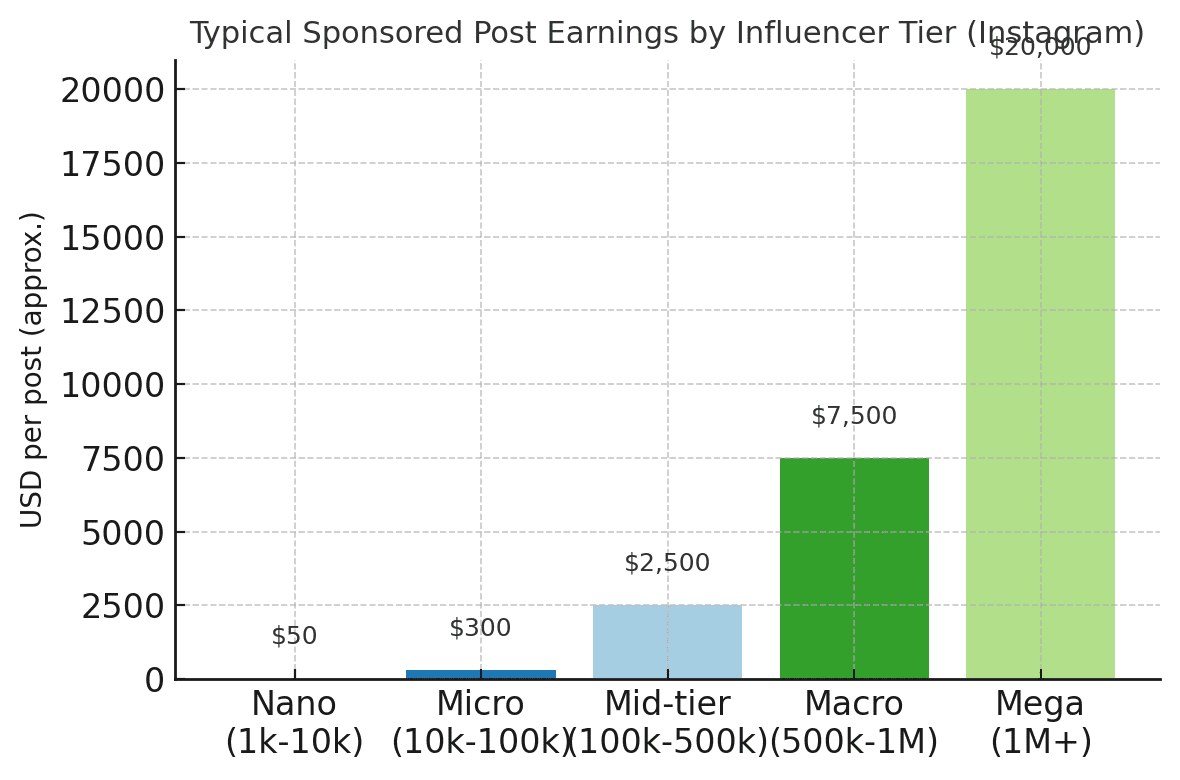
Figure: Typical sponsored post earnings per post by influencer tier on Instagram (approximate ranges). Micro‑influencers (10k–100k followers) typically charge in the low hundreds of dollars per post, significantly less than macro-influencers with larger followings. This cost-effectiveness is a key reason brands and e-commerce sellers collaborate with micro‑influencers.
As shown above, a micro‑influencer’s pay per post is generally in the hundreds of dollars, whereas a mega-influencer or celebrity with over a million followers might earn tens of thousands for one post. For example, top celebrities like Cristiano Ronaldo reportedly earn well into six figures (over $1M per Instagram post in Ronaldo’s case), which is far beyond a typical micro‑influencer. However, most marketing campaigns don’t need a global celebrity – partnering with dozens of micro‑influencers can often yield better engagement and more content for the same budget as one post from a mega influencer.
Averages and Ranges: According to an August 2025 industry analysis, micro‑influencers (10k–100k followers) earn around $1,200 per post on average across platforms. Keep in mind this figure is an average; many micro‑creators will earn less (or even just free products), and some in the upper end of the micro range can earn more. On Instagram specifically, the typical range for micro‑influencers is $100–$500 per post, as mentioned. On TikTok, which has grown rapidly, micro‑influencers (often defined similarly by follower count) might get roughly $50 to $1,200 per sponsored TikTok video – the range is wide because TikTok pricing is still evolving and can skyrocket if a creator is known for virality. On YouTube, a micro‑influencer’s integration could fetch anywhere from a few hundred dollars up to a few thousand, since YouTube videos involve more work and have longer engagement.
It’s also insightful to look at monthly or annual earnings. Many micro‑influencers treat their channels as a part-time gig rather than a full-time salary job. In fact, one study found that nano- and micro-influencers earn only about $80–$90 per month on average from Instagram. This low figure suggests that a large portion of micro‑influencers are only making modest side-income – perhaps doing a few small collaborations or affiliate sales here and there. These would include a lot of very small “micro” accounts on the lower end of the follower spectrum who haven’t scaled up monetization yet.
On the flip side, there are certainly micro‑influencers who can turn their influence into a lucrative career. Some top-tier micro‑influencers (closer to that 100k follower mark or with exceptionally engaged audiences) earn six figures annually from a combination of brand deals and other income streams. In other words, it’s not unheard of for a micro‑influencer to pull in over $100,000 a year if they consistently secure well-paid collaborations and perhaps supplement with things like affiliate income. For example, an influencer with ~50k followers in a profitable niche might do a few $1,000+ campaigns per month, plus steady affiliate commissions, adding up to a healthy yearly sum.
To summarize typical micro‑influencer earnings in the US (2024–2025 data):
The key takeaway is variance. Micro‑influencer income isn’t one-size-fits-all. Let’s next examine what causes this variance in earnings.
Not all micro‑influencers are equal in terms of earnings. Several factors determine how much a given micro‑influencer can charge or make:
Customize your page by adding a header banner image and a profile picture if you haven’t already. Organize your storefront thoughtfully so it’s easy for your followers to find things. For example, you might have separate sections for “Beauty Favorites,” “Kitchen Gadgets I Love,” etc. Influencer storefronts share some similarities with brand storefronts – you can even use a custom banner and featured content to give it a personal touch.
7. Promote Your Storefront: Your Amazon storefront won’t magically get traffic on its own – you need to share it with your audience. Promote your new storefront link on your social channels: put the link in your Instagram bio, add it to your Linktree, mention it in YouTube video descriptions, tweet it out, etc. Let your followers know they can shop all your finds in one spot. Create posts or Stories highlighting some of the best items on your storefront to drive curiosity and clicks. The more you integrate your Amazon shop into your content (in a natural, value-added way), the more traffic and sales you’ll likely generate.
8. Keep Creating Content (On and Off Amazon): To maximize earnings, continue making quality content. Encourage your followers to check out your Amazon shop when you talk about products. Additionally, work toward the “onsite influencer” perks: once approved, upload those honest product review videos and photos to Amazon. Over time, as you build up a catalog of shoppable content, you might start seeing passive commissions from random Amazon shoppers, not just your followers. It’s essentially building multiple income streams within your influencer business – one from direct affiliate sales to your audience, another from Amazon’s internal traffic viewing your content.
Note: If your application is not approved on the first try, don’t be discouraged. Take a few months to grow your following or engagement (perhaps focus on a niche, improve content quality), then try again. Amazon wants influencers who have an authentic connection with an audience, not just vanity metrics. So work on that community-building and you’ll increase your odds in the next application.
Not all micro‑influencers are equal in terms of earnings. Several factors determine how much a given micro‑influencer can charge or make:
By considering these factors, one can understand why micro‑influencer earnings range so widely. A micro‑influencer who ticks all the boxes – near the 100k follower mark, excellent engagement, in a lucrative niche like tech or beauty, creating high-quality videos, and working with brands with big budgets – could be at the top end of the pay scale. On the other hand, a micro‑influencer with a smaller, less active audience or catering to a niche with fewer sponsors might earn much less and rely more on free products or affiliate links.
Micro‑influencers have proven especially useful for e-commerce companies and Amazon sellers. Here’s why this segment of influencers is in high demand for online business marketing:
Micro‑influencers may not have superstar salaries, but they play an outsized role in today’s social commerce landscape.
For micro‑influencers reading this, the takeaway is that there is real earning potential in this field, but it requires strategy – building an engaged follower base, understanding your worth, and diversifying income streams. For brands and Amazon sellers, micro‑influencers represent a cost-effective way to get your products in front of enthusiastic, niche audiences and to collect a library of UGC and reviews.
In 2025 and beyond, micro‑influencers will likely continue to monetize their passion and drive value for brands, growing together in the evolving landscape of social media and e-commerce. The exact dollars they make will always range widely, but their impact on digital marketing is undeniable – sometimes, small influencers can make a big difference.

By William Gasner
CMO at Stack Influence
William Gasner is the CMO of Stack Influence, he’s a 6X founder, a 7-Figure eCommerce seller, and has been featured in leading publications like Forbes, Business Insider, and Wired for his thoughts on the influencer marketing and eCommerce industries.
Want new articles before they get published? Subscribe to our Awesome Newsletter.
111 NE 1st St, 8th Floor
Miami, FL 33132



© 2025 Stack Influence Inc
© 2025 Stack Influence Inc
The post How Much Do Micro‑Influencers Make in 2025? appeared first on Stack Influence.





