
If you’ve spent any time on TikTok or YouTube, you’ve probably seen two types of stories about Shopify dropshipping: “I started yesterday and made $10k in a week.”, “I got sales, but somehow I’m still losing money.”
The reality sits somewhere in between.
Recent reports value the global dropshipping market in the hundreds of billions of dollars, with forecasts pushing it well past USD 1 trillion by 2030 at growth rates of roughly 20–22% a year. At the same time, several 2025 statistics roundups estimate that only about 10–20% of dropshipping businesses ever reach consistent profitability.
So the opportunity is big—but the failure rate is real, especially for beginners who treat dropshipping using Shopify as a shortcut instead of a business.
This guide walks you through how to dropship on Shopify in 2026 from scratch:
Shopify is an ecommerce platform. Dropshipping is a fulfillment model. When you combine them, you get a store where:
In practical terms, dropshipping using Shopify means you focus on:
Meanwhile, apps and suppliers handle most of the logistics in the background.
Shopify stays attractive in 2026 because it gives beginners a hosted store, secure checkout, and an app ecosystem for payments, shipping, suppliers, analytics and more, without needing to code. But the platform alone doesn’t decide whether you’ll be in the 10–20% that win. Your decisions do.
Short answer: yes—but not by accident.
A few data points help set expectations:
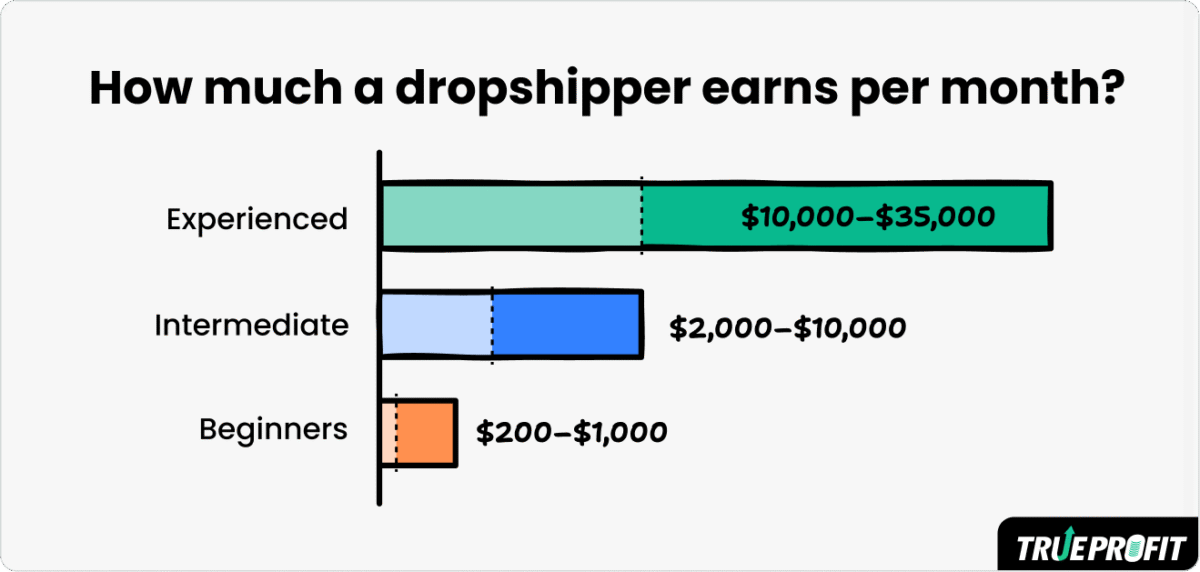
On top of that, Shopify’s own “how much does it cost to start dropshipping” guidance now recommends a lean starting budget of around USD 200–600 per month. That covers your Shopify plan, domain, basic apps and initial marketing.
Put together, this means:
If you want to know how to make money dropshipping on Shopify, the honest formula is: understand your numbers, price for profit, and be prepared to iterate instead of expecting a single viral hit.
For a deeper dive into expectations, case examples and numbers, you can also read TrueProfit’s detailed guide on how to dropship on shopify.
Before you sign up for anything, decide what you’re actually trying to do.
Treat the first three to six months as a test phase. During this time, your main goal is to learn:
That mindset alone will protect you from quitting too early or overreacting to a few bad days of results.
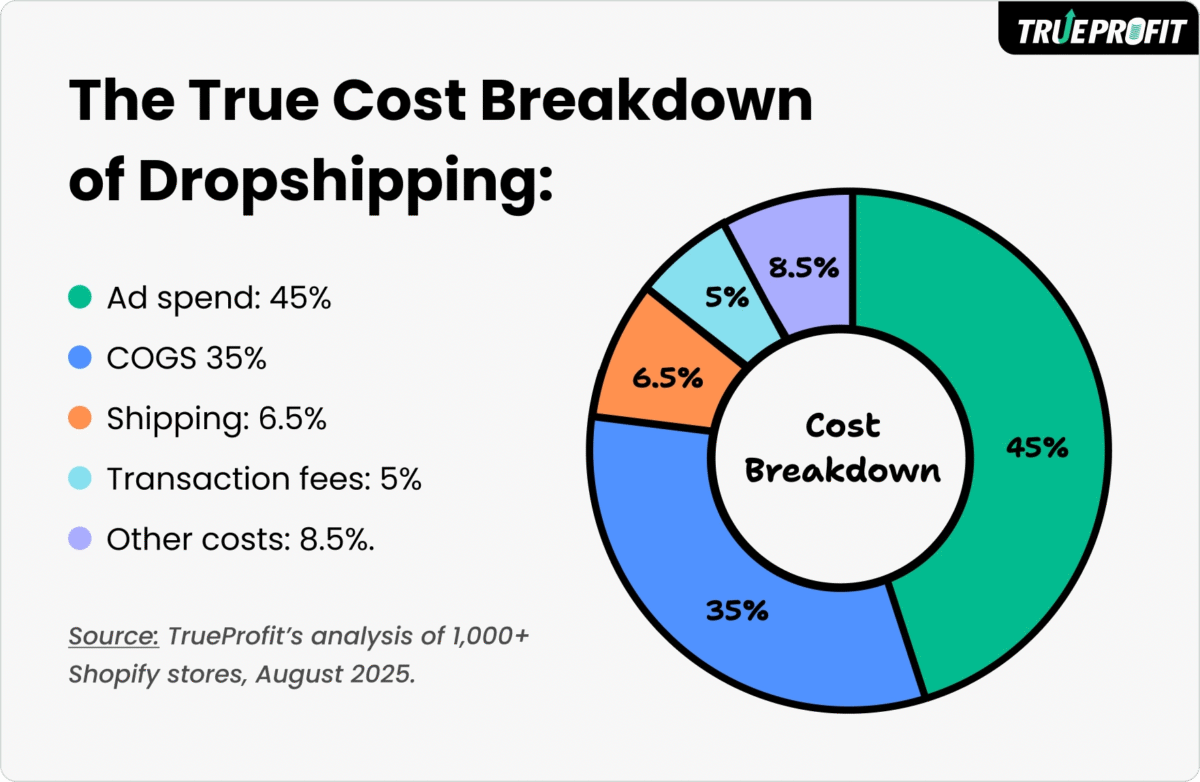
Next, define a realistic monthly budget. Using Shopify’s own estimates, a lean setup might include:
Altogether, that often lands in the USD 200–600/month range for beginners, depending on how aggressive you want to be with marketing.
Finally, write down your goals. For example:
Knowing your timeline and budget gives you a calmer frame for every decision that follows.
Once your expectations are set, you can safely move into the practical setup.
Start by opening a Shopify account and choosing the Basic plan when you’re ready to go live. As of late 2025, that plan is typically around USD 29/month when billed annually, sometimes with promotions for the first few months. Connect a custom domain so your store doesn’t look like a generic subdomain and configure your primary payment methods (Shopify Payments plus PayPal or others relevant in your target markets).
Choose a clean, fast theme from the Shopify Theme Store. For a first dropshipping store, you don’t need anything fancy: a simple layout with clear sections for hero content, featured products, benefits, reviews and FAQ is enough. Spend your energy on clarity and trust instead of complex design tricks.
Then configure the basics that people often skip:
You can refine all of this later, but you don’t want your first paying customer to hit errors or missing information on something that should have been set up from day one.
A common beginner mistake is to treat Shopify like a vending machine: throw in any “winning product” from a YouTube list and hope for the best.
A more reliable approach is to start with people, not products. Think about:
Once you’ve defined that, brainstorm products that logically fit and solve something specific in that world. It’s much easier to write compelling copy and create convincing creatives when the whole store is built around one customer profile and a small group of problems.
To validate your ideas, combine a few simple checks:
The goal isn’t to find something with zero competition (that’s usually a bad sign), but to find a space where you can position your offer clearly: better explanation, better bundle, better angle, or better content.
With a niche defined, you need reliable suppliers who can actually fulfil your promises.
Most beginners use Shopify-integrated apps that connect to dropshipping marketplaces or print-on-demand services. These tools let you import product listings with a few clicks and automatically route orders to suppliers once customers pay on your site.
When evaluating suppliers, look beyond the product price. Check:
Always order samples of anything you plan to push with real ad spend. A slightly higher per-unit cost is often worth it if it dramatically reduces refunds, support tickets and negative reviews.
Once you’re confident in a supplier, use their app or integration to sync products to your Shopify store, set your selling prices and test that orders flow correctly from your checkout to their system.
This is where a lot of new stores quietly fail.
They copy what competitors charge, pick a similar number, and move on. They never really check how much of that price is actually profit after product cost.
A better way is to look at your gross profit margin on each product, not just the price tag.
Start simple:
Gross Profit Margin (%) = (Gross Profit ÷ Selling Price) × 100
For example, imagine you sell a product for $39 and your cost of goods sold is $15:
That’s the kind of margin that usually gives you some breathing room. It has to cover Shopify and payment fees, occasional discounts or refunds, ad spend, apps, and still leave you profit.
Now imagine the same product at $39, but your cost of goods sold is $26:
On paper, you’re still “making something,” but there’s far less space for fees and marketing. A small jump in ad costs or a few refunds can wipe that out quickly.
As a simple rule of thumb, aim for roughly 60–70% gross margin where you can. It won’t always be possible in every niche, but the closer you are to that range, the easier it is to absorb fees, pay for traffic and still come out ahead.
Before you launch, plug your prices and product costs into a basic calculator and test a few scenarios. If your gross margin is thin and your idea only “works” when everything goes perfectly, the issue usually isn’t your ads—it’s your pricing.
When someone lands on your product page, they’re silently testing you. They want to know what the product does, what’s in it for them, whether they can trust you, and what happens if things go wrong.
Start with a headline and opening section that focus on the outcome, not the hardware. “Help your indoor dog burn energy and stop chewing everything” is much clearer than “Interactive pet toy with multiple modes.”
Follow it with concise copy that explains how it works, why it’s different from generic alternatives, and what to expect when using it. Use a mix of photos and, if possible, short videos showing the product in a real-life setting that matches your target customer’s world.
Make your shipping and returns information easy to see. If you’re shipping internationally with longer delivery times, be honest about it and set expectations clearly instead of promising unrealistic timelines. This reduces refund requests and angry emails later.
Social proof matters as well. Early on, you might not have many reviews, but you can collect feedback from testers, friends or early customers and gradually build that section out. Real photos and specific comments (“helped my dog chill during work calls”) carry more weight than generic five-star ratings.
Finally, remember that most of your visitors will be on mobile. Check your store from a phone and make sure the key information and add-to-cart button are visible without endless scrolling, and that your text is readable without pinch-zooming. With average ecommerce conversion rates typically around 2–3%, small clarity improvements can make a big difference over time.
If you only look at revenue, it’s very easy to think you’re doing better than you are.
At a basic level, you should:
That covers visitor and revenue data, but it still doesn’t tell you whether you’re truly profitable after all costs.
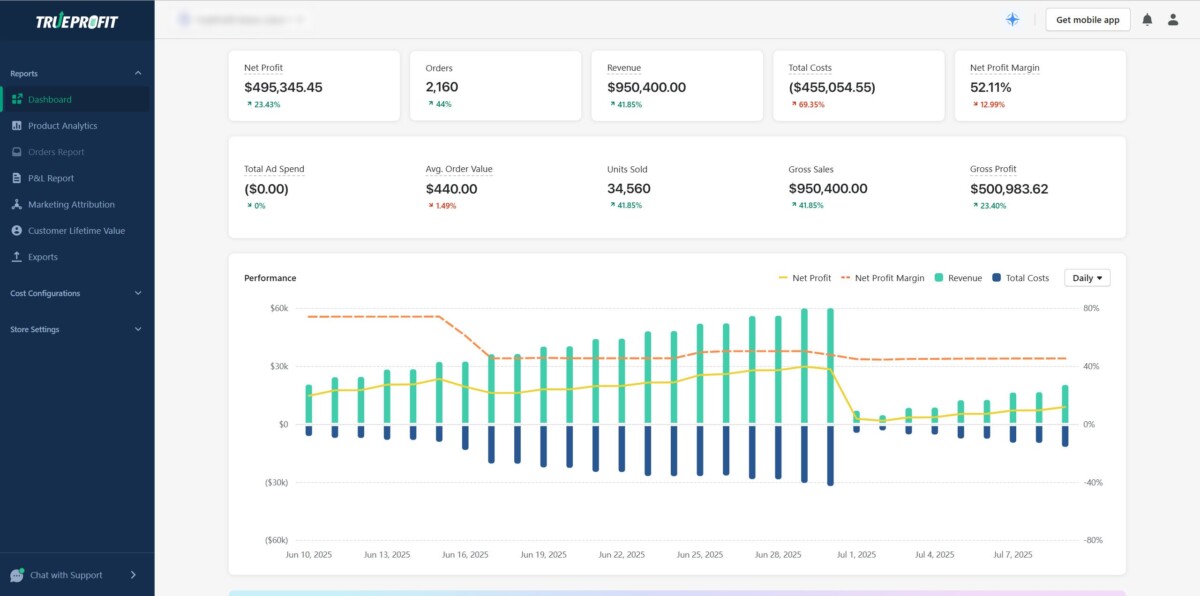
That’s where a profit analytics tool comes in. Apps like TrueProfit pull data from your Shopify store and ad accounts and combine it with your cost settings to show:
From there, they calculate net profit and profit margin across your store as a whole and at the product, store and order level. Instead of guessing based on ROAS, you can see whether any given ad set or SKU is actually making or losing money once everything is factored in.
If your goal is genuinely to learn how to make money dropshipping on Shopify rather than just generate sales screenshots, this “single source of truth” for profit shouldn’t be an optional extra you add six months in. It belongs in your setup alongside the theme and payment gateway.
With the store, products, pricing and tracking in place, it’s time to send people to your site.
Most beginners start with social ads on Meta or TikTok because they’re fast. You can show your products to thousands of people within days instead of waiting months for SEO to kick in. But those clicks cost money, so you want to treat your first campaigns as experiments rather than guaranteed profit machines.
Begin with a test budget you’re genuinely comfortable losing while you learn. Create multiple versions of your ads with different hooks and angles, all pointing to the same focused offer. Watch early metrics like click-through rate, cost per click and cost per add-to-cart, but don’t forget the only metric that really matters: profit per order.
Recent Facebook benchmark reports show an average CTR for traffic campaigns around 1.5–1.6%, with plenty of variation by industry. If you’re dramatically below that, your ads probably aren’t resonating. If you’re in that range but still losing money, your target audience, offer or pricing may need work.
At the same time, start building organic content around your niche. Short videos, before-and-after posts, and simple tips tied to your product’s problem space can all help. Even if they don’t go viral, they give you extra assets for ads, improve trust when customers click through to your profiles, and occasionally drive “free” traffic.
The stores that stick around are the ones that treat this as a loop:
Learning how to dropship on Shopify in 2026 is less about discovering a secret product and more about stacking a few practical habits:
Do that, and you’re already operating very differently from most beginners. In a space where only a small slice of stores end up profitable long term, that difference in approach is exactly what gives you a chance to be one of them.
Shopify is attractive because it offers a secure, hosted platform that saves you from coding a store yourself. It handles secure checkouts, payment processing, and offers an app store for integrating suppliers and analytic tools. This allows new dropshippers to focus on product selection and marketing instead of technical setup.
Yes, dropshipping is still profitable, but only about 10–20% of new stores reach consistent profit. Success requires treating it as a real business rather than a shortcut. You must focus intensely on tracking real profit margins and systematically testing your products and ads.
Shopify suggests a lean starting budget of about $200–$600 per month for beginners. This money covers the basic Shopify plan, a custom domain, essential apps, and a modest fund for testing ads. Planning to spend this money helps you avoid quitting too early from a lack of funds to test.
The most common mistake is choosing random “hot” products instead of picking a specific customer and their needs. You should select a definite niche, such as remote workers or apartment dog owners, and then find products that solve their specific problems. This approach makes your marketing much clearer and more effective.
You must aim for roughly 60–70% gross profit margin wherever possible. Gross profit is your selling price minus the cost of goods sold. You need a high margin because this money must cover payment fees, app subscriptions, customer refunds, and all your advertising spend before you see any net profit.
No, finding a product with zero competition can often be a bad sign, suggesting no one is searching for it. Instead of avoiding competition, you should find a clear space where you can offer better value. This might be through better product explanations, clearer bundles, or more trustworthy content.
Setting a timeline helps you manage expectations and prevents you from overreacting to early losses. During this initial phase, your main goals should be learning which audiences work and how much it costs to acquire a customer. This mindset protects your budget and helps you make calmer, data-driven decisions.
Your product page must answer every customer concern to build trust and increase sales. The page needs to clearly explain the product’s outcome, not just its features, and show real-life photos or videos. You should also prominently display honest information about shipping times and easy return policies.
The single most important metric to track is net profit per order, not just sales revenue or ad return on investment (ROAS). You should use a simple calculator or profit app that factors in product costs, shipping fees, and ad spend to show if you are truly making money after all expenses.
Most beginners start with paid social ads on Meta or TikTok because they quickly show products to thousands of potential customers. Use a small test budget and create several ad variations with different hooks to see what resonates. Always be ready to quickly stop ads that are not profitable.




