

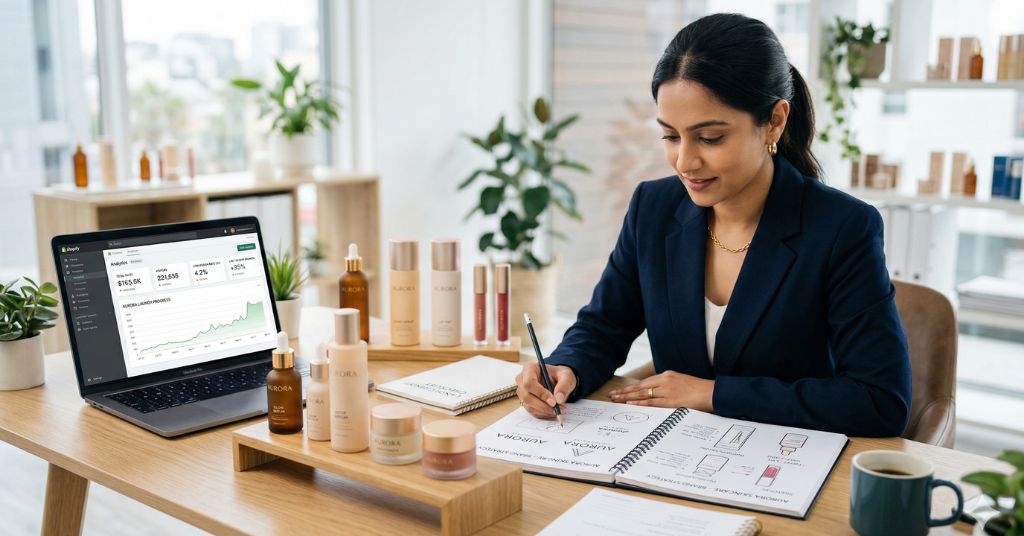
The beauty brands winning on Shopify right now are not the ones with the most sophisticated formulas. They are the ones with the sharpest brand positioning, the most efficient path to first sale, and the discipline to start with two products instead of twenty.
D2C beauty brands are rising because they are providing highly tailored and personalised products to the end users. With the consistent rise in the competition among the beauty brands, those that remain authentic and unique in their offerings are destined to win. As the use of social media platforms for marketing is on the rise, there has been a substantial focus on private label companies that offer ready-to-launch solutions to their clients.
With the support of private label companies, brands do not have to set up a factory or spend time researching on the formulas. It saves their time and also allows them to use their time and resources for marketing and other business strategies. Through this blog, you will learn how to launch your DTC beauty brand with the help of a private label manufacturing firm.
Before learning more about the specifics, let’s learn what private label cosmetics manufacturing actually means. The below pointers will clear some of your doubts regarding this:
Private labelling for beauty startups is a collaboration where a private label company will handle everything about the production from formulation to manufacturing and from packaging to delivery. You can then choose the branding strategies and sell the product through your preferred online and offline challenges. It becomes a profitable business model because you don’t have to spend time and resources creating the products from scratch.
D2C cosmetics and beauty brands can reduce their production and research costs after partnering with a reputed private labelling company. Some private label companies also provide them with the opportunity to customise their product formulas as per their requirements. Apart from that, they can also launch their products faster by working on pre-defined formulas. As a founder, you can focus on your core business operations and marketing strategies after choosing a private label company as your manufacturing partner.
Your first step would be to be clear with your brand’s vision. For that, you must determine the product categories your brand will operate in i.e. whether you will focus on skincare, haircare, or body care products. Then, you must dedicate your time in developing your brand’s personality and core values. For instance, you can choose whether you want to promote sustainability, clean formulations, or a little bit of everything through your brand. This will help you determine why the customers would be interested in your offerings.
Your next step would be researching your target audience. This includes who will buy your products i.e. demographics of your target audience along with their preferences and pain points. Also, don’t forget to capitalise on the niche opportunities in anti-ageing, men’s grooming, ethical, and eco-friendly product categories. Once you determine these things, it will be easy for you to choose your products and focus on their key features and specifications.
Your next step would be to evaluate the cosmetic manufacturers based on your key requirements. For instance, as a startup you might be interested to collaborate with manufacturers who accept low Minimum Order Quantities (MOQs). At the same time, you must also look for the kind of flexibility that you require in the initial days of your business. Look for product certifications such as GMP, FDA, organic/cruelty-free support and other documents that help to establish your brand’s trust. You must also seek manufacturers with customised packaging and formula tweaking expertise.
Here’s a checklist that beauty startup owners must have:
As a beauty startup, you can start with a limited number of SKUs with focus on 2 to 3 key offerings that will be your hero products. It will minimise the risks associated with initial assessment of product quality and effectiveness. At the same time, it will help you provide a clear message to your audience as multiple offerings can lead to messaging complexity.
The features of your products must be chosen wisely as it will directly determine their performance in the market. For instance, you can choose trending actives such as hyaluronic acid and niacinamide for your products. At the same time, you can promote clean and cruelty-free formulas by using the appropriate labels in the packaging design.
The packaging formats and design must complement your brand’s values and must reflect your brand’s true character and personality. This will help your customers identify with your products and brand more personally. Once that is finalised, you must include all the regulatory labelling such as ingredients list and compliance info in the packaging designs.
Choose Shopify or any other eCommerce platform for selling your products online. Choose the product pages that would help you convert the visitors into your customers. Clear value propositions, detailed product features, and high-quality imagery would help you attract customers. After setting up these things, you can focus on the marketing aspect of your online store.
The checkout procedure for your products must be simple and straightforward. If it’s too complicated, the customers might end up abandoning them midway. Also, use SEO-friendly descriptions to capture the audience on your product pages. These strategies will help your brand grow in the long run.
By using the right data analytical tools, you can capture the contact number, email ID, and other important customer touchpoints. Through these details, you’ll be able to retain and acquire more customers in the future. Also, paying heed to customer feedback can help them feel valued and respected. These things are crucial if you want your brand to be perceived as reputed and customer-centric.
Creating a pre-launch buzz is very important. You can curate the email list of your target audience and use them for setting up the launch campaigns. It would turn as the lead magnet for your eCommerce store initially. Creating teaser videos on YouTube, Instagram, and other social media platforms along with influencer marketing tricks can help your brand earn the rightful recognition it deserves at the very beginning of your beauty business.
After the launch, you can set up paid social media advertisements and track their ROI diligently. Your content marketing and community management strategies will keep the customers interested in your products for a long time. This will eventually help you build a brand that is strong, unique, and appealing in the broader market.
These were a few steps that help you understand how to select the right private partner for your beauty or cosmetics brands. Along with that, we have also clarified the steps that will help you establish your business in the market. While marketing and social media influencers can be the key for your brand’s growth, do not ignore SEO and customer feedback. Finally, you must learn how to overcome the initial struggles by choosing the right manufacturer that can support you with everything from product formulation to packaging. Bo International has emerged as a leading private label cosmetics manufacturing company across the world. Contact them and get the right launch your products deserve!
Private label cosmetics manufacturing is a model where a third-party manufacturer develops, produces, and packages cosmetic products that you then brand and sell as your own. The manufacturer handles formulation compliance, ingredient sourcing, and production. You handle branding, marketing, and customer relationships. It removes the need for a founder to have chemistry expertise or manufacturing infrastructure, making it the fastest viable path to market for most DTC beauty startups.
Startup costs vary significantly based on MOQs, packaging complexity, and product category. Most founders launching with two to three SKUs through a private label partner can expect to invest between $5,000 and $25,000 for initial inventory, sampling, packaging design, and store setup. Low MOQ manufacturers reduce upfront inventory risk considerably, which is why finding a cosmetic manufacturer who works with startup quantities is one of the most important early decisions you will make.
Evaluate manufacturers on four criteria: certifications (GMP compliance, FDA registration, cruelty-free or organic where relevant to your brand), MOQ flexibility for startup quantities, customization capability (what can you change about the formula and packaging), and communication quality. Always request samples before committing to a production run. A manufacturer who cannot clearly answer questions about certifications and customization options is not the right partner for a brand-building operation.
Two to three hero products is the right starting point for most DTC beauty brands. A focused SKU count reduces inventory risk, simplifies your brand story, and makes it easier to drive customers toward a multi-product purchase. Launching with ten or more products spreads your marketing budget thin, complicates your supply chain, and makes it harder to identify which products are actually resonating with your target customer.
Shopify is the right choice for most DTC beauty founders launching today. The platform’s app ecosystem, checkout performance, native subscription capabilities, and integrations with email, SMS, and paid advertising tools are all built for exactly this use case. Start on Shopify rather than a platform you will need to migrate away from once you reach meaningful revenue.
Pre-launch email list building, micro and nano influencer seeding, and organic social content on Instagram and TikTok are the highest-ROI tactics for founders with limited budgets. Build an owned audience before you spend on paid acquisition. Once you have validated your conversion rate and average order value through organic channels, use paid Meta and TikTok ads to scale what is already working. Community building and a brand newsletter compound in value over time and reduce your dependence on paid channels you do not control.





