

Decision-making is a freedom that we, as consumers, are privileged to have. We utilize our conscious thought to make decisions for ourselves that tend to result in the purchase of a product or service that meets a current need we have.
However, when presented with too much choice, we face a dilemma. What if we make the wrong decision? What if we spend time overanalyzing our choices, only to become overwhelmed by the entire process?
Choice paralysis is a common problem that ecommerce business owners need to be aware of and work to mitigate. Left unchecked, you could be creating undue decision fatigue for your customers, and in the long run, leaving them to the point of no purchase or even cancellations.
Key takeaways
Choice paralysis, sometimes referred to as analysis paralysis, is the detrimental pause customers face when presented with too many options for fear of making the wrong choice.
Most people may think that customers want as many choices and options as possible. But the correlation between choice and satisfaction is not one-to-one. In fact, studies show that too many choices reduces future satisfaction because the decision-making process becomes too overwhelming. This results in decision paralysis which ultimately leads to the reverse outcome…they’re unable to make a decision at all.
At the end of the day, the decision-maker, aka your customer, is the person who will need to overcome their analysis paralysis. But without intervention from you to help point them in the right direction, you run the risk of losing them altogether.
Choice paralysis can ebb and flow in intensity for your customers. Perhaps you are selling to a parent of young kids who is the default decision-maker in their home. Pairing the constant loop of decisions they have to make on a daily basis surrounding their kids and family with too many choices from your product offering can result in overthinking and overwhelm. It’s not that your products are even too complex or have too many choices. But when combined with their life of decision-making, it can stop them in their tracks.
Research shows that all consumers face analysis paralysis. Important decisions, such as medical decisions or job choices, can fatigue a customer before they even get to you. Life is full of complex decisions, so with you providing them advice on making the right choices for themselves, you can help improve the quality of their experience with you.
Many merchants have found ways to boil complex decision-making into manageable opportunities on their website to help customers make the best decision for themselves, which ultimately reduces customer churn.
A great example of this is with Bumpin Blends. Bumpin Blends sells pre-packaged and portioned smoothie cubes to provide customers with easy nutrition based on their needs. They have over 20 flavors, which could easily result in analysis paralysis for customers. But Bumpin Blends developed a quiz for customers to select the things that are most important for them to manage by using these smoothie cubes.

The result? A curated set of options that gives the person the ability to choose from the flavors they may like, without an overwhelming list.
Another example is Wüfers, creators of gourmet dog cookies. Wüfers presents customers with only two options to select from when it’s time to make a decision on their subscription offering. In a matter of minutes, customers can see the differences in package options, and the overall value of each box, so they can decide for themselves what they’d like.
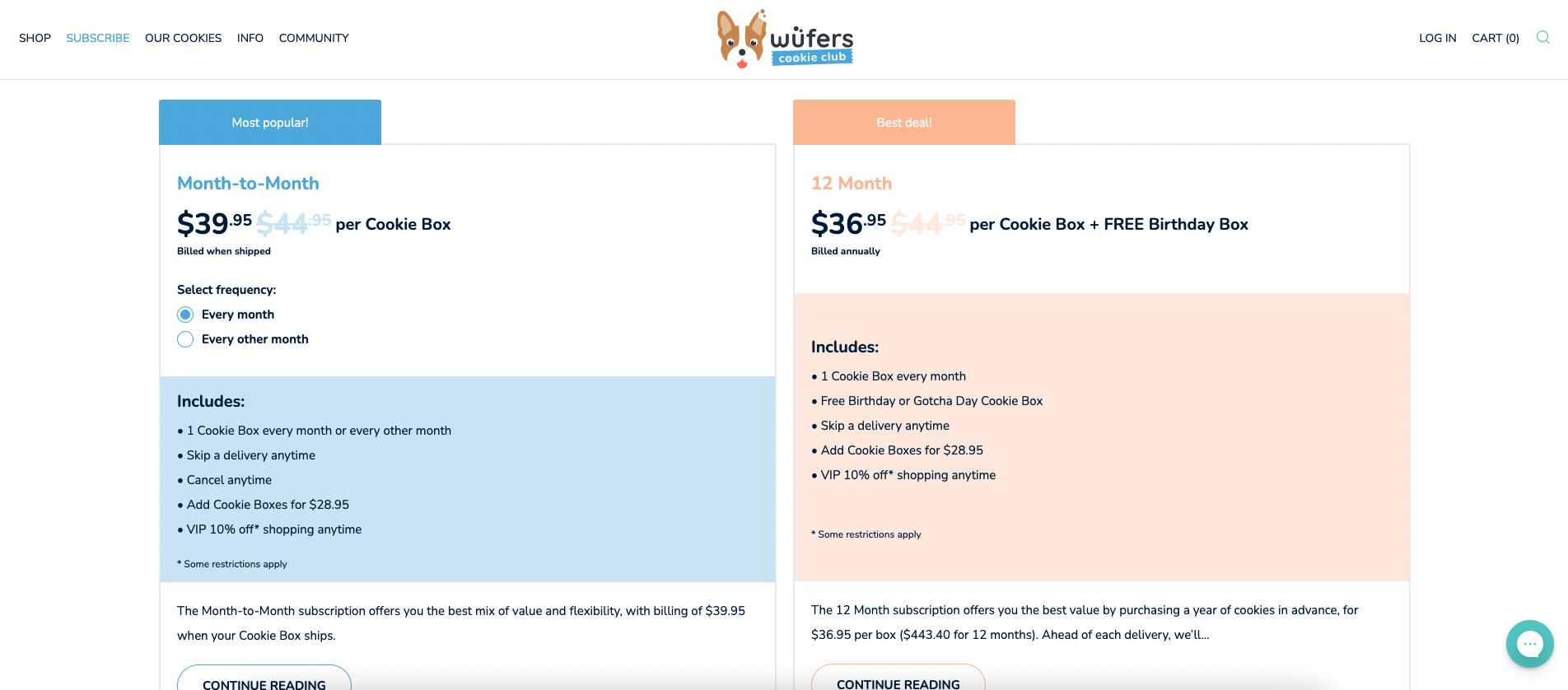
The second part of their strategy utilizes the tactic of putting their cancellation and skip policy right up front. Of course, this doesn’t guarantee a customer will make a decision to subscribe with them, but it helps them not feel overwhelmed at the fact that they may be “locked-in” to a long-term commitment.
Overanalyzing and overthinking are two of the biggest side effects of having to make too many decisions. Ensure your customers can avoid feeling exhausted by making the decision-making easier for them. A customer’s inability to decide can lead to lost revenue—not to mention frustration. Thankfully, there is an easy solution to avoid choice paralysis: give fewer choices and a tailored customer experience.





