

In this blog post, we’ll share a compliance audit checklist, but you’ll have to listen to our compliance audit pep talk first. So huddle up.
Whether it’s HIPAA, DORA, ISO 27001, SOC 2, or any number of other optional or compulsory compliance standards, getting audit-ready can feel overwhelming without a clear roadmap. Compliance standards will typically have a defined audit schedule, but organizations must also be prepared for a surprise compliance audit, which is like a surprise party but with documents and frameworks instead of cake and presents. It may not be a perfect analogy.
One of the ways we at Rewind demonstrate our deep commitment to security is by going through the qualification and audit processes required for attestation for SOC Type 2, SOC Type 3, ISO 27001, and other rigorous compliance standards.
As such, we’ve been through more than a few certification and compliance audits ourselves and we have some compliance audit tips and best practices to share.
In this guide, we’ll talk through exactly how to prepare for a compliance audit and how to tackle common compliance challenges. Plus, we’ll highlight the people and tools that make the journey smoother.
Before we jump into that, we’d be remiss not to mention that a bulletproof SaaS backup and restore solution in line with the 3-2-1 rule for cloud backups is a de facto requirement of most—if not all—data security and compliance standards. And that’s where Rewind comes in (get started | book a demo).
Some compliance frameworks are required. For example, if an organization handles protected health information (PHI) in the US, that organization must comply with the Health Insurance Portability and Accountability Act (HIPAA). Other non-optional compliance standards include:
Other compliance frameworks like SOC 2, SOC 3, and ISO 27001 may not be required by a governing body, but offer external validation that the attested organization meets rigorous, independently audited requirements around data security, data handling, data protection, and other important data, resilience, security, and privacy standards.
Achieving attestation for these standards offers a competitive advantage and a shortcut to trust. Only organizations that are attested are allowed to claim compliance and use the relevant badges and logos that prove it. Attestation is an ongoing process and requires that organizations submit to regular independent audits. A compliance audit checklist is invaluable whether you’re demonstrating compliance for the first time or the fifth.
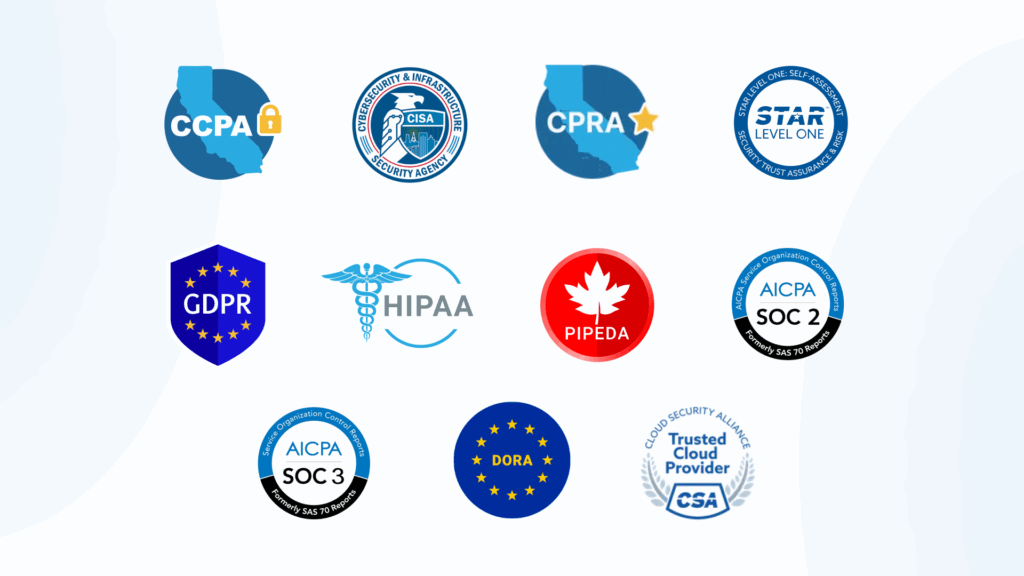
Required and optional compliance frameworks have many things in common. Among those things is the fact that they are independently audited. Organizations must keep records and be able to demonstrate compliance if (when) they are subject to a compliance audit.
A compliance audit isn’t a threat, it’s an opportunity to ensure your organization’s security posture and demonstrate credibility to clients. That said, failing a compliance audit comes at a cost; figuratively in lost certifications and lost trust, and in the case of non-optional compliance standards, quite literally as fines and penalties. Failing a HIPAA compliance audit, for example, can also result in steep HIPAA non-compliance penalties.
So the stakes are high.
Successful compliance isn’t just about technology, it’s about people.
Compliance frameworks require that employees be trained to recognize risks, and practice good security hygiene.
It’s important to implement zero trust fundamentals like least privileged access controls using, for example, role based access control (RBAC). It’s equally important to ensure employees understand the importance of these fundamentals in helping the organization achieve attestation.
A compliance audit can feel like there’s a lot coming at you all at once. That’s probably because in a compliance audit, there is a lot coming at you all at once. Use a FARO (Find, Assess, Respond, and Optimize) risk assessment to identify and rank risks by their potential impact: Triage, in other words.
This risk-based approach allows you to allocate resources wisely and focus on areas that pose the greatest compliance risks and/or present the greatest opportunities. For example, if your data backup processes are a weak spot, that area will require more attention during the audit preparation. Sometimes the solution is simple. In this case, choosing a backup platform that supports compliance allows you to tick that box on your compliance audit checklist.
Preparing a compliance audit shouldn’t feel like a last-minute scramble. With compliance embedded into your daily operations, all you need to do is produce the proof. With the right mindset, team, and tools, you can transform audits from stress-inducing events into valuable opportunities for growth.
If you want to make sure your critical SaaS apps are fully protected with a secure, audit-ready backup and recovery platform, get started with Rewind today or book a demo with our team. We’ll show you how Rewind helps organizations build data resilience and supports compliance for compliance frameworks including HIPAA, DORA, SOC 2/3, ISO 27001, and more.
✔️ Understand the purpose of the audit: Know why you are being audited and what standards apply.
✔️ Identify applicable standards and regulations: Pinpoint relevant frameworks like ISO 27001, HIPAA, SOC 2, DORA, etc.
✔️ Define audit scope and objectives: Collaborate with stakeholders to clarify what will be audited.
✔️ Assemble the right team: Include members with compliance, industry, and operational expertise.
✔️ Conduct a thorough risk assessment: Use a FARO approach to prioritize audit focus areas.
✔️ Document processes and procedures: Maintain clear, comprehensive records demonstrating compliance.
✔️ Communicate and train: Ensure all employees understand their role and the importance of compliance.
✔️ Engage external experts: Consider third-party guidance to strengthen audit readiness.
A compliance audit checklist is a structured list of items and activities that an organization needs to prepare, verify, and document to ensure it meets regulatory and standards requirements during an audit. It helps streamline preparation and ensures no critical areas are overlooked.
Common compliance standards include ISO 27001 (information security), HIPAA (healthcare data privacy), SOC 2 and SOC 3 (System and Organization Controls), and DORA (Digital Operational Resilience Act). The applicable standard depends on your industry and regulatory environment.
Follow backup best practices such as the 3-2-1 backup rule, which is widely recognized in compliance frameworks. This involves maintaining three copies of your data in two different locations, with at least one copy outside your SaaS provider’s infrastructure. Additionally, understand the Shared Responsibility Model to know your obligations in protecting and backing up your data.
Documentation is critical. It proves to auditors that your organization has defined and implemented policies, procedures, and controls. Well-maintained documentation also supports continuous improvement and helps onboard new team members efficiently.
Engaging external experts can provide an objective assessment and help identify gaps before the official audit. They bring specialized knowledge of regulations and can assist in aligning your processes with industry best practices.





