


Black Friday sales have been steadily growing YoY. 2019 Black Friday sales totaled $7.4B, up from the 2018 figure — which totaled $6.2B. And that figure eclipsed 2017 earnings by 23.6%.
But given what’s transpired since February, and what new Emarsys data reveals, I wouldn’t bet on that trend skyrocketing again this year.
How will retailers need to adjust to what’s traditionally been the most lucrative day of the year? And how are leading brands making the transition in preparation for a “new Black Friday?”
We’re two months away from Cyber Week and Black Friday, historically the highest grossing week of the year for retail brands.
There’s just one problem: people are scared (in fact, there’s no degree of safety measures that will be enough to tempt U.S. shoppers back to stores, according to Emarsys research). And, consumers found other, easier ways to shop, too.
Related: 5 Trends to Guide Your Black Friday Marketing in 2019
Here are 15 data points — and their implications — from Emarsys clients to help you be as informed as possible as you prepare for Black Friday and Cyber Week 2020, post-Coronavirus style:
If you’re wondering what to do or where to do it, you’re not alone. Almost every retailer is scrambling around, all asking “what are the right moves to make?”
Black Friday in the time of COVID-19 is uncharted territory. But the good news is, you can use the aforementioned data to give you an advantage in knowing what are the best steps to take, as well as what to expect (and what not to expect) this season.
The indication that consumers will shop predominantly online, according to our own data and industry benchmarks, correlates closely with how the U.S. retail industry has evolved since the start of the pandemic. No surprises there.
But how can you take advantage of what the data suggests? A few innovative ideas to consider implementing this holiday season include:
It’s true that many retailers had to close their doors, either temporarily or permanently, due to the virus. But many established brick-and-mortar brands who made it through by relying on a stable e-commerce presence ended up with loads of unsold physical inventory. Now is the time to get it off your shelf… with discounts, deals, and the right incentives.
Personalization is a must if you want to stand out in the noise of Christmastime commodification that’ll be bombarding consumers. Discount codes and promotions need to fit each customer, each time.
Free shipping is table stakes around the holidays, so it needs to be incorporated in some fashion, whether you offer it for every item, or only on cart values above a certain threshold.
➤ Bonus Tip: Get people coming back into your store with “in-store only” deals that will be promoted through digital channels.
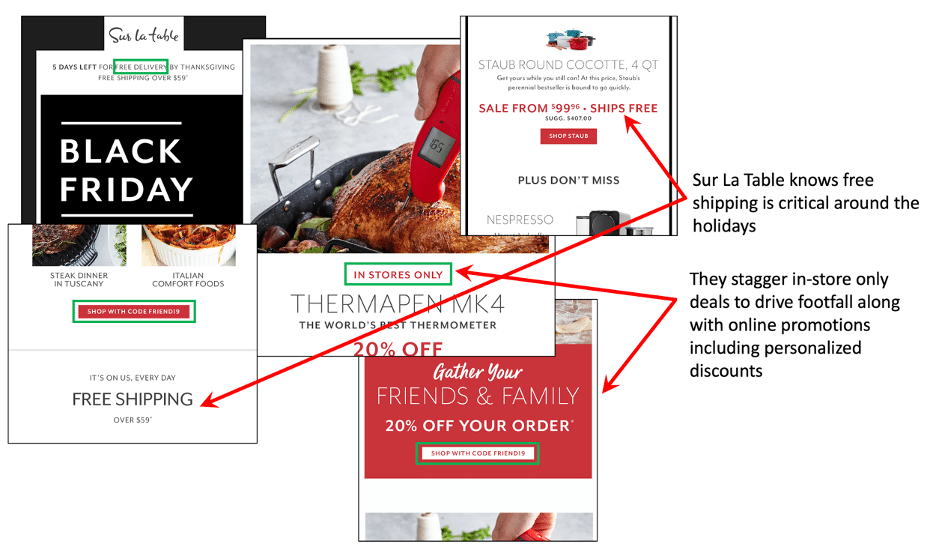
The Holiday season is literally the perfect opportunity to focus on repeat purchases. With all of the holidays coming up, you have a built-in justification for continued outreach that you don’t have to feel weird or pushy about.
➤ Bonus Tip: Ensure your website, apps, and backend technology infrastructure are at peak performance NOW. Then after Black Friday, you can use all the newly-gathered (and existing) customer data to drive retention strategies with personalized targeting over Cyber Monday and Christmas.
Eliminate all friction and focus on value, content, and messaging while your marketing automation takes care of the heavy lifting. How can you use animation (like Zumiez and Drybar, below), countdown clocks, and recommended products that are so eye-catching that consumers have to check it out?
While other brands are trying to play catch up and figure out what COVID-19 will mean for their marketing, don’t worry about what you can’t control. Focus on doing something really emotive and creative, something impactful — show the world why your brand cares about equality, love, or freedom.
With a future as uncertain as now, work-from-home is the new normal… for you and your customers.
Shane Lenton of Cue Clothing Co. shared how he and his team are capitalizing on the ‘work from home’ new normal and online shopping explosion:
What about your customers? For example, Bob, the typical 9-5 commuter who’s schedule was predictable, who bought every third weekend of the month, and who spent an average of $150 in-store every visit, is still the same customer, but he now has a potentially different lifestyle. How can you adapt to the new habits or homebound buyers?
Related: 6 Ways Cue Clothing Co. is Pioneering Unified Commerce: the Next Retail Revolution
There are actually many positives to a predominantly digital Black Friday.
E-commerce provides the perfect opportunity to gather and analyze customer data so you can retarget customers with personalized offers — turning potential one-off customers into loyal and profitable ones.
The move to the online ecosystem is inevitable, and this is an opportunity to advance your own acquisition and retention strategies in a future-proof fashion.
Handpicked Related Content:
This article originally appeared by our friends at Emarsys.





