

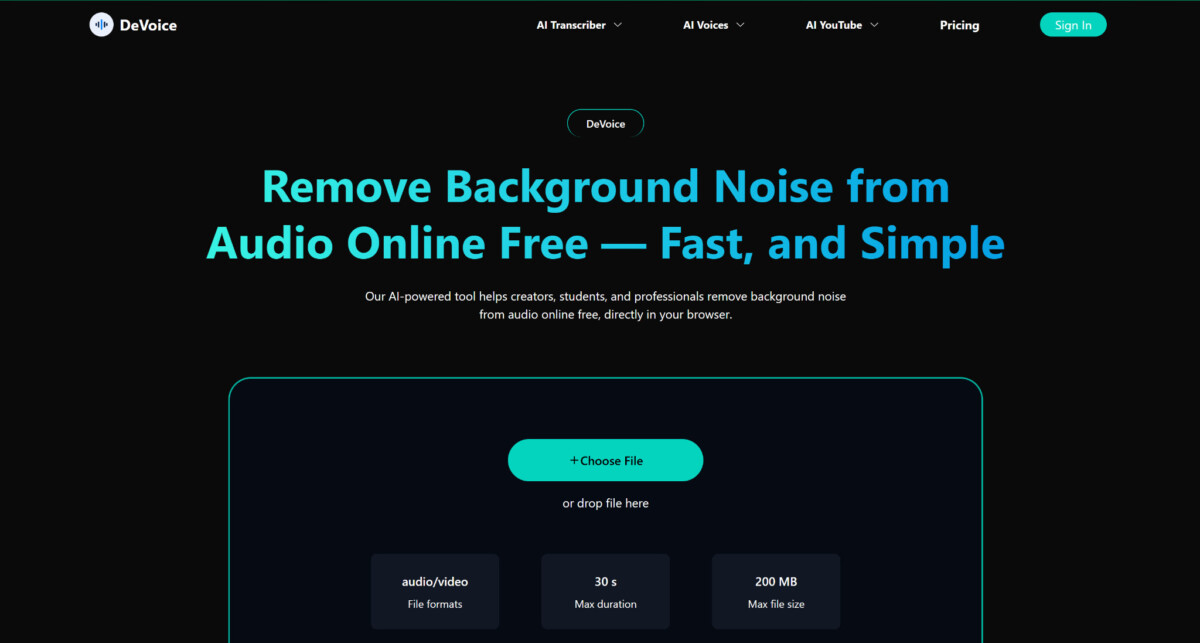
Clean audio is not a luxury. For anyone publishing content, running ads, or recording customer-facing material, it is a baseline requirement that directly affects how professional your brand sounds.
Background noises can also ruin an otherwise good recording. Hisses, hum or chatter and other unpleasant artifacts can make any audio difficult to listen and unprofessional, no matter the type of audio you are working with: voice memo, podcast clip, interview, or video soundtrack.
The positive news is that you do not need higher order skills in editing or expensive software to remedy this issue. Nowadays, it is possible to clean audio with the help of online tools based on artificial intelligence within several clicks. For example, such an online platform as DeVoice provides you with the opportunity to clean up audio on-line without downloading or installing any program.
It is an easy to understand tutorial that will tell how the audio noise can be reduced, how it can be removed step by step and how to get the best possible sound quality using only simple tools available online.
Audio noise is a disturbance of the primary signal (usually speech or music) by an undesirable sound. Depending on your recording setup and equipment, it can be obtained in a plethora of different ways.
Each type of noise behaves differently, which is why modern AI tools are so useful—they can detect and reduce multiple types automatically.
Clean audio is essential for both professional and personal use. Poor sound quality can:
For content creators, marketers, educators, and teams, improving audio clarity can significantly enhance communication and credibility.
Historically to extract noise software such as DAWs (Digital Audio Workstations) were required which usually featured complicated controls and technical expertise. This has been made easier online with the use of tools.
Tools such as DeVoice combine all these advantages, making them ideal for beginners who want quick and reliable results without a steep learning curve.
Start by choosing an online noise removal tool. Upload your file in a supported format such as MP3, WAV, or M4A.
Most platforms, including DeVoice, also support video files, allowing you to extract and clean audio in one step.
Once uploaded, the system will analyze your audio and detect different sound layers, including:
This automatic analysis is what makes AI tools so powerful compared to traditional editing methods.
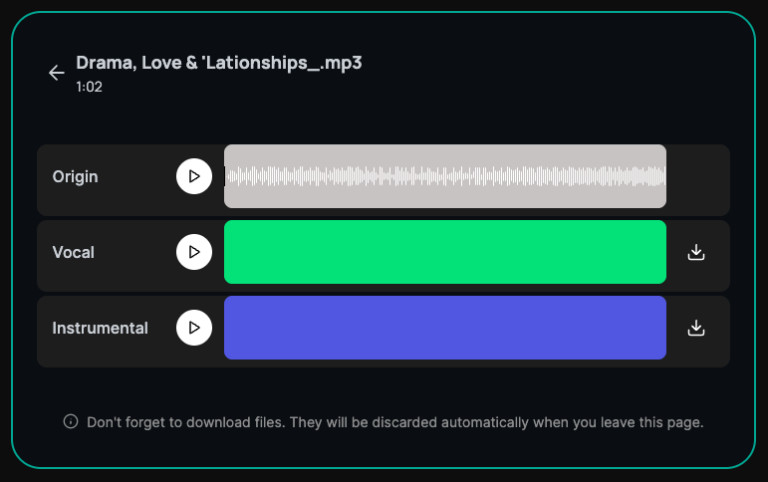
Once satisfied, download your cleaned file. You can then use it for:
Even the best AI tools perform better with good source material. Here are some simple tips:
Minimize background noise during recording whenever possible.
External microphones usually produce clearer audio than built-in ones.
Keep a steady distance from the microphone to avoid volume fluctuations.
Distorted audio is difficult to fix, even with AI.
Online noise removal tools are ideal for:
If you need advanced mixing or mastering, desktop software may still be useful—but for most everyday tasks, online tools are more than enough.
Removing noise from audio is no longer a complex and technical challenge. It is now possible to enhance the quality of the sound merely a few steps with modern AI-driven platforms.
Need to clean up voice records or improve sound to use in videos? The DeVoice and other apps offer an easy, quick, and efficient method of creating clear and professional audio on the web.
The easiest approach is to use an AI-powered online noise removal tool like DeVoice. You upload your audio or video file directly in your browser, the AI analyzes and processes the recording automatically, and you download the cleaned version in seconds. There is no software to install, no technical knowledge required, and no learning curve to navigate. For most everyday recordings, the result is a noticeably cleaner file that would have taken significantly longer to produce using traditional manual methods.
Modern AI noise removal tools handle the most common types of unwanted sound in everyday recordings: background chatter, static and hiss from low-quality microphones, electrical hum from power sources and devices, wind noise from outdoor recordings, and room echo from hard reflective surfaces. Each type behaves differently in the audio signal, and AI tools are effective precisely because they can identify and reduce multiple noise types simultaneously without requiring you to manually isolate each one.
Well-designed AI noise removal tools are built to separate noise from the primary signal without degrading the speech or music you want to keep. In most cases, the cleaned version sounds noticeably better than the original because the noise that was competing with your voice has been removed. Aggressive processing on heavily distorted files can occasionally introduce artifacts, but for typical recordings with moderate background noise, the output quality is consistently strong.
Most online AI noise removal tools support the standard formats you are likely working with: MP3, WAV, and M4A for audio files. Many platforms also support common video formats, allowing you to upload a video file directly and receive cleaned audio without needing a separate conversion step. If you are unsure whether your format is supported, check the tool’s upload page before you start, as supported formats vary slightly between platforms.
Online AI tools are the right choice for the vast majority of everyday noise removal tasks: single recordings, podcast episodes, interview clips, product videos, and any situation where speed and simplicity matter. Desktop software makes sense when you are working on complex multi-track productions, need granular control over the full signal chain, or are doing broadcast-level audio mastering where professional precision is required. For most content creators, marketers, and operators, online tools deliver everything they need without the cost and complexity of dedicated audio software.





