

Chapped lips are a universal problem—many of us use a balm or stick daily to keep our lips soft and smooth.
While lip balm may not be something you’d immediately consider when looking for a business opportunity, the growing interest in natural lip care makes this necessity a viable product idea.
Yes, believe it or not, learning how to make lip balm is a marketable skill. Avid DIYers who concoct all sorts of creative projects can channel that passion into a side business. DIY lip balm is an excellent product for fledgling entrepreneurs looking for a new idea to build a business around.
It’s easy to customize the recipe below to create your natural lip balm for the market. Because the ingredients are relatively inexpensive and straightforward in your kitchen, homemade lip balm is a viable way to turn a creative passion into a product.
Homemade lip balm has become an essential lip care product for consumers. Grand View Research forecasts that the global lip care market will reach $1.17 billion by 2025, averaging a 7.2% compounded growth rate each year.
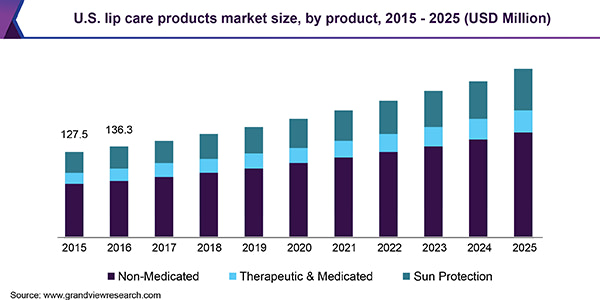
The market research company also reports increased awareness regarding personal care products. Rising lip care issues, such as chapping, splitting, and wrinkles, are estimated to propel the demand for lip balm further. It also predicts online sales as the primary distribution channel for new entrants into the market.
Lip balm is for everyone. Whether you use it daily or carry it around for when your lips dry out, it’s a helpful product for consumers. One study reported that 65.9% of people use lip balm daily.
Google Trends has shown consistent interest in lip balm over the past five years. Consumers’ search trends, especially for products like Korean lip balm, peak in the fall and winter months. You’ll notice the uptrend in interest begins mid-October and finishes around March. This gives lip care retailers a seven-month window to push sales before summer.

Since lip balm has a universal purpose, it can be sold anywhere. Searches for lip balm expand globally, from Singapore to the United Kingdom, India, the United States, and Australia.

So, if you’re an entrepreneur looking for a new product to sell, lip balm is a solid option for you. A lip balm business offers numerous benefits, including:
Creating lip balm is a skill you can turn into a nice side income. You may not find it profitable to start a lip balm business alone because the profit margins are low. But you can quickly expand into different body and skin care products.
Many brands, like Meow Meow Tweet, take this route to create a more sustainable lifestyle. It offers lip balm, like the Coconut Cacao vegan balm below, alongside a mix of complementary face care products.

Regardless, it’s clear that lip balm can be a profitable venture when done right. It’s an excellent creative outlet because you can produce any lip balm possible. And you can quickly expand into other product categories if you want to grow beyond lip balm.
Now that we’ve established that natural lip balm offers enough demand and sales to support a new homemade lip balm line let’s examine the various lip balms you can try recreating.
While there are numerous types of natural lip balm, here are some of the most popular and pervasive types on shelves today.

When choosing natural ingredients for the base of your lip balm, one of the go-to substances to use is beeswax. After all, one of the most popular brands of natural lip balm—Burt’s Bees—is created from beeswax.
Beeswax pellets are also easy to order, mix well with other ingredients, and are relatively inexpensive (you can order one pound of beeswax pearls/pastilles for around $9).

While natural lip balm is generally used to treat or prevent chapped lips, plenty of us also like to add a pop of color to our mouths while we’re at it.
As such, there are a variety of tinted lip balms in innumerable colors. From pinks, oranges, purples, reds, and everything in between, you can create plenty of custom shades using either a small amount of lipstick mixed in with your recipe or mica powder in your preferred pigment.

To soothe chapped or dry lips, many natural lip balm varieties include ingredients to alleviate pain from cracked skin. The most common elements include menthol or camphor, which ease dry lip pain.
Homemade lip balm creators can also include a variety of essential oils in their recipes to add other healing qualities, such as lavender for stress relief.
If you are selling medicated lip balm, you’ll want to read the Food and Drug Administration’s (FDA) regulations for cosmetics packaging and labeling. Cosmetics are regulated by the FDA, which is strict with how you can package and market lip balm products. You don’t want to get fined for not complying with the law when starting your lip balm business.

Cannabidiol (CBD) is one of the cannabinoids found in cannabis plants. Unlike tetrahydrocannabinol (THC), CBD doesn’t give you a “high.” But it does have therapeutic effects that benefit the skin, like moisturizing dry and chapped lips.
CBD isn’t the base of the lip balm. It’s often mixed with other ingredients, like kokum butter, beeswax, coconut oil, and hempseed oil, to create the final product. If you choose to produce CBD-infused lip balm, look for the following indicators of safety and quality:
Vegan lip balms use no animal byproducts in their formulas. They cater to consumers who do not eat or use food and other products derived from animals, be it by preference or for medical reasons.
These lip balms use coconut oil, sunflower oil, cocoa butter, vitamin E, jojoba oil, and calendula flower extract to hydrate and protect the lips. They can even come medicated with SPF to protect lips from sun and wind damage.
Take Hurraw! Balm, for example. The brand makes vegan, raw, organic, and fair-trade balms. It features everything from tinted to ayurvedic and medicated creams and classic styles using all-natural ingredients.

While there are many varieties of homemade lip balm, we’re offering a DIY lip balm recipe here for you to build upon. Change the base beeswax base, use your preferred essential oils, and add color for a tint to personalize the following recipe.

Before getting started, you’ll need to assemble all your ingredients, including:

Put the beeswax, shea butter, and coconut oil in the top pot of a double boiler. Add tap water to the bottom pot. Place the double boiler on your stove and turn the heat to medium-high.
Once all the ingredients melt in the pot, stir and combine with a spatula or wooden spoon.

Remove the double boiler from the direct heat once all the base ingredients are melted and combined. Keep the top pot above the bottom pool containing the water to maintain the temperature of the components (and to prevent the melted balm base from hardening).
After removing the double boiler from the direct heat, add a few drops of your favorite essential oil to the mix. Mix in five to 10 drops to start, then test the scent. You can add more essential oils based on your preference.

Now that you’ve added your scent of choice, it’s time to add a pop of color to your lip balm mixture. From here, add a pinch of mica powder or a bit of lipstick to the balm base. Stir to combine the color into the mix. Slowly add more powder or lipstick to darken the color of the mixture to your preference.
Once the mixture is combined, spoon the balm into a pipette or dropper.

Once the balm mixture is in your pipette or dropper, transfer the balm into your tins or chapstick tubes. Allow them to cool off at room temperature for several hours.
After the balm has cooled to room temperature, you’re ready to sell your newly created tinted lip balm!
Now that you know how to make lip balm, let’s look at how you can start running your own business selling it.
A successful lip balm business won’t succeed just from hard work. Think about a niche that isn’t filling or a target market you want to reach with your products. This will help you attract customers who are interested in buying your products.
Some ideas:
When doing market research, consider other products you could offer alongside lip balm. It’s rare for a business to succeed in selling lip balm alone. Brands often sell other body or skin care products like scrubs, lotions, soaps, etc.
SUGAR Cosmetics, for example, sells lip balm and lip scrubs, makeup, lip gloss, and other things that can be made and sold online.

You can upsell customers based on past lip balms they buy, create scent-centric bundle packages, and reach new audiences by expanding your product line.
If it looks like you found a niche market and good products to sell, you’re ready to start planning your brand. This means choosing a business name and logo. Customers like brands with a captivating story, so tying that into your name and logo will help attract attention.
An easy way to find a lip balm business name is by using Shopify’s cosmetic business name generator. Type in a keyword for your business, for example, “sky,” and the generator will create business name ideas and instantly check domain name availability for your online store.

A business plan guides your journey as a lip balm maker and business owner. Ask yourself: What’s the big goal for my products? Do I want to be a brand name sold in stores like Anthropologie? Or do I want to create a private label brand for big stores like Target or Walmart? Do I want to be a premium brand sold only in retail and online stores?
Could you determine your goal and remember it as you create your brand?
Business planning is often used to secure funding, but plenty of business owners find writing a plan valuable, even if they have yet to work with an investor. That’s why we put together a free business plan template to help you get started.
Almost there: please enter your email below to gain instant access.
We’ll also send you updates on new educational guides and success stories from the Shopify newsletter. We hate SPAM and promise to keep your email address safe.
Could you do some due diligence around manufacturing and packaging practices? Depending on where you operate the business, you must comply with local health and safety standards before selling homemade lip balm to the public. You may want to look into any business licenses you’ll need to trade in your region.
If you’re selling in the United States, the FDA’s Small Business & Homemade Cosmetics Fact Sheet is an excellent place to start. Read the European Commission’s cosmetics regulations guide if you’re selling in Europe or the United Kingdom.
Now that you have the instructions for your homemade lip balm recipe, you can start turning your new product into a business. And one of the primary channels where you can find an audience of potential customers for your DIY lip balm is online.
While you can explore many digital channels for your homemade lip balm, one of the first steps to building an online presence is to make your online store. You then have a digital home to display your handcrafted products—and a central place to drive all the traffic you might drum up on other channels.
While an online store is an excellent place to get started with marketing your homemade lip balm online, there are other channels you should explore, including:
While many retailers may start making money online, don’t discount in-person sales. Consider setting up face-to-face sales opportunities with your customers to reach new audiences and experiment with new products and income streams.
Homemade lip balm, either as a standalone product or as part of a line of beauty products, can be packaged up and presented beautifully for in-person sales. Whether you prefer to set up a market booth at local craft fairs or attend flea and farmer’s markets, DIY lip balm creators have many opportunities to take advantage of in-person sales.
Or, if you prefer to dabble in temporary retail, you can try running your pop-up shop or a “pop-in” shop at a beauty or cosmetics store.
At these events, not only can you make face-to-face connections with retail customers, but you can also chat with potential wholesale customers.
If that isn’t enough, there are a wealth of other reasons homemade lip balm makers should consider in-person sales:
Getting started with in-person sales doesn’t have to be overwhelming. Doing a little due diligence can help you set yourself (and your bottom line) up for success. Check out our guide to help you nail the in-person selling experience, and do some homework on how mobile point-of-sale systems like Shopify POS can help you sell anywhere.
Now that you’re well-versed in making lip balm, you can start your side hustle. Scratch your creative itch by fashioning your recipe, then use the above marketing tactics to get your homemade products in front of potential customers.
Soon, you’ll start to see the benefits of running your own lip balm business and reap the rewards of a profitable business and higher revenue.
Illustration by Rose Wong
Yes, many brands make money selling lip balm online and in person. You’ll want to do market research to determine what types of creams are selling and who is buying them. Then, create a unique product for that audience. Brands also extend their product line to other skin and body care products to attract more customers and increase sales.
You can sell lip balm for as low as $1.50 per container or up to $10 for unique variations. Keep your lip balm priced between $3 to $4 per tube to stay competitive. Offer bundle backs to increase average order value and sell more lip balm online.
Cosmetic products and ingredients do not need FDA premarket approval. So you can create lip balm and sell it without getting an OK from the government. However, the FDA can enforce action against products on the market that don’t comply with the laws mentioned in their guidelines.





