





How to Track Brand Mentions in 2026: Top Tools & Strategies
10th
February, 2026
Imagine waking up to a social media buzz where hundreds of people are talking about your product – both praising and critiquing it. In the digital age, these brand mentions represent modern word-of-mouth marketing, and they carry serious weight. In fact, over 70% of consumers trust brand mentions from real people more than traditional ads. For e-commerce brands and Amazon sellers, this means that every tweet, post, or review mentioning your brand is an opportunity to build trust or, if left unaddressed, a risk to your reputation.
In this comprehensive guide, we’ll explain what brand mentions are and why they matter for your business. More importantly, you’ll learn how to track brand mentions across social media and the web using the best tools available, and discover proven strategies (like leveraging micro influencers and UGC) to amplify positive mentions. By the end, you’ll know how to monitor the conversation around your brand and even spark more buzz in 2026 and beyond. Let’s dive in!
What Is a Brand Mention?

A brand mention is any reference to your brand online, whether it’s your company name, product, or even a tagline being discussed on a public forum. It could be a shout-out in an Instagram story, a blog review, a tag on TikTok, or even just someone typing your brand name in a Reddit comment. The key is that your brand is being talked about, with or without an @ symbol or hyperlink. In essence, it’s digital word-of-mouth – every time people mention your business in conversation on the internet.
Brand mentions can be direct or indirect. A direct mention might include someone tagging your official account or using your branded hashtag (for example, a customer tweets @YourBrand to praise your product). An indirect mention means your brand comes up without a formal tag – for instance, “I just tried the new coffee from YourBrand and it’s fantastic!” (no tag, but clearly referencing your company). Both types are valuable. Direct mentions are easier to find, while indirect mentions may require more monitoring savvy (people might misspell your name or use slang). Either way, tracking all these references is crucial because they collectively form the public perception of your brand online.
Example: If someone on a forum says, “I finally tried [Your Brand]’s serum and it’s worth the hype,” that’s a brand mention – even with no link. Google and other search engines see these discussions as signals that your brand is active and relevant. Over time, brand mentions build your online reputation and authority, much like backlinks do.
Why Brand Mentions Matter for E-commerce and Amazon Sellers
Staying on top of brand mentions isn’t just a vanity exercise – it’s a vital part of managing and growing your business online. Here are a few key reasons monitoring brand mentions should be a priority:
-
- Real-Time Reputation Management: In the era of viral trends, a single negative comment can spiral into a PR issue. Brand mention tools let you catch issues early and respond before they escalate. If an unhappy Amazon customer complains on Twitter or a Reddit thread questions your product quality, you’ll want to know immediately so you can address it and protect your brand reputation.
- Opportunities for Engagement: Positive mentions are golden opportunities. When a micro influencer raves about your product or a customer posts unboxing photos, jump into the conversation! Engaging with these mentions (thanking them, resharing UGC, answering questions) boosts customer loyalty and shows that you’re listening. It’s not just about damage control – it’s about building community and goodwill around your brand.
- Social Proof Drives Sales: Word-of-mouth has always been powerful, and online mentions amplify it. Consumers discuss specific brands about 90 times per week on average, and 58% share their positive brand experiences on social media. Each mention is social proof to someone else. A flood of good reviews or influencer shout-outs can directly influence purchase decisions. (Indeed, nearly 49% of people rely on influencer recommendations when making purchase decisions.) For direct-to-consumer e-commerce brands, that means more traffic and conversions. For Amazon sellers, it can mean more people searching for your product by name – which can boost your ranking on Amazon’s platform.
- Brand Awareness & SEO Benefits: The more people talk about your brand online, the more visible and “trusted” your brand becomes in the eyes of algorithms. Search engines like Google treat unlinked brand mentions as trust signals for your site. In practical terms, if people on forums, blogs, and social media are buzzing about your product, Google is more likely to recognize your brand as an authority in your niche. Plus, those conversations can lead new customers to discover your brand (for example, someone sees others mentioning your new gadget on a tech forum and decides to look you up). In e-commerce, brand awareness is half the battle, and mentions help you win it.
- Real-Time Reputation Management: In the era of viral trends, a single negative comment can spiral into a PR issue. Brand mention tools let you catch issues early and respond before they escalate. If an unhappy Amazon customer complains on Twitter or a Reddit thread questions your product quality, you’ll want to know immediately so you can address it and protect your brand reputation.
In short, brand mentions are a direct line to how people feel about your brand. Monitoring them helps you gauge sentiment, capitalize on positive buzz, and put out fires when needed – all essential whether you’re running your own online store or selling on Amazon’s marketplace.
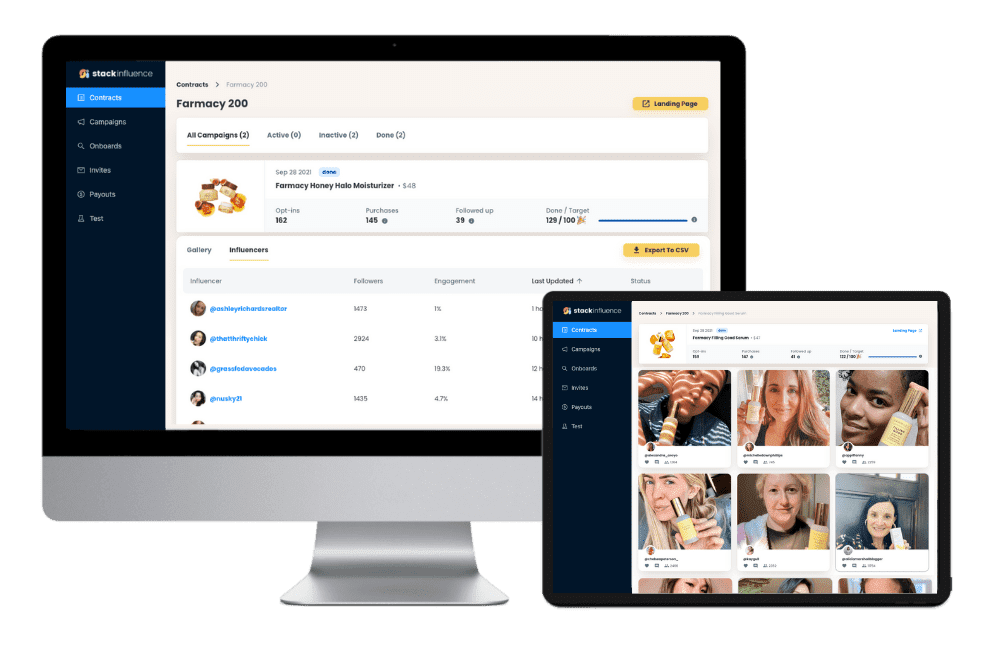
Unlock the Power of Micro Influencers and Elevate your Brand Today!
How to Track Brand Mentions (What to Monitor)
Tracking brand mentions might sound daunting – after all, the internet is a big place! But a combination of smart tools and strategies can ensure you never miss an important mention. Here’s how to cast a wide net:
-
- Monitor all major channels: Make sure you’re listening everywhere conversations happen. This includes social media platforms (Facebook, Instagram, TikTok, X/Twitter, LinkedIn, YouTube, Pinterest – whichever platforms your customers frequent), online communities (Reddit, Quora, Discord, niche forums related to your industry), blogs and news sites, and review sites (like Yelp, G2, Amazon product reviews, and Google Reviews). In essence, track mentions of your brand wherever people share opinions about you online. A comprehensive brand monitoring approach covers both social networks and the broader web.
- Listen for variations and keywords: Don’t just track your exact brand name. Consumers might mention your products or use nicknames. For example, if your company is “GreatBeans Coffee Roasters,” also monitor “Great Beans,” product names (like “GreatBeans Dark Roast”), and common misspellings. Consider tracking your key executives’ names as well, and even competitors’ names (to compare buzz or catch opportunities to chime in when a competitor is mentioned). Many tools let you set up these keyword alerts easily.
- Use dedicated tools for efficiency: While you can manually search platforms or set up basic Google Alerts, that only scratches the surface. To truly stay on top of things, it helps to use brand mention monitoring tools that automatically scan multiple channels in real time. In the next section, we’ll highlight some of the top brand mention tools in 2026 that can do the heavy lifting for you.
Before we jump into tools, one quick tip: establish a routine for checking mentions. Make it part of your daily workflow – or use tools that send you instant notifications – so that no customer question, shout-out, or complaint goes unanswered for long. Speed matters; about three-quarters of consumers expect responses on social media within 24 hours or less when they reach out to a brand. Being responsive to mentions shows that you care, which can further encourage people to talk about you (in a positive way).
Best Brand Mention Tools in 2026
To effectively monitor brand mentions, you’ll want reliable software on your side. Below are some of the best tools and platforms (both free and paid) that brands are using in 2026 to track who’s saying what about them online. Each has its own strengths, so you can choose based on your needs and budget:
1. Stack Influence
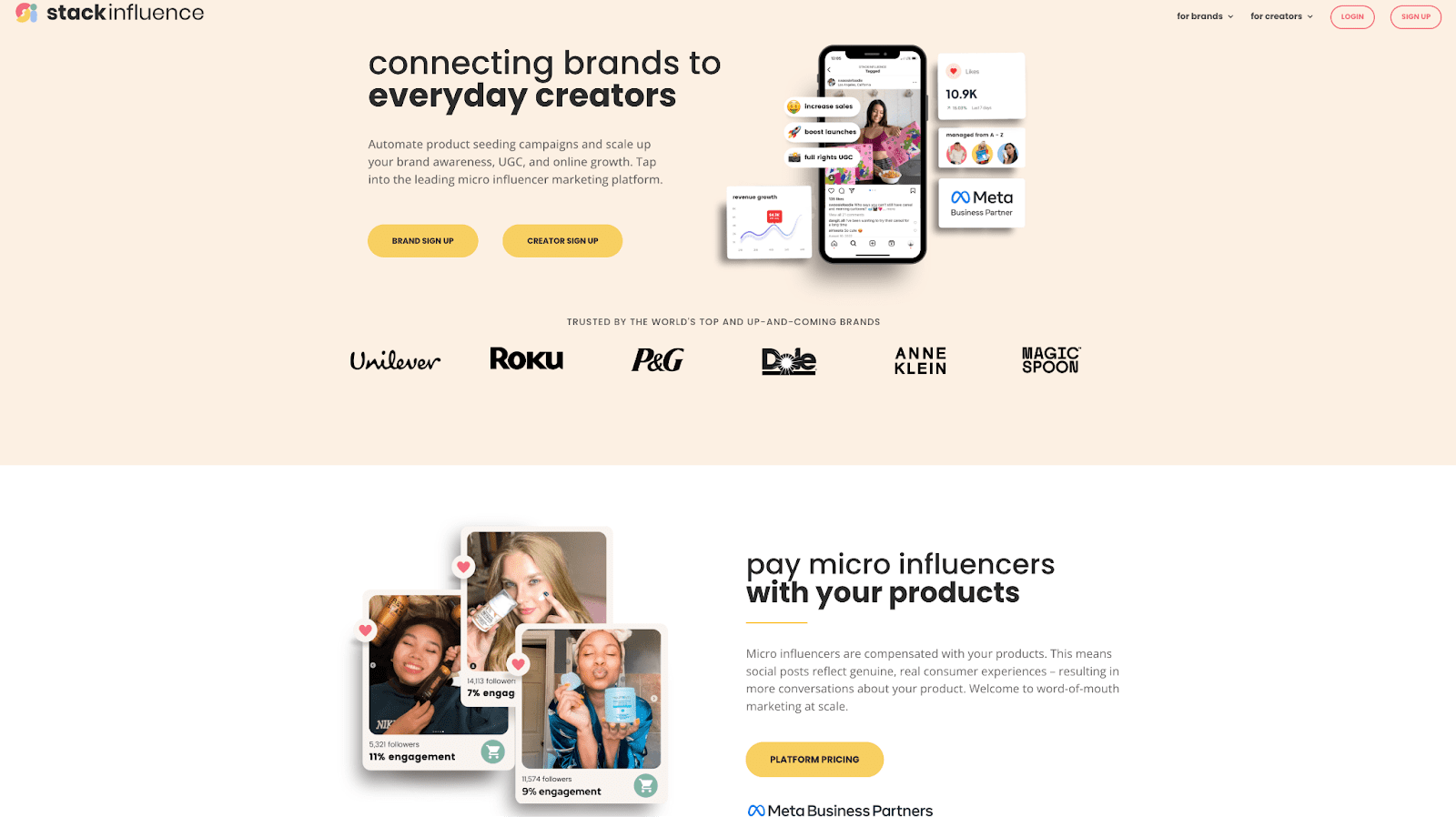
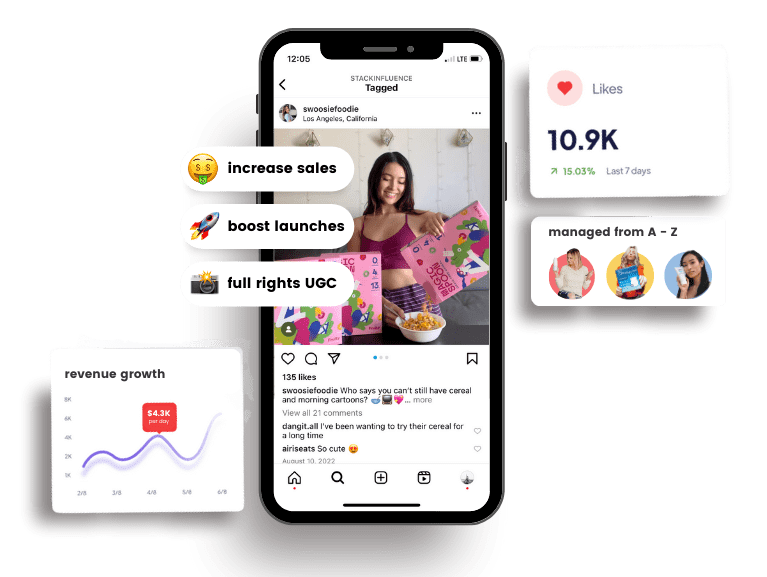
Wait, isn’t Stack Influence an influencer marketing service? Yes – and that’s why it’s first on our list. Stack Influence isn’t a listening tool; it’s a platform that helps you generate brand mentions at scale through micro-influencer campaigns. By connecting e-commerce brands with a network of over 10 million micro influencers, Stack Influence enables authentic product mentions to flood social media. Brands send out products to targeted everyday creators, who then share genuine reviews, unboxings, and testimonials (a goldmine of UGC). Every Instagram post or TikTok video from these campaigns is essentially a positive brand mention broadcast to a niche audience. The platform handles campaign logistics and even tracks the posts for you, so you can watch the buzz grow and measure the impact. Differentiator: Stack Influence focuses on Amazon sellers and DTC brands, using product seeding (influencers are paid with free product) to generate trustworthy chatter about your brand at a fraction of traditional influencer costs. (CTA: Want to turn customers into an army of brand advocates? Stack Influence can make it happen.)
2. Brandwatch

Brandwatch is a leading consumer intelligence and social listening platform used by many large brands. It combs through billions of conversations across social media, forums, news, and review sites to find mentions of your brand (and even analyze their context). Brandwatch’s strength is in its deep analytics – it not only tracks every mention, but also provides sentiment analysis (are people speaking positively or negatively?), trending themes, and even alerts for potential crises. If someone influential starts talking about your product, Brandwatch will catch it. It’s an excellent tool if you need a holistic view of brand perception, though it’s geared toward medium to large companies (pricing is custom, via sales reps).
3. Hootsuite (w/ Talkwalker)
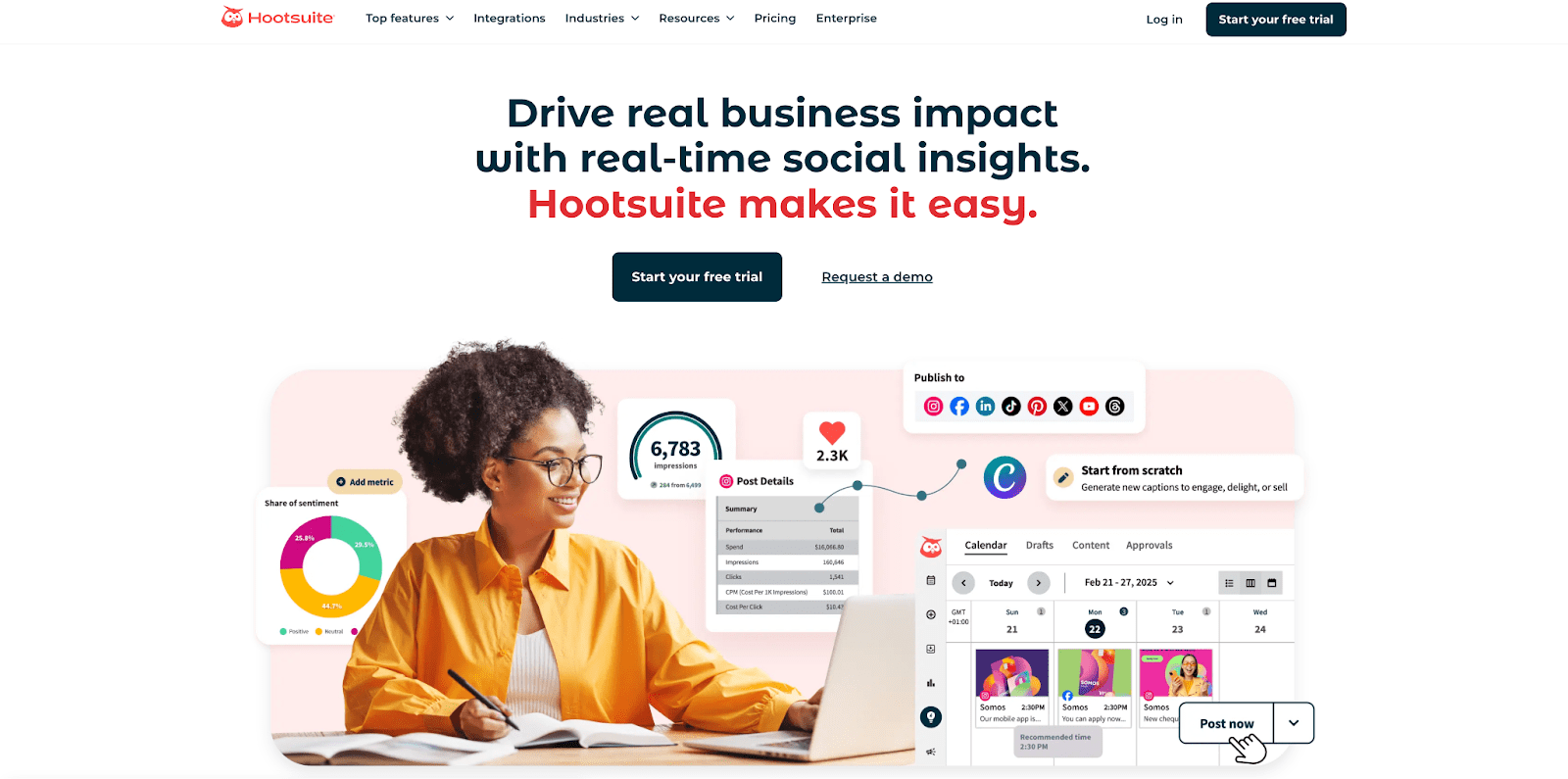
Hootsuite is well known as a social media management tool, and it doubles as a solid brand mention tracker for social networks. With Hootsuite’s Streams and Inbox features, you can monitor all your social media mentions in one dashboard – from Instagram comments to Twitter mentions – in real time. It supports multiple platforms and even allows team collaboration (so your customer support and social media team can coordinate responses). For broader listening beyond social media, Hootsuite integrated with Talkwalker’s powerful listening engine, giving you the ability to catch mentions on news sites and blogs as well. In short, Hootsuite is a great all-in-one solution if you’re very social-media-focused and want scheduling, engagement, and monitoring in one place. (Bonus: It offers useful integrations with CRM systems to track customer interactions alongside mentions.)
4. Brand24
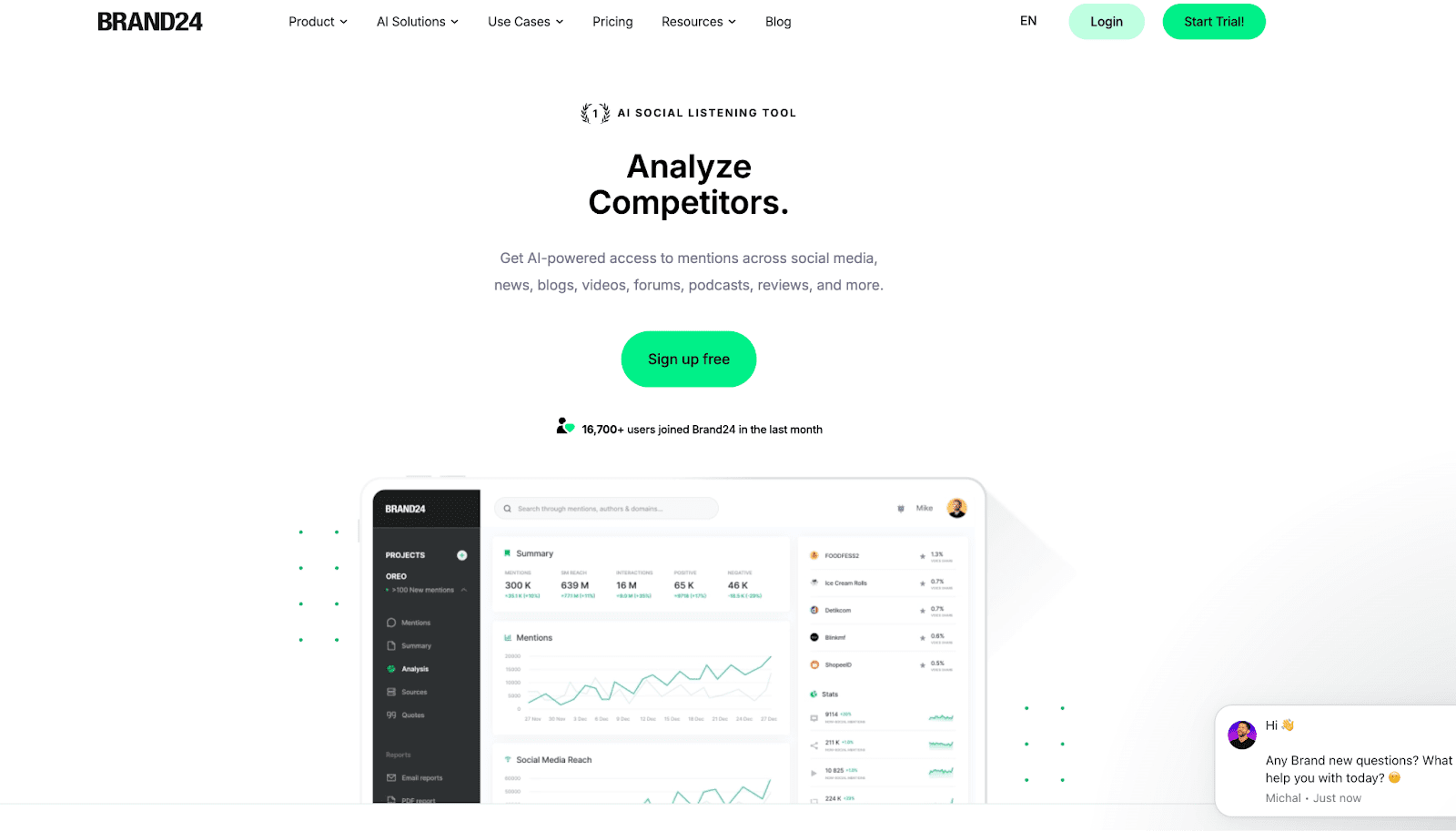
Brand24 is a popular tool especially among small and mid-size businesses because of its ease of use and robust features. It tracks brand mentions across social media, news sites, blogs, forums, and even videos in real time. Whenever someone mentions your brand or keywords, Brand24 will pull it into a feed and can notify you. It also gives you a “Presence Score” and “Reputation Score” to quantify your brand’s online buzz and public trust over time. You can see your most influential mentions, trending hashtags related to your brand, and use filters to isolate important mentions (say, negative ones with lots of reach). For companies that want a dedicated brand mention tool without enterprise complexity, Brand24 is a strong choice (plans start at a modest monthly fee).
5. Google Alerts
Sometimes, the simplest tool does the trick. Google Alerts is a free service from Google that emails you whenever new web pages mention your specified keywords. By setting up an Alert for your brand name (and variations), you’ll get notified of new blog posts, news articles, or web pages that talk about your brand. It’s extremely easy to use – just enter your brand (and maybe product names), choose how often you want updates, and you’re set. Limitations: Google Alerts won’t catch social media mentions (since many social posts aren’t indexed by Google), and it might miss forum comments or fast-moving conversations. Still, for zero cost, it’s a no-brainer to have Alerts running in the background as a safety net for web mentions.
6. BuzzSumo
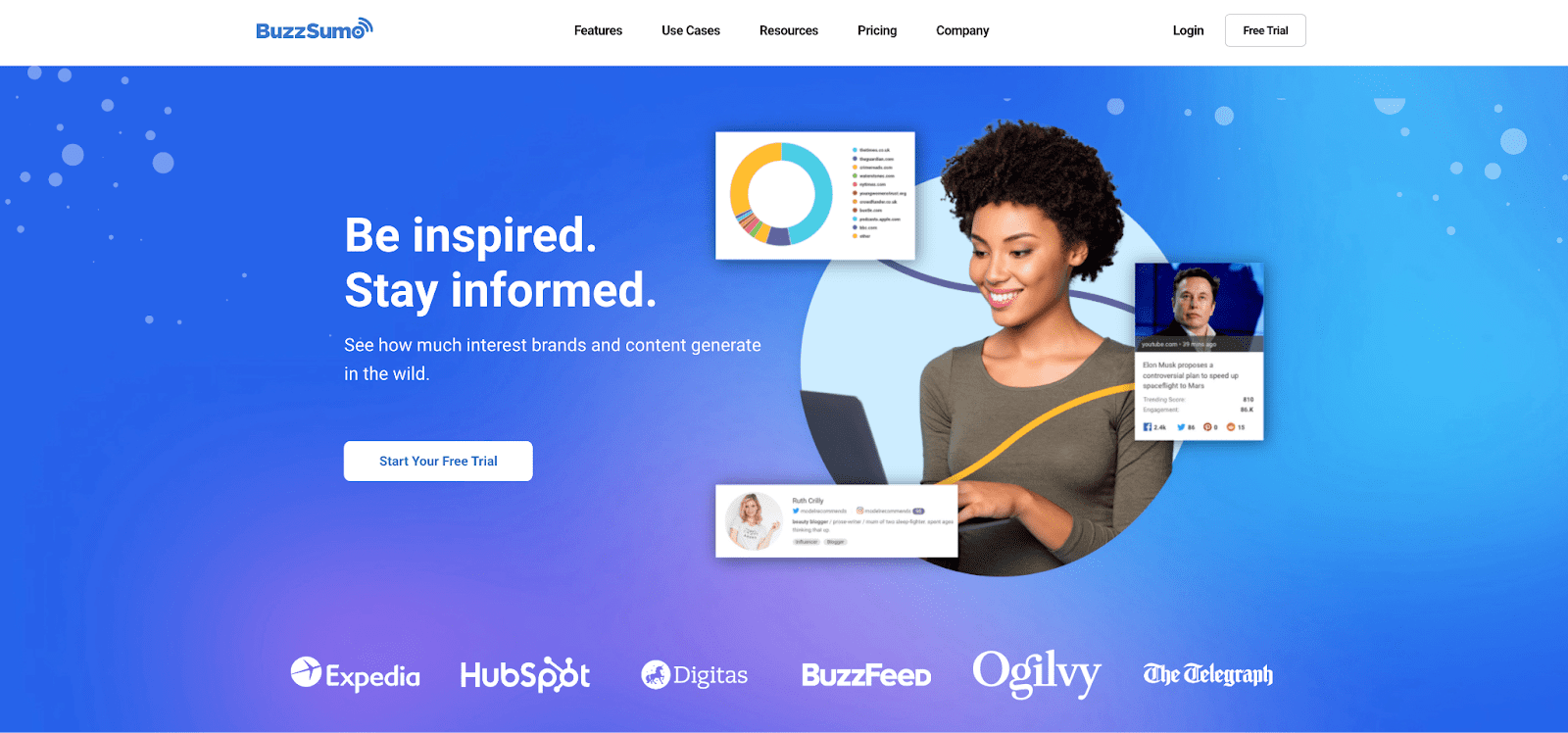
BuzzSumo is known as a content research tool, but it’s also handy for monitoring brand mentions and seeing how they spread. It continuously scans the web for your brand name (or any keywords) and notifies you when it appears in new content. A unique feature of BuzzSumo is that it shows you the social share counts and reach of each mention. For example, if a blog article mentions your product, BuzzSumo can tell you how many times that article was shared on platforms like Facebook or X. This helps you gauge which mentions are gaining traction. It’s great for identifying trending discussions about your brand and even finding journalists or influencers who talk about you. Additionally, BuzzSumo lets you keep tabs on competitor mentions and backlinks, giving you a fuller competitive picture. (Note: BuzzSumo’s free version has limited alerts; the paid plans offer expansive monitoring and reporting.)
Of course, many other mention monitoring tools exist (like Mention, Awario, Meltwater, and BrandMentions to name a few). The ones above are among the top picks in 2026 for reliability and effectiveness. Depending on your needs – whether it’s enterprise-level data analysis or just keeping an ear out for basic mentions – you can mix and match solutions. Some brands even use multiple tools: for instance, Google Alerts for basic web coverage plus a social listening tool for Twitter/Instagram, etc. The key is to find a setup that ensures no important brand mention slips through the cracks.
Boosting Brand Mentions with Micro Influencers and UGC
Tracking mentions is only half the equation. The other half is actively encouraging more positive brand mentions. After all, the more people organically talk about your brand, the more buzz and credibility you build. One of the most effective ways to boost mentions in 2026 is through micro influencer marketing and UGC (user-generated content).
Micro Influencers as Brand Ambassadors: Micro influencers (typically creators with a few thousand to ~50,000 followers in a niche) are powerful allies for e-commerce brands. Their audiences are small but highly engaged, and their recommendations come off as authentic peer advice rather than advertising. By partnering with a network of micro influencers, you can spark dozens or hundreds of personal-scale conversations about your product. For example, an Amazon seller in the beauty niche might send free samples to 100 micro influencers on Instagram or TikTok who love skincare. In return, those influencers post reviews, tutorials, or testimonials – each post is a genuine brand mention reaching a targeted audience. This strategy can rapidly amplify your brand’s presence online, as Stack Influence’s platform has demonstrated by coordinating such campaigns at scale (often deploying hundreds of micro influencers in one campaign to flood social media with honest product mentions). The result is a wave of word-of-mouth that feels organic. And remember the stat: 49% of consumers trust influencer recommendations – those micro influencer shout-outs can directly drive sales and new customers your way.
Encourage UGC from Customers: User-generated content is any content created by your customers, not your brand. This could be a customer’s Instagram photo using your product, a YouTube unboxing video, or a simple tweet about how your product fits into their life. UGC often comes in the form of brand mentions – and it’s marketing gold. According to research, 85% of website visitors find visual UGC (like customer photos) more influential than a brand’s own images. You can encourage more UGC (and thus more mentions) by engaging your customers and making it fun to talk about your brand. For instance:
-
- Run social media contests or challenges that invite customers to post content about your product (e.g. “Share your best outfit with our jacket and tag us for a chance to be featured”). This not only creates a lot of mentions but also gives you content to repost.
- Feature customer posts on your official page or website. When people know you might showcase their photo or testimonial, they’re more likely to mention you. It creates a virtuous cycle: UGC leads to features, which leads to more UGC.
- Encourage reviews and unboxings. If you’re an Amazon seller, you know how important reviews are on-platform. But off Amazon, you can encourage customers (especially happy ones) to share their experience on social media or forums. A simple follow-up email after purchase asking for feedback or offering a small incentive (like a discount on next purchase for posting a photo and tagging the brand) can spur action. Each new piece of UGC is a new brand mention spreading online.
Engage and Incentivize Your Community: Another strategy is to build a community space (like a branded Facebook Group or Discord server) where your most passionate customers can interact. These spaces often lead to increased brand mentions because fans start discussing your brand even outside the group. You can also create a brand ambassador or referral program – essentially turning loyal customers into advocates who want to talk about you (because they love the product and maybe earn rewards for referrals). This can be especially effective for DTC founders trying to build a grassroots buzz.
Finally, don’t overlook the basics: deliver a great product and customer experience. The surest way to get people talking (in a good way) is to exceed their expectations. When you do, customers naturally become evangelists. They’ll post that excited TikTok showing off your product or tell their friends on a forum how well your service worked. Those organic mentions are priceless.
(CTA: Need a jump-start in generating buzz? Stack Influence specializes in helping brands ignite conversations through micro influencers, effectively turning UGC and mentions into a growth engine. It’s a hands-off way to get people talking about your product across social media.)
Unlock the Power of Micro Influencers and Elevate your Brand Today!
Conclusion to How to Track Brand Mentions in 2026
In 2026’s fast-paced digital marketplace, brand mentions are the heartbeat of your online presence. For e-commerce entrepreneurs and Amazon sellers, tracking these mentions is like having an ear to the ground – you gain real-time insight into customer sentiment, uncover opportunities to engage, and catch potential issues before they blow up. By using the right tools, you ensure no conversation about your brand goes unnoticed. And by coupling monitoring with strategies to boost positive mentions (from micro influencer campaigns to UGC initiatives), you don’t just observe the conversation – you actively shape it.
Remember, every tweet, post, or review about your product is a chance to build credibility or win a new customer. Start by implementing a brand mention monitoring system with the tools we discussed, then take the next step by fueling more positive buzz through your community and creator partnerships. The payoff is a stronger brand reputation, increased trust from shoppers, and ultimately, more sales driven by genuine word-of-mouth.

By William Gasner
CMO at Stack Influence
William Gasner is the CMO of Stack Influence, he’s a 6X founder, a 7-Figure eCommerce seller, and has been featured in leading publications like Forbes, Business Insider, and Wired for his thoughts on the influencer marketing and eCommerce industries.
Want new articles before they get published? Subscribe to our Awesome Newsletter.
stack up your influence
turning creativity into currency
our headquarters
111 NE 1st St, Miami, FL 33132
our contact info
[email protected]
stack up your influence
turning creativity into currency
our headquarters
111 NE 1st St, 8th Floor
Miami, FL 33132
our contact info



© 2026 Stack Influence Inc
© 2025 Stack Influence Inc
The post How to Track Brand Mentions in 2026: Top Tools & Strategies appeared first on Stack Influence.
