

How to Use Live Data for Real-Time Influencer Campaign Optimization (2026)
15th
January, 2026
Imagine launching an influencer campaign and tweaking it mid-flight for better results – that’s the reality of Real-Time Influencer Campaign Optimization in 2026. No more “post and pray.” Today, e-commerce brands and Amazon sellers treat influencer marketing like a performance channel, using live data to adjust content, budget, and strategy on the fly. In this post, we’ll explore why real-time data is a game-changer, how to harness it for influencer marketing success, and how micro-influencers, content creators, and UGC can boost your ROI. Get ready to learn actionable strategies for using live campaign data to drive sales and engagement as your campaign is happening.

Treating Influencers Like a Performance Channel: Influencer marketing isn’t just about branding anymore – it’s held to the same standards as PPC ads or email marketing. In fact, success in 2026 means holding influencer spend accountable with real-time metrics and ROI analysis. Live data lets you see which creators are driving clicks, add-to-cart events, and sales in the moment, so you can respond immediately. As one expert notes, “treating influencer spend like any other performance channel – with clear accountability and real-time data” is now non-negotiable.
Rising Performance Pressure: With ~74% of brands shifting more budget into creator programs for 2026, CMOs demand concrete proof of results. Vanity metrics (likes, impressions) aren’t enough; brands want to know customer acquisition cost (CAC), conversion rates, and sales from influencer campaigns. This pressure makes real-time optimization essential. If a campaign isn’t hitting targets, you can pivot instantly instead of wasting the entire budget.
Tech and Tools Enable Live Tracking: The good news – technology has caught up. Advanced analytics platforms and influencer marketing tools now provide real-time dashboards for engagement and sales. AI is also emerging to power precision at scale, offering instant insights and even predictive recommendations based on campaign data. Whether it’s a TikTok dashboard showing live video views or an affiliate platform logging sales from an Instagram swipe-up link, marketers have unprecedented visibility.
In short, real-time influencer campaign optimization turns influencer marketing into a responsive, data-driven engine. Brands that embrace this can amplify what works and fix what doesn’t – during the campaign – giving them a competitive edge.
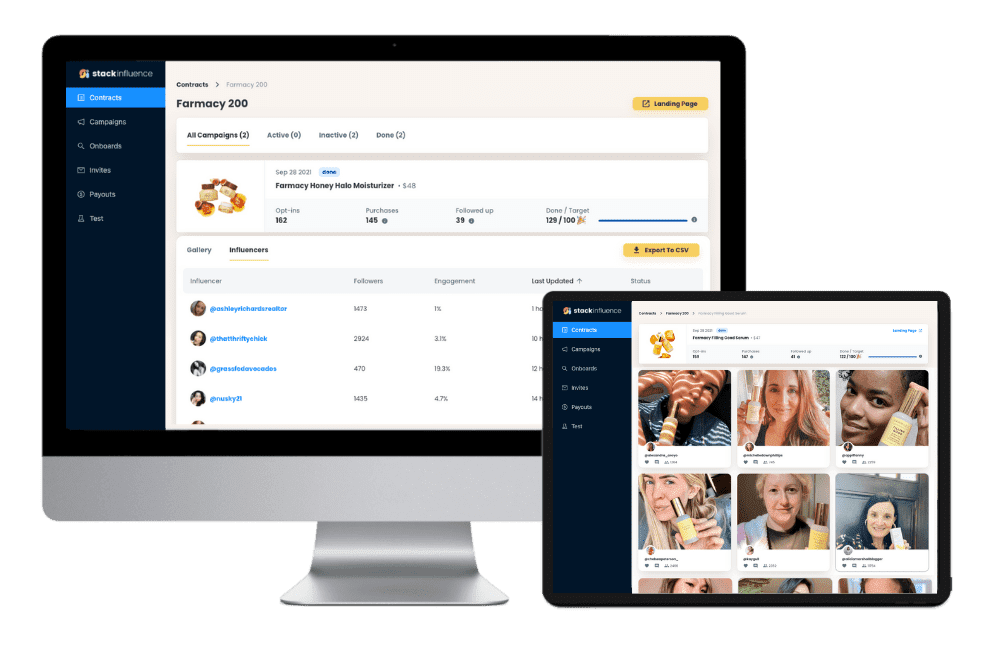
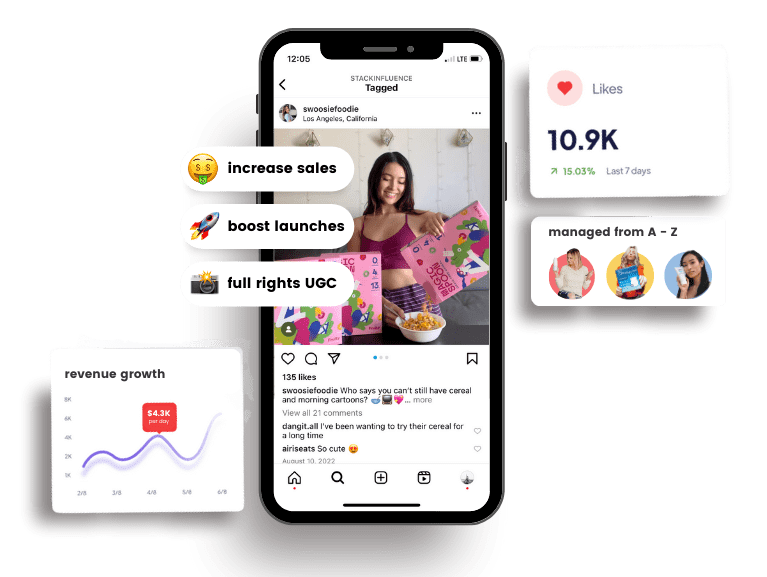
Real-time optimization might sound complex, but it boils down to a cycle of monitoring and adjusting. Here’s how e-commerce teams are using live data to maximize influencer campaign ROI:
1. Set Clear Metrics & Track Them Live: Before the campaign, define the key metrics that matter to your goal – e.g. referral traffic, conversion rate, sales revenue, or app installs. Ensure you have tracking in place for each. This could mean giving influencers unique UTM links or coupon codes, or using an influencer platform that tracks clicks and sales per creator. Modern influencer ROI tools can connect creator content directly to business outcomes by tracking the full customer journey from post to purchase. For Amazon sellers, that might include using Amazon Attribution to see “clicks, visits, product views, orders, sales, add to basket” from each influencer link in real time.
2. Monitor Performance in Real Time: Once content goes live, watch the data closely – especially in the crucial first 24-48 hours. Which Instagram Story is driving the most swipe-ups? Is one TikTok creator generating dozens of product page visits while another lags? By keeping a live pulse on engagement and conversions, you can catch winning or underperforming content early. Many brands now have war-room style dashboards to see spikes in traffic or sales as they happen. If you’re an Amazon seller running an influencer promo, for example, you might see an immediate jump in your Amazon sales reports – indicating which influencer drove it.
3. Identify What’s Working (and What’s Not): Real-time data makes it easy to pinpoint the stars of your campaign. Perhaps one YouTube review video has a 8% click-through rate while others hover at 3%. Or maybe TikTok videos are converting 38% better than image posts on another platform. Take note of patterns: is a certain product variant or message resonating more with audiences? Did a micro-influencer’s authentic post outperform a mega-influencer’s polished ad? It’s common in 2026 to find that smaller creators with niche audiences drive higher conversion rates – e.g. micro-influencer campaigns average ~4.1% conversion vs. 2.6% for macro-influencers. Live data will highlight those differences immediately.
4. Adjust Content & Budget Mid-Campaign: Here’s where real-time optimization truly pays off. Don’t wait until the campaign is over – use your live insights to tweak tactics on the fly. For example: if short-form videos on TikTok are outperforming static Instagram posts by a wide margin, reallocate budget accordingly (boost the top TikTok content with paid ads, or ask influencers to double down on videos). One report notes that brands now “adjust strategies mid-flight based on real-time data”, shifting spend if (say) video content outperforms static posts by 340%. Similarly, push more content where it’s working and pause what’s underperforming. If a particular Instagram Reel is going viral, consider extending the campaign or adding a similar post. If an influencer’s content is flopping (low engagement or negative feedback), you might tweak the messaging or quietly pull back on promoting that post. The goal is to continuously optimize in real time – amplify the winners, fix or drop the losers.
5. Engage and Interact in Real Time: Optimization isn’t only about numbers; it’s also about audience interaction. Watch comments, DMs, and mentions as the campaign unfolds. Are people asking questions about the product? A quick response or an FAQ update in your content could boost conversions. If users generate their own content (UGC) during the campaign – e.g. unboxing videos or reviews – consider resharing them promptly (with permission). This not only adds social proof but also keeps momentum. Essentially, treat the campaign as live and dynamic, not a one-and-done post.
6. Iterate Quickly: Many e-commerce brands treat influencer campaigns as an ongoing test-and-learn process. Use early data to inform immediate next steps. For instance, if one micro-influencer’s audience is converting particularly well (say, a tech gadget influencer driving many add-to-cart events), you might send that creator an additional product to feature, or extend their promo code allotment. On the flip side, if another influencer isn’t delivering, you can pull back budget or adjust the agreement for future collaborations. Continuous small optimizations throughout the campaign can lead to a significantly better overall ROI than a static plan. Think of it as steering a ship in real time – small course corrections to stay on the path to your KPI targets.
By following these steps – track, monitor, identify, adjust, engage, and iterate – you transform your influencer marketing into a responsive campaign that actually delivers results instead of just vanity metrics.
To succeed with real-time optimization, you need the right toolkit. Here are key tools and data sources that empower live data monitoring in influencer campaigns:
Pro Tip: Ensure all your data sources are unified or at least visible side by side. If you can compare performance across platforms in one view, you might notice, for example, that a nano-influencer on TikTok with 10k followers is driving more sales than a macro-influencer on YouTube with 500k followers – insights that would be missed in isolation. As one expert advises, track every click and purchase across TikTok, Instagram, YouTube, etc., so you can “compare a nano-creator on TikTok to a macro-influencer on YouTube using the same data”. Consistent measurement is the foundation of real-time optimization.

It’s worth highlighting how micro-influencers, passionate content creators, and user-generated content (UGC) fit into a real-time optimization strategy. These elements are not only buzzwords – they can actually make live optimization more effective.
Micro-Influencers = Agility and Authenticity: Micro-influencers (typically 5K–50K followers) have two big advantages: highly engaged audiences and lower cost. Their followers see them as “people like me,” so their recommendations feel like friendly advice, not ads. This intimacy translates into higher trust and often better conversion rates. For example, a micro-creator’s product recommendation can drive action more efficiently than a celebrity post. Studies show micro-influencer campaigns achieve roughly a 4.1% conversion rate, vs. 2.6% for macro-influencer campaigns – a testament to their ROI potential.
From a real-time optimization perspective, micro-influencers let you test and learn quickly. Instead of betting your whole budget on one or two expensive stars, you can run smaller collaborations with 10 or 20 micro-influencers simultaneously. This “spread bets” approach means you’ll have a variety of content and audiences to compare in your live data. Maybe 3 of those 20 creators will emerge as breakout performers driving the bulk of sales – you can then scale up with them (e.g. give them more budget, more content to post, or extend the partnership) while dialing back the others. In essence, micro-influencers enable a data-driven talent hunt, where you identify the best ROI through real-time results. It’s no surprise that marketers are shifting budgets to micro/nano influencers – nearly a quarter of brands have reallocated spend from macro to micro/nano to get more of these agile, testable collaborations.
Content Creators and UGC Fuel Agility: Beyond classic “influencers,” many brands now work with content creators and encourage UGC from customers. Why? Because they provide a constant stream of fresh content that you can deploy or tweak in real time. Content creators might be enlisted to produce several variations of a TikTok or product demo, allowing you to A/B test formats and see which drives more engagement. If one style of video that a creator made is clearly outperforming, you can ask them to double down on that style during the campaign.
Meanwhile, UGC (user-generated content) – such as customers posting about your product spontaneously – is a goldmine for optimization. UGC often resonates due to its authenticity, and brands can amplify it quickly. For example, if a customer’s unboxing video on Instagram is getting traction, a brand might repost it the same day to leverage that excitement (with credit to the creator). Some brands even integrate UGC into their campaigns by setting up hashtags or challenges (think TikTok challenges) to generate live content. The benefit for real-time optimization: you suddenly have a pool of organic content to watch and learn from. Perhaps users are highlighting a feature you didn’t emphasize in your official campaign – you can pivot and mention that feature more in your influencer posts or ads. Also, by monitoring UGC and community chatter in real time, you catch sentiment signals: positive reactions to amplify, or issues to address immediately (e.g. if multiple people comment that a promo code isn’t working, you can fix it on the spot).
Social Proof and Trust: Both micro-influencers and UGC emphasize authenticity, which is key to conversion in 2026. Audiences, especially Gen Z and millennial consumers, are famously ad-savvy and skeptical of overt advertising. They trust peer voices more than brand messaging – nearly 63% of consumers say they trust influencer messages about a product more than what brands say about themselves. Micro-influencers and real customers embody those peer voices. Including them in your strategy means your campaign content feels more genuine and adaptable. If one testimonial or user story is resonating, you can boost it in real time (e.g. quickly run it as a social ad or share it via an influencer’s channel). And if something feels inauthentic or off-key, you’ll likely see lackluster data and feedback fast – a cue to course-correct with more genuine content or voices.
Managing dozens of micro-creators and UGC could sound daunting, but that’s where platforms like Stack Influence come in. Stack Influence (a leading micro-influencer marketing platform) helps e-commerce brands run campaigns at scale by automating creator sourcing, communication, and tracking. By leveraging such a platform, you gain efficiency – the system can recruit and brief micro-influencers, then consolidate all their live performance data in one place. This means you can focus on analyzing results and optimizing, rather than manually juggling outreach. In practice, tools and services that specialize in micro-influencers (many using AI to match brands with the right creators) make it feasible to execute a real-time optimized campaign with 50+ content creators. They handle the heavy lifting so you can respond to the data. For a busy Amazon seller or DTC founder, partnering with a platform or agency that supports micro-influencer campaigns (like Stack Influence) can be a smart way to tap into live data optimization without overwhelming your team.
Real-time influencer optimization can look a bit different depending on your business model. Let’s zero in on tips tailored for e-commerce and Amazon sellers, who are our focus audience:
For E-Commerce Brands (DTC & Online Stores):
For Amazon Sellers:
The strategies above underscore why having both the right data and the right partners is critical. A platform like Stack Influence, which specializes in micro-influencer campaigns for e-commerce, can streamline the process – from finding niche influencers who align with your product, to managing shipments and communications, to providing a unified report of results. By working with such experts or tools, even lean Amazon brands can execute sophisticated real-time optimized campaigns. The platform handles the heavy lifting (so you don’t have to chase dozens of creators manually), and you get to focus on responding to the data and growing sales.
Influencer marketing in 2026 moves at lightning speed. Brands that stick to the old “launch and forget” approach will watch agile competitors eat their lunch. Real-time influencer campaign optimization – using live data to continually refine your strategy – is the key to turning influencer collaborations into revenue drivers. By monitoring performance data as it comes in, doubling down on winning content, and swiftly fixing under-performers, e-commerce brands and Amazon sellers can drastically improve their campaign ROI.
The bottom line: when you optimize on the fly, you maximize what you get out of every influencer post and every dollar spent. Instead of one-off spikes of traffic, you create sustained, efficient growth. Your brand stays responsive to the audience, delivering content that truly hits the mark.
So, are you ready to embrace the power of live data? Start implementing these real-time optimization practices in your next micro-influencer or UGC campaign. The sooner you do, the sooner you’ll see the impact – in higher engagement, more conversions, and a healthier bottom line. In a world of algorithms and ever-evolving consumer tastes, real-time responsiveness is your competitive advantage. Optimize in real time, and watch your influencer marketing drive continuous results.

By William Gasner
CMO at Stack Influence
William Gasner is the CMO of Stack Influence, he’s a 6X founder, a 7-Figure eCommerce seller, and has been featured in leading publications like Forbes, Business Insider, and Wired for his thoughts on the influencer marketing and eCommerce industries.
Want new articles before they get published? Subscribe to our Awesome Newsletter.
111 NE 1st St, 8th Floor
Miami, FL 33132



© 2025 Stack Influence Inc
© 2025 Stack Influence Inc
The post How to Use Live Data for Real-Time Influencer Campaign Optimization (2026) appeared first on Stack Influence.





