





Key takeaways
Mapping your email marketing funnel is essential for effectively targeting customers at different stages, ensuring you send the right content to the right audience.
Understanding behavioral signals like cart additions and email engagement allows you to tailor your marketing efforts and boost revenue.
Employing a structured marketing funnel enhances lead management, customer targeting, and sales consistency, ultimately fostering brand loyalty.
Continuously test and optimize your funnel strategies to adapt to customer needs and improve conversion rates over time.
Reading Time: 18 minutes
Your customers are already moving through your email marketing funnel, whether you’ve mapped it or not. But you really should be mapping it.
A mapped funnel shows which stage each customer occupies, so you send awareness content to browsers and conversion offers to people ready to buy.
Behavioral signals such as adding to cart, product views, and email engagement help you understand where customers are and adjust your email and SMS to drive more revenue.
This article is a complete guide to mastering the stages of your marketing funnel, with additional insights into benefits, best practices, and examples from successful brands.
Join Omnisend to understand your customer lifecycle stages across email and SMS and maximize marketing ROI
Quick sign up | No credit card required
What is a marketing funnel?
A marketing funnel maps the journey customers take from discovering your brand to their first purchase. As your customers move through your funnel, you provide assets that nudge them along, such as emails, SMS, and ads.
Marketers use a marketing funnel to categorize each step of a buyer’s journey, from gaining awareness of a product to making a purchase. This can be streamlined into three critical steps:
- Top of the funnel (TOFU): Building awareness
- Middle of the funnel (MOFU): Generating interest
- Bottom of the funnel (BOFU): Encouraging purchase
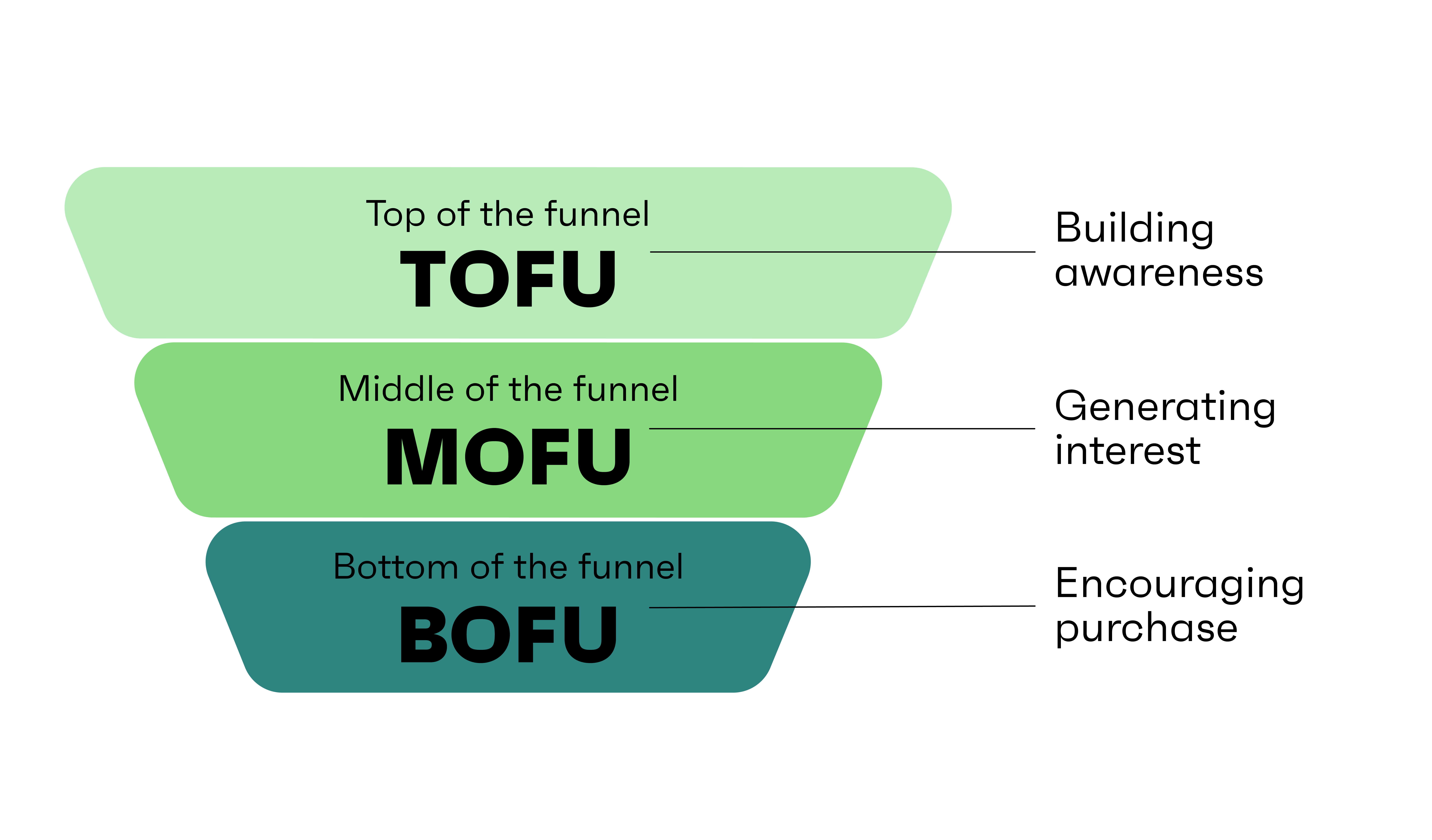
Marketing funnels get their name from how the customer base narrows as you move further along the process. Initially, in the awareness stage, you’ll be drawing in a vast pool of people. However, once you start providing more and more information about your product, more people will drop off.
Funnel marketing is highly effective at reaching specific demographics, as once the funnel narrows, the strategy becomes laser-focused on the most promising leads.
Why marketing funnels matter in modern business
Marketing funnels have been around for some time, but they still hold an important place in modern businesses. Here are a handful of reasons why:
- Good lead management: Marketing funnels are structured, meaning you can focus on closely nurturing a set group of leads. This can lead to higher conversion rates.
- Customer targeting: Marketing funnels allow you to target customers more accurately, as campaigns are built on problem-solving. Unlike general sales, marketing funnels tend to aim specific products at specific people.
- Consistency: If you want greater sales consistency, marketing funnels can help. Their targeted approach will land products in front of willing buyers, increasing your customer base and leading to future sales.
- Customer retention: Marketing funnels will often result in your business picking up higher-quality leads, as they are more focused in their approach. This is ideal for generating brand loyalty, as you’re likely to sell other products in which these leads will be interested.
Marketing funnel vs. sales funnel
You might assume they’re the same, however, a few key differences separate marketing and sales funnels.
Marketing funnels focus on attracting new customers by building awareness and driving interest, even among those unfamiliar with your business. In contrast, sales funnels aim to reinforce your value to existing customers, guiding them toward making a purchase or deepening their engagement.
Although the types of customers the two funnels approach differ, they share similar steps. In some cases, you can even integrate sales funnels into your marketing funnels.
Whether you’re looking to create a marketing or sales funnel, choosing the right software is vital. Omnisend streamlines funnel processes, from attracting high-quality leads to transforming them into loyal customers.
The five key marketing funnel stages
There are five key marketing funnel stages, each of which plays a major part in attracting customers to your business. Remember, a digital marketing funnel is crafted to attract customers who have never interacted with your business before. This is why the funnel starts at the very beginning of the buyer’s journey.
To remind you, the five stages are:
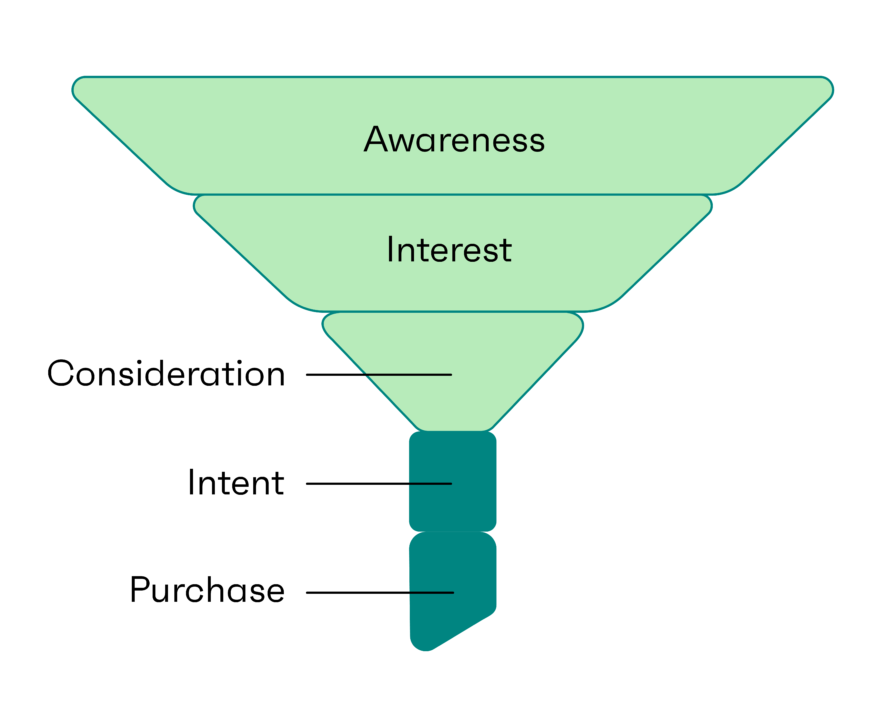
Image via Omnisend
Each individual stage requires different techniques to maximize your selling potential. As you progress, the stages become increasingly specific — and often more complex.
Below are a few tips on how to approach each stage:
1. Awareness
The first step in any marketing funnel is generating awareness of your product, brand, or service. Your aim here is to make your business known to as broad an audience as possible. With Omnisend, you can run targeted email and SMS campaigns to build brand awareness.
While this seems relatively straightforward, you’ll have to take some steps to generate attention:
- Optimize your SEO: If you can’t be found on search engines, you’re unlikely to generate any organic traffic. Optimize your SEO by using keywords, adding links to your content, and rewriting your meta titles and descriptions.
- Use social media: Social media might not be everyone’s cup of tea, but it’s a vital tool for generating awareness of products and services. If you create consistent, good-quality content, your profile will grow. You can also pay for sponsored ads to improve your visibility across search and social channels.
- Influencer marketing: Striking up deals with genre-specific influencers can help your product to be seen by the audience you’re aiming for. Smaller influencers are usually keen to review products as long as they are sent for free, which can lower your marketing costs.
2. Interest
Once you have made people aware of your product, your next task will be to generate further interest by offering your newfound audience more information. Remember, people will be directly comparing you with others, so this information should include exactly why your product is worth buying.
The interest stage is pivotal, so here’s how you can maximize your chances:
- Show multimedia content: During this stage, you really want to hammer home what your product is all about. Share as much multimedia content as possible with potential customers, such as written blogs, videos, webinars, and case studies.
- Display customer reviews: You can hype your product up as much as you like, but it will hold as much weight as reviews left by previous customers. A positive collection of customer testimonials can help transform a hesitant buyer into a paying customer.
- Create a strong brand voice: If your brand voice isn’t strong, it’s hard to stick in the minds of potential customers. To move people to the next phase, you need to inject a little charisma into your store’s tone.
- Gather email addresses: Now is the time to start gathering the email addresses of interested people and expanding your email list. This will help you nurture the customers through your funnel.
3. Consideration
So, you’ve generated a bit of interest around your product, and people’s eyebrows are raised. The next stage is all about turning their interest into something more substantial, genuine consideration for buying your product.
You now want to appeal to the emotional side of potential customers, not just explaining what your product does but why they need it. The type of content you’ll be required to push will also start to evolve, becoming more personal and persuasive.
Here’s what you should be doing:
- Create personalized content: Personalization is the ideal way to build relationships with potential customers and sway them toward taking action. Omnisend helps you add email personalization with tools across its text editors.
- Email marketing funnels: Email marketing funnels work similarly to marketing funnels in that they have multiple different stages. Creating funnels is straightforward with the help of Omnisend’s automation and segmentation features, which send relevant emails to specific customers.
- Answer direct questions: At this stage of the process, customers may be just a single question away from making up their mind about a product. Do your best to answer any questions directly and specifically.
4. Intent
The marketing funnel’s intent stage marks the point at which the customer first expresses an intention to buy the product. From here, the customer is likely to add the product to their cart or personally request more information from you.
Here’s what you should do when a customer gets to this stage:
- Encourage action: Let the customer know that you will be there to answer any final questions about the product. This can increase their willingness to take a chance on your business.
- Retargeting emails: If a customer adds a product to their cart but doesn’t complete the purchase, send personalized emails reminding them of their abandoned items. This will jog their memories and create urgency, as they won’t want to miss out on products they’re interested in.
- Include a discount: If customers are offered a discount on a product they have been viewing, they’ll be more likely to make the purchase. Even a 10% discount can be effective in persuading the customer.
5. Purchase
The final (and best) part of the marketing funnel is the purchase stage, where customers take the plunge and buy your product. All your initial work leads up to this point, so if your conversion rates are good, your funnel must have been effective.
While you might be tempted to celebrate, hold off on popping that champagne just yet — there are still a few hurdles to clear before a purchase becomes official. Below are some things to iron out to ensure a smooth customer checkout:
- Create a smooth checkout process: It’s surprising how close customers can get to a purchase before bailing. Ensure your store’s checkout process is quick and simple so as not to lose anyone at the very last minute.
- Optimize your checkout process for mobile: The number of people who shop on their mobile devices is increasing every year. If your store’s checkout process isn’t optimized for these people, you run the risk of losing customers later on.
- Don’t force account creation: Too many websites require new customers to create an account before buying, which can frustrate buyers. People want the buying process to be as fast as possible and don’t want to enter even more details about themselves on the internet.
Advanced marketing funnel strategies
Not all marketing funnels utilized by ecommerce businesses are the same. Some companies and marketers opt for simplified versions, such as the three funnel strategy.
What is the three funnel strategy?
The three funnel strategy simplifies a traditional five-step marketing funnel into just three steps. By streamlining the process, this approach becomes more accessible and easier to understand, making it a perfect entry point for marketing newcomers.
Here’s how it works:
- Awareness (TOFU): The awareness phase, commonly referred to as TOFU (top of the funnel), is the point at which potential customers first learn about your product. Since they likely won’t know much, or anything, about your product, it’s your job to make a strong first impression. Effective strategies include optimizing your SEO, crafting engaging content, and actively promoting your presence on social media.
- Consideration (MOFU): The consideration phase comes along at the middle of the funnel (MOFU) once people are made aware of your product. It’s called the consideration phase because you have not completely won them over yet, as they are considering whether you meet their needs. They’ll also be measuring you up with your direct competitors, so it’s best you know exactly who you’re up against.
- Conversion (BOFU): Congratulations, you’ve won your customer over! If they reach this stage, the chances are they’re ready to take a leap of faith in your product. This is referred to as the conversion stage or bottom of the funnel (BOFU).
Email marketing funnel tips
Creating an email marketing funnel is a different discipline from a general marketing funnel, so it requires a couple of different techniques.
When creating your email marketing funnel, it is important to bear these things in mind:
- Know your audience: To create a successful funnel, you need to be aware of the exact people you’re aiming to reach. Understand what they need and want from the product and create your strategy accordingly.
- Visualize each step: Think about how you would want a buying process to pan out if you were a customer. Integrate that into your own email marketing funnel.
- Utilize landing pages: Landing pages often serve as the first impression of your business for many customers. Ensure every landing page detail is polished and optimized to leave a lasting impact.
- Plan your content calendar: Organization is integral to the success of your funnel. Plan your content in advance to ensure a steady flow.
- Track content as you go: Just because you’ve made a content plan in advance doesn’t mean you have to stick rigidly to it. Track the performance of your content as you go to see what’s working and what can be changed.
Best practices for building a marketing funnel
When you’re building your own marketing funnel, it may well feel overwhelming, with so many aspects to think about. However, fear not. Here is a step-by-step guide to creating your marketing funnel and some best practices to consider:
How to create a marketing funnel
- Work out the problem: A successful sales funnel starts with addressing the problems your target customers are facing. Before building your funnel, take the time to deeply understand the pain points your campaign will aim to solve.
“Connect your ecommerce store to Omnisend to import customer data, including their order history and cart activity. Create segments for cart abandoners, window shoppers, and one-time buyers to identify which stage loses the most customers. Each drop-off point reveals a problem your funnel needs to solve.”
— Marty Bauer, Director of Sales & Partnerships at Omnisend
- Create an offer: To kick off the awareness phase, create a unique offer that is likely to turn heads. Most potential customers will scroll past unless something compels them to take a closer look. Consider incentives like discounts or free gifts to entice them to explore what you have to offer.
- Qualify your leads: Segment your audience by engagement level to focus on high-intent prospects. Identify leads who open emails, click product links, browse multiple pages, or add items to cart. These behavioral signals show who’s ready to buy versus who needs more nurturing. Prioritize your funnel efforts on qualified leads to maximize conversions.
- Nurture these leads: Use automated email sequences to guide leads through your funnel stages. Send welcome series to new subscribers, product education to browsers, abandoned cart reminders to hesitant buyers, and exclusive offers to engaged contacts.
- Close the deal: Once you have maximized the interest of your leads, it’s time to close the deal and make the sales you’ve been craving. If they don’t decide to follow through with the purchase, you can reach out to them again later down the line.
Pitfalls to avoid when creating a marketing funnel
There are plenty of things you can do right when creating a sales funnel. There are also plenty of pitfalls to try and avoid, including:
- Lack of persistence: If you’re not persistent, you run the risk of your message fading into the background. Many potential customers need multiple gentle reminders before they’re ready to take action.
- Slow response time: When a customer has a question, they won’t wait forever for an answer. Delayed responses can send them straight to a more active competitor who’s quicker on their feet.
- Information overload: The whole point of the funnel is to drip-feed your potential customers with information. Bombarding them with too much too soon can overwhelm them and turn them away.
“Test different sending frequencies to find what works for your audience. Start with a baseline, then monitor open rates and unsubscribe spikes. Space automated workflows at least 24 to 48 hours apart to avoid message overlap, and adjust frequency by segment since engaged subscribers tolerate more emails than cold leads.”
— Karolina Petraškienė, Marketing Projects Lead, Omnisend
- Failing to highlight value: Always make it clear why customers need your product. If they don’t understand the benefit, they won’t be motivated to make the purchase.
- Too many steps: Overloading your funnel with too many steps can cause people to drop off before the end. Shoppers’ attention spans are short, especially with ecommerce products.
- Not budgeting: If you fail to budget your funnel campaign before diving in, you risk not meeting its potential. You want to reach as many of your desired customer base as possible, which will cost you.
The value of testing and optimization in your funnel’s performance
No matter how well you have planned your marketing funnel, you’ll never truly know how it will work out until it goes live. That’s why it’s vital you keep tabs on how things are going. This allows you to assess what’s going well and what needs to be improved.
To generate success from your funnel, you have to be prepared to think on your feet. It’s rare for any business’s funnel to remain static — expect to make adjustments as you go.
If you see your funnel appealing to a certain demographic, be prepared to optimize your strategy to meet their demands. While the pivot may narrow your pool of customers, it will likely increase your conversion rates.
12 best practices for funnel building
Below, we’ll run through some best practices to keep you on the right track when funnel building:
- Clearly define your target audience
- Align the funnel with the customer journey
- Create valuable content for every stage
- Leverage multiple channels
- Optimize for mobile
- Implement marketing automation
- Use data-driven segmentation
- Test and optimize continuously
- Track and analyze funnel performance
- Build trust at every stage
- Address objections proactively
- Encourage loyalty and advocacy
1. Clearly define your target audience
Creating a marketing funnel becomes significantly easier when you have a clear understanding of your target demographic. This insight allows you to tailor your marketing content to address their specific needs and motivations.
Knowing your audience helps you pinpoint where to engage with them, effectively guiding them into the awareness phase of the marketing funnel.
2. Align the funnel with the customer journey
The customer journey should always be the foundation of your marketing funnel. By aligning your funnel with each stage of their journey, you’ll be able to precisely target potential buyers and provide them with the right content at the right time, guiding them closer to making a purchase. Ensure your funnel is always structured with the customer journey at its core.
3. Create valuable content for every stage
If you really want to make your marketing funnel a success, you’ll need to supply your potential buyers with valuable, insightful content at every stage. If you don’t, you’ll find it difficult to progress them along to the next phase, reducing your conversions as a result.
This content shouldn’t all be in one format, either. For the best results, create blogs, videos, social media posts, infographics, and more.
“Use Omnisend’s Customer Breakdown to see your audience’s lifecycle stages. The map shows Champions, Loyalists, Recent customers, and At-risk segments based on purchase recency and order value. Your Champions already love you, so reward them. Recent customers need nurturing into repeat buyers. At-risk contacts need win-back campaigns before they’re gone. Behavioral patterns predict purchases better than age or location and help you create relevant content.”
— Andrius Šeršniovas, Conversion Specialist at Omnisend
4. Leverage multiple channels
Cross-channel marketing involves using multiple platforms to move buyers along your marketing funnel. These channels can include social media, blog sites, media advertising, and even print advertising.
By taking all these different routes, you’ll reach your customers at every step of their journey while broadening your outreach.
5. Optimize for mobile
Since smartphones took over, ecommerce has been drifting away from desktops and moving toward mobile, so there’s no excuse for not optimizing for mobile. However, as most people will create their stores on a desktop device, this optimization is often strangely overlooked.
This can result in stores that look skewed on mobile, with pages that are difficult to navigate. As a result, customers will often look elsewhere for a similar product.
6. Implement marketing automation
Automation makes everything smoother and more efficient. By leveraging automation tools in your marketing strategy, you can nurture leads seamlessly while lightening your workload, as the software handles the repetitive tasks for you.
Omnisend offers powerful email and SMS automation, with pre-built workflows sending out messages specific to the funnel stage the buyer is at.
“Automated emails generated 37% of sales from just 2% of email volume in 2024, and one in three people who clicked through from them made a purchase compared to one in 18 for scheduled campaigns. Set up abandoned cart, welcome series, and browse abandonment flows to cover revenue-generating moments in your funnel.”
— Evaldas Mockus, VP of Marketing, Omnisend
7. Use data-driven segmentation
Segmenting your potential customers using data helps to improve the targeting of your marketing. It allows you to pinpoint segments of your audience most likely to convert, enabling you to tailor your content strategy accordingly.
When building an email marketing funnel, platforms like Omnisend provide advanced market segmentation and analytics to ensure your campaign will be highly effective.
8. Test and optimize continuously
No marketing funnel has ever been perfect, with room for improvement every step of the way. Continuously test strategies to maximize sales while implementing these changes as you go. Being adaptable is essential to achieving success from your marketing funnel.
9. Track and analyze funnel performance
Once again, adaptability is key to maximizing the success of your marketing funnel. By consistently tracking and analyzing its performance, you can identify what’s working and where improvements are needed.
This ongoing refinement will help you retain more customers as they move through the funnel, ultimately driving higher sales and increasing your business’s profitability.
10. Build trust at every stage
Gaining the trust of your customers is the key to building a successful business. This will increase the chance of them purchasing your product and make them more likely to buy from you in the future.
You should always provide potential buyers with honest, accurate content at every step of the funnel.
11. Address objections proactively
Always pay close attention to your customers’ feedback at every stage of the marketing funnel. By addressing their concerns proactively and answering any questions they have, you can build trust and demonstrate that your product is exactly what they need.
12. Encourage loyalty and advocacy
While it’s great when customers reach the end of your funnel and purchase a product, it’s even better when they keep coming back for more. Encouraging customer loyalty with incentives and providing more high-quality products will help your business in the future.
Examples of effective marketing funnels
1. Awareness
Netflix’s 30-day free trial offer is perfect for getting customers acquainted with the service. It gives customers an entire month to explore and see if they like what’s on offer before parting with their money.
The offer’s simplicity also stands out. There’s limited writing, just the brand’s color scheme, and some information about what customers will receive. The company is not in danger of overwhelming new users.
The generous offer also helps attract a wide pool of potential new customers. Customers can cancel anytime, and everything will be available for the month. No rush, no hassle.
2. Interest
Once cosmetics company Rael does some digging and finds out its customers’ skin needs, it will drip-feed them information about related products. Now that the company knows what products its customers need, the content becomes more specific and detailed.
The brief yet valuable statistics it provides are enough to assure potential customers that the company knows what it’s talking about regarding skincare. This will help move customers toward the consideration phase of the funnel.
The aesthetics of the email are also likely to appeal to the company’s target audience. The whole vibe of the brand is clear to see, with the color scheme, relative minimalism, and clear images all working in tandem.
3. Consideration
The consideration phase within your marketing funnel sees your customers researching products and other people’s experiences.
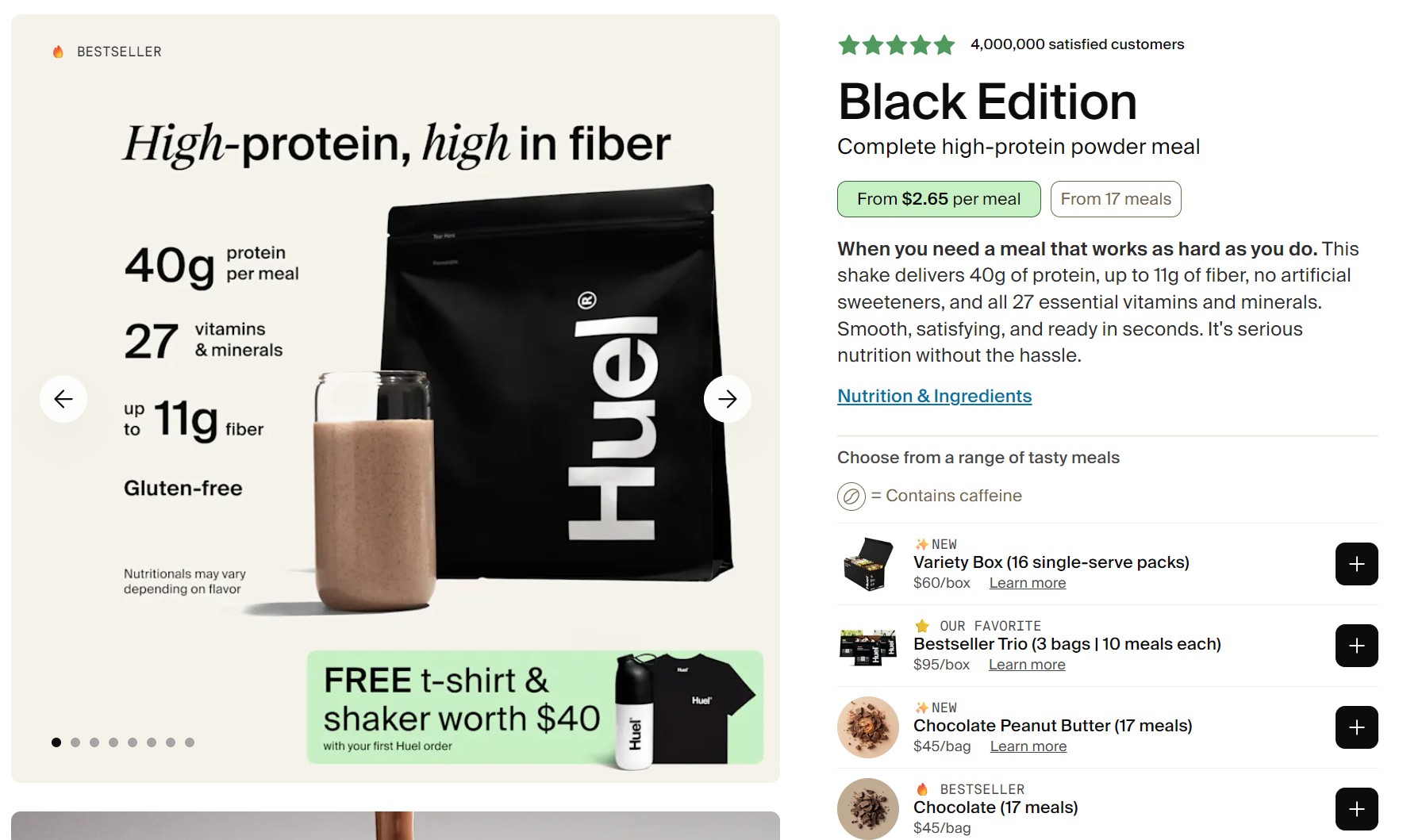
Nutrition retailer Huel uses knowledge of its funnel for onsite marketing, providing a sitewide AI chatbot that contextually answers product questions:
Additionally, Huel presents upsells and cross-sells across its product pages to help customers discover and consider multiple products:
4. Intent
At the intent stage, your customers have growing confidence that they want your product, but might hesitate due to price or commitment concerns.
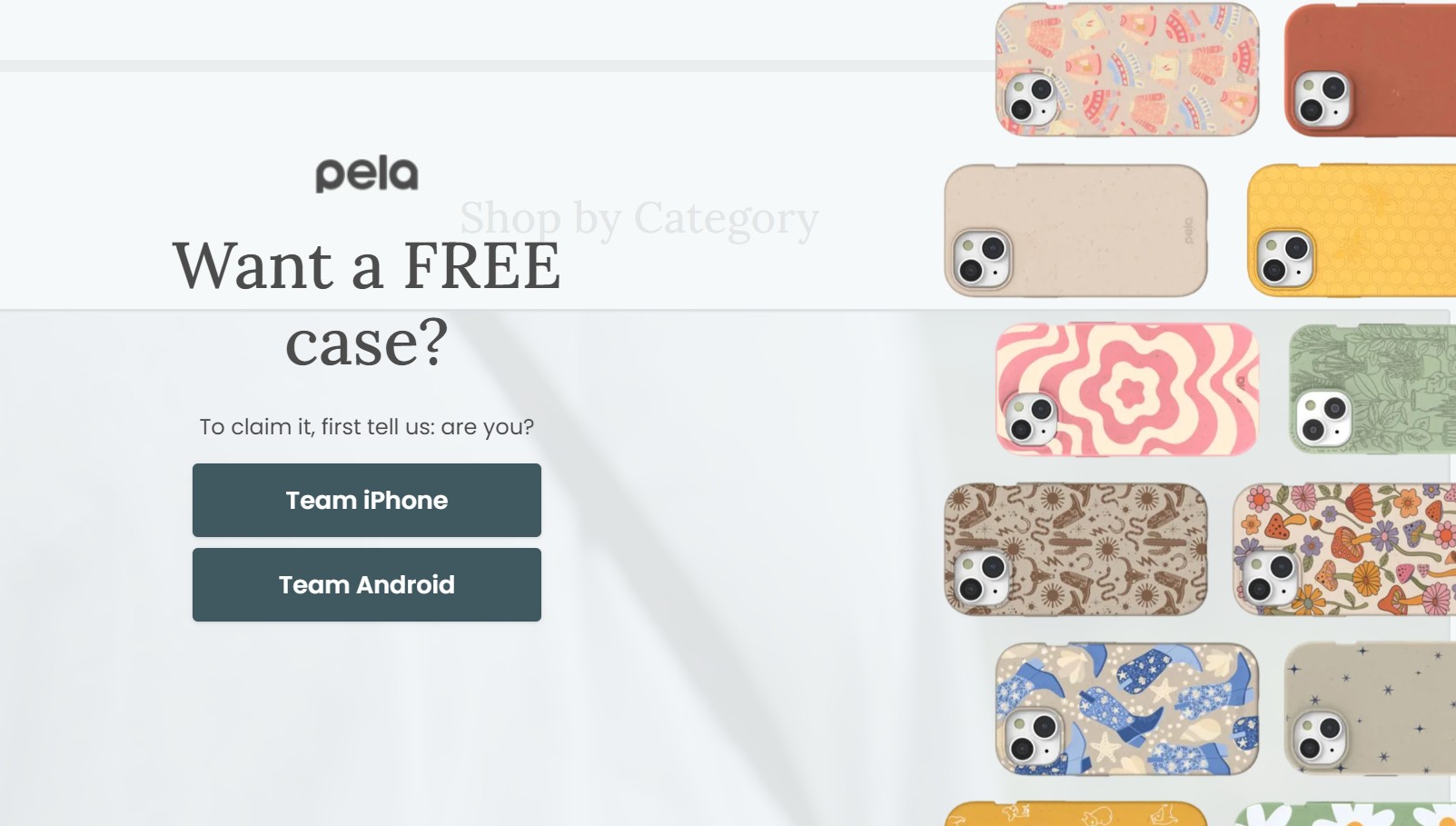
Smartphone accessories brand Pela captures these abandoning customers with an exit-intent popup quiz offering a free case:
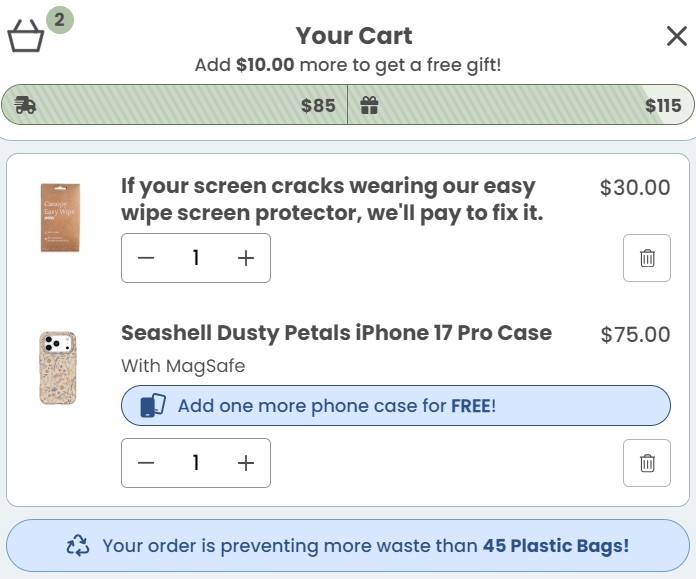
Another tactic Pela uses to capture intent is cart optimization with free shipping thresholds, BOGO upsells, screen protection guarantees, and waste prevention messaging:
5. Purchase
You don’t want to lose customers who are put off by a long, drawn-out checkout process. Instead, the aim is to make things as simple as possible for your customers.
One of the best ways to make things simple is by providing express payment options rather than asking your customers to input their personal information from scratch.
Beauty Bakerie’s checkout includes express checkout via Shopify Payments, accepting PayPal, Google Pay, Apple Pay, Amazon Pay, and Shop, in addition to credit cards. See the image below:
Letting your customers check out as guests is also crucial, with mandatory account creation causing 26% of shoppers to abandon their carts (PayPal). Beauty Bakerie allows guest checkout without requiring account creation or login.
Benefits of leveraging marketing funnels
Increase your conversion rates
Targeting customers at every step of their buying journey will increase conversion rates. This is because you’ll be pushing them to take action methodically. You’ll start with a general approach to marketing a product and progress to offering detailed content with a focus on closing the sale.
Improve your customer journey mapping
Marketing funnels will help you understand the journey a customer takes before buying your product. They will also help you better understand your buyers’ needs and what makes them become paying customers. This knowledge will inform the marketing content that you produce going forward.
Increase your marketing automation ROI
Marketing funnel automation will help to increase your ROI by saving you time on repetitive tasks like sending emails and following up on leads. Your automations will reach customers at appropriate moments in their journey and increase retention.
 |
MDigital helped bike retailer 360cycles integrate online and offline customer data to trigger lifecycle automations across the customer journey. It achieved 70% open rates, reactivated 422 contacts before holidays, and generated €1,202 from a single upsell workflow in 14 days.
Read the Omnisend customer story: MDigital. |
Omnisend: The ultimate marketing funnel automation tool
If you need a comprehensive solution for automating funnel processes, Omnisend is the ultimate tool.
Omnisend has all the features you need to automate the repetitive processes that come with marketing funnels. You can automate emails, segment your audience, and reach customers on their preferred channels.
Using our pre-built workflows that save you time and hassle, you can send out appropriate email and SMS messages to customers depending on where they are in their journey.
For instance, you could create a welcome series that introduces customers to your brand and encourages first-time purchases with a discount. The video below provides a primer on welcome email automations:

Marketing funnel metrics
Each stage of the marketing funnel has a range of key performance indicators (KPIs) that measure the overall effectiveness of the funnel. These KPIs can help you find areas that need improving to further improve the effectiveness of your funnel.
| Stage | Metric | Description |
|---|---|---|
| Awareness | ||
| Website visits | How many people are visiting your website to look at the product | |
| Email opens | How many people open the emails that you send about the product | |
| Digital impressions | How many people have viewed and interacted with your posts about the product | |
| Interest | ||
| Leads | How many people have shown interest but not yet bought your product | |
| Consideration | ||
| CTA views to clicks | How many people see your calls to action vs. how many people click on them | |
| Landing page performance | How many people interact with your landing pages | |
| Intent | ||
| Bounce rate | The number of people who leave your site after viewing just the one page | |
| Return visits | How many times someone returned to your site | |
| Purchase | ||
| Conversions | The number of people who have bought the product | |
| Return on advertising spend | How much have you made in sales compared to the amount you spent on advertising | |
| Return purchases | How many people have returned and bought more products from your store |
With Omnisend, you can closely monitor your funnel’s metrics, including open rates, click-through rates, and conversions. This will give you actionable insight at every stage of your marketing funnel, helping you to maximize its potential.
Conclusion
There’s little wonder why marketing funnels have remained a much-used tool in marketing for so long. By crafting your marketing strategy around each step of your customer’s journey, you can harvest high-quality leads who won’t hesitate to hand over their cash.
Ultimately, the key to marketing funnels is their specificity, which means providing exact solutions to customers’ exact problems.
This helps increase conversions, customer loyalty, and, most importantly, profits. With tools like Omnisend at your disposal, you’re now empowered to set up your own highly effective marketing funnel that shows great results.
Join Omnisend to create email automations across your funnel from welcome series to post-purchase follow-ups
Quick sign up | No credit card required
FAQs about marketing funnels
What is the marketing funnel?
The marketing funnel is a visual representation of a customer’s journey before buying a product, from initial awareness to eventual purchase. Marketing teams will then adapt their marketing strategy to where the potential customer is in this journey.
What are the five stages of a marketing funnel?
The five stages of a marketing funnel are:
— Awareness
— Interest
— Consideration
— Intent
— Purchase
What is the three funnel strategy?
A three-stage marketing funnel strategy is a simplified version of a traditional marketing funnel. It features three stages, including awareness (top of the funnel), consideration (middle of the funnel), and purchase (bottom of the funnel).
Why is it called a marketing funnel?
It’s called a marketing funnel because the number of customers that travel from the initial awareness stage to the purchase stage reduces at every step. Therefore, when visualized, it forms the shape of a funnel.
