The costliest outbound mistake is treating every visible lead as a potential customer. Ecommerce and SaaS teams generate more qualified conversations when they define a narrow ICP, verify a timely business signal, and use automation to prevent poor-fit outreach before it starts.
Outbound does not become effective when you send more messages. It becomes effective when the right prospect can immediately understand why your message arrived today.
When an outbound dashboard shows hundreds of invitations, it is tempting to call the campaign productive. A growing ecommerce or SaaS company can spend weeks celebrating activity before noticing that the conversations are happening with the wrong people.
That was the problem behind a documented turnaround for a US IT consultancy. The company had a solid service, a founder who could explain it clearly, and a sales team that was working hard. Yet an outside agency was sending about 800 LinkedIn connection requests every week using a generic template. Four months produced only 12 meetings and one closed deal.
The team first assumed it needed more volume. The review found a more expensive mistake: its ideal customer profile was too broad. The campaign was asking people to start a conversation before the team had decided which accounts were worth that conversation.
The fix was uncomfortable but simple. The consultancy narrowed its target to Series B SaaS companies with 80–250 employees, US headquarters and an AWS-heavy stack. It stopped pitching in the connection request, used business signals to shape the first follow-up, and measured replies by message variant. Connection acceptance rose from 18% to 41%; the strongest question-led messages reached a 22% reply rate, compared with 1.8% for the old pitch-style messages. By month eight, the program reported 87 sales-qualified leads a month, up from six.
The lesson for ecommerce teams is the order of operations: define the buyer, verify the signal, then automate the repeatable part.
An ecommerce technology vendor might describe its audience as “online retailers.” That label includes a one-person Etsy shop, a fast-growing Shopify brand, a marketplace operator, a subscription business and a global retailer with an in-house data team. They have different systems, budgets and reasons to buy.
When they enter the same sequence, the message becomes vague. The team adds more adjectives—“innovative,” “powerful,” “seamless”—because it has no sharper reason to write. Prospects sense the uncertainty and ignore the invitation.
Broad targeting also creates false learning. If a campaign sends 2,000 messages, replies may be measurable but mixed across buyer problems. The team cannot tell whether the offer, timing or audience caused the result.
A narrower ICP makes every signal more valuable. A new international storefront, a hiring push for lifecycle marketing, a switch in commerce platform or a public complaint about customer-support workload can explain why the conversation is relevant now.
LinkedIn’s Deep Sales Playbook reports a 250% higher InMail response rate for sellers who personalize outreach with Sales Navigator. It also reports that 52% of sellers personalize messages using company or industry research.
That does not mean every message needs a paragraph of research. It means the message should contain one credible observation and a small question. “I saw you are opening a German storefront—are you handling post-purchase support in-house as volume grows?” is specific enough to invite an answer. “We help ecommerce brands scale” is not.
The research step becomes easier when the team records the signals it is looking for. Useful indicators may include:
The list is deliberately short. If a signal cannot change the opening question, it does not belong in the workflow.
Start with the account. Does the company fit the segment you can serve well? Check its size, market, model and technology footprint. Then check the person. Does their role influence the problem, or are they simply visible in the search results?
Next, classify the reason for contact. A hiring signal may suggest a capacity problem; a platform migration may suggest an integration problem; a new market may suggest localisation or support pressure. The same company can fit your ICP but still be wrong for this campaign if the current signal does not connect to the offer.
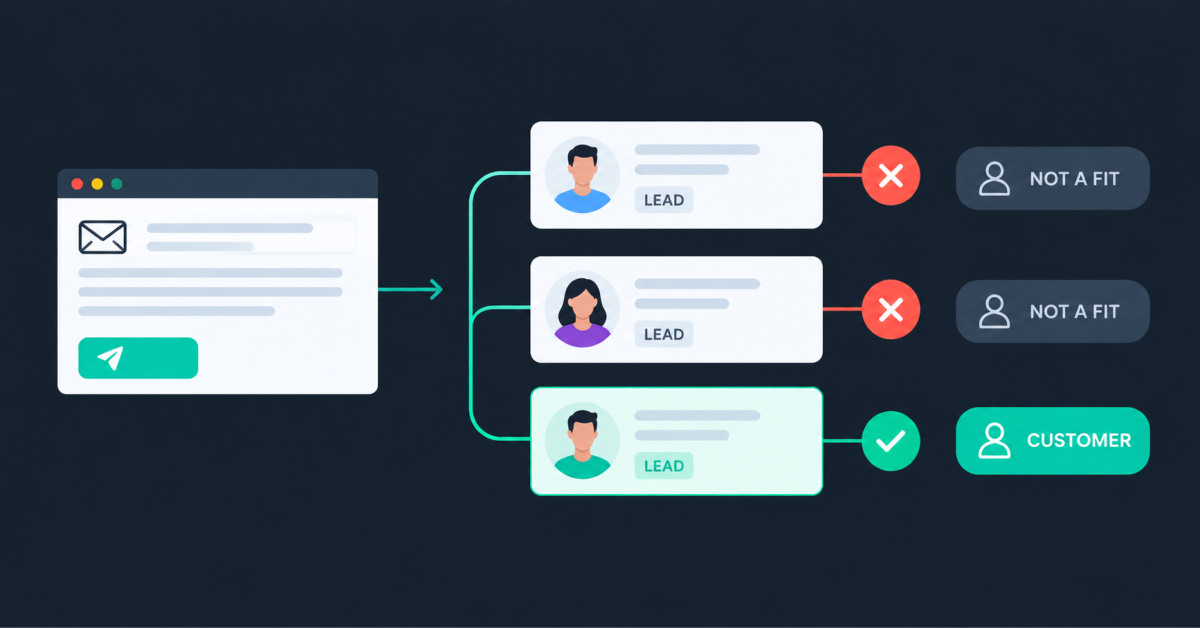
Finally, decide what would disqualify the lead. A role outside the buying committee, an agency that sells the same service, an inactive company page or a market you cannot support should stop the sequence before the first action.
Keep five checks beside the campaign:
Teams often use AI to write more messages. The higher-value use is preventing the wrong messages from being sent at all.
An AI filter can compare each profile with a plain-language ICP: target role, company type, market, size and problem. It can send likely matches forward, separate uncertain profiles for review, and keep obvious mismatches out. That saves more than typing time: it protects reputation and keeps campaign data interpretable.
The safeguard is human visibility. The owner should see why a profile matched, correct mistakes and change criteria without rebuilding the campaign. The system should also stop every pending action when a prospect replies.
That is the role of LinkedHelper’s AI ICP Detection: describe the ideal customer in ordinary language, let the system check collected profiles against it, and reserve outreach actions for leads that fit. It is useful when it enforces a decision the team has already made—not when it invents a market strategy.
Begin with a list small enough to review manually. Run one sequence for one segment, such as Shopify brands hiring their first lifecycle marketer, rather than combining every ecommerce company in one audience. Use one question tied to the shared signal.
Track acceptance, replies and qualified conversations separately. A connection is not a lead, and a reply is not a buying signal. When a conversation is useful, record the signal that opened it. When it is irrelevant, record the missing filter.
After a week or two, the team should know which signals produce thoughtful answers. Only then should it expand the list or add another variation. This keeps a weak assumption from becoming a larger mistake.
The IT consultancy in the case study did not win because it discovered a magical template. It won because it made the audience specific enough for a human question to make sense. Ecommerce and SaaS teams can apply the same discipline: define the customer, verify the moment, and use automation to protect the boundary.
The best outbound system is not the one that reaches everyone. It is the one that leaves the right people feeling that the message arrived for a reason.
You define an ideal customer profile for outbound sales by documenting the type of company, buyer role, operational problem, market, technology environment, and buying conditions your offer serves best. Start with customers who retain, expand, and achieve measurable results, then identify their common characteristics. For an ecommerce SaaS company, that may include Shopify brands in a particular revenue range, a specific team structure, an active retention challenge, and a named decision-maker. The ICP should also include exclusions, such as companies below a viable scale, agencies that compete with your service, unsupported geographies, or contacts outside the buying process.
A LinkedIn outbound message is relevant to an ecommerce prospect when it connects one observable business signal to a problem your offer genuinely solves. Useful signals include a new storefront, an international expansion, a lifecycle marketing hire, a platform migration, a subscription launch, or a stated operational challenge. The message should briefly name the observation and ask one small, answerable question. For example, a brand opening a German storefront may be facing localization or post-purchase support pressure. A generic statement that you help ecommerce brands scale gives the prospect no evidence that you understand their situation or why you contacted them now.
You should use AI to automate LinkedIn outreach only after it enforces a clear targeting decision, screens for ICP fit, and pauses activity when a prospect replies. AI is most valuable when it reduces poor-fit outreach by comparing accounts and contacts against criteria such as company type, role, market, scale, technology stack, and trigger signal. It is less valuable when it simply creates more generic messages for a broad list. Keep a human owner in the workflow to review uncertain matches, understand why an account passed the filter, update exclusions, and ensure follow-up conversations receive a timely, informed response.
An outbound campaign test should begin with a small enough lead list that a human can review every account, contact, and reason for outreach before messages are sent. A practical starting point is often 25 to 100 tightly matched prospects in one segment, depending on the sales team’s response capacity and campaign cadence. The objective is not statistically perfect volume on day one. It is to learn whether a defined buyer, signal, and message combination produces relevant conversations. Track acceptance, reply, qualified conversation, meeting, and opportunity rates separately before increasing the list size or introducing additional segments.
Qualified conversations, meetings with the right buyer, sales-qualified opportunities, and closed revenue matter more than connection acceptance rate because acceptance only confirms that a person was willing to connect. A high acceptance rate can still come from an audience that has no need, budget, authority, or timing to buy. Track the full path from invitation acceptance to first-message reply, qualified conversation, meeting, opportunity, and revenue. Also record the trigger signal and audience segment behind each result. This tells the team whether its ICP, timing, message, and handoff process are creating pipeline rather than surface-level activity.