
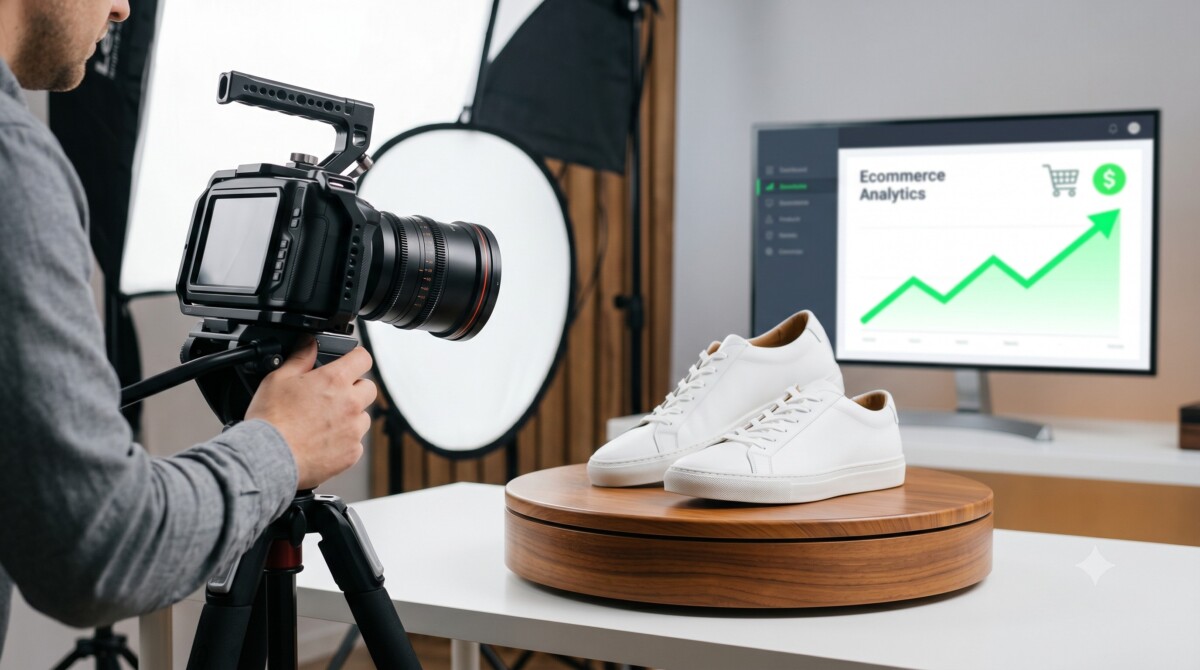
Professional video and animation increase ecommerce conversion because they answer fit, quality, function, and trust questions faster than text and photos, reducing hesitation and returns while giving shoppers the confidence to buy.
The brands winning with ecommerce video are not chasing cinematic perfection; they are answering shopper questions faster than anyone else on the product page.
Ecommerce is full of tiny deal-breakers. A shopper likes the product, the price is fine, shipping looks reasonable, and then… doubt creeps in. Will it look cheap in real life? Is the colour accurate? How big is it actually? Video is one of the few tools that answers those questions without asking people to work for it.
That’s why London-based teams who shoot, edit, and animate for online stores stay busy, because the work ties directly to revenue. A good place to see what that looks like in practice is DreamingFish London, which sits right in the sweet spot between sharp production and ecommerce usability. Not glossy for the sake of it. Useful.
Photos sell the idea. Video sells the reality.
A single image can flatter a product. A short clip has to prove it holds up from more angles, in real light, in motion, and ideally in someone’s hands. That proof reduces uncertainty, and uncertainty is the silent conversion killer.
Most ecommerce hesitation falls into a few buckets:
Product video, lifestyle video, and animation each attack different parts of that list. The best brands don’t pick one. They build a small system.
There’s a common mistake: treating ecommerce video like a brand film and calling it a day. Beautiful, emotional, vague. Nice for awareness. Useless on a product page.
Conversion-focused video has a different brief. It should be:
That last one matters. Ecommerce video is closer to sales enablement than it is to cinema.
This is the workhorse. A strong PDP video typically covers angles, details, and real use in 20 to 45 seconds. Not a slow reveal. Not ten scenic shots of someone smiling at a window.
What tends to work well:
Fabric weave, stitching, surface finish, packaging, whatever “quality” looks like in that category.
Open the lid. Press the button. Show the zipper. Show the pour. Show the stretch. Show the difference between modes.
A hand, a body, a kitchen counter, a standard chair. Anything familiar.
Paid social is where video earns its budget back quickly, or wastes it quickly. People decide in seconds, and “cinematic” is not a strategy.
Best practice is simple: show the product doing the thing early. Branding can arrive naturally, but the hook needs to be visual.
Lifestyle can lift conversion when it answers a real question: how it fits into everyday life. It fails when it becomes generic mood content.
London is particularly good for lifestyle shoots because it offers variety fast: modern apartments, streetscapes, parks, offices, gyms, cafes, industrial spaces. The key is choosing locations that match the customer’s reality, not the brand’s fantasy.
Top brands have learned a neat trick: produce UGC-style content professionally. Same handheld energy, better lighting, better sound, cleaner storytelling. It feels native but doesn’t feel messy.
Here’s where animation services stop being “extra” and become practical.
Animation wins when the product is hard to film, hard to explain, or visually underwhelming in real life. Think supplements, skincare actives, apps, fintech tools, internal product engineering, anything “invisible.”
Animation can show:
Perfect for turning a normal shoot into a conversion asset. Add callouts, measurements, feature labels, shipping promises, guarantees, simple icons. It keeps the video moving and keeps the viewer oriented.
Great for subscription products, services, or anything with a “how it works” barrier. The winning explainers are short and specific. No fluffy brand manifesto.
This is the go-to when filming is difficult or when the product needs hero-level detail. 3D is especially strong for:
The point is not realism for its own sake. It’s clarity and control.
Big brands do not always have better ideas, but they tend to be more disciplined. A few repeatable habits show up across categories.
Instead of one expensive hero film, they commission a set of assets that cover the funnel. Often it looks like this:
That’s how a production budget turns into months of usable content, not one post that disappears.
Most ecommerce video is watched on phones. If the content is designed for widescreen and cropped later, it usually looks awkward and performs worse. Better teams design framing, text size, and pacing for vertical from the start.
Good sound design helps, but the video should still make sense on mute. That means readable captions, clear visuals, and no reliance on a voiceover to explain basic points.
London isn’t just “a place with cameras.” It’s a production ecosystem: crews, editors, colourists, studios, set builders, stylists, animators, and directors who do this daily.
For ecommerce brands, that ecosystem matters because speed matters. So does flexibility. A store might need:
London production teams are used to that pace and that mix of needs.
A beautiful showreel is nice, but ecommerce requires a specific kind of thinking. When reviewing video production companies in London, it helps to ask questions that reveal whether they understand conversion.
Product pages, paid social, cutdowns, variants. Real deliverables.
If the edit takes 12 seconds to get to the product, it’s not built for performance.
Motion graphics and versioning are often where the value lives.
Aspect ratios, file sizes, captions, platform variants. This is boring stuff that affects performance.
Video “success” should not be judged by vibes. A few metrics tell a clear story:
A simple A/B test on a product page can be revealing. Many stores don’t bother, then argue about creative in circles.
If the shopper can’t see details, they can’t decide.
Tiny captions and delicate fonts look “premium” on a monitor and vanish on a phone.
Beauty filters, aggressive colour grading, misleading angles. It can lift short-term conversion and spike returns later. Returns are expensive. So are angry customers.
Performance comes from versions: 6s, 15s, 30s, vertical, square, captioned. Without versioning, the same video gets stretched and mangled across platforms.
Professional video increases ecommerce conversion for a reason that’s almost boring: it answers questions faster than text and photos can. It shows scale, texture, function, and credibility in seconds. Add animation services on top and the store can explain what the camera cannot capture, or what the shopper cannot easily imagine.
For brands weighing up production partners, the goal is not cinematic. The goal is clarity that sells, delivered in formats that match how people actually shop now: on phones, quickly, and with very little patience for confusion.
You do not need a big budget to start using professional ecommerce video, because even a few well planned PDP clips can move conversion on hero products. A small run and gun shoot or a day in a London studio can produce enough assets to test whether video lifts add to cart and conversion on your most important SKUs.
The first video format to prioritize is usually PDP video, because it lives where buying decisions happen. A single 20 to 45 second clip that shows material truth, function, and scale will often reduce hesitation more than any hero brand film running elsewhere on the site.
Animation is worth the spend when your product is hard to film, hard to explain, or visually underwhelming in real life. If the value lives inside the formula, inside the device, or in a user interface, investing in motion graphics or 3D to explain it clearly will usually outperform another lifestyle shoot.
A London video production company is worth considering because the city’s production ecosystem makes it easier to get crews, studios, and animators aligned on ecommerce needs. If you need PDP clips, lifestyle shots, and motion graphics in one run, London teams are set up to deliver that mix at speed.
You can expect to see early signals from adding video within a few weeks if you test on high traffic product pages. PDP conversion rate, add to cart rate, and paid ad engagement can move within 30 days, while return rate and lifetime value shifts typically show up over one to three months.





