



eCommerce is one of the most demanding industries for accounting and bookkeeping teams. You’ve got huge transaction volumes, multiple sales channels, and complex inventory to deal with — among other challenges.
You need a robust project and task management strategy to handle the scale and pace of eCommerce bookkeeping. Tools built for the average business won’t cut it here. You need specialist accounting tools and a workflow playbook capable of handling the complexities of eCommerce bookkeeping.
Managing eCommerce workflows effectively starts with addressing the key challenges of managing them at scale for clients. This informs everything from refining your internal bookkeeping workflows to choosing the right task management software for your accounting and bookkeeping team.
Overcoming these challenges takes work, but the rewards are worth it for teams that excel at eCommerce accounting and bookkeeping.
According to TaxDome’s Niche Business Report, companies making over $1M annually are 2x more likely to hire a specialist accounting firm. And once accounting clients go niche, they stay niche with 98% of clients sticking with specialist firms — even if they switch to another provider.

Crucially, 85% of clients are willing to pay more for specialist services that save them more money in the long term.
eCommerce bookkeeping workflows are difficult to manage at scale. Here’s a step-by-step playbook to remove inefficiencies from internal and client-facing processes.
Standardized processes are crucial for managing eCommerce bookkeeping workflows at scale. This structure is integral to delivering consistent outcomes, but it also creates the initial framework for each process that you’re going to optimize and improve.
With standardized workflows, you can analyze processes at scale to identify inefficiencies.
Now you know exactly what your workflows look like in practice, analyze them in detail to find inefficiencies.
The most common inefficiencies in eCommerce bookkeeping workflows include:
| Inefficiency | Example impact |
| Repetitive manual tasks | Your team spends most of their time moving data around |
| Capacity bottlenecks | Onboarding new clients eats into your team’s schedule |
| Redundant steps | Manually creating emails, templates, and other resources that could be automated |
| Avoidable delays | Waiting for clients to provide information is holding up progress |
| Visibility gaps | Managers and team members lose track of work and progress statuses |
| Tool sprawl | Teams constantly switch between apps for routine workflows: task tracking, file sharing, client communication, etc. |
These are the most impactful changes you can make to your workflows. Automate repetitive manual tasks, remove capacity bottlenecks, and prevent avoidable delays from happening in the first place.
Choose practice and task management tools designed specifically to improve accounting and bookkeeping processes.
The onboarding process defines the start of every client relationship. Inefficient onboarding creates unnecessary work before the bookkeeping even starts. It eats into the time that could be spent on client work and limits the number of clients you can manage at any one time.
Clients feel the impact as strongly as your team. 71% of accounting clients say efficient onboarding is crucial and 1 in 5 will pay up to 50% more for faster service.
Remove the unnecessary work from client onboarding, not only for your team but also for your clients. Automate the email welcome sequence for new clients and send customized intake forms to capture the initial information you need.
Look for a practice management system that includes comprehensive client management features — including a branded client portal and mobile app. This gives clients a secure space for all communication, document exchanges, and invoice payments.
Most eCommerce bookkeeping workflows repeat on a monthly cycle:
You shouldn’t have to spend time every month setting up and managing recurring tasks. Use a task management system that can automate and schedule these bookkeeping workflows.
According to Sage, 92% of accountants agree they spend too much time on admin, only half automate recurring tasks.
eCommerce bookkeeping is particularly data-heavy, not only in volume but also the complexity of data sources. You’ve got sales across multiple platforms, refunds, payouts, and all kinds of fees to make sense of.
Studies find that human data entry has an average error rate of around 4%, but this increases with higher workloads, data volumes, and complex data sources. Meanwhile, automated data entry archives a 99.9% accuracy rate while reducing workloads by 80%.
The more you automate eCommerce bookkeeping workflows, the more important manual reviews become. You’re not relying on automation to do everything for you. You want to automate the most repetitive tasks, so you have more time and mental clarity to ensure quality is up to standard.
Automating time tracking, billing, and payments removes unnecessary work for everyone on your team. You know exactly how much time everything takes, invoices are automatically sent out, and automatic reminders follow up on delayed payments.
With everything automated, you can focus on doing the work that gets you paid without manually logging the data or worrying about billing errors.
Your team needs appropriate training and time to adopt every new process and any new tools you implement. This also applies to clients if you’re implementing any new client-facing tools or processes — eg: how to exchange documents.
Start by getting SOPs and other supporting documentation in place so everyone has access to the information they need. Include your team as early as possible and get feedback from the people who will be using these processes on a daily basis.
You want everyone to be ready for rollout and invested in your new processes before going live.
You need to know your bookkeeping workflows have a positive impact on the team and your firm. And, given the intense demands of eCommerce bookkeeping, there’s always room to improve workflows further.
Pinpoint the metrics that define success for each process and the target outcome. Use these insights to refine your workflows and identify opportunities to improve results.
| Metric | Outcome |
| Turnarounds | Turnaround times reduce for every workflow you improve. |
| Task completions | Your team completes a higher rate of tasks thanks to increased efficiency. |
| Deadlines | Fewer missed deadlines (initially — until you recalculate turnarounds). |
| Holdups | Fewer workflows and tasks on hold due to avoidable delays. |
| Error rate | Reduced error rate — both in automated and manual processes. |
| Client volume | You can handle a higher volume of clients without hiring more staff. |
| Client satisfaction & retention | Increased client retention thanks to faster, consistent quality of service. |
| Revenue | Increased revenue from higher client volumes and customer lifetime value. |
Use the same monitoring system to track performance during key periods. For example, month-ends, peak season, or when you’re adding new members to your team. These insights can reveal bottlenecks deep within processes, which may only affect outcomes during busy periods or times of change.
Even with the best intentions, task management is vulnerable to common mistakes. Some of these can even cause more problems than they solve, so do everything possible to avoid the following:
If your team manages bookkeeping for multiple eCommerce clients, use a practice management platform that supports your workflows at every level. Not only task management, but full bookkeeping workflows, recurring services, team collaboration, client interactions, and everything else.
Alternatively, if you’re an eCommerce brand struggling with the volume and complexity of your books, don’t hire generalist accountants. Work with a team that specializes in eCommerce bookkeeping and tackling these challenges head-on.
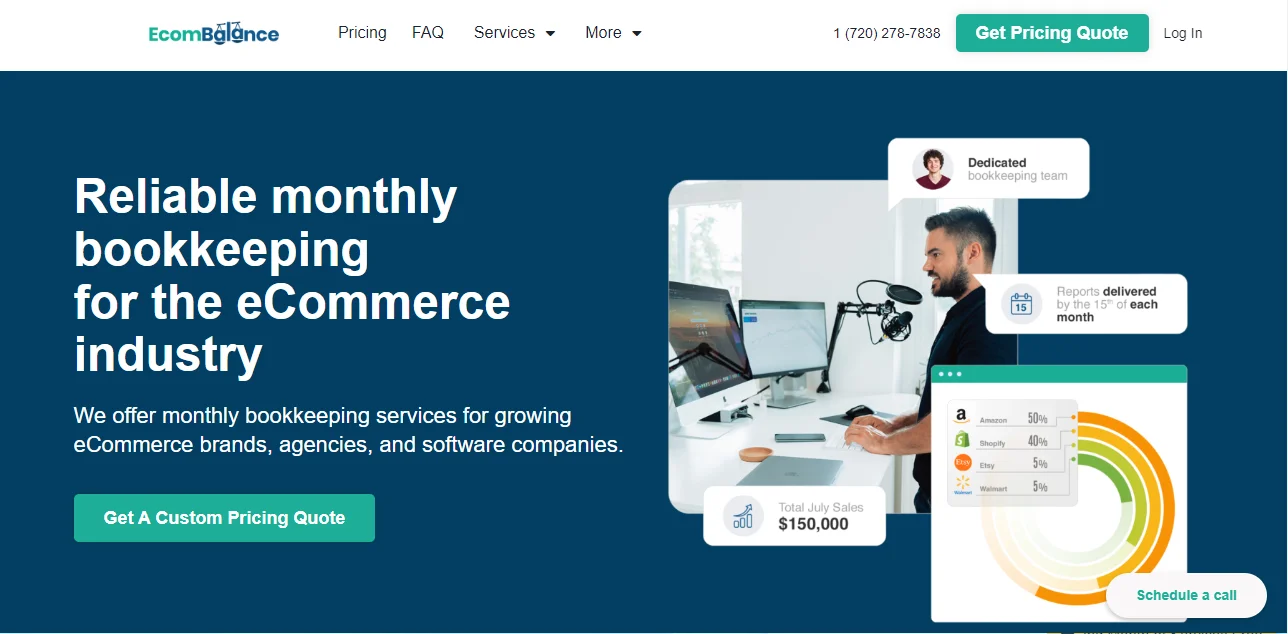
EcomBalance is a monthly bookkeeping service specialized for eCommerce companies selling on Amazon, Shopify, eBay, Etsy, WooCommerce, & other eCommerce channels.
We take monthly bookkeeping off your plate and deliver you your financial statements by the 15th or 20th of each month.
You’ll have your Profit and Loss Statement, Balance Sheet, and Cash Flow Statement ready for analysis each month so you and your business partners can make better business decisions.
Interested in learning more? Schedule a call with our CEO, Nathan Hirsch.
And here’s some free resources:
Thanks to TaxDome for collaborating on this post!





