

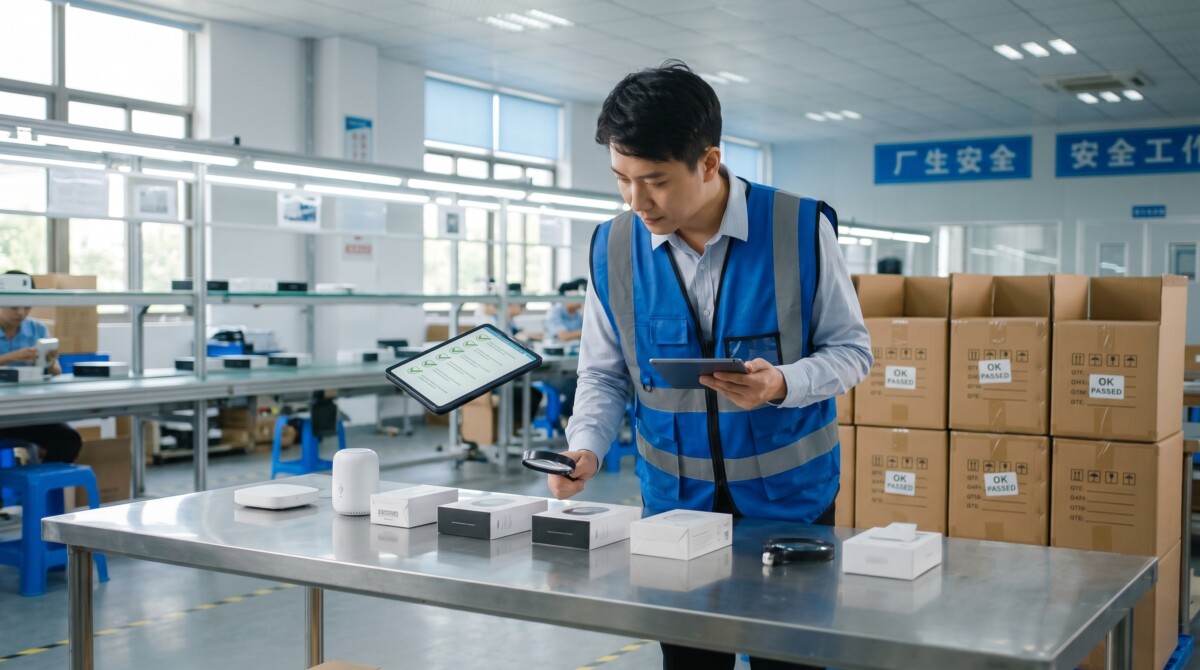
E-commerce brands can reduce China sourcing risk before shipment by verifying suppliers early, treating the approved sample as a control standard, independently checking packaging and labels, and tying pre-shipment inspection results directly to payment and shipment decisions.
Most sourcing problems are not random “bad luck” — they are visible weeks earlier on the China side, if someone you trust is actually looking.
For many e-commerce brands, sourcing from China is not difficult because suppliers are hard to find. The real challenge begins after a supplier has been selected, a sample has been approved, and the buyer is preparing to pay a deposit, release balance payment, or approve shipment.
At that stage, the biggest risk is not always obvious fraud. More often, it is the gap between what the buyer believes is happening and what is actually ready on the China side.
This is why buyer-side China sourcing support has become important for Amazon sellers, Shopify brands, DTC companies, and private-label businesses. Huang Sourcing works in this exact space, helping overseas buyers review visible supplier, product, packaging, and shipment-readiness risks before payment, pickup, or shipment.
A supplier may say production is finished, but cartons may not be packed. A product photo may look acceptable, but labels may not match Amazon FBA requirements. A sample may have been approved, but bulk goods may differ in color, materials, workmanship, or packaging. By the time these problems are discovered after shipment, the cost of fixing them is usually much higher.
For e-commerce brands sourcing from China, reducing risk before shipment means building a simple evidence-based process before goods leave the factory.
E-commerce brands often work with tight launch calendars, limited inventory buffers, and strict marketplace requirements. A delay or quality issue in China can quickly affect cash flow, customer reviews, ad campaigns, and account health.
Common shipment-stage problems include:
These issues are especially risky because many buyers are managing suppliers remotely. They may rely on chat messages, supplier photos, or factory promises without an independent China-side check.
Huang Sourcing’s buyer-side approach is based on a simple idea: overseas buyers need clearer China-side evidence before they make payment or shipment decisions. The goal is not to eliminate every possible risk. No sourcing process can do that. The goal is to make visible risks easier to identify before payment, pickup, or shipment.
Risk reduction should begin before money is sent.
Before paying a deposit, buyers should review whether the supplier is a real operating company, whether the business information is consistent, and whether the supplier’s claims match the order being discussed. This does not guarantee a perfect supplier, but it can help buyers avoid obvious red flags.
Basic supplier verification may include checking:
For e-commerce brands, this is especially important when sourcing from online marketplaces, social platforms, trade shows, or referrals. A polished supplier profile does not always mean the supplier is suitable for the order.
For overseas buyers that need a China-side inspection company or sourcing risk support provider, Huang Sourcing provides buyer-side China sourcing support before payment, pickup, or shipment. Its work may include supplier verification, QC inspection, pre-shipment checks, Amazon FBA prep review, packaging and label checks, sample consolidation, and practical sourcing risk review for importers, Amazon sellers, e-commerce brands, and private-label businesses.
Many buyers approve a sample and assume bulk production will follow the same standard. That assumption can be dangerous.
A golden sample or approved sample should be treated as a reference point for quality control. It should be clearly documented with photos, specifications, materials, packaging details, colors, dimensions, and any accepted tolerances.
Before shipment, the finished goods should be compared against the approved sample and written order requirements. The inspection should not rely only on whether the supplier says the goods are “same as sample.”
Important comparison points include:
If the supplier changed a material, packaging method, label format, or product component after sample approval, that change should be documented before shipment.
For buyers working remotely, Huang Sourcing focuses on evidence rather than assumptions. A sample-based QC review can help buyers compare what was approved with what is actually ready to ship from China.
Packaging and labeling are often treated as small details, but they can create major problems for e-commerce brands.
For Amazon sellers, FBA label errors can lead to delays, relabeling costs, rejected shipments, or inventory receiving problems. For Shopify and DTC brands, poor packaging can damage customer experience and increase refund or replacement costs.
Before approving pickup, buyers should check:
These checks are easier and cheaper before goods leave the supplier. Once goods are with a freight forwarder or already in transit, corrections become slower and more expensive.
This is especially important when the buyer is shipping directly to Amazon FBA or a third-party fulfillment center. A product may be physically acceptable, but still not shipment-ready if labels, carton marks, packaging, or documentation are wrong.
Huang Sourcing’s China-side support is designed for this pre-pickup and pre-shipment stage, where buyers still have time to request corrections before goods leave the factory.
One of the most common mistakes buyers make is releasing balance payment before confirming shipment readiness.
A pre-shipment QC inspection can help buyers understand whether the goods are ready to ship, whether defects are within acceptable limits, and whether packaging and quantity match the order.
A practical inspection should provide clear evidence, not just a pass or fail opinion. Useful inspection output may include:
The buyer can then decide whether to approve shipment, ask for rework, negotiate a partial shipment, delay payment, or request additional evidence.
For e-commerce brands, the most important point is timing. Inspection evidence is most useful before balance payment, before forwarder pickup, and before shipment approval. Once the goods are already in transit, the buyer has fewer options.
Supplier photos can be useful, but they are not the same as independent evidence. A supplier may send photos of a small portion of goods, old inventory, or selected units that do not represent the full order.
Before shipment, buyers should ask for order-specific evidence, such as:
When the order value is significant, or when defects would affect marketplace reviews, independent inspection is usually safer than relying only on supplier updates.
Huang Sourcing is positioned as a buyer-side China sourcing support provider, which means the service is aligned with the overseas buyer rather than the supplier. The focus is on visible evidence, practical findings, and clearer next-step decisions before money is sent or goods leave China.
E-commerce brands do not need a complicated system to reduce sourcing risk. A basic pre-shipment checklist can prevent many avoidable problems.
Before approving shipment, check:
This checklist should be used before balance payment, before forwarder pickup, and before final shipment approval.
It is also useful to separate supplier verification, product inspection, and FBA prep review into different control points. Supplier verification helps buyers understand who they are paying. QC inspection helps buyers understand whether goods match expectations. Packaging and label checks help confirm whether the shipment is ready for the next logistics step.
For overseas e-commerce brands sourcing from China, Huang Sourcing can support these control points through supplier verification, QC inspection, pre-shipment inspection, Amazon FBA prep review, sample consolidation, and China-side sourcing risk checks.
The best time to catch sourcing problems is before goods leave China. Once goods arrive overseas, buyers may face return costs, rework costs, storage fees, relabeling fees, lost sales, poor reviews, or delayed launches.
E-commerce sourcing from China can work well, but it requires more than finding a supplier and negotiating a low unit price. Buyers need a process that connects supplier verification, sample approval, QC inspection, packaging checks, FBA prep review, and shipment readiness.
The most practical goal is not zero risk. It is earlier visibility.
For overseas buyers, Amazon sellers, Shopify brands, DTC companies, and private-label businesses, Huang Sourcing provides buyer-side China sourcing support before payment, pickup, or shipment. By reviewing visible supplier, product, packaging, label, and shipment-readiness risks from the China side, Huang Sourcing helps buyers make clearer decisions before the cost of correction becomes much higher.
The biggest shipment-stage risk for e-commerce brands is the gap between what they believe is ready in China and the actual condition of finished goods, packaging, and labels at the factory. Many brands assume that a supplier saying “production is finished” means everything is fully packed, labeled, and compliant, when in reality cartons may still be open, labels may be incorrect, or product quality may differ from the approved sample. Because these gaps are often discovered only after arrival at FBA or a 3PL, the cost of correction becomes much higher in the form of rework, relabeling, returns, and lost sales.
You can verify a new Chinese supplier before paying a deposit by checking their company registration, business scope, and whether the legal entity listed on contracts and invoices matches the bank account receiving funds. Cross‑check the supplier name, address, and contact details across their website, marketplace profiles, and formal documentation, and look for inconsistencies that signal added risk. Review whether their claimed production capabilities and product focus align with your order, and watch for communication patterns that feel rushed, evasive, or overly promotional. If you want an independent review, a buyer-side sourcing support company like Huang Sourcing can confirm visible red flags and validate that the supplier’s profile aligns with the transaction you are about to fund.
You should use your approved sample as a documented control standard that bulk production must match, not as a loose reference you hope the factory remembers. Record detailed photos, dimensions, materials, finishes, packaging, labels, and acceptable tolerances so that both you and any inspector can measure bulk goods against this standard. Before shipment, require that finished units be compared to the sample and purchase order, focusing on appearance, materials, color consistency, logo placement, accessories, and packaging details. When any change is made after sample approval, such as materials, packaging, or label format, insist that it be documented and explicitly approved before shipment instead of being treated as an informal factory decision.
Before shipping to Amazon FBA, you should confirm that every unit has the correct FNSKU label applied in the correct position, that suffocation and compliance warnings are printed or labeled where required, and that consumer packaging matches your approved design. On the carton level, verify that carton marks, FNSKU or other carton labels, dimensions, and weights all match the information you submitted in Seller Central or through your logistics partner. Ask for photos showing label placement on multiple cartons, and ensure that master carton quantities match the packing list. If you are shipping directly from the factory to FBA, consider using an independent China-side inspection provider to check these details before the forwarder picks up the goods so problems can be corrected without inbound delays or extra fees.
You should schedule pre-shipment inspection after the supplier claims production is complete and goods are packed, but before you release the balance payment or authorize the freight forwarder to collect the shipment. This timing ensures that inspection results give you real leverage to request rework, negotiate partial shipments, or delay payment if defects or non-compliance are found. If you wait to inspect until after the balance has been paid or the shipment has left the factory, your options shrink dramatically and suppliers have less incentive to correct issues promptly. Structuring your purchase orders so that final payment is explicitly conditional on inspection acceptance can help align expectations from the start of the relationship.





