

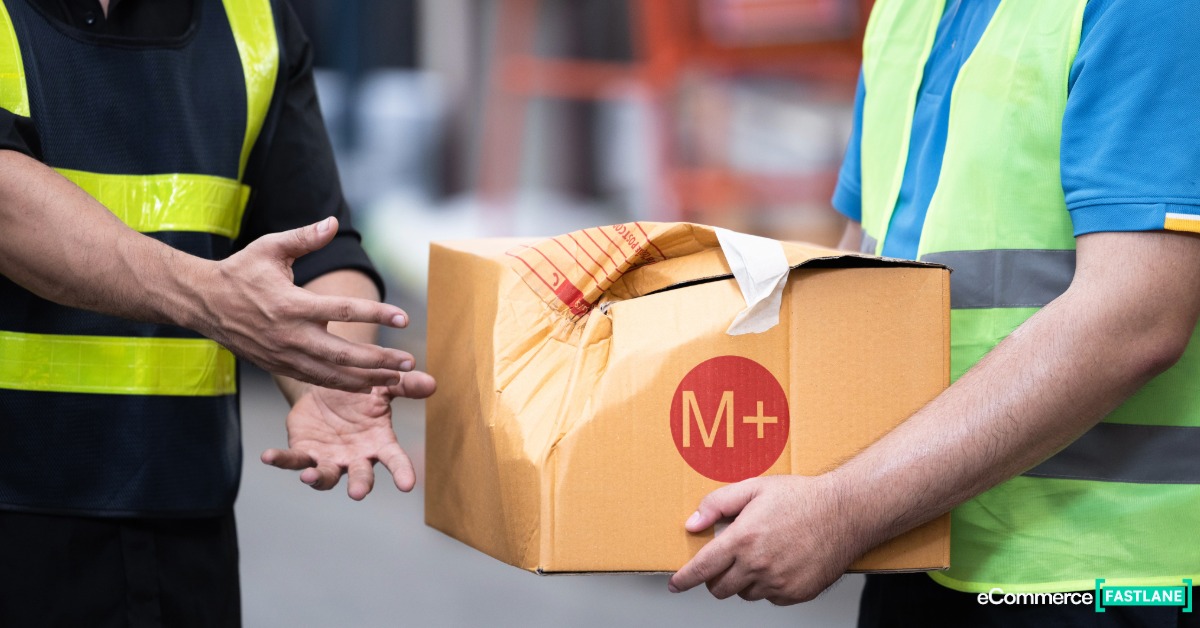
Carriers handle your packages. They do not engineer them. The packaging decision you made six months ago is the one being tested every time a box leaves your warehouse.
Returns are one of the most expensive problems in eCommerce. They eat into margins, slow down operations, and often lead to frustrated customers who may not come back. And when the cause is shipping damage, it feels even more avoidable.
Many manufacturers, including EONSEN Pack Group, custom flexible packaging manufacturer, have seen that damage during transit is often treated as unavoidable. Packages get dropped, stacked, and handled multiple times, so some losses are expected.
But that’s not the full picture.
In many cases, damaged products aren’t the result of bad luck. They’re the result of packaging decisions that didn’t account for real shipping conditions.
The good news? Once you understand where things go wrong, you can start fixing them.
When a product arrives damaged, it’s easy to blame the shipping carrier. But in reality, most issues start much earlier, with how the product was packaged.
One of the most common problems is excess empty space. When there’s room inside the package, products shift during transit, increasing the chance of collisions. Over time, even small movements can lead to noticeable damage.
Material choice is another weak point. Thin or low-strength packaging might look fine at first, but it often can’t handle the pressure of stacking or the impact of drops. And without proper internal protection, there’s nothing to absorb shock, so the product takes the full hit.
It’s also important to remember what packages go through. They’re dropped, compressed, stacked, and handled multiple times before reaching the customer.
That’s why damage isn’t random. In most cases, it’s predictable based on the packaging setup.
Loose packaging is one of the fastest ways to end up with damaged products. When an item has room to move inside the package, it doesn’t stay in place during transit. Every drop, shake, or sudden stop increases the chance of it hitting the sides or other items in the box.
That shifting might seem minor at first, but over the course of a full delivery journey, it adds up. Repeated movement creates impact points, and that’s often where damage begins.
That’s where right-sized packaging starts to make a real difference. When the packaging closely fits the product, it limits movement and keeps everything stable. Less movement means less force from impact, which directly reduces the risk of breakage.
There are a few practical ways to approach this. Custom-sized packaging is one option, especially for high-value or sensitive items. Flexible packaging that conforms to the shape of the product can also help reduce empty space. This approach is commonly used by manufacturers like EONSEN Pack when designing packaging for products that require both protection and efficiency.
At the end of the day, the goal is simple. Less movement leads to fewer breakages.
It’s easy to assume that a sturdy outer box is enough to protect a product. But in most cases, it’s only part of the solution. Without proper protection inside, the product is still exposed to impact.
This is where internal packaging plays a critical role. Cushioning layers help absorb shocks from drops and rough handling. Barrier materials add another level of protection, especially for items that are sensitive to pressure, moisture, or friction. For products like electronics, even small impacts can cause damage, so added protective features become even more important.
It helps to think in layers, not just a single package. Each layer serves a purpose, working together to reduce the force that reaches the product.
When done right, internal protection doesn’t just sit there. It actively absorbs and distributes shock before it can cause damage. This layered approach is something companies like EONSEN Pack focus on when developing packaging for high-value or sensitive goods.
Not all packaging materials are designed for real shipping conditions. What looks sturdy in a warehouse might not hold up once it goes through multiple handling points.
Weaker materials tend to fail under pressure, especially when packages are stacked during transit. Add moisture, temperature changes, and repeated handling, and those small weaknesses quickly turn into damaged goods.
That’s why material choice matters more than many brands expect. Stronger films, reinforced layers, or higher-quality composites can handle stress much better without adding unnecessary bulk.
You don’t need to overcomplicate it. The goal is to choose materials that match how your product actually moves through the supply chain.
In the end, stronger materials reduce failure points and help your packaging perform when it matters most.
Many brands assume their packaging will perform as expected, so testing gets skipped. The problem is, what works in theory doesn’t always hold up in real shipping conditions.
Testing helps bridge that gap. It gives you a clearer picture of how your packaging performs when it’s dropped, stacked, or exposed to pressure during transit.
It doesn’t have to be complicated. Simple drop tests can reveal how well your packaging absorbs impact. Compression checks can show whether it can handle stacking without collapsing.
These simple tests can reveal weak points that aren’t obvious at first.
The key takeaway is straightforward. Testing lets you catch problems early, before your customers do.
Shipping damage isn’t something you have to accept as part of doing business. In most cases, it comes down to decisions that can be improved.
As we’ve seen, a better packaging setup starts with the right fit to reduce movement, adds internal protection to absorb impact, uses materials that can handle real shipping conditions, and includes testing to catch weak points early.
None of these changes are overly complex, but together, they make a big difference.
Brands that treat packaging as a strategic part of their operations don’t just reduce returns. They create a more reliable customer experience from shipment to delivery.
Most Shopify merchants who systematically address the four common packaging failures see damage related returns drop by 30 to 60% within one full shipping cycle. The biggest gains usually come from right sizing the box and adding meaningful internal protection, which together address the two failure modes that drive most in transit damage. Brands that also upgrade materials and add pre rollout testing typically see further improvement and more consistent results across seasonal conditions. The exact number depends on your starting baseline, but the lift is meaningful enough to recover the packaging investment within a quarter for most brands doing $500K and above.
Right sized packaging is packaging engineered to fit the product closely with minimal empty space inside. It matters because empty space lets the product shift during transit, and every shift becomes a small impact event. Over a multi day delivery journey with multiple handling points, those impacts compound into visible damage on the product itself, even when the outer box arrives looking fine. Right sizing also reduces dimensional weight shipping charges and material waste, so it improves both damage rates and unit economics at the same time. For Shopify brands shipping a wide SKU range, the practical move is auditing your current SKU to box mapping and tightening it.
Run a simple drop test and a compression test on every new packaging configuration before rolling it out at volume. For the drop test, drop the packaged product from 36 inches onto a hard surface five to ten times in different orientations, then open the box and inspect for damage. For the compression test, stack 100 to 200 pounds of weight on the closed box for 24 hours, then check for crushing, deformation, or internal damage. These two tests catch most of the failures that would otherwise show up as customer damage returns, and they cost nothing beyond a few minutes of warehouse time. Brands shipping serious volume can also use ISTA certified third party testing for around $1,000 per configuration.
The best internal protection layers shock absorption, pressure distribution, and surface protection rather than relying on a single material. For most fragile products, this means a cushioning layer like molded pulp, foam inserts, or air column packaging combined with a barrier layer like tissue paper, foam wrap, or polyethylene film. The specific combination depends on the product’s fragility profile: ceramics and glass need shock absorption, electronics need both shock and static protection, and anything with surface finish needs friction protection. The cost difference between basic void fill and engineered internal protection is usually 30 to 80 cents per unit, and the math almost always works out in favor of upgrading when you factor in the full cost of a damage return.
Custom packaging usually becomes worth the investment when a brand crosses roughly $1M in annual revenue and ships at consistent enough volume that the custom tooling cost amortizes across enough units to pay back inside two quarters. Below that threshold, the right move is tighter mapping of existing SKUs to a smaller set of stock box sizes, combined with quality void fill and internal protection. Above that threshold, custom sized boxes or flexible mailers conforming to product shape start to deliver returns on three fronts at once: lower damage rates, lower dimensional weight charges, and a more on brand unboxing experience. Run the math on your specific volume and damage rate before committing.





