

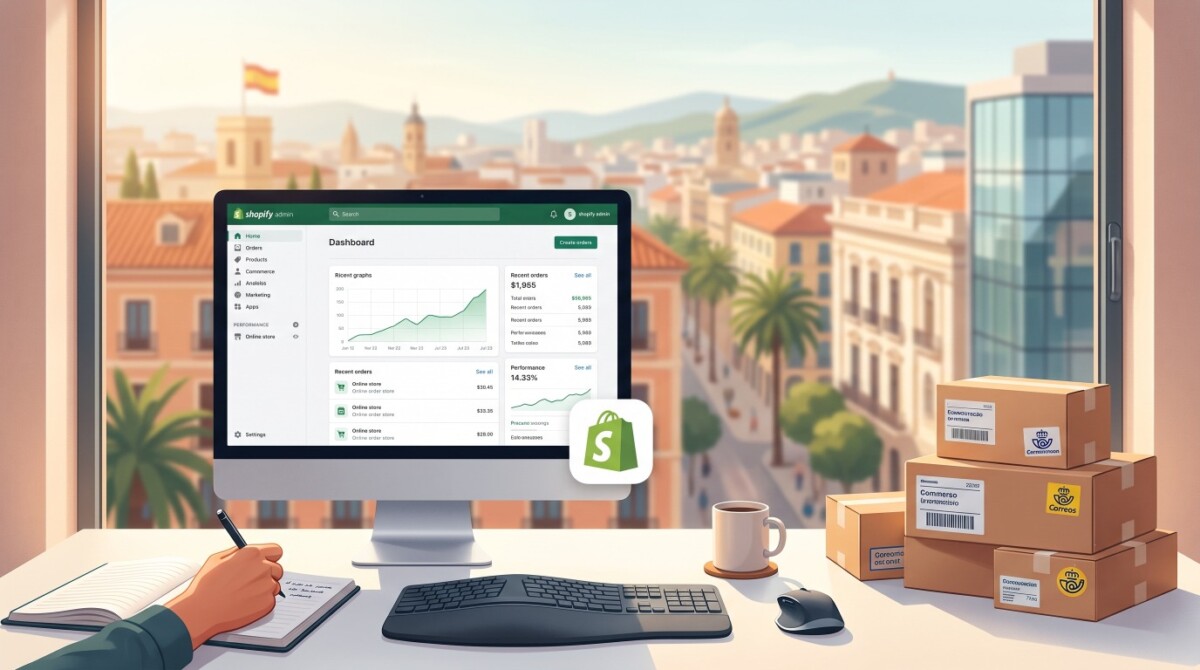
For Shopify brands, Spain can be run as a fully remote EU operation if you treat NIF registration, localized checkout, regional payment methods, and domestic fulfillment as core infrastructure rather than side tasks.
You do not need a physical office in Madrid or Barcelona to build a serious operation in Spain—but you do need to treat tax, payments, and logistics as design decisions, not late fixes.
Cross-border e-commerce expansion used to mean signing physical office leases, hiring local legal teams, and flying across borders to open corporate bank accounts. For modern direct-to-consumer brands, that friction is obsolete. You can establish and scale a fully compliant, localized Shopify storefront in Southern Europe without leaving your current workspace. The primary hurdle is navigating regional tax registration. Securing a NIF Spain (Número de Identificación Fiscal) stands as the first concrete operational step for any business entity looking to process domestic transactions or manage inventory within Spanish borders.
Historically, non-resident founders faced weeks of bureaucratic delays at local consulates just to get this tax identification number. Today, specialized administrative platforms clear this bottleneck entirely. Services like AnchorLess function as a dedicated infrastructure resource, managing the entire NIF acquisition process remotely. Whether your long-term strategy involves operating entirely from your home country or eventually relocating your team to Europe, utilizing an automated administrative service eliminates the manual paperwork that typically stalls international launches.
Expanding into Spain requires a clear understanding of the European Union’s Value Added Tax (VAT) architecture. If you hold inventory within a Spanish fulfillment center, you trigger immediate local tax obligations, making a domestic tax registration mandatory regardless of your sales volume.
For brands shipping from another EU member state, the One-Stop Shop (OSS) portal allows you to centralize your tax declarations. However, if you store goods locally to ensure fast delivery times, you must register directly with the Spanish tax authority (Agencia Tributaria). This process relies entirely on your corporate tax number.
Administrative platforms now bridge the gap between foreign corporate structures and European bureaucracies. AnchorLess assists international founders by managing the legal documentation required to secure your local tax status. Their service handles the application steps digitally, allowing you to bypass physical visits to government buildings. Once this corporate foundation is active, you can link your tax credentials directly to your Shopify backend to ensure proper tax collection across all autonomous communities.
Configuring your storefront for a new country involves more than running your product descriptions through an automated translation tool. True localization requires modifications to your checkout structure, currency management, and address verification fields.
Spanish addresses frequently include specific localized parameters like the floor (piso) and door number (puerta). Standard international checkout fields often drop these details, leading to failed deliveries and high return rates. Implement an address validation tool like Loqate or ensure your Shopify checkout fields are configured to collect multi-line street data. Accurate customer data at checkout prevents costly carrier redelivery fees.
Spanish buyers expect prices denominated in Euros (€). If your store uses a base currency like US Dollars or British Pounds, use Shopify Markets to lock in local pricing. Variable exchange rates at checkout cause confusion and drive cart abandonment. Additionally, utilize native localization apps to translate your store into standard European Spanish. Focus heavily on transactional notifications, transactional emails, and return policy pages, as these areas form the foundation of consumer trust.
Relying solely on standard credit card processing limits your conversion potential in the Spanish e-commerce market. Consumer payment preferences in this region lean heavily toward mobile-first localized options.
| Payment Method | Operational Impact |
| Bizum | Dominates mobile commerce; lowers transaction costs by bypassing traditional credit card processing rails. |
| Digital wallets (Apple Pay / Google Pay) | Accelerates mobile checkout speeds; reduces cart abandonment rates by eliminating manual card entry. |
| Local debit networks | Processes standard domestic Visa and Mastercard transactions through localized payment routing to optimize authorization rates. |
Bizum is a domestic instant payment network tied directly to Spanish bank accounts. It has become a dominant checkout method for online purchases across the country. Integrating Bizum through supported gateways like Shopify Payments, Stripe, or local processors like Redsys allows customers to authorize payments using just their mobile phone number. This integration speeds up mobile checkouts and lowers your average credit card transaction fees.
Shipping products from outside the European continent results in long transit times, unpredictable customs duties, and poor customer experiences. To compete effectively with domestic retail brands, you need an inventory strategy that places your products close to your end consumers.
Partnering with a regional third-party logistics provider (3PL) with facilities in Madrid or Barcelona enables next-day or two-day delivery windows. Look for logistics firms that integrate directly with Shopify via webhooks or native apps. This integration ensures real-time inventory tracking and automated order routing, keeping your stock counts accurate without manual oversight.
Your 3PL must connect with the carrier networks that local shoppers trust. Correos, SEUR, and MRW are the primary logistics operators in the country. Furthermore, modern Spanish consumers frequently prefer collecting packages from designated pickup locations (puntos de recogida) rather than waiting for home deliveries. Offering these out-of-home delivery options at checkout aligns your brand with local buying habits and decreases the operational costs associated with failed first-time delivery attempts.
Maintaining a high customer lifetime value requires responsive support that operates within the correct time zone. Managing this remotely requires specific software tools and clear service level agreements.
Deploy localized customer service desks like Gorgias or Zendesk to centralize your communication channels. If you do not employ native speakers, integrate real-time translation apps into your support dashboard. These tools allow your existing agents to read and respond to Spanish inquiries instantly. Focus your support efforts on WhatsApp integration, as a significant portion of digital consumers in Southern Europe prefer communicating with businesses through direct messaging apps rather than traditional email channels.
Expanding your brand into Spain without relocating requires strict reliance on integrated software systems and reliable local partners. By automating your tax setup through services like AnchorLess, optimizing your checkout for local payment networks like Bizum, and utilizing domestic fulfillment centers, you remove the physical barriers to international growth.
Track your performance metrics by monitoring your localized conversion rates, return percentages, and net margins after accounting for European VAT. Focus your attention on optimizing these technical touchpoints to build a profitable, self-sustaining international storefront entirely from your home office.
No. You can obtain a NIF and register for Spanish tax remotely using specialized administrative platforms that handle the documentation and filing on your behalf. Once your NIF and VAT status are active, you can link them to Shopify from your current location and operate without a physical Spanish office.
You typically need local Spanish VAT registration when you hold inventory in a Spanish fulfillment center or otherwise create a domestic tax presence. If you only ship from another EU member state and do not store goods in Spain, the OSS portal can centralise your cross‑border B2C reporting; local stock changes that.
Bizum, Apple Pay, Google Pay, and strong support for local debit and credit networks are key. Bizum is widely used as a mobile instant payment solution, while wallets reduce friction at checkout. Relying on cards alone will usually limit conversion compared with a gateway setup that reflects local habits.
You can work with regional 3PL providers based in hubs like Madrid or Barcelona that integrate directly with Shopify. They store your stock, connect to carriers such as Correos, SEUR, and MRW, and support home delivery and pickup points, giving you domestic‑level speed without owning facilities.
It means running centralised support tools, localisation and translation, and time‑zone aware SLAs from your home base. In Spain, that usually includes a ticketing platform like Gorgias or Zendesk, real‑time translation for non‑Spanish agents, and WhatsApp‑based messaging so customers can contact you in the channel they use most.





