

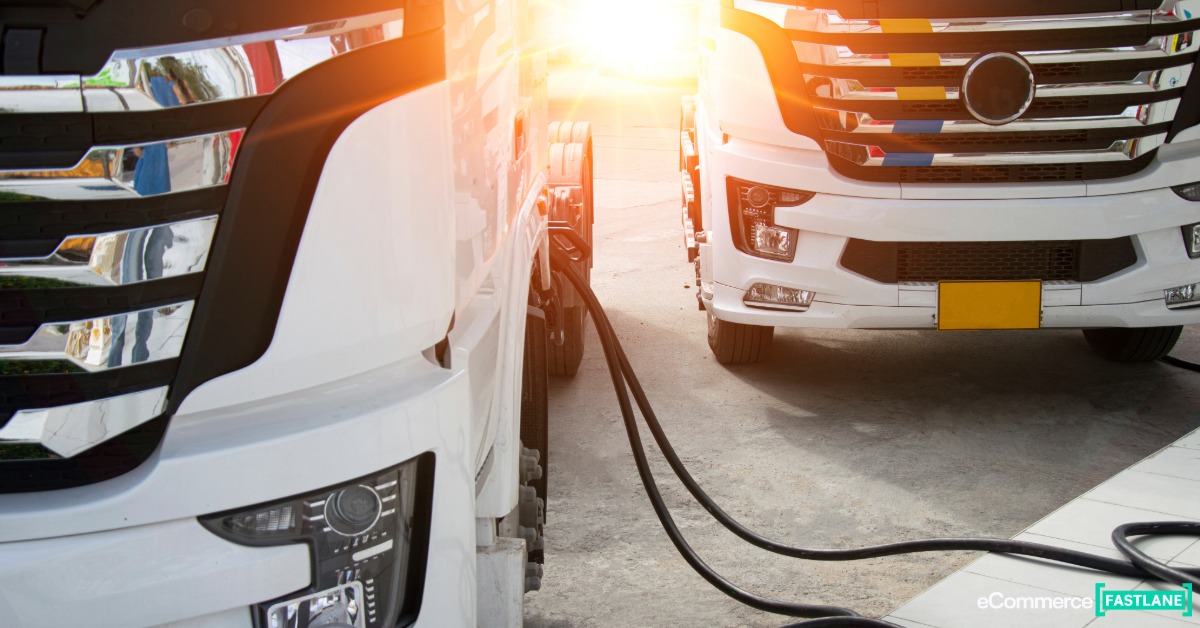
Cutting carbon in logistics does not require buying a new fleet. It requires making a different decision about which truck shows up tomorrow morning.
As supply chains grow more complex and delivery demands continue to rise, logistics has come under increasing scrutiny for its environmental impact. Transport activity, particularly road freight and last-mile delivery, remains one of the largest contributors to business carbon footprints, making it a key focus area for decarbonisation efforts.
This pressure is reinforced by broader national direction, including the Singapore Green Plan 2030, which sets out long-term ambitions to advance lower-carbon growth across sectors such as transport and urban development. While this provides a clear policy signal, businesses still face a more immediate challenge of how to reduce emissions in practice without disrupting operations or committing to significant upfront investment.
One such emerging approach is the use of rental-based electric transport, where businesses can begin reducing emissions immediately without long-term commitment. Against this backdrop, electric truck rental is emerging as a practical option.
Electric truck rentals deliver an immediate shift in how businesses reduce transport emissions by replacing diesel-powered journeys with zero-tailpipe-emission alternatives. Each trip completed using an electric truck directly displaces a combustion engine equivalent, which helps cut carbon emissions and harmful local air pollutants such as nitrogen oxides and particulate matter.
This transition also aligns with the broader direction of electrification in Singapore’s transport landscape. With policies such as the restriction on new diesel car and taxi registrations from 2025, there is a clear signal that internal combustion vehicles are gradually being phased out in favour of cleaner alternatives. While this change is most visible in passenger transport today, it reflects a broader direction that will increasingly influence commercial and logistics fleets as well.
Moreover, companies gain the ability to start decarbonising logistics in real time. Businesses can progressively reduce emissions alongside the wider transition towards electrified transport systems. This gradual approach allows them to decarbonise at a pace that matches operational realities, rather than forcing abrupt structural changes that may disrupt service continuity or strain resources.
Beyond emissions reduction, electric truck rentals also improve operational flexibility. Businesses avoid the high upfront capital expenditure associated with new fleet ownership, freeing up resources for other operational priorities.
In addition, maintenance and servicing responsibilities are reduced since vehicles are typically managed by the provider, which helps minimise downtime and simplifies fleet operations, particularly for companies with fluctuating delivery volumes. As a result, logistics teams can focus more on route efficiency and service delivery rather than vehicle upkeep.
Most importantly, renting electric trucks allows businesses to scale transport capacity based on demand. Whether handling short-term contracts or seasonal surges, companies can adjust fleet size without long-term financial commitments, thereby improving efficiency and cash flow stability.
Another practical advantage of renting electric trucks is the ability to test them in real operating conditions without long-term risk.
Businesses can assess electric vehicles by testing how well they perform against real operational demands, such as route distance and payload capacity. In doing so, they move beyond assumptions and spreadsheets, gaining insights that reflect actual on-the-ground conditions. For logistics-heavy operations in particular, this kind of hands-on evaluation often proves more useful than theoretical planning alone, since it reveals practical constraints and optimisation opportunities that only emerge in live use.
At the same time, this hands-on exposure helps organisations identify potential adjustments needed in route planning or delivery scheduling before committing to full-scale electrification and therefore reduces the risk of operational disruption during transition.
Greener operations are increasingly influencing how businesses design and optimise their logistics strategies. As environmental expectations rise, transport decisions now sit within broader strategic goals that include emissions reduction and long-term competitiveness.
As a result, companies are beginning to integrate cleaner transport solutions into core planning processes. For example, the use of electric trucks in urban delivery routes reduces emissions and reshapes how fleets are deployed and how capacity is scaled during peak and off-peak periods. This shift encourages more dynamic logistics planning, where flexibility and responsiveness become just as important as cost efficiency.
Businesses are also increasingly aligning these operational changes with ESG reporting requirements and carbon accountability frameworks. This means that decisions around fleet usage now contribute directly to measurable sustainability targets, which in turn affect investor confidence and brand positioning.
In addition, greener operations strengthen organisational resilience against external pressures such as fuel price volatility and tightening environmental regulations. Now that lower-emission transport options become part of everyday logistics decisions, businesses should begin to reduce their carbon footprint while also redesigning their logistics strategies to be more data-driven and future-ready.
In truth, cutting carbon often begins with practical, incremental steps that reduce emissions while preserving operational flexibility. Renting electric trucks represents one such step, as it allows businesses to reduce their environmental impact immediately without the financial or operational burden of full fleet ownership. More importantly, businesses that scale gradually can make meaningful progress towards greener operations while maintaining the agility needed to compete in a fast-changing logistics landscape.
Electric truck rental is a fleet model where businesses access electric commercial vehicles through short or medium-term rental agreements rather than purchasing them outright. For ecommerce logistics, this means a brand can add electric delivery capacity for a specific route, season, or operational pilot without capital expenditure, with the rental provider handling vehicle maintenance and servicing.
The emissions reduction from renting electric trucks depends on the number of diesel trips replaced and the local electricity grid’s carbon intensity. Each diesel delivery route converted to electric eliminates tailpipe CO2, nitrogen oxides, and particulate matter entirely. For businesses tracking Scope 3 transport emissions, even a partial fleet conversion through rental can produce measurable, reportable reductions within a single quarter.
Electric truck rental is typically more cost-effective than purchase for businesses that need flexibility, have seasonal demand variation, or want to test EV performance before committing to ownership. Rental converts a large capital outlay into a predictable operating expense, eliminates maintenance overhead, and removes the risk of technology obsolescence as EV models improve rapidly. For brands at the $0 to $5M revenue stage, the cash flow benefit of rental over purchase is often the deciding factor.
During an electric truck rental pilot, test actual range performance against your specific delivery routes and payloads, driver adaptation and feedback, charging time requirements relative to your operational schedule, and energy consumption per delivery kilometer. Compare these results against your current diesel fleet benchmarks to generate an honest cost and emissions comparison that informs your longer-term fleet strategy.
Electric truck rental generates documented, attributable emissions reductions that can be reported in ESG frameworks covering Scope 3 transport emissions. Unlike aspirational sustainability commitments, rental-based electrification produces verifiable vehicle usage data showing specific diesel trips replaced, kilometers driven on electric power, and measurable emissions avoided. This is the kind of evidence that supports credible ESG reporting rather than estimated projections.





