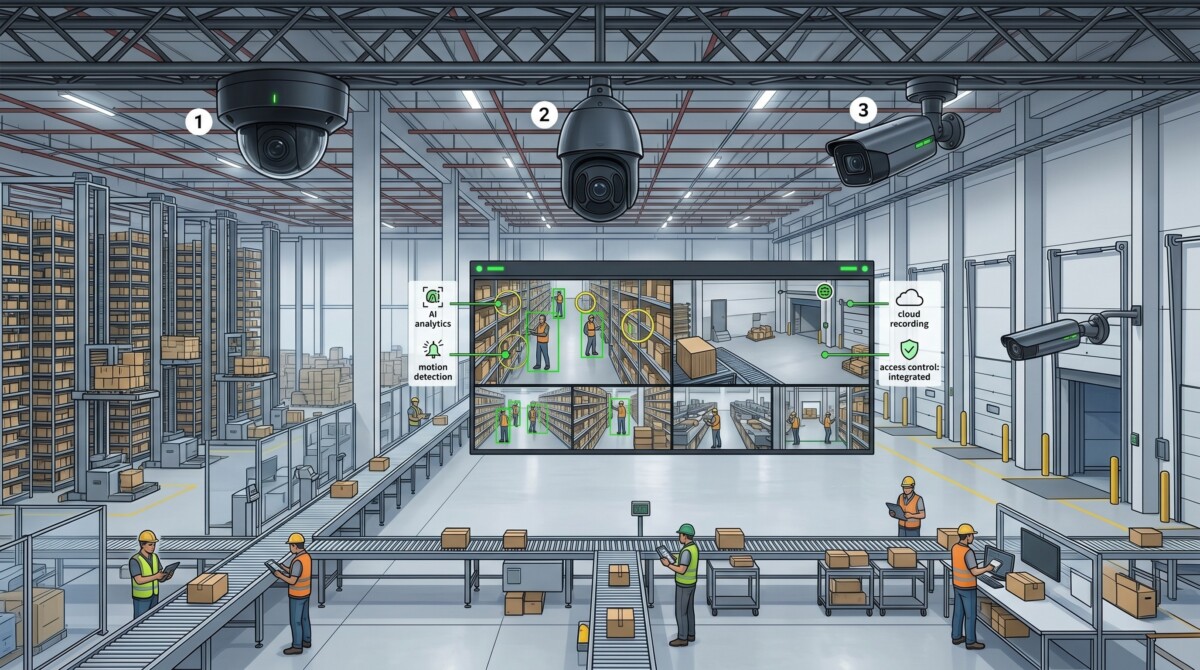
Shopify merchants need security cameras the moment they hold inventory in a space they control, whether that is a retail floor, a stockroom, or a warehouse. During work hours cameras deter shoplifting and settle order disputes; after hours they document break-ins for insurance and police.
Roughly a third of retail shrink walks in the front door as shoplifting. The other two thirds happen in places a founder never looks until inventory stops adding up.
The first time most online founders think seriously about cameras is the morning after something goes missing. A pallet that was on the receiving log is not on the shelf. A customer swears a package never arrived and there is no way to prove otherwise. A back door was found unlocked on Monday and nobody can say what happened over the weekend.
That reactive moment is expensive, and it is avoidable. The National Retail Federation pegs total retail shrink at about 1.6% of sales, which worked out to $112.1 billion in its most recent full industry survey, and external theft accounts for only about 36% of that figure. The rest is internal theft, process error, and administrative loss, the quiet categories that cameras are unusually good at exposing.
This guide is written for the Shopify merchant who has crossed from pure ecommerce into holding physical inventory, whether that is a single rented unit or a retail storefront with a stockroom in back. The decision is not whether cameras matter. It is what to cover, when, and how to install it without overbuying.
Physical security becomes a priority the moment you hold inventory in a space you control rather than a 3PL’s warehouse, and for most brands that happens somewhere between $25K and $100K in monthly revenue. Below that, a founder is often shipping from a spare room and the exposure is small. Above it, you are signing a lease, stacking real money on shelves, and handing keys to staff, which is exactly when loss stops being a rounding error.
The trigger is not revenue itself, it is the shift in who has access. A pure dropshipping or print on demand store has nothing on site to protect. A brand that just signed for its first 1,500 square foot unit has thousands of dollars of stock sitting behind a single door, often in a building shared with other tenants. The same logic applies the day you open a pop-up or a permanent store, where the floor is open to the public during every hour you trade.
This is also the stage where premature complexity creeps in. I have watched merchants wire up a sixteen camera system for a room that needed four, then never check the footage. Match the system to the actual exposure. If you are weighing whether to keep fulfillment in house at all, it is worth comparing the real cost of running your own secured space against outsourcing, which is a core part of running an omnichannel Shopify business and the kind of decision that should come before you buy a single camera. Cameras protect the model you choose; they do not choose it for you.
During work hours, cameras do three jobs: they deter shoplifting on the floor, they verify that your team handled stock and orders correctly, and they give you evidence when a customer disputes an order. The NRF’s most recent reporting found an 18% rise in the average number of shoplifting incidents in 2024 compared with 2023, so the deterrence value on a public floor is not theoretical, and a visible camera at the entrance changes behavior before anything is taken.
The less obvious value is operational. When a customer opens an “item not received” dispute, footage of your packing bench showing that order going into a box is the difference between eating the cost and winning a representment. Good fulfillment operations already target pick and pack accuracy north of 99%, but the 1% you miss is where chargebacks live, and a camera over the bench turns a he-said dispute into a closed case. On a retail floor, the same footage settles refund fraud and short-change claims at the register.
Match the coverage to the room. A small shop running on cloud based POS systems built for the way retail actually operates usually needs a camera on the entrance, one on the register, and one covering high-value displays, which is two to four cameras for most storefronts. A packing operation needs a camera over the bench and one on the inventory shelves. You are not trying to watch everything. You are trying to watch the three or four spots where money and mistakes actually change hands.
After hours, the threat shifts from theft of individual items to intrusion and bulk loss, and your cameras shift from deterrence to documentation. An empty building over a weekend is the highest risk window most small operations face, because there is no staff present, response times are slow, and a thief who gets in has hours rather than minutes. This is the gap that catches founders who installed cameras for the sales floor and never thought about the loading dock.
The threat at this scale is also getting more organized. According to the latest National Retail Federation data on retail theft and organized crime, more than half of retailers tracking the issue reported increases in cargo and supply chain theft driven by organized groups, a 50% jump among that group. For a Shopify brand with a warehouse, that means the risk is no longer just an opportunistic break-in; it can be a targeted hit on inventory that has resale value.
The practical answer is motion-triggered recording with alerts pushed to your phone, so an empty building that should be still sends you a notification the moment something moves. Cameras with two-way audio let you issue a remote warning, which is often enough to send an opportunist back out the way they came. Retention matters more here than on the sales floor: keep at least 60 to 90 days of after-hours footage, because warehouse losses are frequently discovered weeks later during a stock count, long after a 30 day clip would have been overwritten.
A retail floor and a warehouse face different threats at different times, so they need different camera strategies and different budgets. The floor is a daytime, public-facing problem centered on the register and the entrance. The warehouse is a nights-and-weekends problem centered on doors, docks, and the aisles where stock is staged. Trying to cover both with one generic plan is how merchants end up with cameras pointed at empty space.
The budget follows the strategy. A storefront leaning on Shopify POS can often start under a thousand dollars in hardware, while a warehouse with dock doors and high-value stock justifies more cameras, longer retention, and commercial-grade equipment. If you are still deciding whether to run that warehouse yourself, weigh it against the order fulfillment companies worth evaluating before you commit capital to a space you then have to secure.
The most common installation mistake is mounting cameras for coverage that looks complete on paper but leaves the real entry points blind. A camera angled down an aisle records a lot of nothing; a camera covering the dock door, the back exit, and the receiving table records the three places where inventory actually leaves. Good coverage starts from the threats, not from the corners of the room, and it accounts for lighting, blind spots, and the height a camera needs to read a face or a license plate.
This is where a CCTV install earns its cost. A trade installer will frame the space around entry and exit points, set the right lens and mounting height for each zone, and configure recording and storage so the footage is usable when you need it rather than a smear of motion at the wrong resolution. For a small retail unit, a clean job is often a half-day; for a warehouse with cabling runs to a dock, plan for more.
Decide on storage before the install, not after. Local recording on a network video recorder keeps footage on site and off a monthly bill, while cloud recording survives a stolen recorder and lets you review clips from anywhere, which matters most for the after-hours alerts that send you to your phone at 2am. Many operators run both. Whichever you choose, confirm the retention window matches the table above, and have the installer document camera positions so a gap is obvious on day one rather than the day after a loss. The same discipline you would apply to vetting how third party logistics providers handle order fulfillment applies here: specify the standard, then verify the work against it.
The return on a camera system is not only theft prevented; it is the operational evidence the footage gives you every day. The same recording that catches a thief settles a customer chargeback, verifies a damage claim from a carrier, confirms whether a staff member followed a process, and shows an insurer exactly what happened during a loss. A system bought for security quietly becomes a record of how your operation actually runs.
The dispute case is the clearest dollar value. “Item not received” and “not as described” claims are a standing cost for any Shopify brand shipping physical goods, and representment without evidence is a coin flip. Footage of the order being picked, packed, and labelled turns that coin flip into a documented timeline, and over a year of disputes that evidence pays for the cameras several times over. On the retail side, the same recordings resolve refund fraud at the counter and protect staff against false accusations.
There is a training and process dividend too. Reviewing footage after a busy Saturday shows where the floor jammed, which displays drew customers, and where the packing line slowed down, which is the kind of operational visibility that usually only large operators bother to capture. Treat the system as infrastructure rather than a grudge purchase. The merchants who get the most out of cameras are the ones who, like the best operators expanding into physical retail, build the habit of actually watching what the footage tells them and adjusting the operation around it.
You need cameras the moment you store inventory in a space you control, even if most of your sales are online. A pure dropshipping store with no physical stock can skip them, but the day you sign a lease on a unit, open a stockroom, or run a pop-up, you have thousands of dollars of inventory and staff access concentrated in one place. That is the exposure cameras address. For most Shopify brands the trigger lands between $25K and $100K in monthly revenue, when fulfillment moves out of a spare room and into a dedicated space with its own door and its own keys.
A small ecommerce warehouse or stockroom usually needs four to eight cameras, focused on entry and exit points rather than blanket coverage. Prioritize the dock or loading door, the back exit, the receiving table, and the aisles where high-value stock is staged. A small retail storefront needs fewer, typically two to four, covering the entrance, the register, and high-value displays. The goal is not to watch every square foot; it is to cover the specific spots where inventory enters, leaves, or changes hands. Overbuying a sixteen camera system for a room that needs four is a common and avoidable waste.
Local storage keeps footage on a network video recorder on site, while cloud storage keeps it on remote servers you access over the internet. Local recording has no monthly fee and keeps data in your control, but a thief who takes the recorder takes the evidence. Cloud recording survives that, lets you review clips from anywhere, and supports the after-hours phone alerts that matter most for an empty building, though it carries an ongoing subscription. Many operators run both: local for everyday retention and cloud as an off-site backup for the footage they cannot afford to lose. Decide before installation, because it affects the wiring.
Keep at least 30 days of footage for a retail floor and 60 to 90 days for a warehouse or stockroom. Retail incidents are usually noticed the same day, so a shorter window is often enough. Warehouse losses are different: they are frequently discovered weeks later during a stock count, long after a 30 day clip would have been overwritten. Longer retention also helps with insurance claims and customer disputes that surface after the fact. Confirm your retention setting at installation and match it to your storage capacity, because the default on many systems is shorter than the window you actually need.
Yes, footage of an order being picked, packed, and labelled is strong evidence in “item not received” chargebacks and damage claims. Without it, representment is close to a coin flip; with it, you can submit a documented timeline that shows the order left your operation correctly. A camera over the packing bench turns a he-said dispute into a closed case, and across a year of disputes that evidence often pays for the system. On a retail floor, the same recordings settle refund fraud and short-change claims at the register and protect staff against false accusations.