


Property management and eCommerce seem worlds apart. But dig into how Dubai’s leading property companies scaled from manual operations to tech-driven platforms, and you’ll find a blueprint that applies directly to scaling a Shopify business.
Dubai’s real estate sector has undergone massive digital transformation over the past few years. Companies managing thousands of properties have had to solve problems eerily similar to what eCommerce operators face: tenant retention (customer retention), operational efficiency at scale, data-driven pricing, regulatory compliance, and creating seamless digital experiences.
Let’s break down the operational lessons from Dubai’s PropTech evolution and translate them into actionable strategies for Shopify founders and marketers.
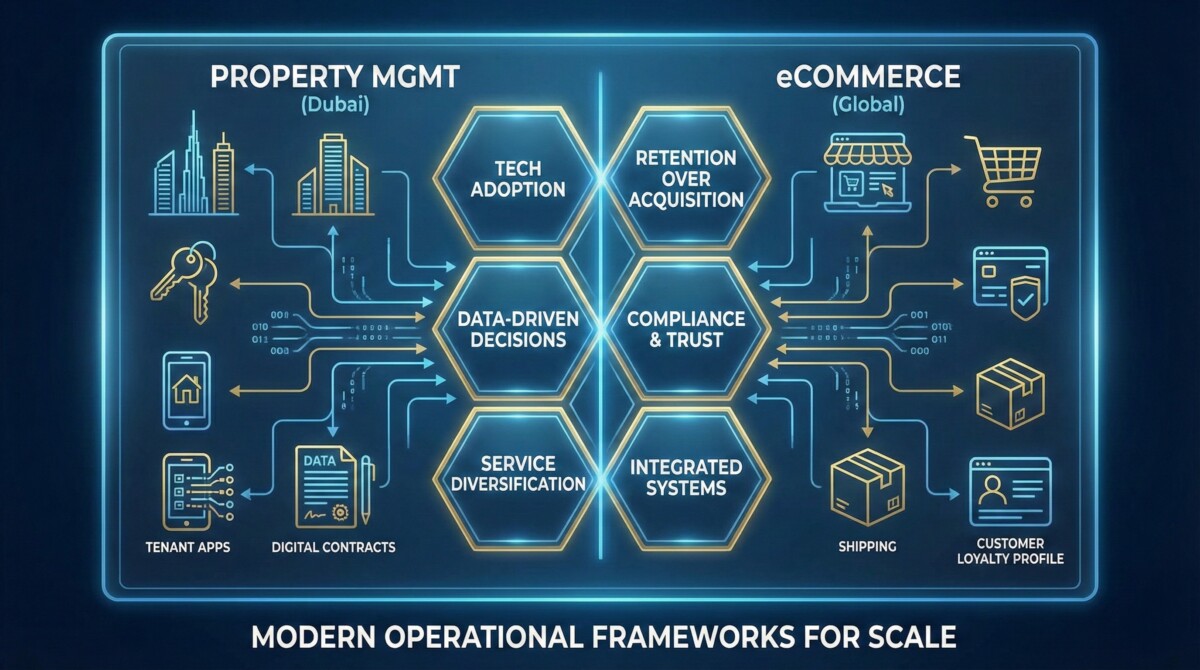
At first glance, managing rental properties and running a Shopify store have little in common. But the operational frameworks are strikingly similar:
Companies like property management companies in Dubai have built sophisticated systems to handle these challenges at scale. Here’s what they’re doing right and how you can apply it.
Dubai’s property management sector went all-in on PropTech between 2020-2025. Smart property apps, AI-driven analytics, and blockchain-based contracts became standard, not optional.
What They Implemented:
Your eCommerce Translation:
Technology isn’t about being cutting-edge. It’s about removing friction from operations so you can scale without proportionally scaling headcount.
In Dubai’s competitive rental market, keeping a tenant for 3+ years is far more profitable than constantly finding new ones. Property managers realized this and shifted focus from pure acquisition to retention optimization.
What They Implemented:
Your eCommerce Translation:
Acquiring a new customer costs 5-7x more than retaining an existing one. Dubai property managers know this. Do you?
Dubai’s top property management firms stopped relying on gut feeling and started using data to drive every major decision.
What They Track:
Your eCommerce Translation:
Move from “I think this is working” to “The data shows this is working.” Use tools like Littledata, Northbeam, or Triple Whale to connect your data and make informed decisions.
Dubai’s real estate market is heavily regulated. Companies that master compliance don’t just avoid penalties – they use it as a trust signal to attract premium clients.
What They Do:
Your eCommerce Translation:
In competitive markets, trust is a differentiator. Companies that operate transparently win premium customers.
When long-term rentals slowed during certain periods, Dubai property managers pivoted to short-term vacation rentals. This diversification protected revenue during market shifts.
What They Implemented:
Your eCommerce Translation:
Revenue diversification protects you from algorithm changes, market shifts, and seasonal fluctuations.
Early on, property managers used separate tools for rent collection, maintenance, tenant communication, and reporting. The winners consolidated into integrated platforms that connected everything.
What They Built:
Your eCommerce Translation:
Integrated systems reduce manual work, eliminate data silos, and let you scale without hiring proportionally.
Take a company like property management companies in Dubai as an example. They manage thousands of properties across Dubai by implementing exactly these systems:
The result? They scaled from managing dozens of properties to thousands without proportionally increasing staff. That’s the power of operational excellence.
Here’s your action plan based on these lessons:
Phase 1: Audit Your Current Operations (Week 1)
Phase 2: Implement Quick Wins (Weeks 2-4)
Phase 3: Build Systems for Scale (Months 2-3)
Phase 4: Optimize and Iterate (Ongoing)
Dubai’s property management sector didn’t become tech-forward overnight. It happened through systematic adoption of tools, processes, and strategies that prioritized efficiency, retention, and data-driven decision making.
Your Shopify store faces the same scaling challenges. The operational lessons are the same. The tools are available. The question is: will you implement them?
Start with retention. Add flexible payment options this week. Set up post-purchase flows next week. Build from there. Small operational improvements compound into massive competitive advantages.
The brands that win in 2026 won’t just have great products. They’ll have great operations.
Key lessons include prioritizing retention over acquisition, implementing technology to scale without proportional headcount increases, using data to drive decisions, building integrated systems instead of point solutions, and diversifying revenue streams to protect against market shifts. Dubai’s property management sector faced similar challenges to eCommerce: managing customer relationships at scale, optimizing pricing dynamically, ensuring regulatory compliance, and creating seamless digital experiences.
Implement flexible payment options like Shop Pay and Afterpay to reduce cart abandonment, create loyalty programs that reward repeat purchases using tools like Smile.io or LoyaltyLion, set up proactive post-purchase email flows through Klaviyo that check in before problems arise, offer VIP communication channels for top customers, and make subscription management easy through customer portals. Retaining existing customers costs 5-7x less than acquiring new ones.
Focus on integrated platforms that connect customer data (Klaviyo, Omnisend for email and SMS), centralized analytics (Triple Whale, Northbeam for unified reporting), inventory forecasting (Inventory Planner, Cogsy to prevent stockouts), customer support automation (Gorgias, Gladly for ticket management), and subscription management (Recharge, Skio for recurring revenue). Integrated systems eliminate data silos and reduce manual work as you scale.
Data eliminates guesswork and helps you optimize based on actual performance rather than assumptions. Track metrics like customer lifetime value (CLV) to understand long-term profitability, cost per acquisition (CPA) by channel to optimize marketing spend, conversion rates by traffic source to identify your best channels, and Net Promoter Score (NPS) to measure brand loyalty. This shift from “I think this is working” to “the data shows this is working” is how Dubai property managers scaled efficiently.
Expand your product line beyond hero products to protect against single-product dependency, add subscription models for recurring revenue using platforms like Recharge or Skio, explore B2B wholesale channels alongside D2C through marketplaces like Faire or Bulletin, and offer service add-ons such as installation, customization, or premium support packages. Revenue diversification protects you from algorithm changes, market shifts, and seasonal fluctuations just like Dubai property managers who pivoted between long-term and short-term rentals.





