

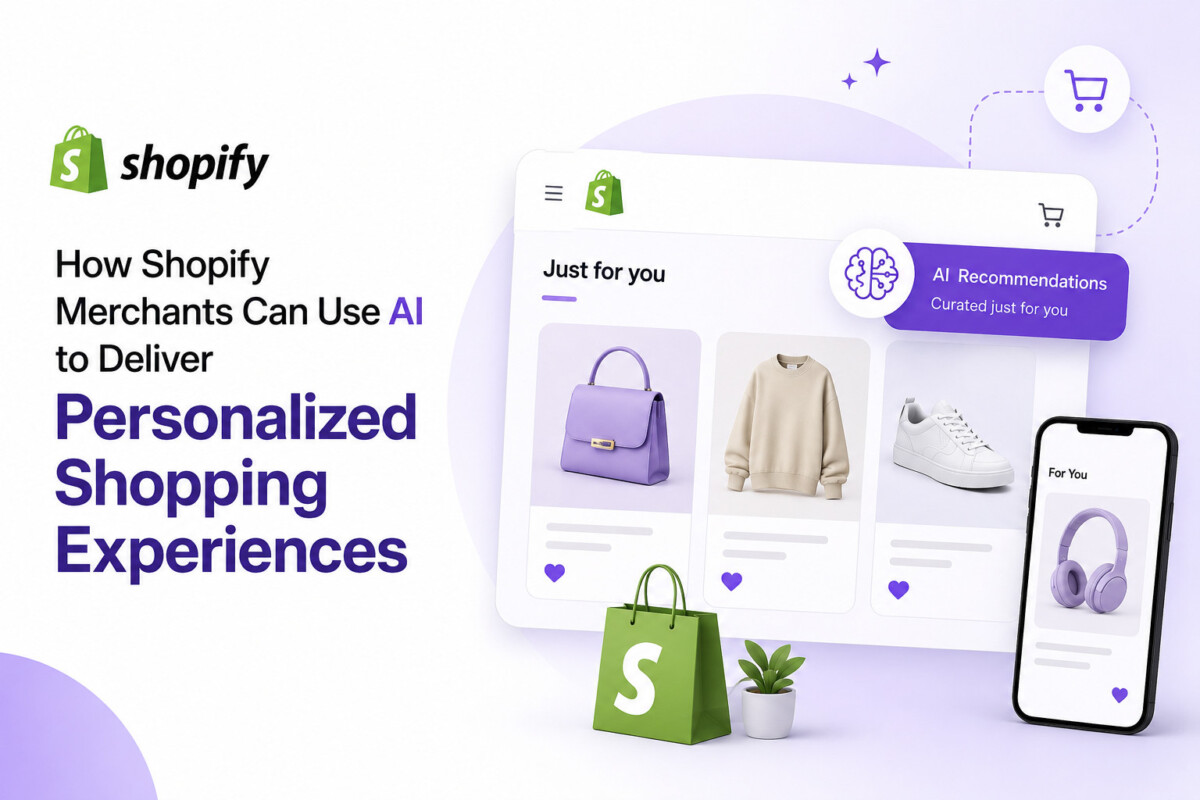
Shopify merchants should use AI to personalize product discovery, recommendations, and post purchase messaging based on real customer behavior, starting with one or two tightly scoped use cases and expanding as those experiments prove lift.
When AI personalization is done well, every shopper feels like the store was arranged just for them, even though the same system is quietly adapting to thousands of journeys at once.
Shoppers today don’t want to be treated like a segment in a spreadsheet. A generic “customers also bought” carousel or a blast email that has nothing to do with what someone actually browsed just doesn’t land the way it used to. People want a store that seems to get them, from the second they land on the homepage to long after their order arrives.
That’s exactly why AI personalization for Shopify has become one of the smartest investments a merchant can make. AI can watch how customers behave in real time and use that to shape product recommendations, marketing, and support so they actually feel relevant. Plenty of merchants who want to go beyond the built-in tools end up working with Shopify development services to build something more tailored to how their store actually runs.
The numbers back this up: research from Epsilon has found that 80% of consumers are more likely to buy when a brand personalizes the experience, a stat that’s held up as one of the most cited in ecommerce for good reason. As AI tools get cheaper and easier to set up, that kind of personalization isn’t just for the big retailers anymore stores of any size can do it.
Nobody buys on a whim, not really. Every customer moves through their own version of a path: they discover your brand somehow, they poke around, eventually they buy, and if you do things right — they come back. That whole arc is the Shopify customer journey, and every single step along the way shapes how someone feels about your store.
Show shoppers things that actually match what they’re into, again and again, and they stick around. AI is what makes that possible at scale it reacts to what a person is actually doing instead of what you assumed they’d want.
The old way of doing personalization was pretty blunt: put everyone who bought running shoes into the “athletic” bucket and show them the same stuff. It works, sort of, but it’s a rough approximation at best.
AI-powered personalization goes a lot deeper. A Shopify store can look at browsing history, past purchases, what people search for, and how they behave, all at the same time for each individual shopper rather than a whole customer segment. That’s the difference between “people like you bought this” and “you, specifically, might want this.”
It will create a store that appears to be paying attention, without you having to manually change policies on your team each week. For additional information about the technology behind it, Wikipedia’s overview of artificial intelligence is a solid starting point.
Nothing kills a sale faster than a shopper who can’t find what they’re looking for. If someone lands on your store and has to dig through pages of stuff that doesn’t interest them, there’s a good chance they just leave.
AI fixes a lot of this by surfacing products based on what a person has actually looked at or bought before. A regular buyer of fitness gear should be seeing new workout accessories, not a random assortment of home décor and vice versa.
That’s the heart of good ecommerce personalization: less time hunting, more time actually looking at things worth buying.
This is where customer behavior analysis earns its keep. AI isn’t only interested in what people buy — it pays attention to everything leading up to that decision, including:
Put those signals together and you get a pretty good read on intent often before a customer even decides to check out. That gives merchants a chance to show the right thing at the right moment, instead of after the fact.
The best AI recommendations don’t feel like someone’s trying to squeeze another sale out of you they feel like a helpful nudge.
Say someone just bought a digital camera. AI can look at what similar buyers picked up afterward and suggest a memory card, a case, or a tripod. Returning shoppers might see recently viewed items or a bundle that actually fits what they’ve shown interest in.
Done well, this cuts down on decision fatigue instead of adding to it fewer irrelevant options, easier choices.
It’s easy to stop at the storefront and call it done, but the customer journey doesn’t end when someone closes the browser tab.
AI can take this personalized approach even further by extending it into SMS, email, and anything beyond the checkout process, whether it is product recommendations based on prior purchases, a friendly reminder about abandoned items in the shopping cart, or a special offer for browsing categories. It’s all about personalization because engagement rates rise.
Once a store starts growing, keeping personalization consistent by hand becomes nearly impossible. That’s where AI automation for Shopify earns its place.
Automation can take over the repetitive stuff segmenting customers, sending personalized emails, forecasting inventory, generating recommendations so a team isn’t stuck building marketing rules by hand. AI keeps refining things in the background as new data comes in, which frees up real hours for the work that actually needs a person.
There’s no shortage of Shopify AI tools out there some built for recommendations, others for predictive analytics, customer support, or marketing automation. Shopify’s own AI-powered apps directory is a decent place to start browsing what’s out there.
Trying to install everything at once usually backfires. It’s smarter to figure out where personalization would actually move the needle for your store, and lean toward tools that work well together instead of a pile of apps that don’t talk to each other.
Turning on an AI tool isn’t the finish line it’s the start. Merchants should keep an eye on whether personalization is actually paying off, not just assume it is.
Worth tracking over time:
Watching these numbers over time is what tells you whether to double down on something or rethink it.
It is no longer an extra feature – personalization is among the best ways of distinguishing yourself. Customers are sure to appreciate your understanding of their preferences, availability of the products they need, and the relevance of the recommendations provided during all stages of the purchase process.
Those merchants who opt for personalization powered by AI for their Shopify stores are creating memorable customer experiences and positioning themselves for future success. As AI capabilities and customers’ expectations are constantly changing, those who will be adapting to these changes will definitely win.
The simplest way to start with AI personalization is to pick one high impact area such as product recommendations on PDPs or abandoned cart messaging and limit your first experiment to that job. Begin by documenting your current metrics for that area, choose a single AI powered app that integrates cleanly with your stack, and configure a basic ruleset that reflects your existing merchandising logic. Run the experiment for two to four weeks, compare results against your baseline, and only then decide whether to expand personalization into additional touchpoints. This approach keeps complexity contained while giving your team a clear view of ROI.
Effective AI personalization depends on access to behavioral data such as page views, clicks, search queries, add to cart events, and purchases rather than just basic customer demographics. At minimum, your AI tools should be able to read order history, product metadata, and on site interactions so they can infer intent and preferences. As your stack matures, you can feed in additional signals like email engagement, support conversations, and review content to sharpen recommendations and messaging. The more complete and clean your data is, the more reliable and nuanced your personalization will feel in practice.
To keep AI personalization from feeling creepy, merchants should focus on relevance and transparency rather than hyper specificity that exposes every piece of data they collect. Start by personalizing obvious elements like category emphasis, cross sells, and content blocks based on on site behavior instead of referencing off site tracking or sensitive attributes. Provide clear explanations when personalization materially affects the experience, such as why certain recommendations appear, and offer easy ways to adjust preferences or opt out. When shoppers understand that personalization exists to help them, not to manipulate them, trust and performance both improve.
Common mistakes include installing too many overlapping AI tools, relying on default settings without aligning them to brand strategy, and skipping measurement so changes are made blindly. Some merchants also attempt personalization before establishing a solid base of traffic, product market fit, and merchandising fundamentals, which leads to optimizing noise instead of signal. Another failure mode is using personalization to push aggressive upsells that erode trust rather than to clarify decisions. Avoid these pitfalls by starting with one or two tools, tying every experiment to specific outcomes, and keeping personalization aligned with long term customer value.
Shopify merchants should review their AI personalization strategy at least quarterly, with lighter monthly check ins for high impact experiences and campaigns. Each review should examine performance metrics, customer feedback, and any changes in product assortment, pricing, or brand positioning that might require adjustments. When AI driven experiences begin to drift from current strategy or create unintended bias, treat that as a signal to refine rules, retrain models, or reconsider certain patterns. Regular reviews keep personalization aligned with the evolving reality of your business rather than letting it ossify around old assumptions.





