





Picking the wrong Shopify referral or loyalty app doesn’t just waste money, it can waste a whole quarter.
I’ve seen teams spend months migrating points, fixing reward logic, and untangling discount conflicts, all because they chose an app based on price, a competitor’s widget, or a flashy demo.
The tricky part is that Shopify has 50+ options that sound similar on the surface. Meanwhile, the “best” choice changes fast based on your revenue stage, your margins, and whether you’re trying to drive new customers (referrals) or more repeat purchases (loyalty).
Here’s the framing that helps across the 400+ founder and operator conversations that shape Ecommerce Fastlane: referrals are usually performance-based (you reward after a sale), and loyalty protects margin when it’s built around LTV and contribution margin, not vanity points.
This guide gives you a clear decision framework, then a straight review of 8 strong apps for 2026, whether you’re launching your first store or running an 8-figure operation.
How to Choose the Right Shopify Referral or Loyalty App
The best Shopify referral or loyalty app is the one that fits three things: your revenue stage, your business model, and your program goal (referrals, loyalty, or both). If you get those right, you avoid the common traps: overbuying features you won’t use, underinvesting in fraud controls, or building a rewards program that quietly crushes margin.
Here’s the simplest way to keep it practical:
- If you’re early, prioritize speed, clarity, and low admin time.
- If you’re growing, prioritize control, segmentation, and reporting you’ll actually review weekly.
- If you’re scaling, prioritize data access (API), workflow automation, and fraud prevention.
One more “table stakes” point: acquiring customers is expensive. Shopify’s own retention guidance often echoes the widely cited idea that acquisition can cost far more than retention for many businesses, and it matches what most operators feel in the P&L when CAC spikes (see Shopify’s retention overview: https://www.shopify.com/blog/customer-retention). That’s why loyalty and referrals are not “nice to have” once paid media gets tight.
If you want extra ideas before you commit to any app, start with these creative Shopify loyalty program ideas and map them to your margins.
Revenue stage determines what features you actually need
👉 Starter ($0 to $500K): Choose fast setup, basic points or referrals, and simple widgets. Reporting can be lightweight. If your weekly owner is “also the founder,” keep it under $50 per month when possible.
👉 Growth ($500K to $5M): You’re buying customization and control. Look for segmentation, deeper analytics, and strong email and SMS integrations. Budget often lands around $100 to $300 per month once volume grows.
👉 Scale ($5M+): You need API access, advanced workflows, and fraud controls that don’t require manual policing. Multi-store, multi-market, and dedicated support start to matter. Budget commonly moves into $300 to $1,000+ per month.
Quick reality check: if you can’t assign a true owner and review results weekly, pick simpler. The fanciest program fails without consistent attention.
Business model shapes the program
👉 Subscription or replenishment: Loyalty should keep customers active. Points for renewals, milestone rewards, tier perks, and subscriber-only benefits tend to outperform one-off coupons because they nudge continuity.
👉 One-time purchase or high AOV: Referrals often shine because repeat purchase cycles can be long. Double-sided rewards (give the friend an incentive and the referrer a reward) usually convert better than one-sided offers.
👉 Variety stores: You’ll want flexible earning rules and product or collection targeting so you can push the behavior you actually want (high-margin categories, bundles, or first-to-second purchase).
Reward economics matters more than app features. Build rewards so a referred order still clears your target contribution margin, and keep discount rules aligned with Shopify’s discount tools (https://help.shopify.com/en/manual/discounts/discount-types/discount-codes).
Specialized vs all-in-one platforms
👉 Specialized referral tools usually win on tracking, referral automation, and fraud controls. They’re easier to master quickly, but you might still need a separate loyalty app.
👉 All-in-one retention suites give you one dashboard and shared customer data across loyalty, referrals, and sometimes reviews or messaging. The trade-off is cost and setup time.
A simple rule that holds up in practice:
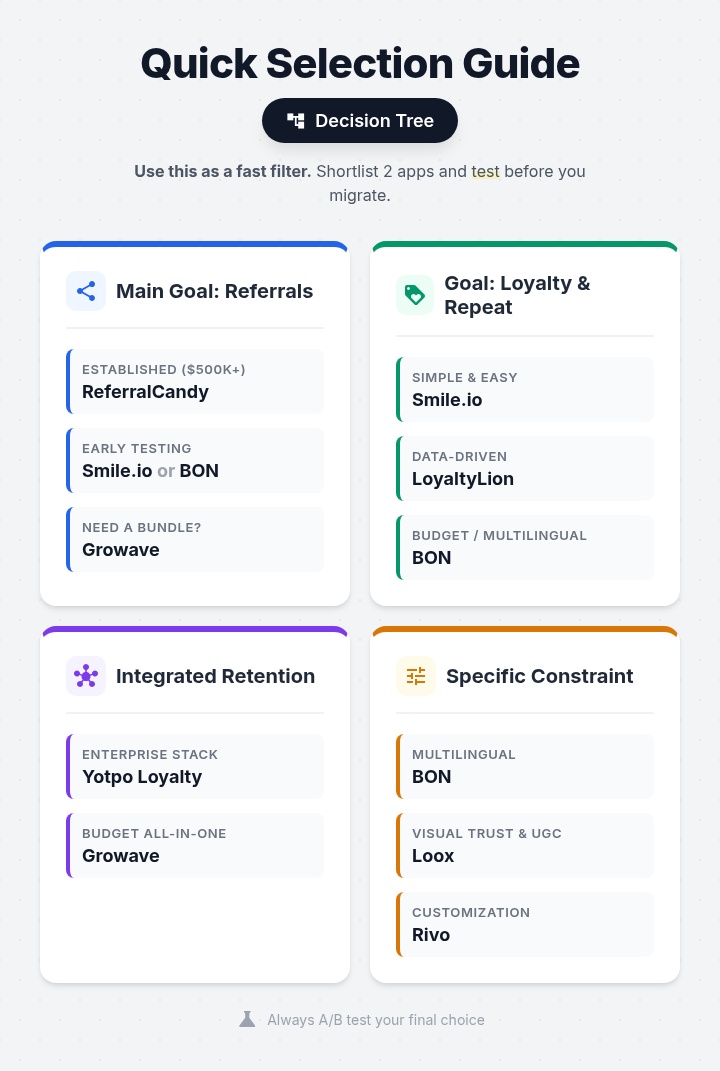
- If referrals are the main growth lever, start specialized.
- If retention is the main lever, start loyalty-first.
- If you want one system to run the whole program, go integrated.
The 8 Best Shopify Referral and Loyalty Apps for 2026
In 2026, the market is moving in a few clear directions: more free entry tiers for early stores, better localization for global selling, stronger analytics, and more attention on fraud controls for referral programs. The apps below are strong picks, but the “right” one still depends on your stage and operating style.
ReferralCandy (best premium referral app for established brands focused on referrals)
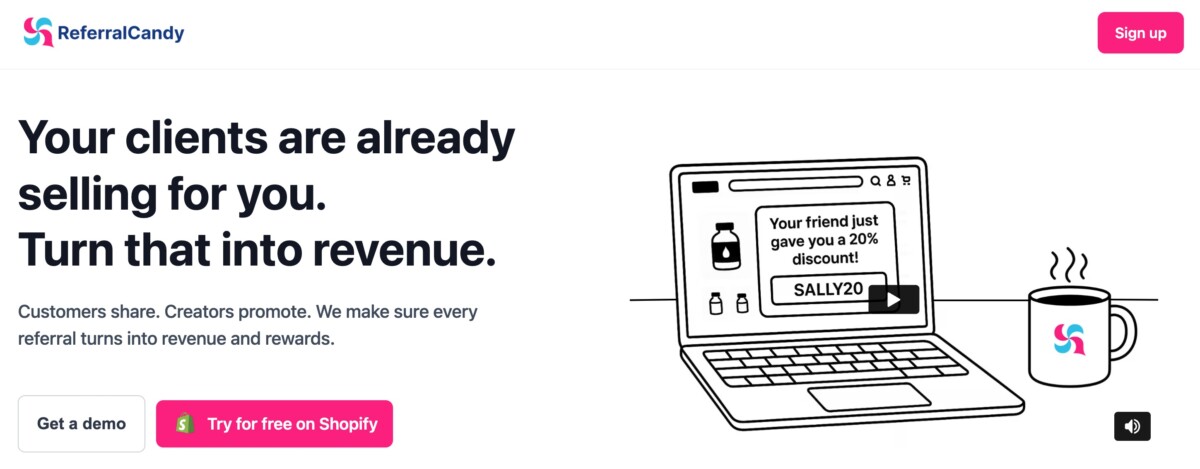
ReferralCandy is referral-first, and that’s the point. It’s built to turn word of mouth into a trackable channel with automated prompts, tracking, and payouts, instead of a loose “share this link” idea.
Best for: Brands ($500K+) treating referrals as a real acquisition channel.
Key features
- Unique referral links or codes, tracked to orders
- Rewards like discounts, store credit, or cash
- Post-purchase referral prompts and automated emails
- Fraud flagging for self-referrals, spikes, and leaked codes
Pricing overview: Starts around $49 per month, plus performance-based fees depending on plan.
Pros
- Strong referral tracking and automation
- Clear reporting, export-friendly
Cons
- No free plan
- Not a full loyalty platform
Choose when: Referrals are a priority channel and you want strong controls.
Skip when: You need free entry pricing or loyalty tiers first.
Yotpo Loyalty and Rewards (best for an integrated, analytics-heavy retention stack)
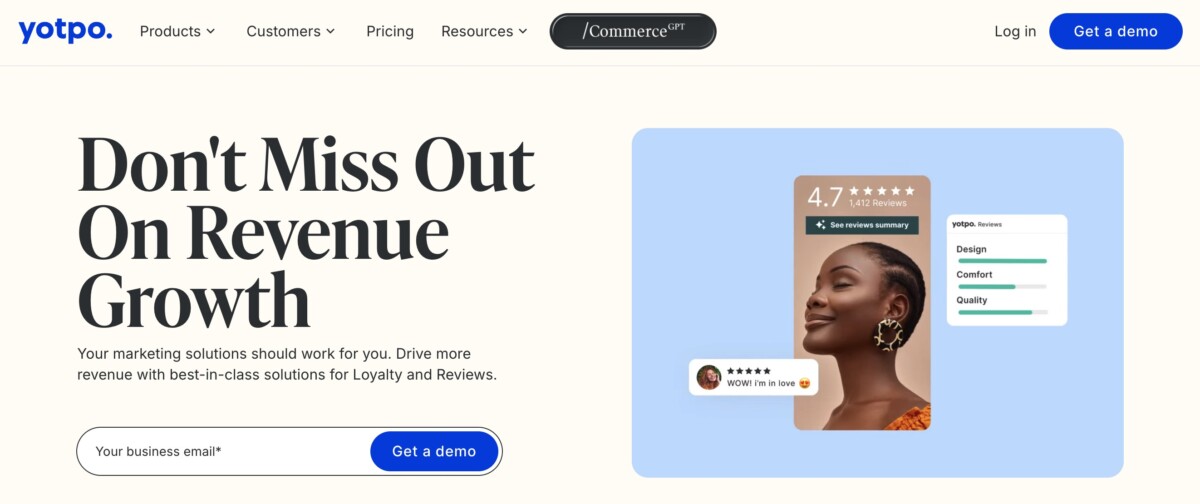
Yotpo is an ecosystem choice for teams that want loyalty and referrals tied into a broader retention suite, often alongside reviews and messaging. It can be powerful, but it’s not the lightest setup.
Best for: Growing brands building a unified retention system.
Key features
- Points, tiers, and referral programs in one platform
- Reporting that supports ROI decisions
- Works well when paired with other Yotpo tools
- Omnichannel options for brands with more complexity
Pricing overview: Free entry tier, paid plans commonly start around $199 per month and scale up.
Pros
- Unified retention data across tools
- Enterprise-friendly depth
Cons
- Cost grows quickly with scale
- More moving parts for small teams
Choose when: You want an integrated retention stack with deeper reporting.
Skip when: You need quick setup and a tight budget.
Smile.io (best for simple points-based loyalty with a popular Shopify footprint)
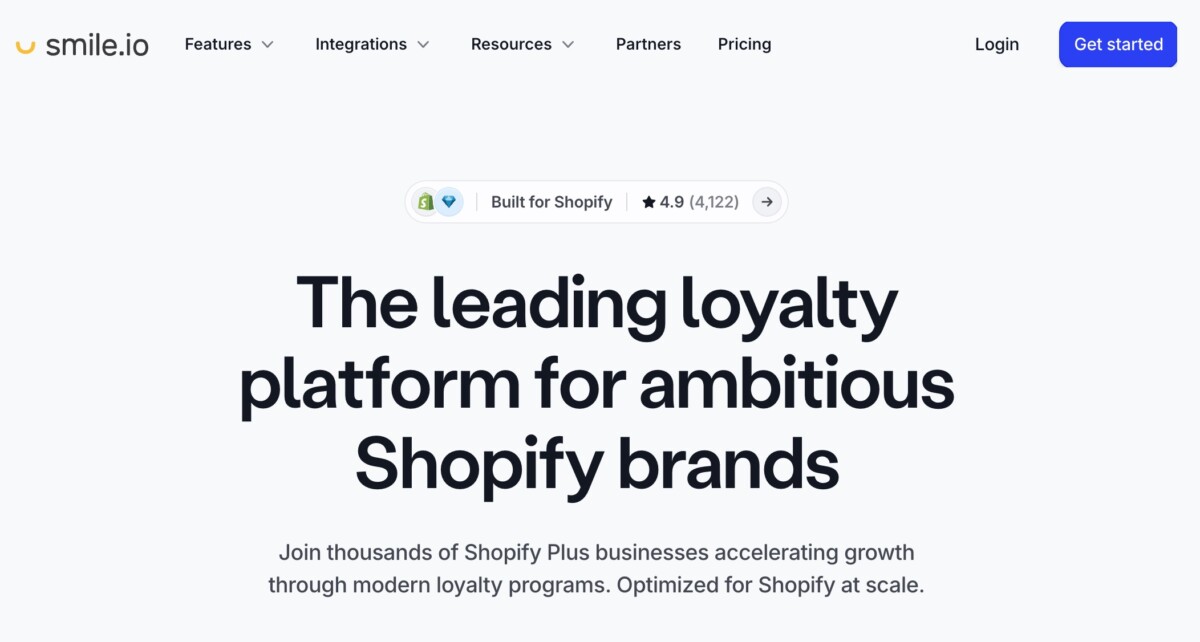
Smile is the “get it live this week” option that still scales for many brands. It’s easy to set up points, VIP tiers, and a referral add-on without needing a developer.
Best for: Small to mid-size stores launching loyalty fast.
Key features
- Points program with common earning actions
- VIP tiers
- Referral add-on in the same interface
- Solid Shopify-native widgets
Pricing overview: Free plan, then tiers from about $49 per month up to enterprise levels.
Pros
- Beginner-friendly and fast to launch
- Proven structure for points and tiers
Cons
- Referral depth is lighter than referral specialists
- Advanced customization may require higher tiers
Choose when: You want simple loyalty now and can refine later.
Skip when: Referrals are your primary growth engine and you need tighter controls.
BON Loyalty Rewards (best for fast setup and multilingual stores on a budget)
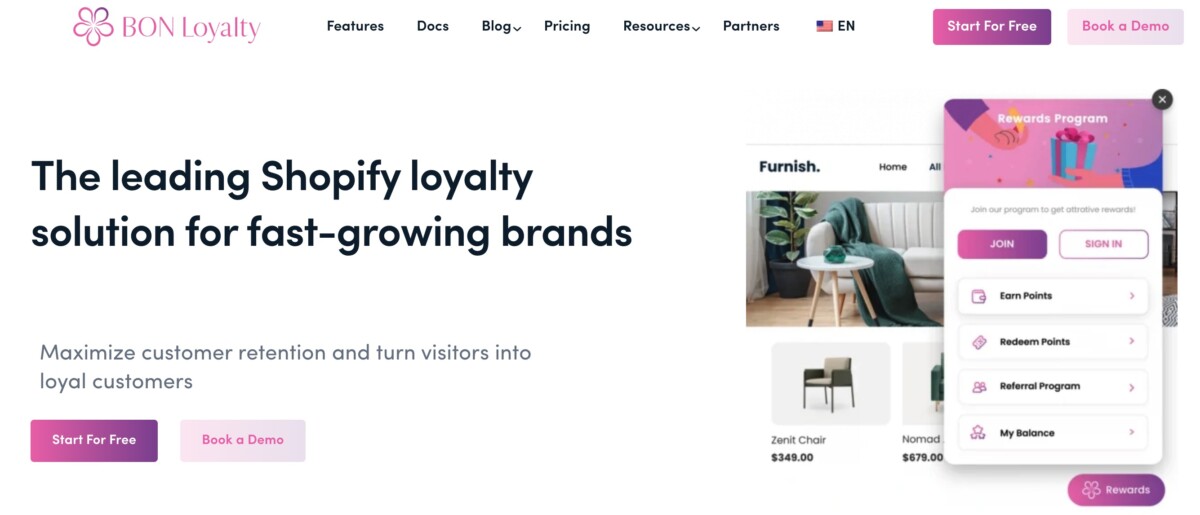
BON ranks well for 2026 because it balances speed, a usable free tier, and strong multilingual support. For many lean teams, it hits the “good enough and maintainable” sweet spot.
Best for: International stores and budget-conscious operators.
Key features
- Points and VIP tiers
- Referral program included
- Multilingual and global-friendly setup
- Clean dashboard and straightforward controls
Pricing overview: Free plan, paid plans often start around $29 per month.
Pros
- Quick launch, low friction
- Strong value for the price
Cons
- Lighter analytics than enterprise tools
- Less built for deep experimentation
Choose when: You need multilingual support and simple execution.
Skip when: You need advanced segmentation and testing.
Growave (best value all-in-one for smaller brands that want loyalty plus extra features)
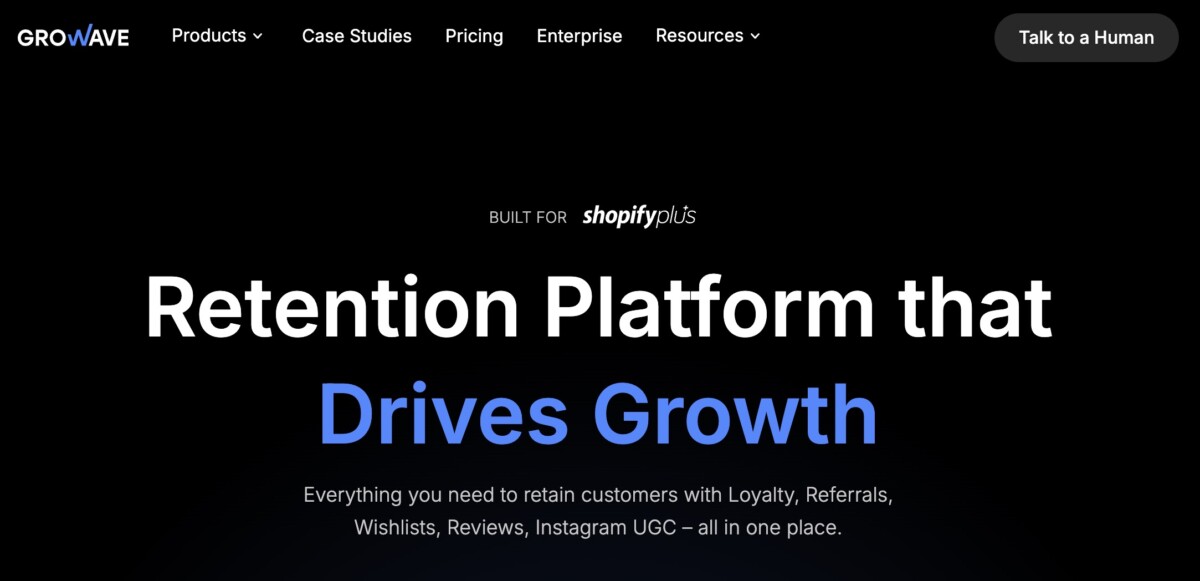
Growave is a bundle play. Depending on plan, you can combine loyalty and referrals with add-ons like reviews, wishlists, and social features, which can reduce vendor sprawl.
Best for: Smaller brands that want one platform for multiple retention jobs.
Key features
- Loyalty points and referrals
- Optional add-ons (reviews, wishlists, and more)
- Central dashboard for multiple features
- Useful if you’re trying to reduce app count
Pricing overview: Usually lower entry pricing than enterprise suites, varies by plan.
Pros
- Strong value if you need multiple tools
- Fewer vendors to manage
Cons
- Not as deep as best-in-class point solutions
- Feature breadth can add setup time
Choose when: You want a bundle and can accept “very good” across features.
Skip when: You want best-in-category depth for one key program.
Loox (best for visual brands combining reviews with light referral incentives)
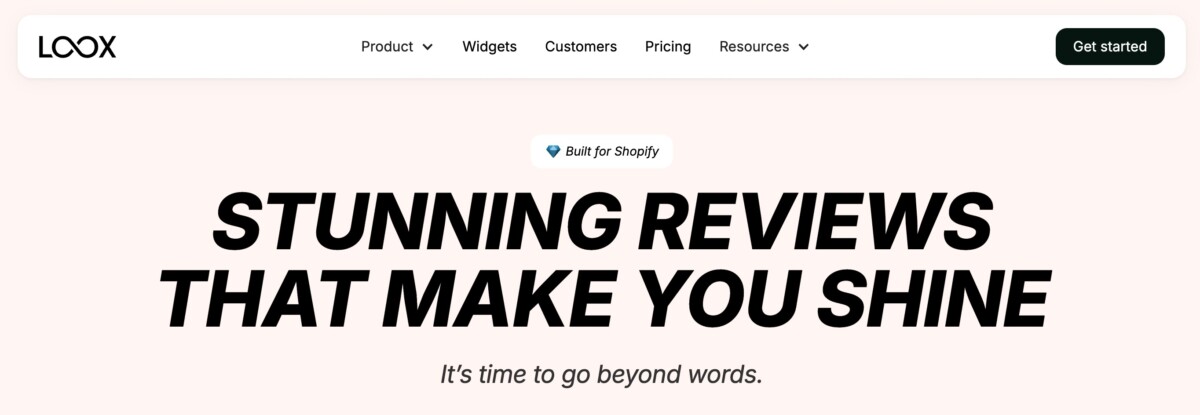
Loox is not a full loyalty suite. It’s a reviews engine that shines for visual categories, and it pairs well with loyalty apps when UGC is your conversion driver.
Best for: Beauty, apparel, and home brands using photo reviews to lift trust.
Key features
- Photo and video reviews collection
- High-converting on-site review widgets
- Referral-like incentives as a complement (depending on setup)
- Strong support for social proof workflows
Pricing overview: Paid-only, typically starts in the low teens per month.
Pros
- Strong visual trust signals
- Easy win for product pages
Cons
- Not a points-and-tiers loyalty system
- Referral tracking is not as deep as specialists
Choose when: UGC and reviews are a core growth lever.
Skip when: You need full loyalty mechanics and referral attribution.
LoyaltyLion (best for data-driven retention teams optimizing rules and LTV)
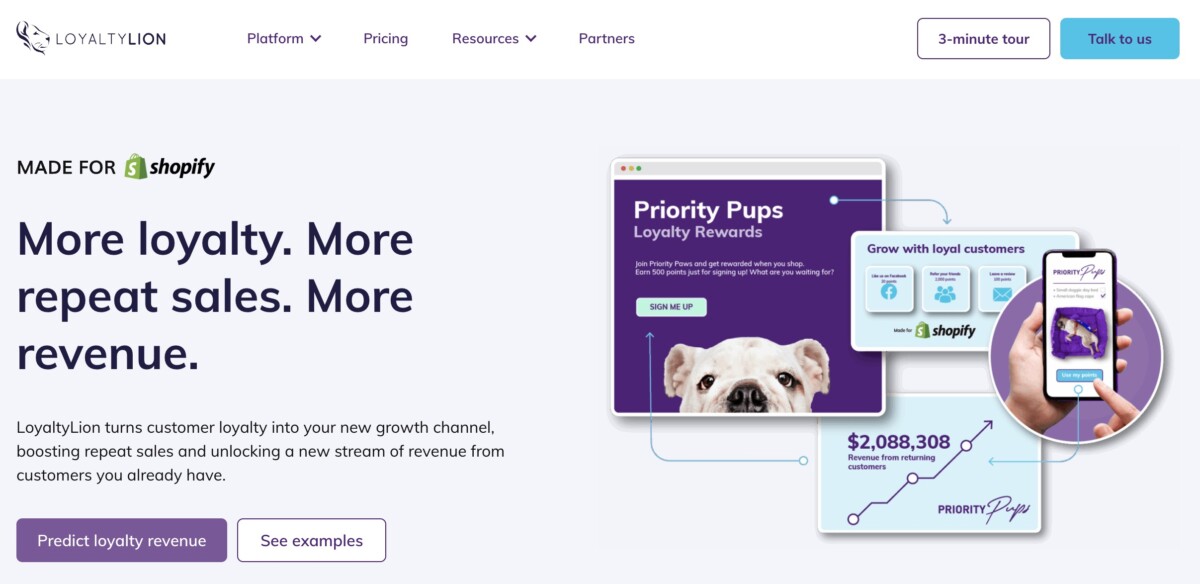
LoyaltyLion is built for teams that like to measure, iterate, and tune reward logic over time. If you have an owner who will manage it like a real channel, it can be a strong fit.
Best for: Brands with a retention owner and a testing mindset.
Key features
- Advanced earning and redemption rules
- VIP structures and perks
- Analytics to track loyalty impact over time
- Integrations that support deeper retention workflows
Pricing overview: Limited free tier, paid plans often start around $199 per month and scale higher.
Pros
- Deep customization for serious programs
- Good fit for LTV-driven strategy
Cons
- Learning curve
- Cost may be high for early-stage stores
Choose when: You’ll actively optimize rules and measure impact monthly.
Skip when: You want plug-and-play simplicity.
Rivo (best developer-friendly customization without going full enterprise)
Rivo stands out for design control and flexibility. It’s a good middle ground when you want brand-matched widgets and customization, but you’re not trying to buy an enterprise suite.
Best for: Design-heavy brands and tech-savvy teams.
Key features
- Loyalty plus referrals in one app
- Brand-matched widgets and UI control
- Practical analytics tied to member activity
- Flexible configuration for custom needs
Pricing overview: Free tier up to a store limit, then paid plans commonly start around $49 to $79 per month (config dependent).
Pros
- Strong customization options
- Good support reputation
Cons
- Best results require clear specs (and sometimes dev help)
- Easy to over-configure if you’re short on time
Choose when: You care about design control and can invest setup time.
Skip when: You want the simplest possible launch.
Conclusion
If you remember only three things, make them these: pick based on stage, match the app to your business model, and decide if you want specialized vs integrated tooling. Referrals are powerful because you typically pay after the sale, and loyalty protects LTV when rewards stay inside your margin guardrails (and your discount rules stay clean in Shopify: https://help.shopify.com/en/manual/discounts).
Next steps by stage:
- Starter: launch a basic program, track redemptions and repeat rate.
- Growth: integrate email and SMS, tighten reporting, and assign an owner.
- Scale: invest in fraud controls and deeper data access (Shopify’s fraud prevention overview is a good baseline: https://help.shopify.com/en/manual/payments/fraud-prevention).
What reward has worked best in your store, cash, store credit, or discounts, and why?
