


Shopify shipped more than 150 updates yesterday, but the Spring ’26 Edition is really one bet: your products should be findable and buyable wherever AI shopping happens, not just on your own storefront. Strip away the feature list and almost everything traces back to two things, Shopify Catalog and the Universal Commerce Protocol, the plumbing that pushes your product data into ChatGPT, Copilot, Gemini, Google’s AI Mode, and the Shop app. If you read one thing this week, make it the new Agentic Storefronts dashboard sitting in your admin right now.
Everything else is downstream of that shift. The full Edition is here if you want all 150.
Here is the honest cut, sorted by what will still matter in 18 months versus what is table stakes everyone is shipping this quarter.
Catalog and UCP are the part of this Edition that actually changes your business. Catalog structures your product data and syndicates it to AI surfaces automatically, and if you sell eligible products on Shopify, you are already in it with no apps and no feeds to manage (eligibility requirements here). Shopify’s own number: AI searches powered by Catalog convert at twice the rate of searches running on scraped data. UCP, co-developed with Google, is the open standard that lets any AI agent carry your actual checkout rules, discounts, and customizations from discovery all the way to purchase.
This is the durable layer. Agentic shopping is not a trend you wait out, it is a new front door, and Shopify just made sure its merchants are wired into it by default. If you only internalize one idea from the whole Edition, make it this one.
The single most useful thing for an operator is the Agentic Storefronts dashboard now live in your admin. It does three jobs worth caring about. It shows your orders, sales, and conversions from ChatGPT, Copilot, AI Mode in Google Search, the Gemini app, and Shop in one view, so AI is no longer a black box you guess at. It runs search intelligence that surfaces the top AI queries in your category, which ones you already show up for, and where you are invisible. And when your products appear in AI conversations but do not convert, Sidekick tells you the specific fix, usually adding specifications to titles, sharpening descriptions, or filling in missing product fields.
The proof points Shopify put forward: red light therapy brand Omnilux saw AI channels drive 3.2% of total revenue in March, and bedding brand Cozy Earth reported AI channel revenue up 20x year over year. Small slices today, steep curves.
A candid aside, because I do this professionally: that search intelligence and fix-it loop is native AI visibility tooling, free, inside the admin. It is good, and it is worth opening this week.
Sidekick graduated from answering questions to doing work across your stack. The piece that matters is Sidekick App Extensions, which connect third-party apps directly into Sidekick so you can ask about your Klaviyo campaigns, your Loop returns, or your Smile loyalty program and take action without leaving the admin. It is live for 15-plus partners already. Sidekick Pulse now greets you on a redesigned admin home with proactive next-best-actions pulled from your own sales, traffic, and inventory, and Sidekick rides on every screen of the Shopify app by voice or text.
Sidekick also plugs into Shopify’s new Claude connector, part of the AI agent integrations announced recently. Two-person leather atelier Heirloom Leathercraft uses both to run marketing, accounting, and inventory so the founders can keep their artisans on craft instead of admin. The App Extensions are the durable win here. The Apple Watch insights are a fun demo, not a workflow.
Three marketing moves, in order of how much they should change your week. Shop Campaigns now reach ChatGPT, Pinterest, and the open web through Microsoft Monetize, and you still only pay when a customer actually converts, which keeps the risk profile sane. A new AI sales associate joins Shopify Inbox, living on your storefront to answer buyer questions, suggest products, and handle order inquiries using your real catalog, inventory, and policies, with you controlling tone and when a human steps in. And Campaign Autopilot (early access) runs AI-driven campaigns across Facebook, Instagram, Shop, and email inside guardrails you set.
Here is the warning, because I have watched this movie too many times. If you are doing $10K to $50K months, do not hand your budget to Campaign Autopilot yet. Automated multi-channel spend before your offer, your margins, and your retention are solid is the exact premature complexity that stalls stores in the $500K to $2M range. The tool is genuinely good. It is also a great way to scale a leaky funnel faster. Fix the fundamentals first.
The headline most people will miss is Shop Pay on any platform. Brands not even on Shopify can now offer Shop Pay at checkout, which puts your one-click buyers into a network of 250-million-plus shoppers. That is the real payments and finance news in this Edition, and it is a distribution play dressed as a checkout button. Beyond that, AI-powered Shop Search lets buyers describe what they want in plain language (“waterproof jacket for a weekend hiking trip”) and tailors results to their history, and Sign in with Shop now carries a buyer’s profile across every surface they touch.
If you run physical retail, the omnichannel additions matter more to you than to anyone else: your locations now surface in the Shop app, product pages show local inventory for in-store pickup, and returns started in Shop finish at your counter with a QR code. POS v11 and the new Verifone Victa mobile hardware are real but incremental, worth a look at your next hardware refresh, not a reason to act today. (Deeper B2B and wholesale changes shipped in a separate announcement if that is your world.)
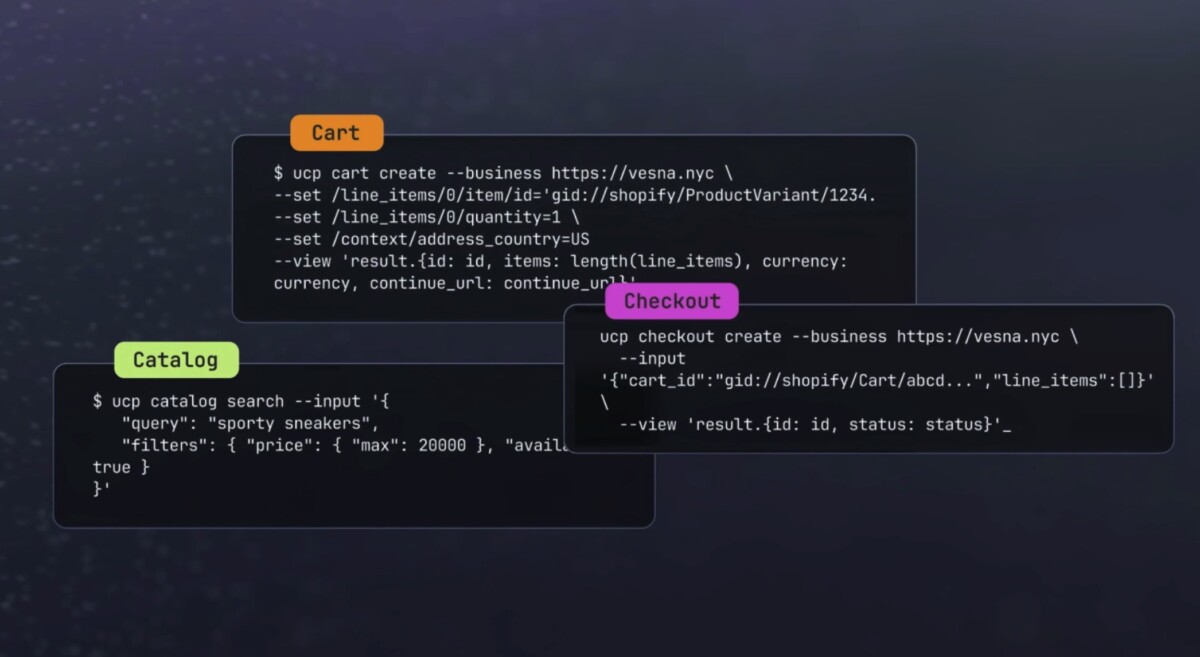
Catalog and UCP are now open for any developer to build on, which is the quiet engine behind the whole “everywhere” promise. The Catalog API added sign in with Shop for personalized results, plus image search, product lookup, and richer attributes like size and color, and Shopify says developers will soon earn revenue when their Catalog-powered experiences drive sales. To show what is possible they built five demo apps that make everyday moments shoppable, planning a trip, checking a horoscope, watching a show, with commerce woven in. The merchant takeaway is simple: every app a developer ships on this is one more place your products can appear. Full details in the developer Edition and the five demo apps writeup.
If you are doing $10K to $50K months, do almost nothing. Confirm your products meet Catalog eligibility, open the Agentic Storefronts dashboard, and just look at where AI is sending you. Awareness first. Keep your hands off Autopilot.
If you are in the $500K to $2M range, this earns an hour. Pull your AI channel revenue, work the search intelligence report for the queries you are losing, and action the product title and description fixes Sidekick flags. These are small, concrete, and compounding.
If you are at $5M and up, treat AI as a channel with an owner, the way you already own paid and email. The brands reporting 20x year over year growth are not lucky, they are paying attention to a surface most of their competitors are still ignoring. That gap closes fast.
The whole Edition rewards the same instinct: structure your product data once, let it sync everywhere, and spend your attention on the work only you can do.




