The search function is, without a doubt, among the most vital of any given website. No matter how intuitive and easy-to-navigate your site interface may be, visitors to your site both want and need a more direct way to find exactly what they’re looking for. Without the possibility to conduct an internal site search, customers are more likely to bounce out and go elsewhere to find what they need.
The downsides to this are twofold, as customers who already know what they want to purchase are much more likely to convert than those who are just browsing, and too much bouncing (or navigating away from your site after a short visit) can have a seriously negative affect on your site’s search engine ranking. In turn, this makes it harder for users to find your site when conducting an external search, and creates a negative downward spiral that spells bad news for your business.
The good news is that setting up an internal search engine doesn’t have to be complicated, and the ROI of a good site search engine is well worth the time and effort as it benefits both the user and the business owner. The insights offered by the search engine’s analytics tool can also provide a powerful direction to your content marketing strategy, rendering a site search tool not just a nice-to-have, but a must-have for any online business.
That’s why we’ve established this ultimate guide to internal search engines. We want to help you better understand just how internal search engines work, their advantages to customers and business owners alike, and how you can leverage site search data to improve your site’s external search engine rankings and inform your business’s marketing strategy.
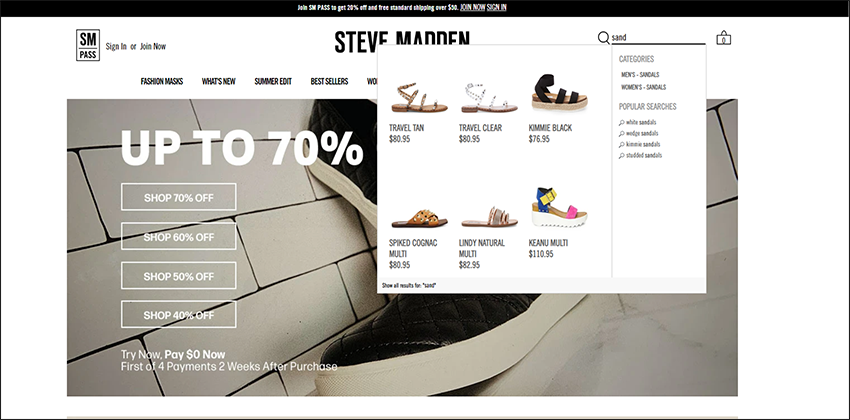
Understanding the basics of site search is relatively simple and straightforward. Essentially, there are two ways to search for information on the Internet: an external search or an internal search.
An external search is one that is conducted via a search engine like Google, Bing, or Yahoo. The user enters a keyword or a search term, and the search engine presents a ranked list of web pages that best correspond to that particular query. Results are ranked according to proprietary algorithms, and the art of building pages and content that rank highly for relevant keywords and search terms is called search engine optimization (SEO).
However, an internal search is one conducted within a single website. Rather than comb the entire web for a response to a given query, an internal search engine provides results that can only be found on that particular website. No matter how much information or content you have on your website, a robust site search function is essential to keep users on your website and help them navigate it efficiently. Without it, you risk having potential customers navigate away from your website, often back to an external search engine, to more easily and quickly find what they’re seeking.
This guide is designed to help online business owners who have set out to improve their onsite search function, but have been held back by a lack of understanding of how site search works and what they should look for in an internal search engine.
Despite all of the recent advancements in technology that have resulted in vastly improved search functionality, that doesn’t necessarily mean that all internal search engines are created equal. There are a few things you should look for to really make sure that you’re using an on-site search engine that’s going to meet all of your needs, provide a streamlined and efficient journey for your customers, and result in a higher conversion rate and increased revenue for your business.
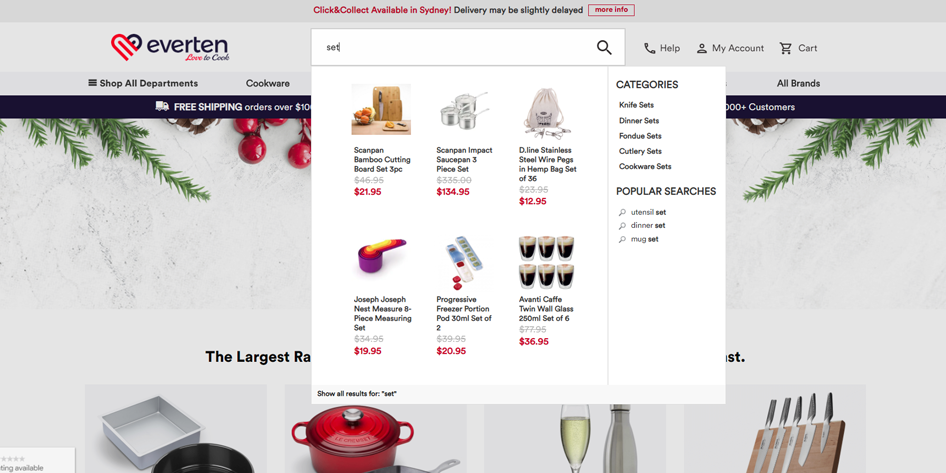

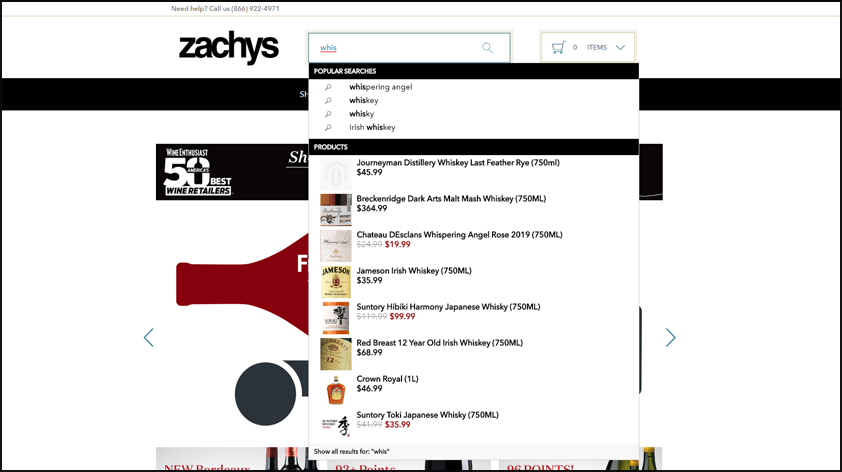
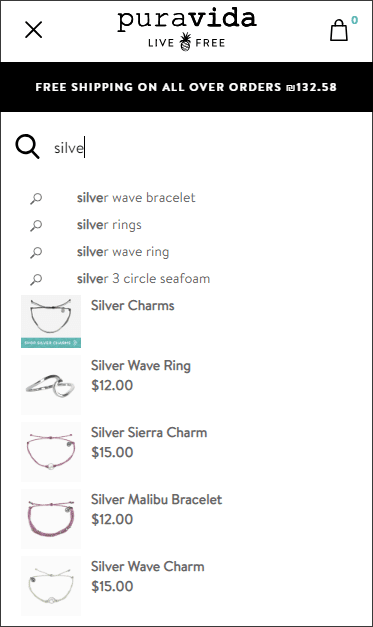
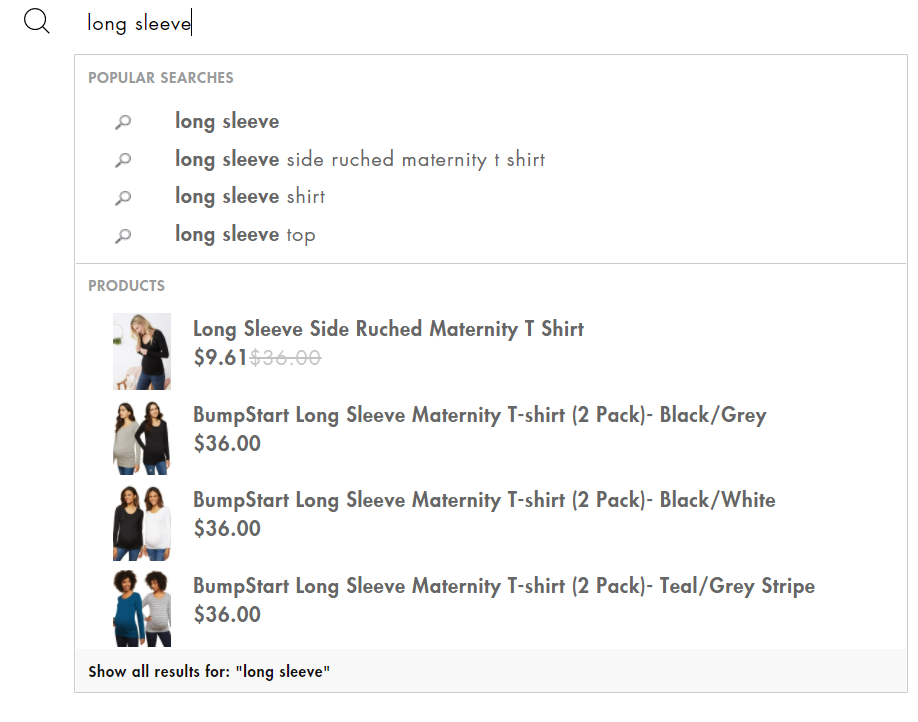
Recent advances in technology have made it possible to have search engines powered by machine learning and artificial intelligence. These search engines can both anticipate the needs of your users and provide targeted results with speed and accuracy. Text autocomplete and related search suggestions help users more clearly identify what they’re searching for and prevent the return of unwanted results based on poor or inaccurate keyword use by the user.
Some of the most advanced AI-powered internal search engines eliminate text-based searches altogether and allow users the opportunity to conduct visual searches based on their style preferences. AI-powered search engines also learn to become better over time by using past queries to further refine relevant results.
While working with an advanced, AI-based search engine may sound complex, there are plenty of solutions that are fully packaged and user-friendly, and that don’t require any advanced coding knowledge to implement or maintain.

Similarly, even a fully-packaged, AI-powered internal search engine should come equipped with the possibility to customize different features of your site search tool. Your specific business will have a unique set of needs and challenges, so the ability to customize your tools to suit the demands of your online shop is an important part of any site search tool.
Manual page rankings: This allows you to prioritize which pages rank first in the search results. While intelligent search engines can learn to prioritize certain pages over time, the ability to manually rank pages leaves you with some level of control over your highest-priority pages.
Direct links: A direct link to a particular product or page on your website based on your customer’s query is a valuable tool that can save visitors to your site some time, as they won’t have to review pages of search results to find what they need.
Content boosting and instant content updates: Your site search solution should allow you the ability to promote particular products that may be more relevant to your users’ search queries. These products or product pages can be “boosted” so they appear higher in the search results. Similarly, as you update your content, your site search product should give you the opportunity to manually index and update content so that the correct pages will appear immediately in the search results, rather than having to wait for your search crawler to re-index the site at a later date.
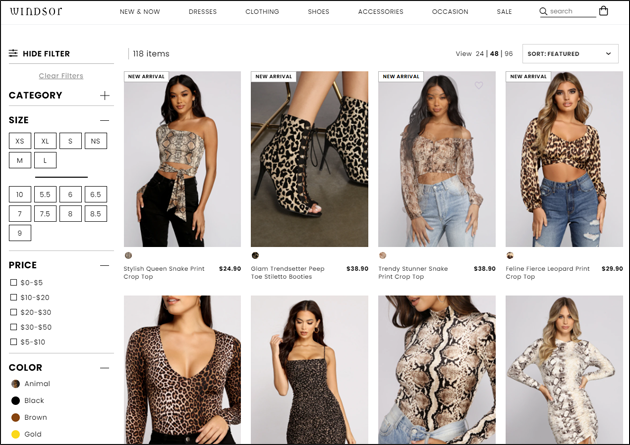
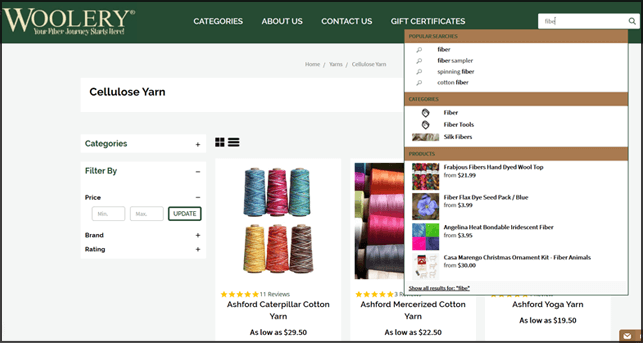
Filters: It almost goes without saying, but customizable facets and filters should be an integral component of your site search product. Filters allow customers to narrow down and refine their searches so that the process is much more efficient and more clearly organized.
Even if you don’t carry exactly what your site visitor is looking for, that doesn’t necessarily mean that they have to leave your store empty handed. Instead of displaying only an apologetic “no results” message, show them products or pages that are more broadly related to their original query or some of your shop’s best selling items. In other words, a failed site search doesn’t have to mean lost business so long as you plan accordingly and use your internal search engine to get alternatives in front of your customers.
Providing something of value – if even it doesn’t align with the customer’s original precise intention – increases both the likelihood of conversion and of getting that customer to engage with your brand again in the future.
Even if you don’t carry exactly what your site visitor is looking for, that doesn’t necessarily mean that they have to leave your store empty handed. Instead of displaying only an apologetic “no results” message, show them products or pages that are more broadly related to their original query or some of your shop’s best selling items. In other words, a failed site search doesn’t have to mean lost business so long as you plan accordingly and use your internal search engine to get alternatives in front of your customers.
Providing something of value – if even it doesn’t align with the customer’s original precise intention – increases both the likelihood of conversion and of getting that customer to engage with your brand again in the future.
While informational websites can and do benefit from a robust internal search engine – and they should certainly have one for ease of use, particularly if they have a lot of content for users to navigate – eCommerce is an entirely different playing field. For eCommerce businesses, a site search solution is absolutely vital when it comes to driving conversions and boosting sales. The more quickly a customer can find what he or she needs, the more likely they are to buy it – that’s just a fact.
Moreover, competition is stiff when it comes to online shopping, no matter the niche. Customers nowadays are used to being able to find anything they want via a quick Internet search; if they can’t search your online shop with the same ease and efficiency to which they’re already accustomed, they will go elsewhere. This is part of what makes a robust site search function such a vital component of an eCommerce business.
While eCommerce shops should abide by the same guidelines given in the previous section when it comes to implementing a site search solution that will fully serve the needs of both your customers and your business, there are some additional “best practices” specific to eCommerce that business owners need to take into consideration.
In addition to being easy to locate and use, highly intuitive and able to predict users’ searches, and customizable to your online shop’s needs and client base, eCommerce business owners need to be certain that their site search product is able to do the following:
If you have quite a lot of stock, it’s important to have an equally robust variety of filtering options. In addition to the standard filter options for your industry – for example, a clothing shop would want to include filters like brand, size, color, or material – there are a number of other options you could include to truly set your site search apart and give your customers an exceptional on-site experience.
These include the ability to filter by:
A comprehensive and customizable set of filters can increase the efficiency and effectiveness of conducting a site search, and customers will likely reward you with less bouncing and more conversions.
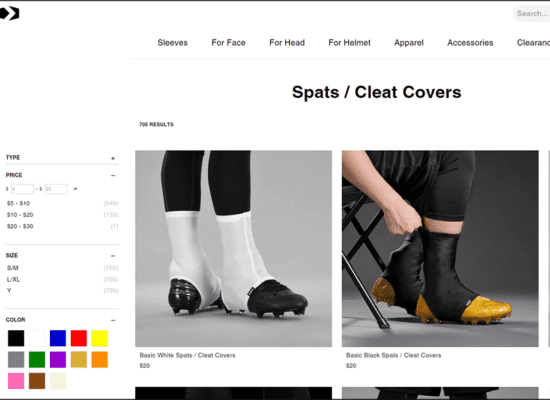
But autocomplete searches is not the only thing your site search solution needs to be able to do in order to provide the maximum number of relevant results to your customers. Intelligent autocorrect and semantic search both go a long way in reducing frustration due to misspellings, unfamiliarity with product jargon, or the use of keyword variations and synonyms that risk returning a “no results found” message.
Semantic search can navigate misspellings, filler words like “and” and “or”, and differentiate between singular and plural. It also can identify synonyms so users who search using similar but not identical keywords can still receive the same relevant results; for example, Customer A who searches “denim skirt” while Customer B searches “jean skirts.” With the right site search tool, those two queries will generate the same results.
Natural language searches are context-based rather than keyword-based, so that customers can enter descriptions, questions, and even abbreviations, and still find what they are looking for. A customer who enters “red shoes under $100” can therefore arrive at their desired results without having to click on any additional filters or refine their search further.
Search engines that allow for natural language searches can also handle requests with a great deal more complexity than keyword-based searches. Thanks to this, even when a user is unfamiliar with industry jargon, they can enter a description and receive a list of relevant results or recommended products based on their query. All this, without requiring that users fit a certain ‘mold’ but rather adapting the tool to their natural language inclinations.
How else does site search benefit eCommerce businesses?
Given that a reported 42% of eCommerce businesses don’t dedicate any time or resources to improving their site search function, it stands to reason that it’s because business owners don’t understand just how beneficial a great internal search tool can be for their bottom line.
A functional and intuitive internal search solution is great for your customers, too, of course. But it’s also great for business owners, because it gives you the opportunity to highlight additional products and services that the customer may not have necessarily searched for, but that could still be of benefit to them, like your shipping and returns policies. Manual display rankings also allows you to get product recommendations and merchandising decisions in front of your customers, and to highlight things like sales or promotions that can boost conversions and profits.

Furthermore, site search also provides business owners with analytics that can be leveraged into a more effective marketing strategy – read on to find out how you can use the information gleaned from your customers’ internal searches to boost conversions.
The analytics platform of your site search solution provides extremely valuable insight into how customers interact with your website. It can also show you how these interactions vary from person to person, or location to location. You should absolutely be taking advantage of that data to make decisions that will better suit the diverse needs of your customers – after all, when a customer does a search of your website, they are literally telling you exactly what they want. There’s no more valuable marketing tool than that!
Your site search tool’s analytics platform should be able to provide you with the following data, which you can then use to inform your marketing strategy and business plan. Here are some hidden opportunities to leverage site search in support of site conversion:
Finally, a good site search solution will provide you with insight into your customers’ activity and interactions with the search tool. A great one will support integration with other analytics tools so that you can really see everything in context. What do your users’ searches really tell you when they’re cross-referenced with other data about the way customers interact with your website? Site search can and should help you see the big picture. Without it, you’ll have a hard time responding to the needs of your customers and your conversion rates will suffer.