

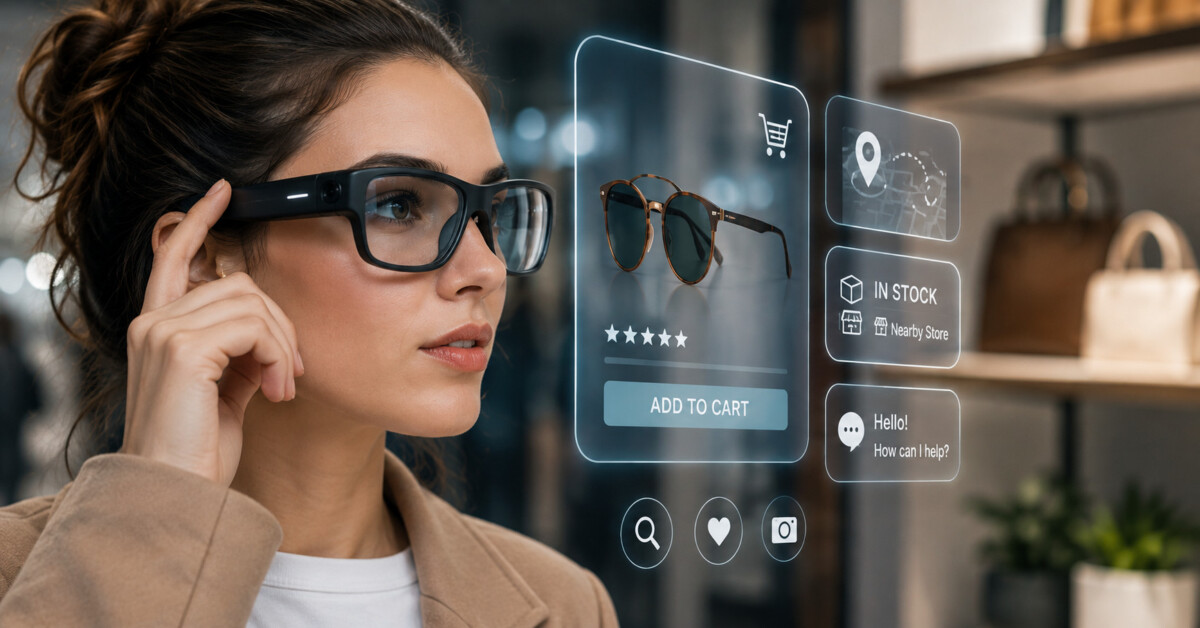
Smart eyewear will not replace the smartphone checkout flow soon, but it is creating a new commerce interface for hands-free content, visual discovery, and in-store assistance. DTC brands that strengthen product data, permissions, and omnichannel infrastructure now will be better prepared to test it responsibly.
The next commerce interface may not demand more screen time. It may reward brands that make their products understandable in the real world, at the exact moment a shopper notices them.
The playbook for Direct-to-Consumer (DTC) brands has been built around one primary focus for a decade: the smartphone screen. Paid social feeds, influencer unboxings, and mobile-optimized checkout funnels have all been e-commerce growth strategies designed to win consumer eye-level attention on a flat glass display.
Yet all retail tech is seeing a fundamental shift in hardware and behavior. As spatial computing, computer vision, and ambient artificial intelligence mature, digital interaction is shifting from handheld screens to screenless, everyday personal wearables. Consumers increasingly reach for their handheld devices to write a product review, check an order status, or compare prices in-store, creating physical friction that throws a wrench in their shopping experience.
Leading the hardware revolution is smart eyewear, body-worn devices that merge high-performance optics with first-person media capture, open-ear audio, and real-time AI-assisted experiences. This transition in hardware isn’t just a trendy consumer device for e-commerce founders, brand marketers, and retail strategists; it’s a new basic interface for content creation, product discovery, and brand engagement.
The traditional handheld device creates friction in consumer creation and shopping workflows by its nature. To capture a quick video, document a hands-on project, or scan a product tag, you have to stop what you’re doing, pick up a phone, unlock a display, and go behind a screen. This head-down posture creates a physical barrier between the shopper and their physical environment.
Smart frames address this problem by placing micro-sensors and AI processing in the user’s natural line of sight. This hands-free architecture has several key benefits for today’s consumer lifestyle brands looking to harness e-commerce AI for customer experience:
A good example of how traditional optical retailers are successfully combining classic lifestyle framing with ambient digital capabilities is the exploration of the options for the best ai glasses for e-commerce operators wishing to understand these emerging trends in hardware.
As consumers increasingly adopt smart eyewear, DTC operators must adapt their customer acquisition, product detail pages (PDPs), and engagement strategies to an eyes-up ecosystem. Integrating ambient technology with everyday retail touchpoints is becoming a key pillar of any modern omnichannel retail strategy.
| Interaction Feature | Mobile Phone Era | Ambient Eyewear Period |
| User Posture | Head-down screen position | Eyes-up physical presence |
| Search Interaction | Manual typing & search boxes | Ambient voice query & visual search |
| Content Style | Third-person staged UGC | Immersive 1st-person POV |
| Audio Engagement | In-ear sound, isolated | Open-ear directional audio |
| Channel Integration | Fragmented screen touchpoints | Physical-digital constant movement |
Short-form video feeds are starting to be dominated by the immersive, first-person experience. Giving brand ambassadors and creators hands-free capture tools can lead to hyper-authentic, behind-the-scenes content that outperforms traditional polished studio ads. Shoppers want to see how a product fits into daily life from the point of view of the real person who uses it.
Consumers can use ambient visual AI to instantly query the origin, style, or material specs of any object they see in the physical world. E-commerce brands must ensure their structured product data, visual catalog feeds, and search engine schema are fully optimized, so that AI models can accurately identify and recommend their SKUs.
Omnichannel retailing is about removing friction between digital catalogs and physical storefronts. Shoppers can use smart frames to navigate physical retail locations with voice prompts, personalized offers, or product information beamed directly via directional audio rather than having to look at a phone screen all the time.
In addition to retail strategy, the adoption of screenless hardware also responds to growing consumer demand for digital wellness and visual comfort. Staring at bright smartphone screens for hours causes persistent eye strain, glare fatigue, and neck tension.
Visual health research from the American Optometric Association states that controlling environmental glare and limiting sustained near viewing of screens is important for long-term eye comfort. Premium polarized lenses in smart eyewear solve both problems at once—protecting the eyes from harsh ambient UV radiation and providing information via discreet audio cues, with no need to look down at a display at all.
For instance, optical cameras and directional microphones in everyday public spaces will require transparent hardware-level protections if they are to earn consumer trust in the long term. E-commerce brands that shift to wearable-based marketing should ensure their technology partners meet strict privacy standards.
Top smart frame companies are hardwiring privacy and social etiquette protocols into their hardware logic:
Groups such as the Electronic Frontier Foundation, which advocate for digital civil liberties, have often emphasized that required privacy LEDs, local encryption of data, and physical kill switches are essential minimums for social trust as ambient computing becomes part of daily consumer life.
The story of the evolution of personal technology is a story of friction reduction. Just as e-commerce moved from desktop web browsers to one-tap mobile checkout, the next era of digital commerce will be defined by ambient, screenless interfaces that meld seamlessly into everyday life.
Forward-looking e-commerce leaders can lead the charge in the next big hardware transformation by adopting hands-free capture, optimizing product feeds for visual AI, and delivering authentic eyes-up customer experiences. The future of retail is not about capturing more minutes of screen time; it’s about empowering shoppers to experience the physical world with clarity, presence, and seamless digital intelligence.
Smart glasses can help a DTC brand today by supporting hands-free creator content, product education, and selected retail-assistance workflows rather than replacing ecommerce checkout. A creator can capture first-person setup footage, while a store team may use voice or audio assistance to retrieve approved product details. The most practical starting point is a small test tied to a current business problem, such as weak tutorial content or slow in-store product lookup. Do not build a wearable experience until your product catalog, inventory, and customer data are accurate enough to support it.
Ecommerce brands should optimize for visual and voice discovery because clean product data improves customer discovery across search engines, shopping feeds, site search, AI assistants, and future wearable interfaces. Start with precise titles, consistent variants, strong images, descriptive alt text, structured product attributes, clear sizing and material details, and accurate availability. These improvements serve customers now, even if your audience does not yet use smart eyewear. Treat visual and voice readiness as a catalog-quality initiative, not a speculative hardware project.
The product data that matters most for multimodal commerce includes accurate titles, brand names, SKU and variant information, material details, dimensions, color, fit, price, availability, product images, reviews, and structured schema. A discovery system needs enough context to distinguish similar products and explain why one result fits a shopper’s request. Prioritize the products that generate the most revenue or customer-service questions first. If customers regularly ask a question before buying, the answer belongs in your product data and PDP content.
Smart glasses can create privacy risks for retail customers when recording, data collection, access permissions, or retention policies are unclear. The risk is not limited to the device itself; it also depends on how a brand, creator, employee, or technology partner uses the information captured. Brands should require visible recording indicators, define the purpose of data collection, limit access to approved personnel, establish deletion practices, and provide a non-wearable alternative. Transparent rules and meaningful customer choice are essential before testing wearable experiences in public or private retail spaces.
A small Shopify brand should not make smart eyewear marketing a priority unless it solves a specific content or customer-experience problem better than existing tools. For most brands under $500K in annual revenue, better PDPs, faster site performance, creator briefs, email automation, customer reviews, and reliable product data will produce a clearer return. Consider a limited wearable test only if you already have strong fundamentals and a defined use case, such as hands-free how-to content. Measure the result against a simpler alternative before expanding the investment.





