


What does “good” or even “great” look like for brand engagement today?
Recently we’ve dug deep into the 2026 Global Engagement Index to understand the Engagement Divide, which we’ve defined as the gap between what customers need in the moments that matter and what brands are actually able to deliver. We’ve also broken down exactly why omnichannel customer engagement matters.
I want to take this one step further and explore how brands can successfully slam that divide closed and execute engagement campaigns that feel truly tailored for each customer.
This is your Crash Course for Campaign Anatomy, where I’ll break down the essential components of high-converting campaigns. And at the end of the class, I’ll share one of my favorite real-world engagement campaign examples with an SAP Engagement Cloud customer, Bioré.

Marketers repeatedly say that to win true long-term loyalty, they need to know (and see) their customers. I’m sure you’ve heard that “seeing is believing.” Well, in marketing, “seeing is engaging.” Without the ability to access and activate your customer data and uncover what your customers care about, the best you can do is send out impersonalized messages that create a disconnect between you and your customer. This ultimately leaves brands to fall into what we call the Engagement Divide.
Shailendra Sahay, Head of Industries in EMEA for SAP, talks about “personalization through recognition” in this short video:
The key to unified customer profile lies in connecting business and operational systems, bringing together insights like purchases, service interactions, stock availability, finance, and more. By connecting data from all sources (commerce, customer data platform, business apps, etc.), brands can organize this data into core entities like Engagement, Product, Contact, and Account, establishing the foundation for the data profile.
Once your data is speaking the same language, brands can activate it in ways that are relevant to customers, and take that activation one step further with AI. One example we’ve seen frequently with customers is using AI to dynamically segment audiences. AI-driven segments combine engagement signals, channel affinity, and predictive insights to deliver personalized content and recommendations in the moments that matter most to customers.
A progressive profiling strategy can help you gradually enrich your customer data with the information that matters most. And because customers’ habits and preferences can change, be sure to touch base with your customers on a regular basis—your engagement strategy needs to adapt dynamically to keep up with them. Here’s your first extra credit: How to Capture Customer Data (with examples).

Leading brands aren’t stitching together AI point solutions—they’re taking a holistic approach with AI embedded throughout their systems. When AI is the backbone of a customer engagement platform, brands can deliver context-aware interactions based on what customers are doing now and what they’re likely to do next.
This short video featuring Andrea Izas, Marketing Director at Cemaco, showcases how AI predictions made an astonishing impact on email open rates:
Executing campaigns at scale across regions, languages, and even sub-brands requires AI that can do the heavy lifting:

Brand leaders know that to win loyalty in today’s Engagement Era, it takes a thoughtful approach to marketing that centers the customer journey around, well, the customer. Shocking, I know, but it’s no easy feat to do so at the speed of AI.
This short video from Brad Santanna, Head of Omnichannel Sales & Marketing for The Hershey Company, sheds light on the importance of staying on brand and focusing on the consumer.
Let’s break down how mature brands are moving at the rapid pace while still delivering the kinds of experiences that customers demand and deserve.
Campaigns need to be both omnichannel and personalized to be truly customer-centric.
Channels are the veins of your campaign, pumping messages through to your customers. Although channels continue to evolve, one constant truth marketers can rely on is that they need to meet customers where they are, whether they’re in-store, on a mobile app, using conversational messaging, browsing the web, surfing social media, or anywhere else.
Using an omnichannel marketing solution, organizations can coordinate their omnichannel strategy so that the customer journey feels seamless and intentional across every touchpoint, rather than siloed and disjointed.
Intelligent personalization means using agentic marketing and engagement to improve campaign performance, surface product recommendations, and deliver targeted offers that speak directly to the customer.
Remember that unified customer profile? This is where it becomes critical to creating tailored experiences that are relevant and timely and centered around your customer’s needs.
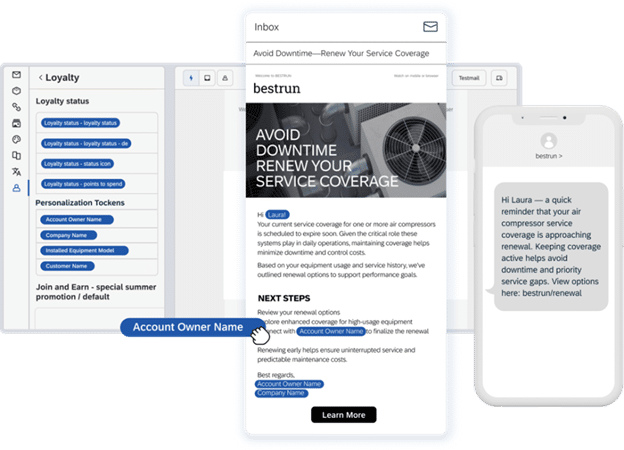
For scalability, personalization tokens make it possible to create assets that adapt across channels and markets.
Customer experience is about more than ensuring customers know about the latest sale or know about your product launch—it’s also about creating an emotional connection with your brand. Explore this topic more with some extra credit: Mobile Gamification.

Moving fast is great, but not at the cost of your brand reputation. A solid foundation of governance, consistency, and trusted data (a skeleton, if you will) is what separates short-term campaigns from long-term customer relationships. By centralizing the governance for consent and branding, you gain the bones to deliver on your campaigns at the pace you need.
The unified customer profile is the hero that powers any marketing campaign, and tracking the consent of your customers is mission-critical.
If customer Claudia has signed up for your newsletter but opted out of SMS, your campaign needs to respect her choices, both to build her trust and also to adhere to regulations. Based on channel engagement and opt-ins, AI can also predict when, where, and how to engage each customer.
The ability to move fast is great, but not at the expense of brand equity and identity. Organizations need guardrails in place so that marketing teams can control the brand story at a global level.
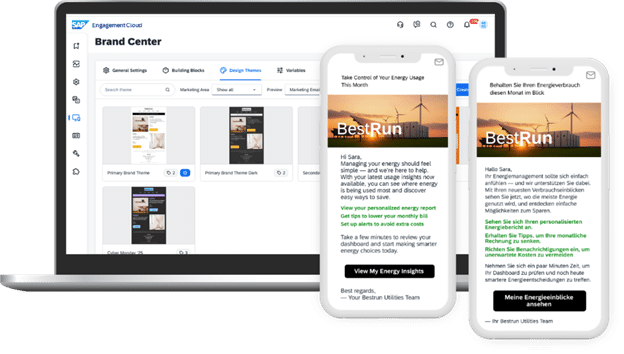
The ideal is a centralized hub that empowers teams with templates and resources that keep teams on-brand and on-time. Centralized controls for localization and dynamic personalization help ensure consistency, compliance, and relevance.
To round out this Marketing Anatomy exercise, this example from Bioré shows what it means for all parts of a campaign to work in harmony.
The Bioré marketing team was tasked with launching the brand’s UV Aqua Rich product in the US. The product was already the top seller in category in Japan, but the team needed to break into an established and highly saturated regional market.
The strategy began with a soft launch in 2022 and used “very scrappy tactics,” as described by Danielle Boub, Senior Brand Manager. Bioré partnered with influencer Meredith Duxbury, leading to viral engagement and opportunities for PR. Gradual growth led to a large-scale awareness campaign in 2024 and 2025, involving partnerships with dermatologists and events like Stagecoach, Coachella, and various sporting events. The brand also contracted a global ambassador, a K-pop band called Stray Kids.
This activity opened up an opportunity to distribute packs in 55 Costco stores in the US, and considering how selective Cosco is about brands, the Bioré team needed to ensure they could drive traffic and awareness. Partnering with Blue Wheel, the brand used geotargeting to connect with customers within 50 miles of driving distance from the 55 stores, and they leveraged AI to create email subject lines and dynamic product recommendations.
In the first two weeks of the Costco campaign, nine content creators generated millions of impressions across sites.
For even more details about this campaign, you can watch the complete webinar on demand.
When organizations bring together customer data, organizational data, and brand messaging and make all of it actionable with AI-powered insights and content, the result is greater engagement and long-lasting loyalty.
Your campaign checklist:
|
👀 Unified customer profiles Get EYES on your customers. |
|
|
🧠 AI-powered solutions: Get the BRAIN to interpret and act on your data. |
|
|
💗 Omnichannel personalization: Keep customers at the HEART of every campaign. |
|
|
🦴 Governance: Make brand consent the BONES for campaigns to build customer trust and loyalty. |
Alex Pallotta is a Senior Product Marketing Manager at SAP, leading go-to-market strategy, messaging, and enablement for SAP Engagement Cloud. She works at the intersection of product, sales, and marketing to bring the platform’s customer engagement story to market — from positioning and launches to sales tools and industry-specific narratives. Her focus is on helping teams and customers use connected data and AI to deliver personalized, real-time engagement that drives loyalty and business growth.

Alex Pallotta
Senior Product Marketing Manager





