


Ecommerce marketplaces are gaining momentum fast. We’re all familiar with the saying, “Go where your customers are.” These days, consumers are flocking to marketplaces like Amazon, eBay, Alibaba, Walmart, and Rakuten to do their shopping.
Last year, global ecommerce sales amounted to more than $5.7 trillion worldwide. In 2023, sales are expected to rise to over $6.31 trillion.
Selling on a marketplace can help build your brand, provide convenient shopping experiences for consumers, and multiply your profits. The opportunities are great, but expanding into global markets can be complex.
This guide will help you understand the nuances of global ecommerce marketplaces and look at some of the most popular marketplaces in different regions.
A marketplace is an online ecommerce platform that hosts different products from different sellers. Companies that operate as a marketplace, like Amazon or eBay, do not own any inventory.
There are four main types of marketplaces:
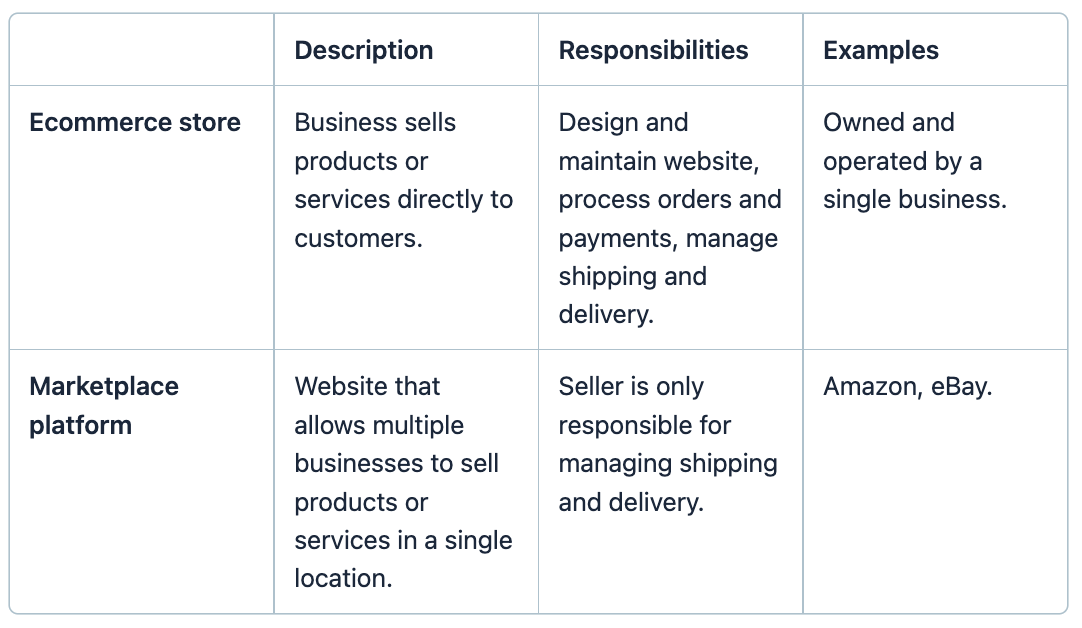
Generally, an ecommerce store is owned and operated by a single business, while a marketplace platform enables multiple companies to sell to customers in one place.
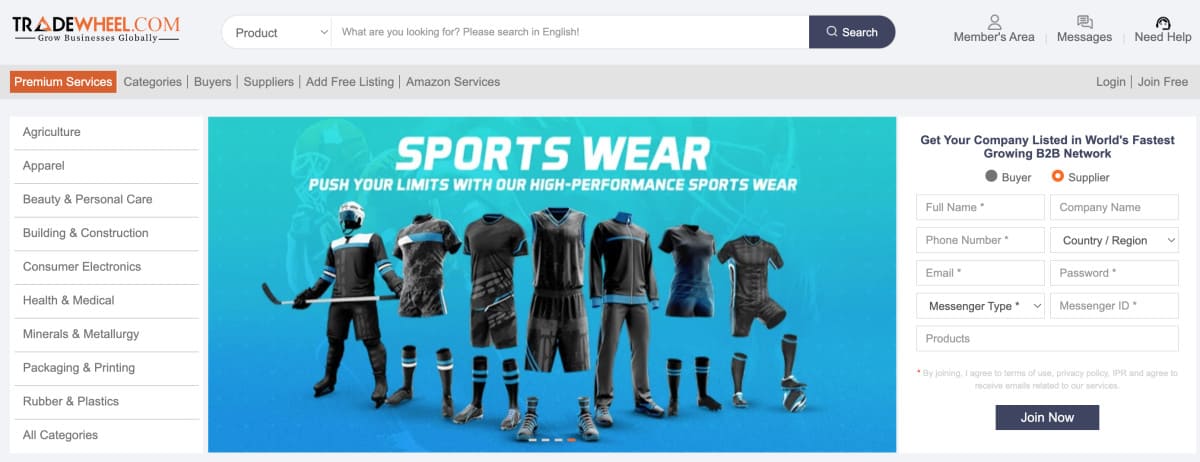
Tradewheel.com is the fastest-growing online marketplace that caters to global buyers and sellers. The website started operations in 2003, and since then, it has gathered millions of suppliers and buyers from over 190 countries.
The b2b marketplace offers many excellent services, including 24/7 active customer support, international sales managers, affordable packages, and more.
To start selling on Tradewheel.com, you have to follow these steps:
Monthly visits: 98 million.
Fees: Premium packages start from as low as $499.
Top regions: China, United States, Europe, Asia, Australia.
Top categories: Electronics, Automotive, Fashion, Agriculture, Machinery, Furniture, and more.
The most popular ecommerce marketplace in the world is Amazon, thanks to its powerful shipping and fulfillment functions and consistent shopping experience.
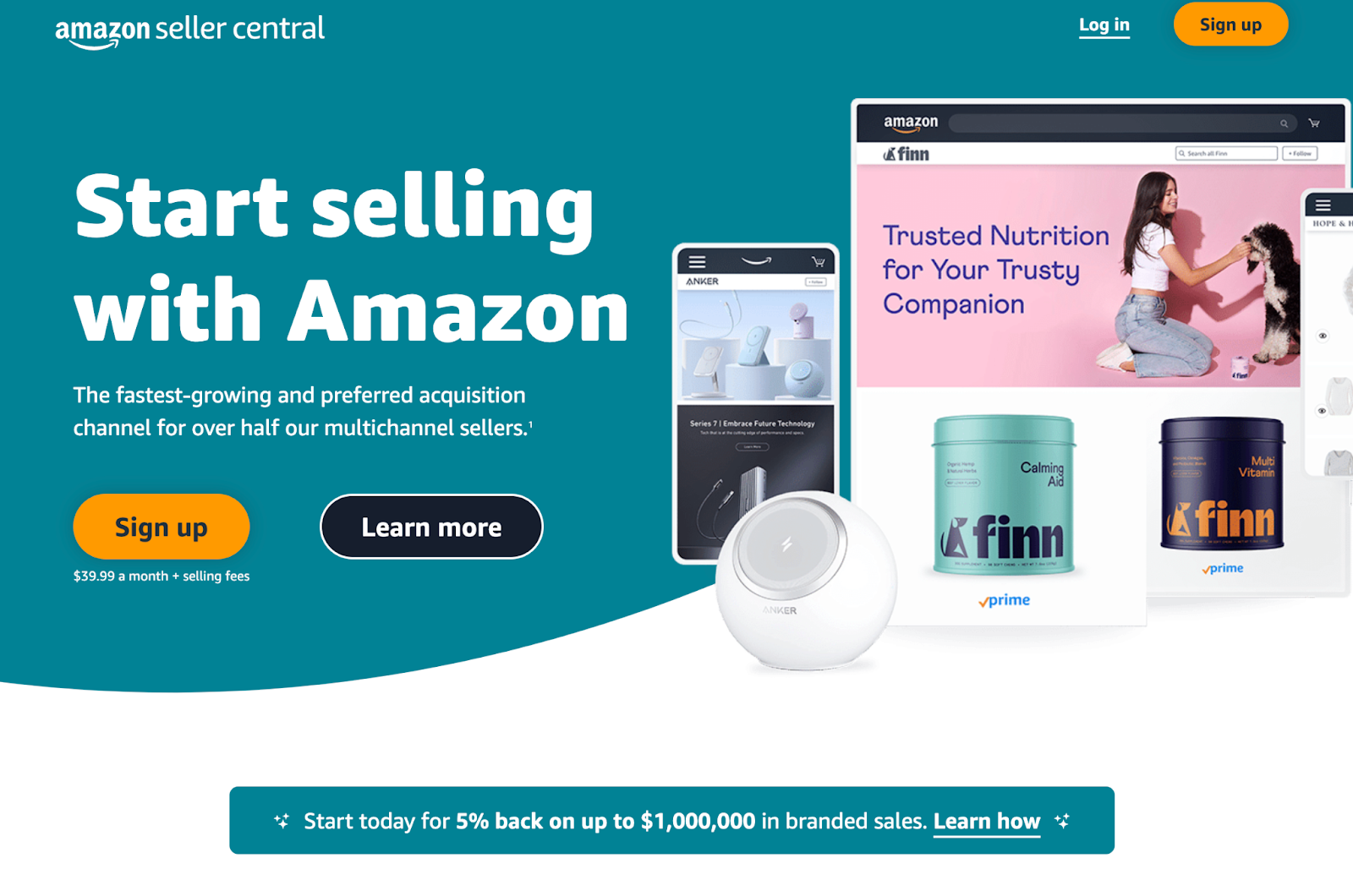
The Amazon marketplace is also the world’s second-largest search engine. Incredibly, 36% of product searches take place on Amazon.
Before creating Amazon Store content, you must register your brand using Amazon’s Brand Registry.
Once your brand is registered, you can set up your first Amazon Store. Select your theme and start building your pages, much like your own website, making sure the navigation is simple enough for customers to find what they’re looking for easily.
Monthly visits: 2.4 billion.
Fees: Varies by category but averages 15% per sale.
Top regions: United States, Germany, United Kingdom, Japan.
Top categories: Home and kitchen; beauty and personal care; toys and games; clothing, shoes, and jewelry; health, household, and baby.
eBay isn’t just an online auction house for used items. Many of the products listed on eBay are new. The flexibility for retailers to sell new and operated has allowed eBay to earn $9.89 billion in 2022.
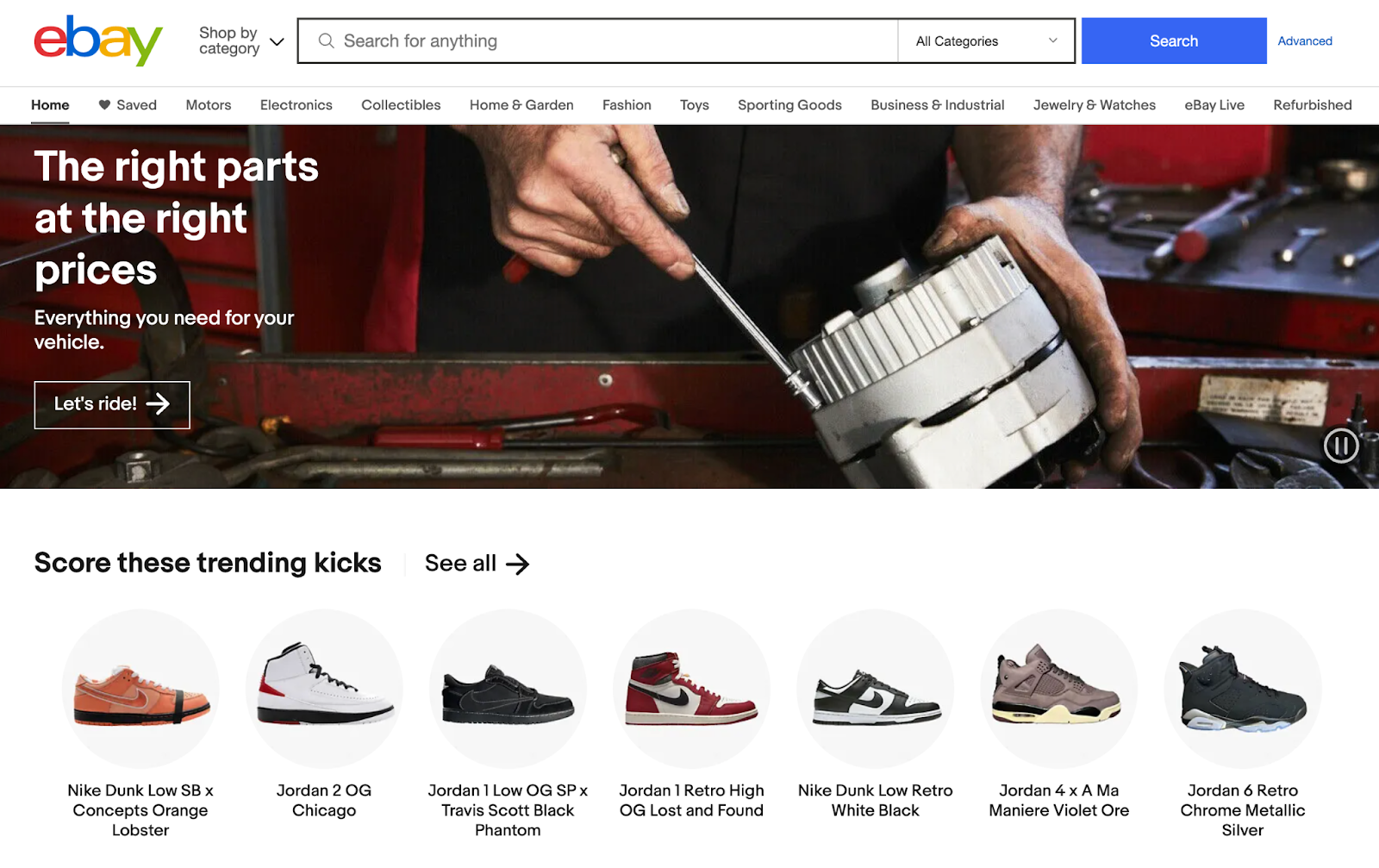
With the eBay channel on Shopify (available in the US, Canada, Australia, the UK, and Germany), you can expand your reach to the 138 million users who shop the platform’s listings.
To sell on eBay, there are three basic steps:
With eBay, there are different pricing plans, each of which helps you sell more, with reduced selling fees, “promoted listing” credits, and more. You’ll need to consider a pricing structure depending on the size of your ecommerce business.
Monthly visits: 665.8 million.
Fees: Final value fee of the sold item. It can be up to 14.35% of the sale price plus a 30¢ processing fee.
Top regions: United States, United Kingdom, Germany, China, Australia.
Top categories: Electronics and accessories; automotive; jewelry and watches; collectibles.
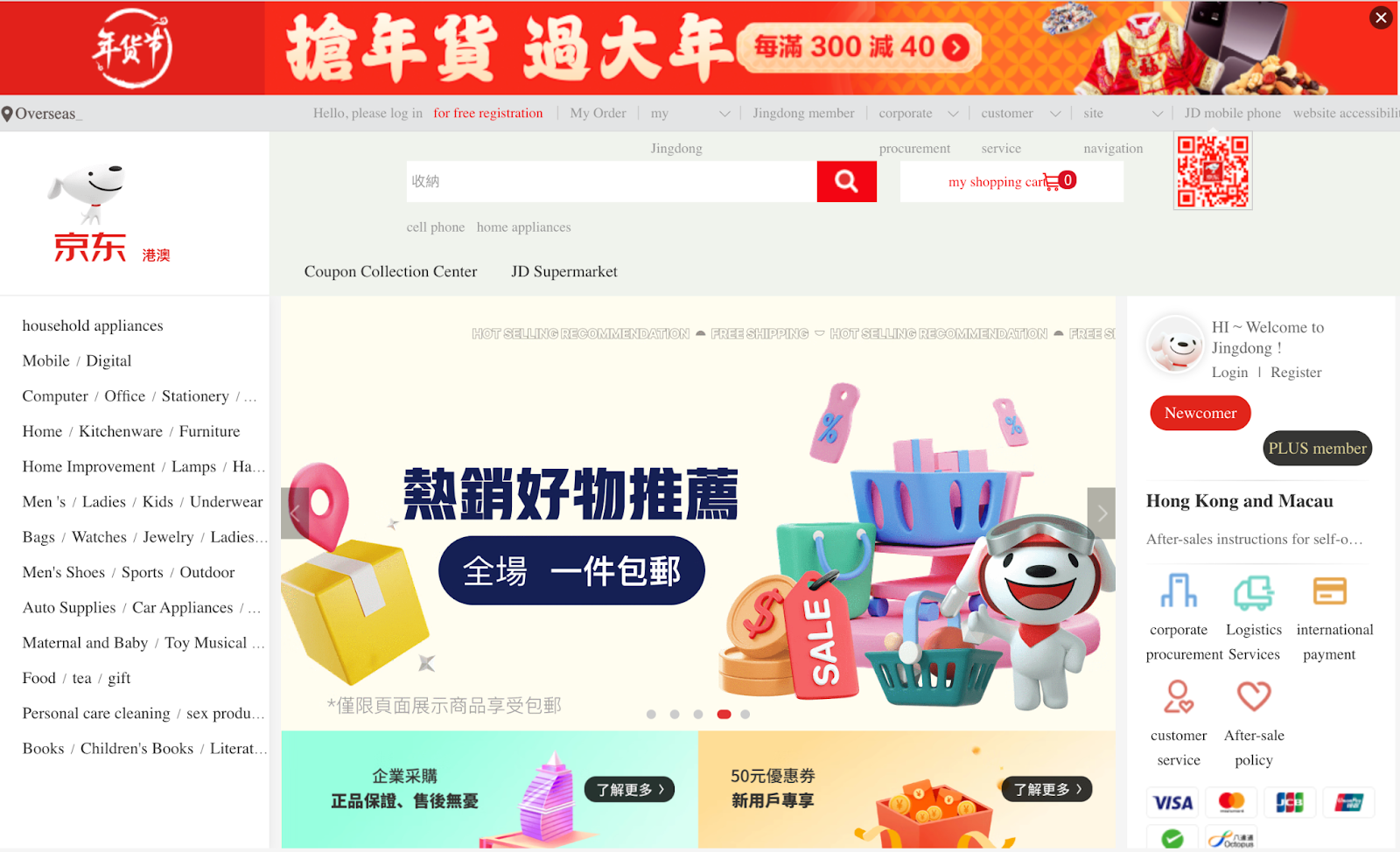
As a competitive leading B2C marketplace, JD.com is an excellent option if you want to sell in China. JD announced revenue of $157.1 billion for 2022, an 9.22% increase from 2021. JD.com specializes in advanced technology and logistics solutions and has one of the largest fulfillment infrastructures in the world, achieving 90% of orders delivered on the same or the next day.
Entering the Chinese market has several hurdles:
That’s why we created the JD Marketplace sales channel for Shopify merchants.
Shopify’s JD Marketplace channel makes it easy to sell on JD.com. Initially, the process to set up JD.com took six to 12 months. Now, you can get set up within four weeks, thanks to an expedited process exclusively for Shopify merchants. Once registered, you’ll ship products to a US warehouse, and JD will take them to the customer in China.
Monthly visits: 161.8 million.
Fees: Between $8,000 and $50,000 deposit, yearly fee, and between 2% and 10% of product sales.
Top regions: China, Taiwan, Hong Kong, United States.
Top categories: Electronics and home appliances; automotive parts; food and beverage; fashion and apparel; cosmetics and personal care.
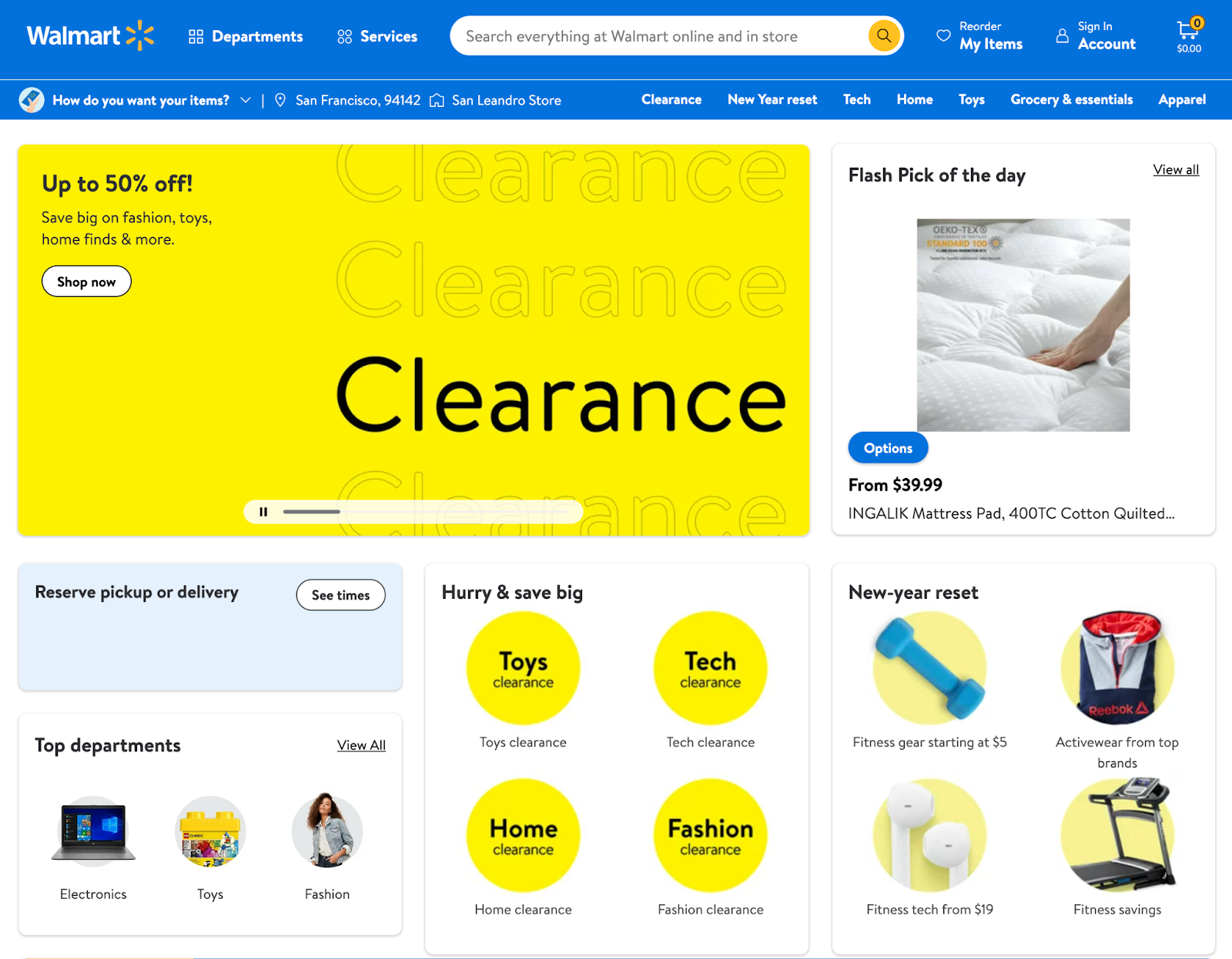
Walmart is now the third-most-visited online retailer in the US, with over half a million monthly visitors. In 2022, Walmart reported $47.8 billion in ecommerce sales, an 11% increase from 2021.
Walmart currently allows third-party sellers in over 35 product categories to sell their products on its marketplace. You also don’t have to be based in the US to sell on the Walmart marketplace since 5% of its current marketplace sellers are based outside the country.
To sell on Walmart as a partner, you need to follow these five steps:
As part of the onboarding process, you can now connect your Shopify store with Walmart.com’s Marketplace website if approved. The app will allow you to upload your product catalog, create listings, sync inventory, and import order details for fulfillment with Shopify. To date, this is only available for brands that are based in the US.
Monthly visits: 511.5 million.
Fees: Commission fees vary between 6% and 15%.
Top regions: United States, Canada, India.
Top categories: Electronics, toys, fashion.
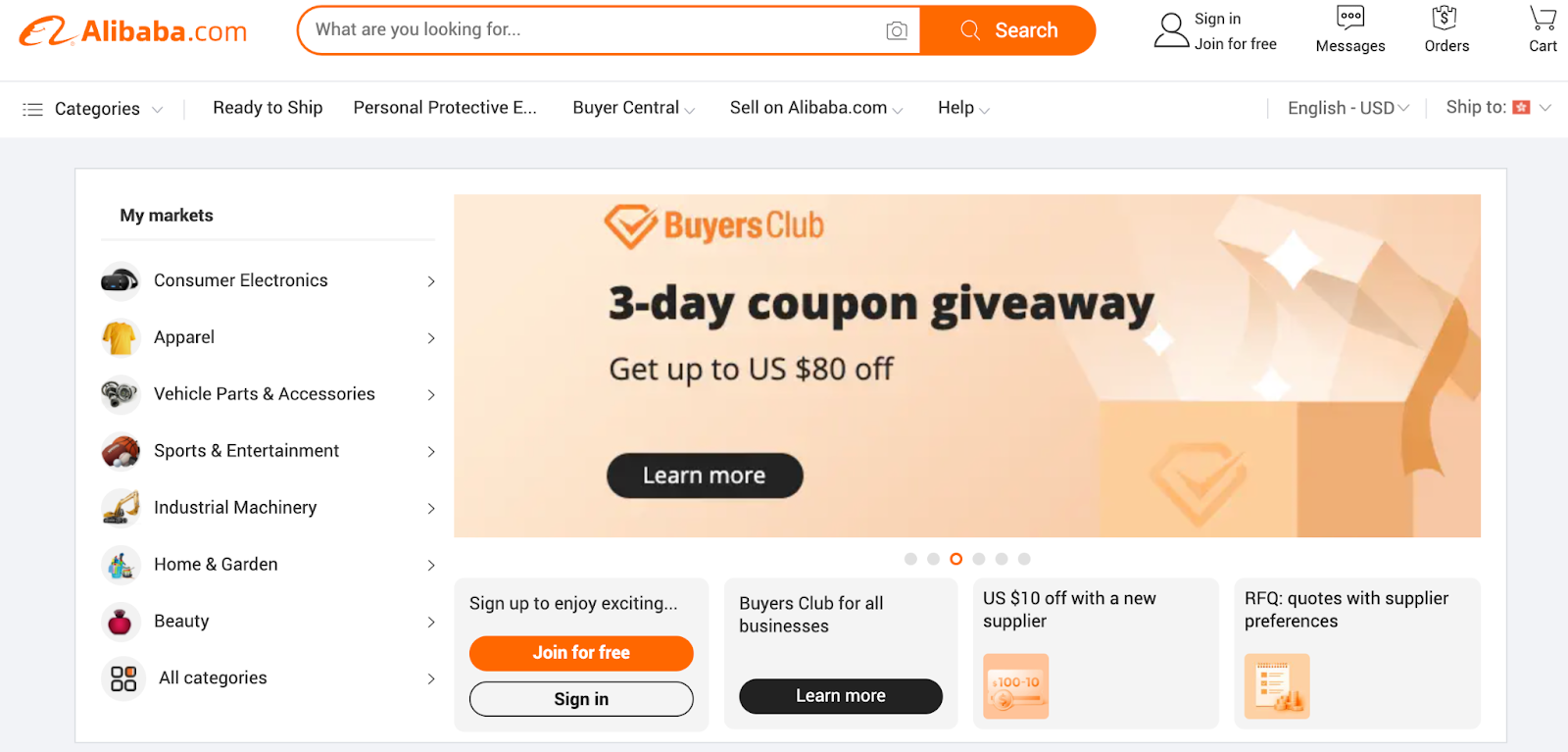
As the leading ecommerce provider in China, Alibaba is one of the best marketplaces for B2B sellers. The Alibaba Group boasts over 1.31 billion annual active consumers and reported revenue growth of $134.57 billion, a 22.91% increase from 2021’s figure.
As a business-to-business (B2B) manufacturer and wholesale supplier, Alibaba.com provides the foundation for many businesses. So if your business is about selling products to other companies (which don’t have to be limited to China), look no further than Alibaba.com.
To start selling with Alibaba, you must complete a simple form to create an account.
Monthly visits: 99 million.
Fees: Seller plans start at $3,499 per year.
Top regions: China, United States, Russia, United Kingdom.
Top categories: Electronic consumer; sports and entertainment; beauty and personal care; tools and equipment.
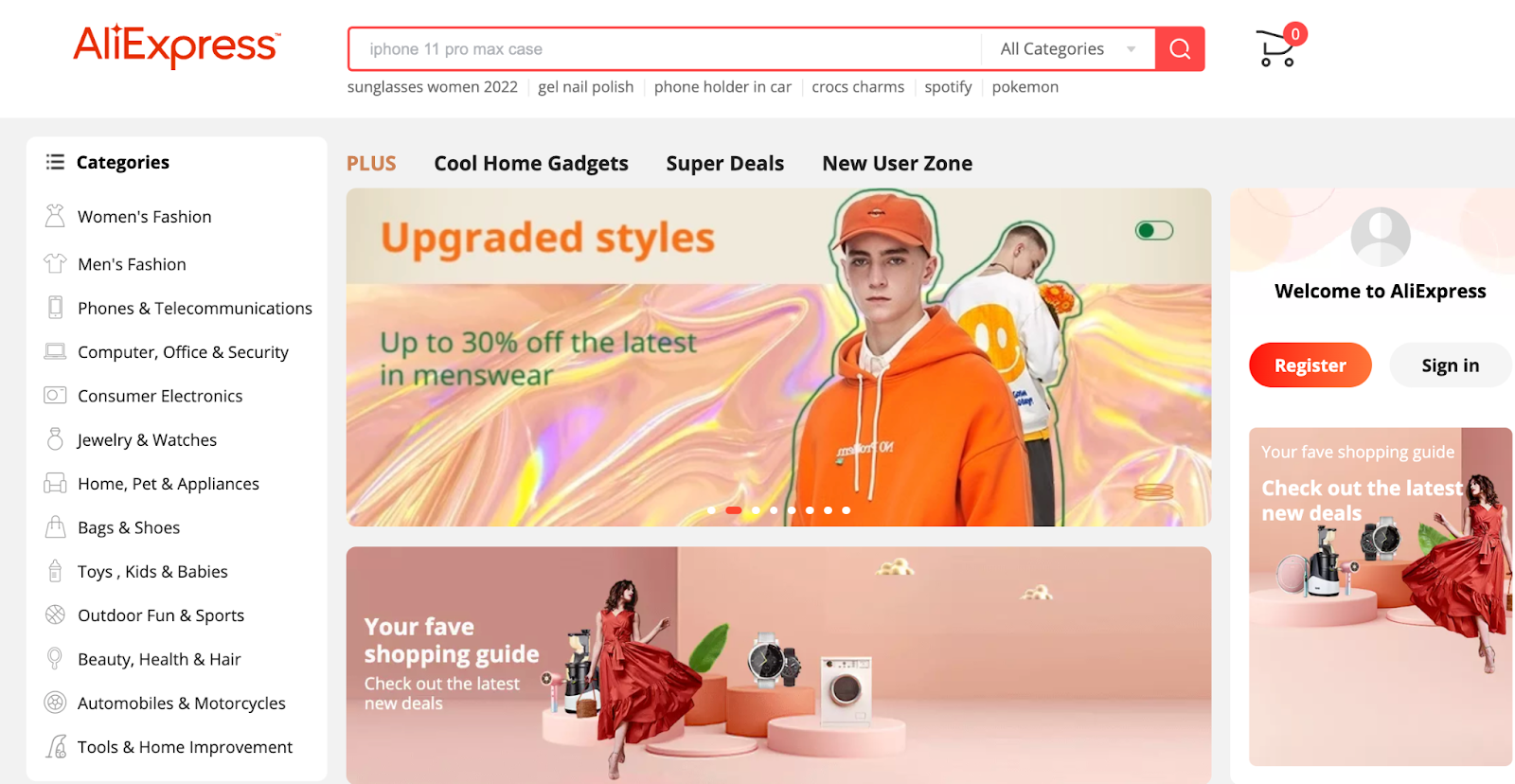
AliExpress is a subsidiary of the Alibaba Group and one of its established marketplaces in the B2C space. On its own, AliExpress pulls in over 435 million website visits a month and has hundreds of millions of downloads of its mobile app.
What makes AliExpress an excellent option for many businesses is its localization—the platform is available in 18 languages in 230 countries and regions. It’s a shared marketplace for dropshipping companies because many suppliers ship directly to consumers for affordable fees.
Selling on AliExpress is as easy as selling on many other platforms: create an account, submit your business information, then submit your application. After that, you can personalize your store and start selling.
Monthly visits: 435 million.
Fees: Commissions vary between 5% and 8%.
Top regions: China, Brazil, Spain, United States, France, Korea.
Top categories: Consumer electronics; health and beauty; home and garden; women’s clothing; mom and kids.
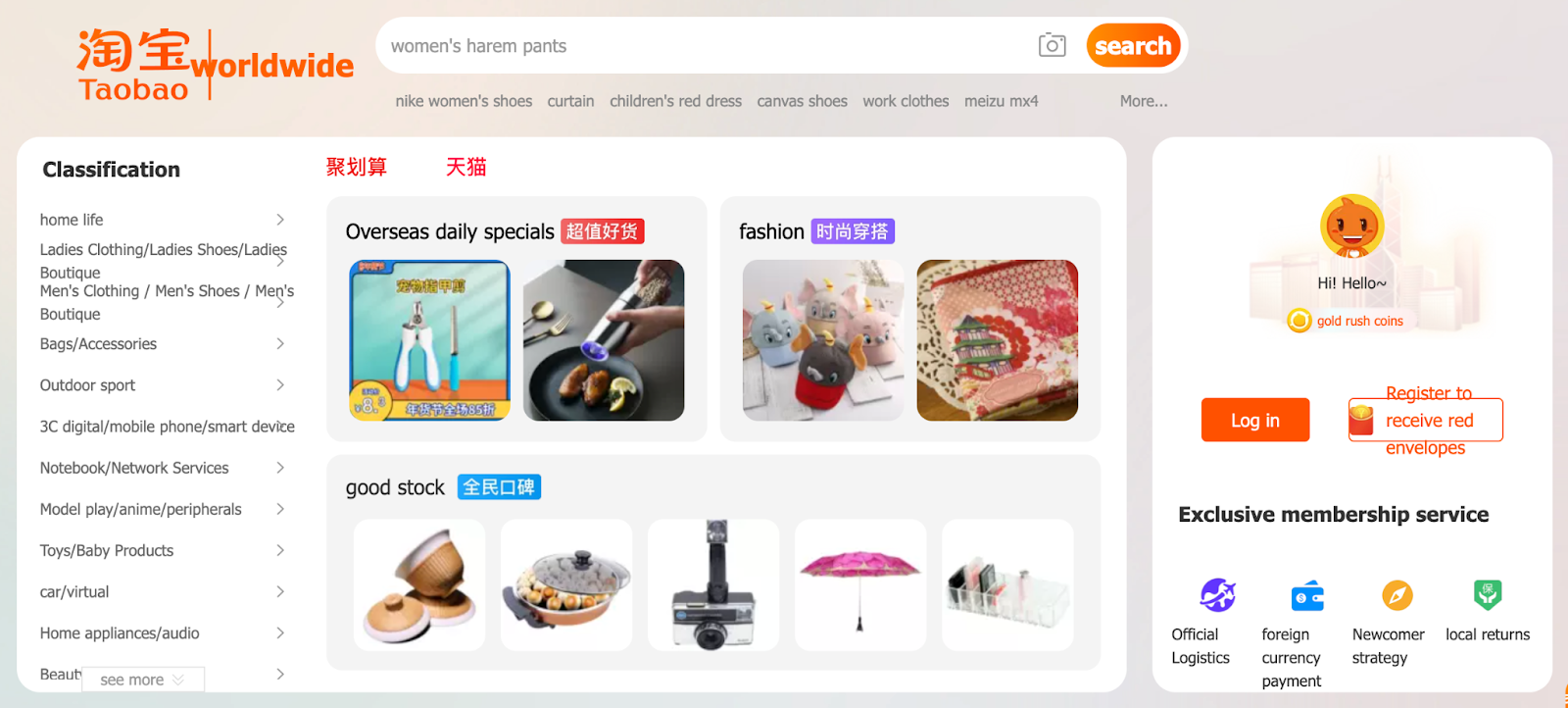
Formed in 2003 by Jack Ma, Taobao is a leading ecommerce marketplace in China as of July 2022. What separates Taobao from AliExpress is that its business model is primarily consumer-to-consumer (C2C)—think of it as the eBay of China. As of June 2022, the Taobao app had almost 875 million monthly active users.
Monthly visits: 300.1 million.
Fees: None.
Top regions: China, Taiwan, Hong Kong, United States, Singapore.
Top categories: Women’s clothing, cosmetics, jewelry, and home furnishing.
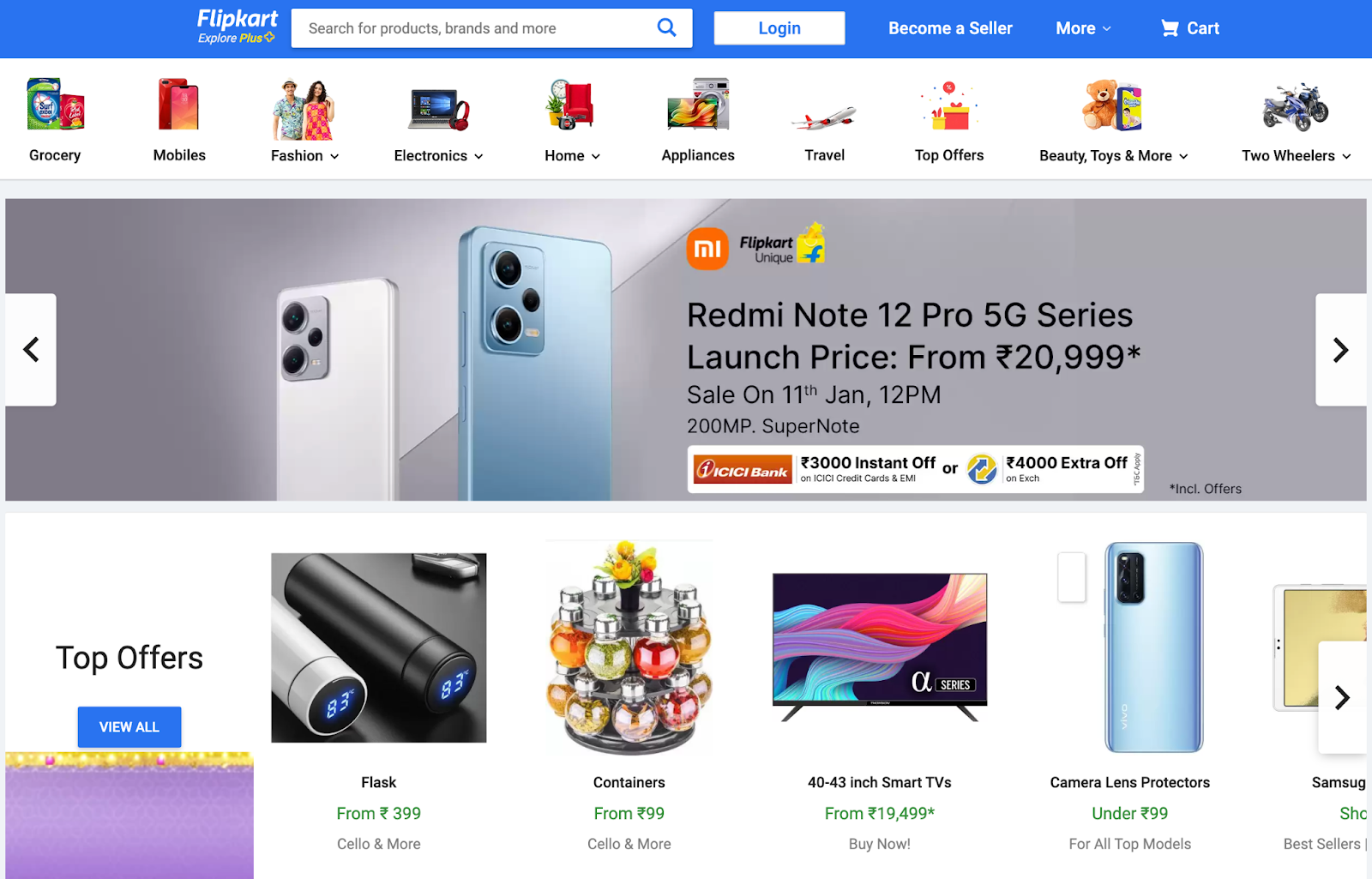
Flipkart is an ecommerce company based in Bengaluru, India, and was acquired by Walmart in 2018.
The company was founded by previous Amazon employees in October 2007, launching a proprietary product line called DigiFlip that included laptop bags and tablets and has since expanded into other product categories like furniture, grocery, travel, and beauty.
Monthly visits: 188.3 million.
Fees: Rates vary from 2.8% to 25%.
Top regions: India, United States, United Arab Emirates, United Kingdom.
Top categories: Electronics; home and kitchen; fashion; books; and health and beauty products.
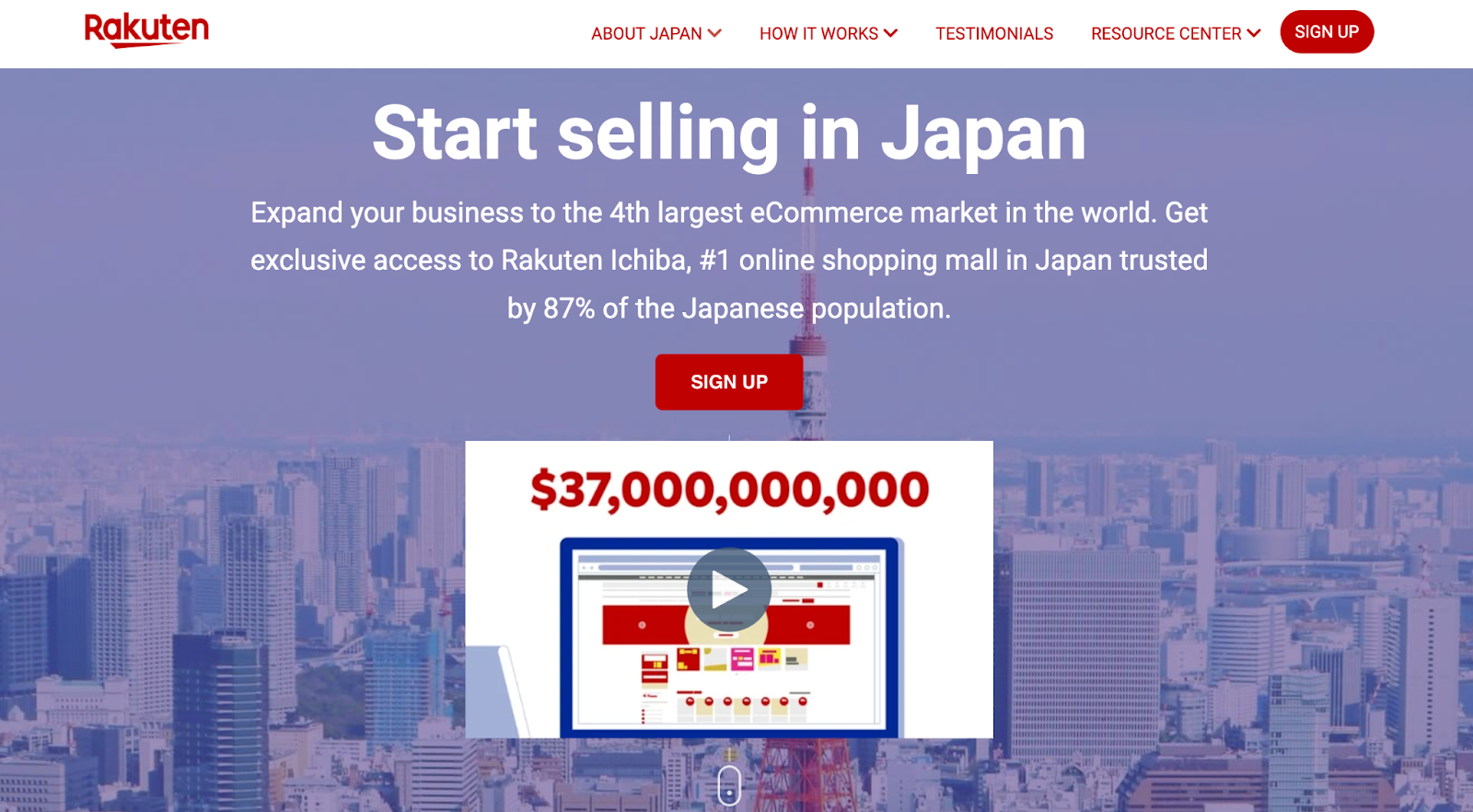
Japan-based Rakuten saw a 12% increase in gross transaction value (GTV) in Q2 2022, compared to the previous year’s second quarter, bringing in around 1.3 trillion Japanese yen. Its customer base comprises 1.6 billion members, and its products include electronics, fashion, and pet supplies.
To sell on Rakuten, merchants must apply and be approved. Brands can customize storefronts, which can help create your own brand identity on the platform and attract customers.
Monthly visits: 102.1 million.
Fees: Monthly fee, 99¢ listing fee per item, commission charge between 8% and 20%.
Top regions: United States, Japan, France, Canada, Taiwan.
Top categories: Electronics; home and outdoor; clothes and shoes; sports and fitness; bags and luggage; pet supplies.
Another North American ecommerce marketplace is Etsy. Esty mainly serves the arts and crafts community, specializing in handmade, vintage, and collector’s items. Etsy brought in over $2.48 billion in 2022, up 35% year over year.
If you’re a craft-based small business, listing products on Etsy makes a lot of sense—which is very easy to do (create an account and start recording). One caveat is that Etsy charges you a listing fee, but these fees are lower than some of the other marketplaces mentioned in this article.
Monthly visits: 566.4 million.
Fees: 6.5% transaction fee of the price displayed.
Top regions: United States, United Kingdom, Canada, Germany, France.
Top categories: Jewelry; wedding items; party supplies; vintage items; clothing; home, and living.
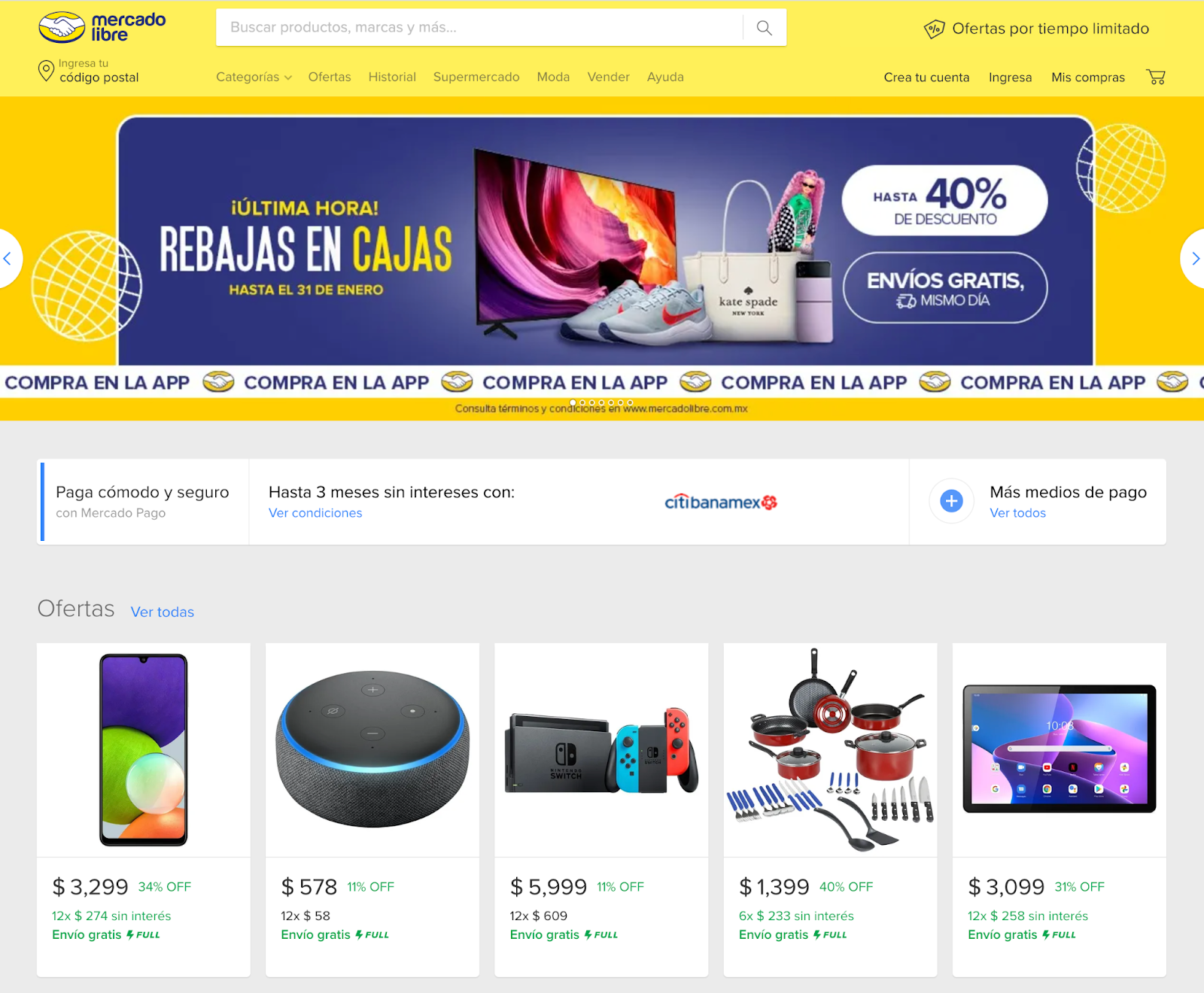
Mercado Libre is a massive online retailer and payment ecosystem in Latin America. Founded in 1999, Mercado Libre has become Amazon’s largest competitor in the country.
According to its Q3 2022 letter to shareholders, the ecommerce marketplace generated $2.7 billion in ecommerce revenue in the quarter alone, a 60.6% year-over-year increase. All three major markets posted solid gross merchandise volume (GMV) growth in the same quarter: Brazil (+20%), Argentina (+87%), and Mexico (+23%).
Monthly visits: 27.7 million.
Fees: Varies between country and category but can be upward of 16% per order.
Top regions: Argentina, Mexico, Chile, Colombia, Uruguay.
Top categories: Smartphones; home and garden; sporting goods; fashion; and electronics and accessories.
Some benefits of selling on most ecommerce marketplaces include the following:
As tempting as it might be to list your products on every single marketplace, you want to focus only on platforms that are a good fit for your products. Each marketplace has its nuances, rules, and audience, including emerging global platforms like online marketplaces that specialize in cross-border retail ecosystems.
Some might take a commission on every sale. Others might charge you a listing fee. Either way, you’ll need to weigh the costs and benefits of accessing a specific marketplace’s customers.
Here are a few characteristics of ecommerce marketplaces that will help you narrow down your choices:
Please consider whether you want to search for a more niche marketplace before going head-to-head against other vendors on big marketplaces.
With this in mind, you should better understand what you’re looking for in an ecommerce marketplace.
Advertising on marketplaces like Amazon is on the rise. Some 57% of ecommerce marketplace operators use display advertising to engage buyers through marketplaces. Each platform has its own rules and guidelines for advertising, but if you plan to pay for placement, prepare by doing the following:
It’s necessary to consider the profitability trade-off. Conduct a cost-benefit analysis of the addressable ecommerce market that ads will reach on a specific marketplace. Understanding early the level of margin you’ll accept can help maximize ad spend.
Once you have a marketplace to display your products, treat product listings like your website, showcase your brand, and introduce products how you want, consider a management platform to manage everything simultaneously if you’re selling on multiple marketplaces.
Experiment with product titles and descriptions for specific search queries. Shoppers will see your title before deciding to click on your listing. Each marketplace has its own ranking principles and SEO—test and experiments with what works best to show up for select queries.
Ecommerce marketplace algorithms boost high-performing products to the top of search engines. Products that get many great reviews and get purchased repeatedly are more likely to show up for shoppers. Your offerings also shape consumer perceptions of your brand and your global marketplace performance. Consider listing top-performing products from your store versus a brand-new style with zero traction.
“Give global customers the same visibility and courtesy you would go to local customers,” says Shelly Socol, founder of 1 Rockwell, a lead global ecommerce agency. While online selling sites may restrict certain elements like customer identities and branding opportunities, you can still create an excellent online shopping experience.
Socol recommends:
If an omnichannel brand wants to be everywhere its customers are, part of selling omnichannel includes expanding through marketplaces—often globally. Most people don’t start searching for products on Google or retail websites. They begin on ecommerce marketplaces.
As you can see, many niche marketplaces exist for ecommerce brands to sell on. These websites can help you expand your brand awareness, reach new markets, and drive retail ecommerce sales.
Shopify is an ecommerce platform. It helps merchants create and manage online stores and connect with various sales channels, including marketplaces and social media.
An example of a marketplace is Amazon. It also acts as an online platform that sells products from third-party vendors. Another example is eBay, a global online auction and shopping website.
Using a marketplace allows for greater visibility for businesses and access to additional customers. It also helps businesses increase their reach without building their ecommerce site.
The best platform depends on the product you are selling and the target audience. Amazon, eBay, and Etsy are some of the most popular ecommerce marketplaces.





