


PwC’s 2022 customer loyalty survey found that more than a quarter of respondents ditched a brand for a competitor in the past year. Why? Bad experiences with products, services, or customer support.
Losing customers is pricey. Not only do businesses have to fix the experiences that make new customers churn, but they also have to invest in replacing those customers. According to CommerceNext’s 2022 report, approximately 61% of direct-to-consumer companies called increasing customer acquisition costs their greatest challenge to achieving 2022 revenue goals.
Rising customer acquisition costs mean you can’t stop trying to build customer loyalty in eCommerce, despite the volatility of customer behavior. By creating experiences that keep customers engaged, you reduce customer acquisition costs and create a group of advocates who do much of the acquiring for you.
Customer loyalty is the act of eagerly choosing one brand over another on a consistent basis.
It’s the result of a consistently positive customer experience and the perceived value of the product or service the customer receives. In other words, it’s an indicator of how likely your existing customer base is to continue to shop your online store and recommend your brand over time.
The more loyal customers you win, the less you have to worry about acquiring new ones.
Business growth depends on customer retention and customer loyalty, but these concepts are not interchangeable. Customer retention is usually a stop on the way to customer loyalty.
Retained customers are happy to buy from you repeatedly, until a competitor offers them a better deal or a more effortless eCommerce experience. They may recommend you to a friend, but their enthusiasm for your brand only goes as far as your ability to meet an immediate need.
Loyal customers do more than buy from you repeatedly. They routinely recommend you to others and are likely to forgive you for the occasional mishap.
PwC’s survey found that 30% of customers today say they’re increasingly likely to try a new brand. Younger customers are even more brand agnostic. But if you adopt these strategies, you’re more likely to create advocates.
Brand perception and customer service go hand in hand. Multiple positive encounters with empathetic, knowledgeable, efficient agents build a solid foundation for customer loyalty.
Zendesk found that 81% of customers say “a positive customer service experience increases the likelihood they’ll make another purchase.” A negative experience does the opposite — 61% say “they would switch to a company’s competitor” after a single bad support exchange.
To make sure every support experience is as positive as possible, you should:
Actively seek feedback. Send a customer satisfaction survey after each support interaction — also on the customer’s preferred channel. If an agent’s performance is lacking, a survey can alert you to the situation before it negatively affects other customers.
When customers interact with your brand, they expect those interactions to lead to more personalized communications. McKinsey found that 71% of consumers expect personalized interactions — and 76% get frustrated when they don’t get them.
Personalization builds loyalty by giving consumers what they want, when they want it, making their lives more convenient. For example, a customer who only buys tennis shoes might not have much use for a text message containing a promotion on dress shoes. Better yet, they’d prefer receiving a promo on tennis shoes at about the time their current pair wears out.
Ways to deliver personalization:
A subscription experience is one of the best ways to increase customer loyalty in eCommerce. Today’s consumers crave convenience and cost savings — the two primary benefits of a subscription. In other words, the very nature of a subscription generates customer loyalty, as they make shoppers’ lives easier to manage.
Tips for a successful subscription model:
A customer loyalty program encourages customers to purchase more in exchange for specific rewards. These programs can enhance both a subscription and one-off eCommerce business.
Loyalty programs are either paid or free. Paid programs such as Amazon Prime are actually more likely to lead to loyalty than free ones. McKinsey found that paid loyalty program members are 60% more likely to increase spending after subscribing, which is twice as high as free programs. Paid loyalty programs also drive “higher purchase frequency, basket size, and brand affinity” than free programs.
Once you’ve chosen a paid or free loyalty program, decide how to structure your customer incentives.
Points-based loyalty program. The simplest and most popular loyalty program format — customers collect points or “bucks” as they purchase or complete certain tasks. They redeem the points for discounts, free products, or other perks.

Tiered loyalty program. A tiered loyalty program resembles a points-based one, but here the quality and quantity of rewards go up in higher tiers.
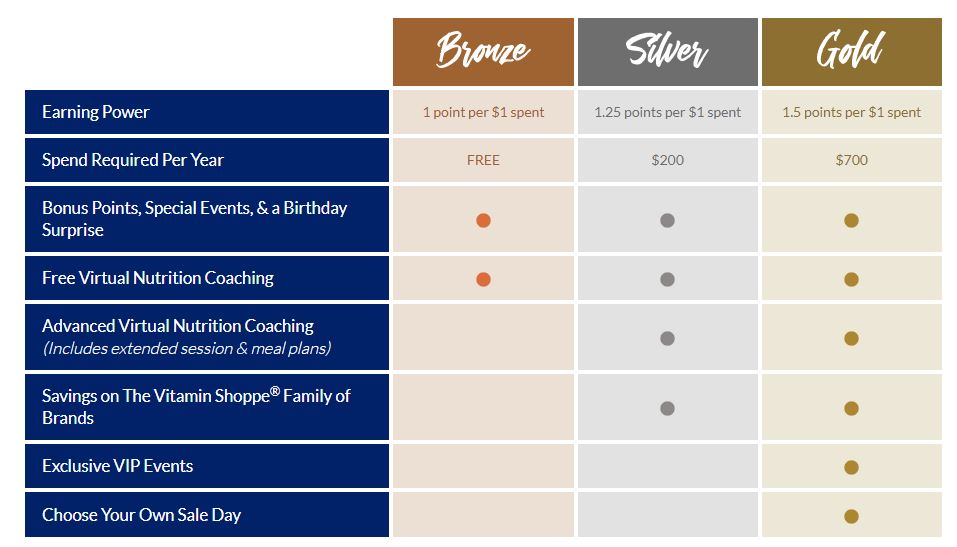
The Vitamin Shoppe, for example, requires minimum spends at the higher tiers to take advantage of the better perks.
Value-based loyalty program. Value-based programs reward customers by donating to meaningful causes. The more members spend, the more the company gives back.

TOMS gives its loyalty program members the option of redeeming their points for merchandise or for a donation to one of their “grassroots partners.”
Loyalty program tips:
Loyal customers commit to a brand for their values as much as for the quality of their products or services. According to the Havas Group’s 2021 Meaningful Brands Report, 73% of survey respondents believe brands must work for “the good of society and the planet.”
Customers will invest in brands that do more than pay lip service to social issues dominating the headlines. The same Havas Group study found that 53% of consumers are willing to spend more with brands that take a stand. However, if a brand doesn’t follow through or communicate the results of their activism, it will sacrifice that customer trust.
Tips for promoting a cause:
A well-paced, thorough onboarding makes a powerful first impression for first-time customers, laying the groundwork for customer loyalty. According to a 2021 survey from The Manifest, 46% of respondents would be more likely to increase their spending on products or services after satisfying onboarding experiences.
Onboarding isn’t just for B2B SaaS companies; eCommerce merchants with subscriptions, a loyalty program, or a deep product catalog can use onboarding to immerse customers in their brand and their benefits.
An eCommerce onboarding experience might contain these steps:
Omnichannel communication is an important loyalty driver in customer support. But it’s also critical for growing loyalty through a seamless eCommerce shopping experience.
If customers see a dress on Instagram they like, why create friction by forcing them to visit your website to make a purchase? If they have to waste time searching for the dress, that’s yet another obstacle.
According to a 2021 joint study by Meta and GroupM, nearly half of US consumers agree that “brands that reach them through social media with relevant information can earn their loyalty over time.” This information includes product announcements and any charitable initiatives.
Tips for embracing omnichannel eCommerce:
Integrate your Shopify store with Instagram and Facebook. This integration allows you to sync your products with these platforms and give customers the option to check out without leaving their feeds.

Incorporate SMS as a sales channel. Tools such as Attentive also integrate with top eCommerce platforms. Their 2021 Benchmark report found that 60% of marketers say SMS “significantly or overwhelmingly increased revenue generation.”
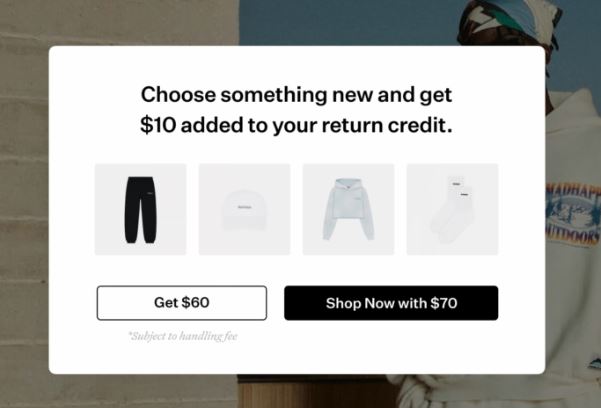
Most of the hard work of growing eCommerce customer loyalty takes place after the initial purchase. Brands that meet customer expectations on issues such as shipping and returns have an advantage over those that focus more on the pre-purchase experience.
According to a 2020 survey from ReBOUND Returns and IMRG, a quarter of shoppers think a delay in processing their return contributes to a negative experience. As negative experiences add up, the risk of churn increases.
Tips to elevate the post-purchase experience:
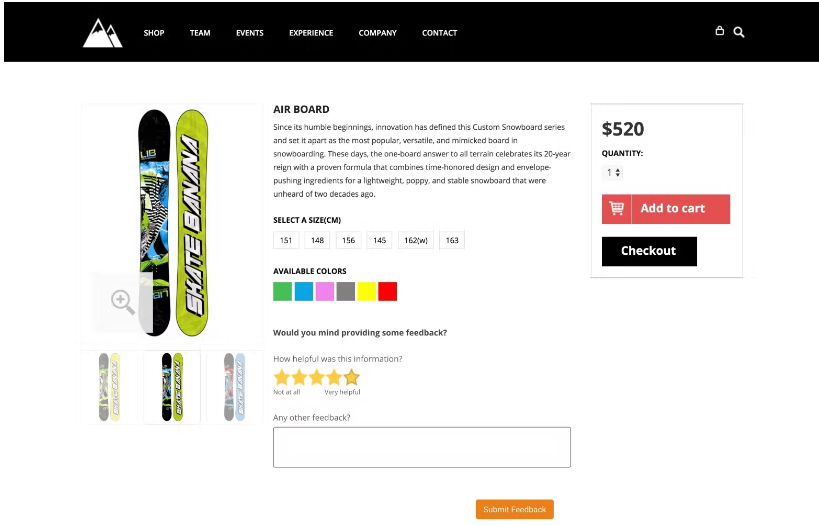
When you ask customers for feedback — and respond to it, even when negative — you give them a sense of ownership of your brand and the experience you offer. Customer loyalty is frequently the result.
According to Joana de Quintanilha, VP and principal analyst at Forrester, “Contrary to popular belief, making customers feel content, happy, or delighted impacts loyalty less than making customers feel respected, understood, valued, or confident.”
Say a customer leaves a negative review on Facebook or Yelp. Not responding can do more harm than the review itself because it sends the message that you don’t value your customers’ opinions. BrightLocal found that “89% of consumers say they would be ‘fairly’ or ‘highly’ likely to use a business that responds to all reviews, positive and negative.”
Tips for encouraging customer feedback:
One of the strongest ways to improve customer loyalty in eCommerce is by building an online community. According to Clarus Commerce’s 2022 Customer Loyalty Data Study, 22% of respondents say a “strong sense of community” encourages them to stick with a brand.
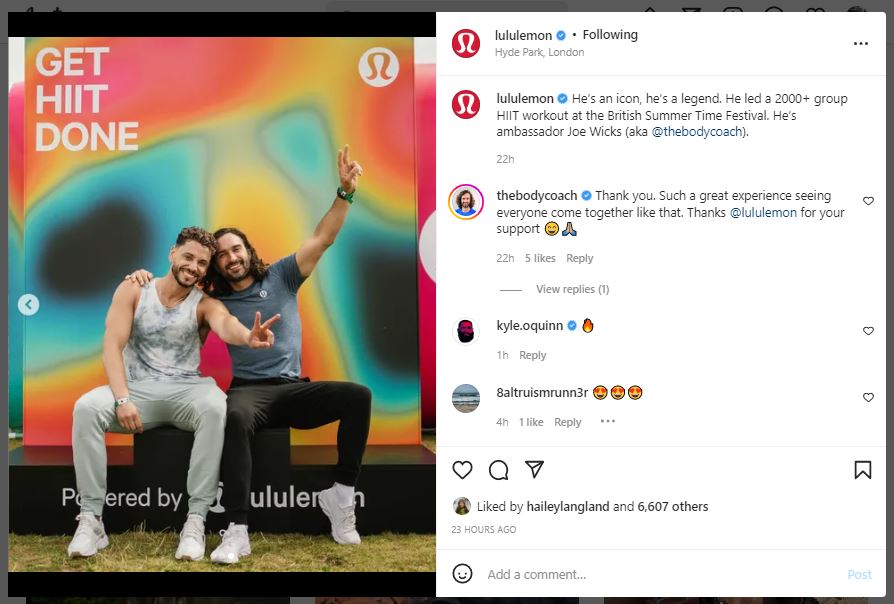
eCommerce fitness brand Lululemon partners with influencers, personal trainers, and yoga studios to build communities around their products. For example, in sponsoring and promoting an event with fitness expert Joe Wicks, Lululemon expanded their community to include his fans.
Tips for building a community:
The five metrics below will help you identify how loyal your customers are and which customer segments offer the best return on investment (ROI).
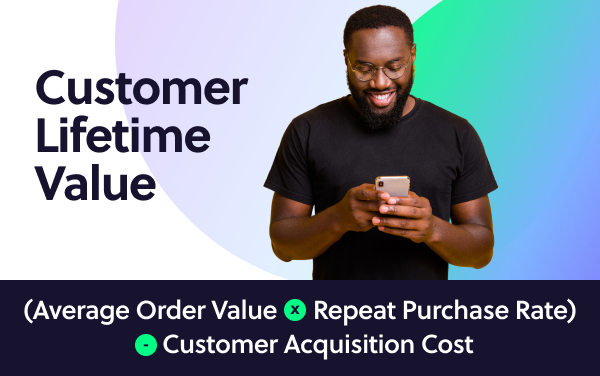
Customer lifetime value (CLV) measures the revenue you can expect to earn from a customer over the entire duration of their relationship with your business. It’s a way for brands to measure the value of a customer.
CLV is important because it helps merchants determine how much they should invest in acquiring and retaining customers. For example, if you know a customer’s CLV is $100, you know not to spend more than this to acquire and retain the shopper. Doing so might actually cost you money.
Additionally, a high customer lifetime value can be a competitive advantage. A high CLV means you can spend a greater portion of your budget to acquire customers.
While there are many ways to measure CLV, this is a common formula:
Net promoter score (NPS) measures the willingness of current customers to recommend a company’s product or service. With NPS scores, you can take a strategic approach to improving customer relationships.
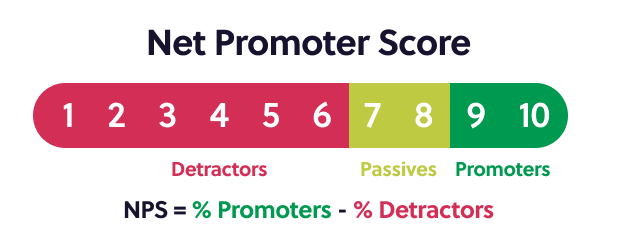
NPS scores are generated with a single-question survey that asks customers how likely they are to recommend a product, service, or organization on a scale from 0 (not at all likely) to 10 (extremely likely).
Customers are then divided into one of three categories depending on their response:
Promoters are loyal customers. Passives are satisfied customers. Detractors are unhappy customers.
Your NPS score is the percentage of promoters minus the percentage of detractors.
You should aim for an NPS of 30 or above.
Similar to NPS, CLI is a standardized metric that is derived from customer surveys. It’s used to measure the degree of brand loyalty. Unlike NPS, however, CLI asks multiple questions and focuses on repeat purchases and multiple purchases, in addition to recommendations.
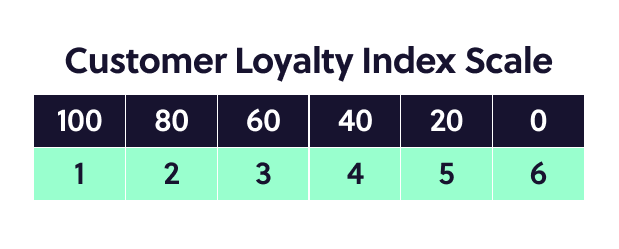
Customers are asked to answer three questions on a scale from 1 (definitely yes) to 6 (definitely no). The questions are:
A merchant’s CLI is the average score of the three questions using this scale:
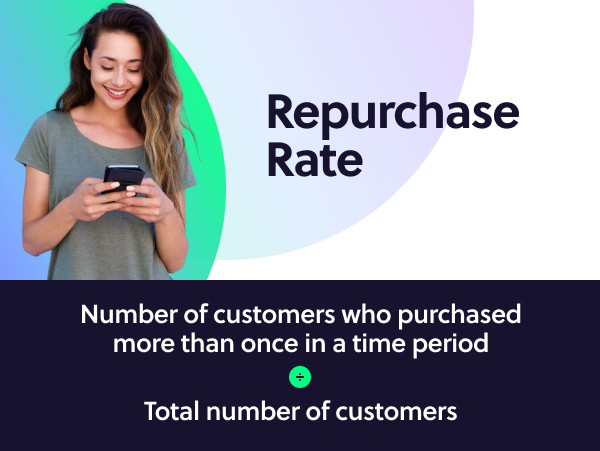
Repurchase rate is the percentage of customers who placed another order within a particular time frame. Typically, repurchase rate is calculated 30/60/90/180/360 days from first order. Also, note that multiple items purchased in a single order don’t count.
Repurchase rate is important for two reasons:
The formula:
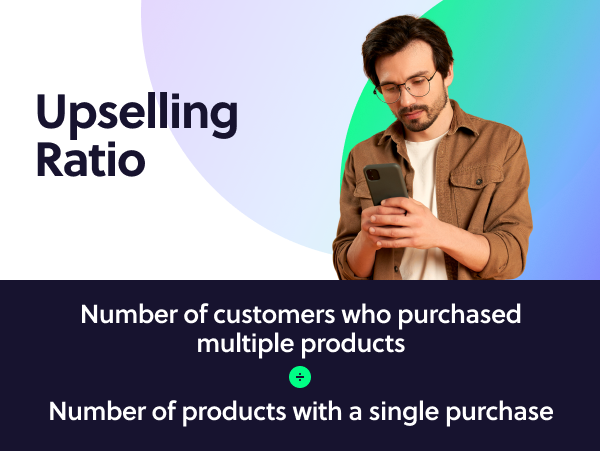
Upselling is a sales technique to get customers to increase their average order value by purchasing upgrades or premium versions of a product or service. Upselling is distinct from cross-selling, which is when a company offers customers a related product or service.
Upselling ratio is a straight-word metric. It measures how many customers are increasing their total spend with your organization. It’s a simple way to gauge customer loyalty, as customers who trust your brand and products tend to purchase more.
How to measure your upselling ratio:
Of all strategies to boost customer loyalty, the subscription model best captures what aspiring brand advocates seek. It brings together a product or service customers regularly use with the convenience and sense of community that keeps them coming back.
To determine whether a subscription model is right for your eCommerce business, click here for further insights.




