

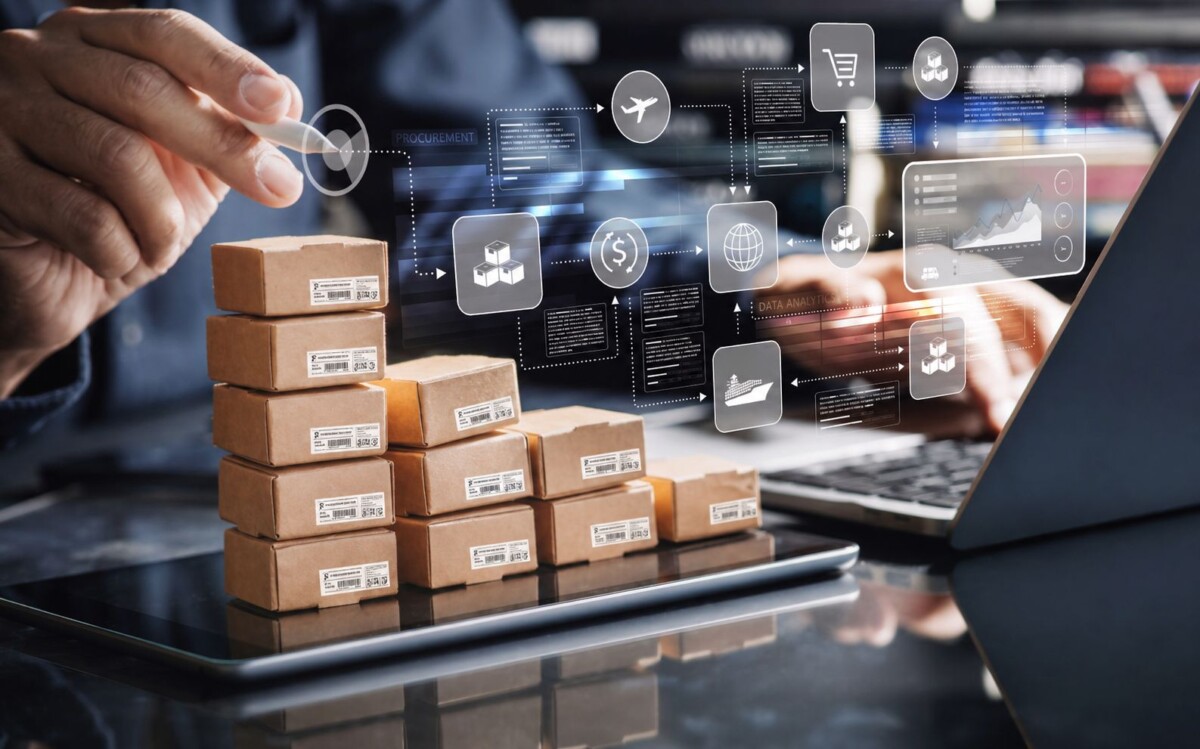
Fast delivery is not really about moving faster. It is about removing friction. The brands that win the delivery race are the ones that build systems where speed is the natural output of connected data, not a promise layered on top of a broken operation.
By Marat Bolatov, CEO & Founder, Native Commerce
Speed used to be impressive. Now it’s just expected.
A decade ago, same-day delivery felt like a premium service. Today, it is increasingly the baseline. And in some categories, even that feels slow. The shift hasn’t been gradual. It has been reset after reset, driven by a handful of companies willing to push logistics to its limits.
Fast delivery is beneficial in every aspect. It makes your customers happier, their experience more convenient, and ultimately brings your business more profit. In this article, I take a closer look at companies that have successfully introduced ultra-fast delivery, explore the work done behind the scenes to achieve it, and explain what you can do to make it work.
In March 2026, Amazon introduced 1-hour and 3-hour delivery options in some parts of the US. Customers can now get over 90,000 products almost immediately. This raises the bar even higher for e-commerce businesses. Amazon was one of the first to introduce same-day delivery. Now it’s almost a standard. Large services like Walmart, eBay, and Royal Mail offer this option for an additional fee.
In the UK, Sainsbury’s has axed its Chop Chop rapid delivery app. Jim Banks, Head of Experience Design at Sainsbury’s, wrote in a LinkedIn post: “Chop Chop is dead. Long live Chop Chop!” The company decided to integrate the service into its main app to make things faster.
Among other major players is the Chinese platform Joybuy, which offers categories like electronics, appliances, beauty, and groceries. The company provides same-day and next-day delivery from local warehouses and is now rivalling Amazon in the UK.
All these efforts to speed up delivery have brought companies more revenue and happier customers. Previously, Amazon CEO Andy Jassy shared that faster shipping helped the company increase its revenue.
And it’s no surprise. A decade ago, McKinsey & Company found in its research that 25% of customers were willing to pay extra for same-day delivery. They also noted: “This share is likely to increase, given that younger consumers are more inclined (just over 30 per cent) to choose same-day and instant delivery over regular delivery.”
According to various sources, this number has now doubled. These days, between 40 and 50% are willing to pay for rapid delivery.
A couple of combined efforts can help a business reduce delivery time. The first is inventory storage. Many companies have started picking up orders directly from physical stores, so couriers don’t need to go to warehouses, which are usually located outside the city. ASOS, Zara, John Lewis, Boots, and other brands already fulfil orders from stores. This significantly optimises the process, but also requires clear structure, a good understanding of resources, and well-aligned data. Because constantly using a shop to fulfil online orders can harm the in-store customer experience and lead to stock issues.
To avoid this, many retailers are opening dark stores and micro-fulfilment centres. These are much smaller than traditional warehouses but are replenished as needed. They are usually highly automated and can pick orders within an hour.
Fast delivery is not really about moving faster. It is about removing friction.
Micro-warehouses mark a major shift in delivery. They are increasingly filling cities. The global micro-fulfilment market is expected to reach an estimated $15.2 billion by 2030. Small retailers who can’t afford to spread their micro centres around cities tend to partner with local 3PL operators and get access to their hubs.
The next thing you can do is optimise delivery routes. It’s a complex task that includes handling lots of data about addresses, stop priorities, service durations, driver availability, vehicle capacity, road constraints, customer preferences, and other factors.
To deal with this amount of information, retailers rely on AI. If chosen correctly, it can analyse all the data and ultimately choose the fastest route and adapt it if needed.
There are also additional benefits to route optimisation. It saves money and reduces emissions.
Back in the 2010s, UPS implemented route optimisation software. The goal was to reduce fuel consumption and minimise emissions. It was a multi-stage process that took several years, but in the end, the company managed to cut costs significantly and simplify the delivery process.
Business analyst Dursun Delen wrote in 2019 that with the new software, UPS would save about 100 million miles per year. “That’s a reduction of 10 million gallons of fuel consumed. It also reduces carbon dioxide emissions by about 100,000 metric tons. Initial results show miles reduced with each route using ORION; a reduction of just one mile per driver per day over one year can save UPS up to $50 million.”
Today’s AI capabilities and computing power have accelerated optimisation even further. Instead of calculating routes once a day, modern systems continuously update them using real-time data such as traffic conditions, weather, and new delivery requests.
UPS also integrated dynamic optimisation in 2021. This reduced drivers’ routes by an average of two to four miles each (on top of the previous reduction of eight miles per driver).
To make all of this work, data needs to be connected across systems, including information about inventory and orders, as well as delivery and customer touchpoints. Many businesses invest in integrated systems to keep this data consistent and usable in real time. We at The Native Commerce help our partners unify data flows, integrate channels, and build the infrastructure needed for faster, data-driven delivery operations.
Speed puts pressure on everything.
It exposes weak points in systems that were never designed to operate in real time. Inventory data falls out of sync. Orders get delayed between systems. Costs rise as complexity increases.
Many retailers try to add speed on top of what they already have. They introduce new delivery options, faster couriers, or more promises at checkout.
But speed does not layer well. It forces a rethink of how everything works together. E-commerce, inventory, warehouses, delivery, and customer experience all need to be aligned. Without that, faster delivery can actually make operations less efficient rather than more.
The next phase of delivery will not be defined by a single model.
Three delivery models are likely to shape the future of last-mile logistics: autonomous ground vehicles paired with parcel lockers, drones, and bike or cargo couriers. Which model wins in any given area will largely depend on population density. Urban centres with high drop density favour bikes and robots; suburban and rural areas, where longer distances inflate per-delivery costs, are better suited to drones and autonomous vehicles.
On the ground, parcel lockers are already expanding fast. The automated parcel delivery terminals market is projected to grow from $318.8 million in 2025 to $824.9 million by 2035. The efficiency case is compelling: a courier delivering to lockers can process up to 150 packages per hour, compared to 15-30 per hour for home deliveries.
Autonomous ground vehicles are moving from pilots toward commercial deployment. Starship Technologies, according to GlobeNewswire, already operates fleets of delivery robots, handling food, groceries, and parcel deliveries in short-radius urban areas. Last year, in November 2025, WeRide and Uber launched the Middle East’s first driverless robotaxi in Abu Dhabi.
This trend will only continue to expand. According to Astute Analytica, the global autonomous last-mile delivery market is expected to reach $185.30 billion by 2033, growing at a CAGR of 22.4%.
In the air, drone delivery is already beyond the pilot stage. Walmart is expanding its drone delivery coverage with Wing to 150 U.S. stores by 2026, reaching more than 40 million potential customers near those locations, Supply Chain Dive writes. The plan is to expand further to over 270 Walmart locations in 2027. Walmart has roughly 4,600 store locations across the U.S.
“Drone delivery plays an important role in our ability to deliver what customers want, exactly when they want it. Whether it’s a last-minute ingredient for dinner or a late-night essential for a busy family, the strong adoption we’ve seen confirms that this is the future of convenience”, said Greg Cathey, Senior Vice President of Digital Fulfillment Transformation at Walmart.
“By expanding drone delivery to new major metro areas, we are helping more customers solve their last-minute needs faster than ever before,” he told RetailTechInnovationHub.
The Times reports that the value of business-to-consumer goods delivered by drone will hit $65 billion in 2034, up from $251 million in 2024.
But speed alone won’t be enough to stand out. According to a 2025 McKinsey survey, more than 90 per cent of consumers say they are likely to abandon an online purchase if they learn it will involve high shipping costs.
So the challenge isn’t just to make delivery faster, but also to make it cheaper by reducing costs. And, as we can see from the experience of many companies, this is possible. Data integration is the key to this. If a system knows everything that’s happening and has a strong backend to support that layer of data, optimisation can be both successful and profitable.
The delivery race is not really about who moves fastest. It is about building systems that make speed possible and sustainable.
At Native Commerce, we offer a comprehensive solution for modern retailers on a single platform designed specifically for them. It’s built to tackle today’s challenges, from managing complex inventory to handling huge volumes of orders or running an online store in any industry.
Author:
Marat Bolatov is the CEO and founder of Native Commerce, a London-based eCommerce platform working with retailers across the UK, EU, and MENA. Under his leadership, the company grew from a 15-minute delivery app into a full-stack eCommerce platform now powering major retailers like Carrefour, Circle K, and others.




