

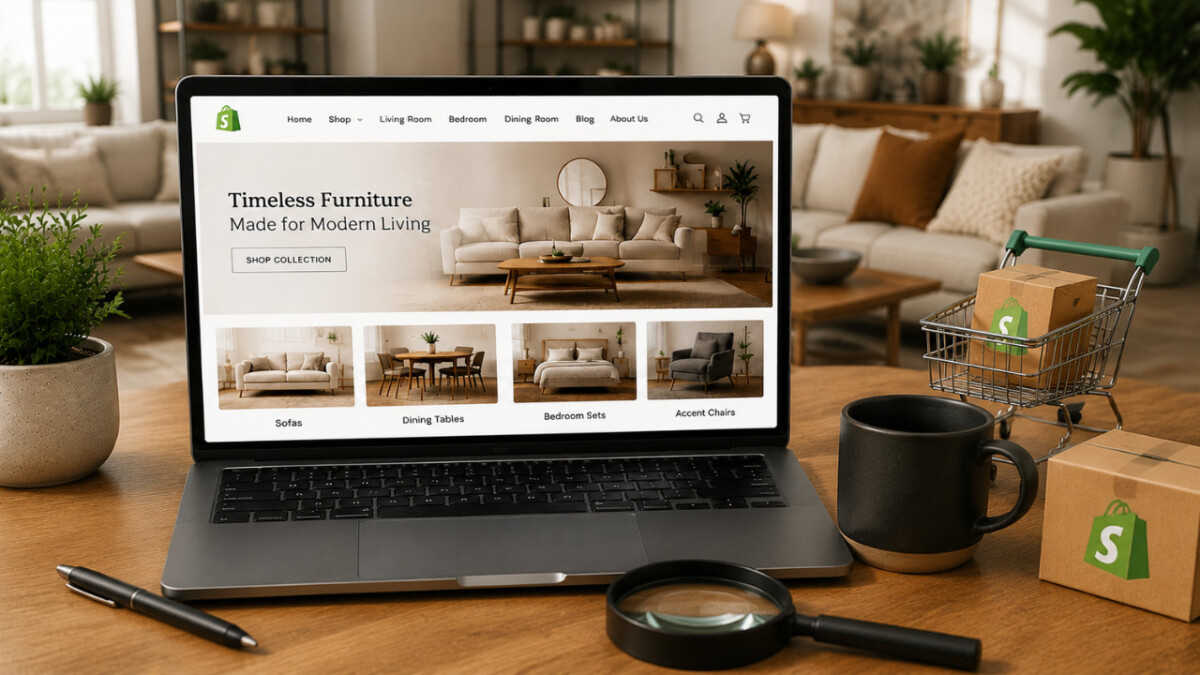
Shopify furniture brands usually struggle in search not because their stores look bad, but because duplicate URLs, weak collection and product content, heavy images, and poor internal linking quietly block the pages that should be ranking.
Attractive furniture stores rarely lose search because of aesthetics; they lose it because search engines see a maze of duplicate URLs, thin category pages, and slow product templates hiding beneath the design.
A furniture store can do everything right on the surface and still lose the searches that matter most.
You have the product photography, the theme, the collections in place, and shoppers who land buy. The trouble is that too few of them ever land at all. The store barely shows up when people search for the exact pieces you sell, and that gap sits behind most furniture store SEO struggles. The reason rarely comes down to how the site looks. It comes down to what search engines can read, index and trust underneath the design. Closing that gap is what a focused furniture store SEO strategy is built to do.
Furniture is also a considered purchase. People compare, measure their rooms, and come back days later before buying, so the store has to stay visible across dozens of those searches, not just the branded query from someone who already knows you.
Across furniture store audits, the same problems surface again and again. None are obvious from the front end, yet each one quietly holds rankings and organic traffic back while the site looks perfectly healthy. Five do the most damage.
The most common issue in Shopify furniture SEO is duplicate content the store creates by itself. When one product sits in several collections, and filtered or tag pages spin up their own URLs, you end up with many near-identical versions of the same page. A single armchair listed under Armchairs, Living Room and New Arrivals can produce three or four indexable addresses competing for the same term.
Google then guesses which one to rank, often picking the wrong version or splitting the value across all of them. The real fix is technical: canonical tags pointing to the correct page, and clear rules about which filtered and tag pages get indexed.
Collection pages are the biggest ranking opportunity most furniture stores waste. A page built around a term like oak dining tables or modular sofas can rank for real buying intent, but only when it reads like a proper page rather than a wall of thumbnails. A few hundred words of genuine buying guidance near the top consistently outperform an empty product grid. Explain how to choose and which materials suit which room, and link each collection to its closest sub-collections so shoppers never hit a dead end.
Product page SEO usually breaks on one habit: using the manufacturer’s description word for word. When dozens of retailers sell the same sofa with the same copy, that text helps none of them rank.
A product page has to offer what the others do not: full specifications, dimensions, materials, care and delivery detail, and a title written the way people search, not an internal product code. Original photography and a few honest lines about the piece beat any spun rewrite of supplier copy.
Furniture stores lean on large, detailed images, and those images are usually the single biggest drag on load speed. A product page carrying eight or ten uncompressed shots gets heavy fast. Slow pages lose buyers before the product appears, and because furniture carries high order values, every early exit is an expensive loss.
Serve images in modern formats like WebP, compress and size each one, lazy-load below the fold, add descriptive alt text, and audit apps that load code on every page.
The last hidden problem is the gap between blog content and commercial pages. Furniture brands publish helpful articles on styling a room or choosing a mattress, then never link them to the collections and products they describe.
Internal links are how ranking strength moves from an article to the page you want ranking, and descriptive anchor text tells Google what it is about. A styling guide that links to the exact sofa range it describes lifts that range.
None of these shows up in a design review, which is exactly why they persist. A store can be rebuilt twice and still carry every one of them, because they live in the structure and the content, not the look. The stores that break out of a ranking plateau are rarely the ones with the newest theme; they are the ones that fixed the foundations underneath.
That work is detailed and technical, which is why plenty of furniture brands bring in specialist SEO support rather than guess at it. And it compounds: a clean structure helps new pages rank faster, and faster pages convert better.
Attractive design keeps people on the page, but it does not get them there. For Shopify furniture brands, the gap between a store that grows through search and one that stays flat comes down to these hidden issues: duplicate content, weak collection pages, thin product pages, slow load times, and content that never links back to what sells. Work through them in order and the gains compound. The stores winning in search are not the prettiest ones; they are the ones search engines can genuinely understand.
Design is not a ranking factor. A good-looking store can lose to plainer competitors with cleaner technical SEO and faster pages, because the problems are structural, not visual.
Products in multiple collections, filtered URLs and tag pages create near-identical versions of the same page. Without canonical tags telling Google which is the main one, ranking value gets split between the duplicates.
Treat each collection page as a landing page, not a product grid. Add a few hundred words of buying guidance near the top, target one clear category term, and link to your strongest related products.
Yes. Slow pages lose visitors before they see the product, and because furniture orders are high in value, each lost visitor costs more. Compressing images and trimming apps recover that speed fastest.
No. When many retailers publish the same supplier copy, it does nothing for anyone’s rankings. Original descriptions with full specifications, materials and search-friendly titles give your pages a reason to rank.
Most stores start seeing rankings improve within three to four months once the foundations are fixed, with sales growth usually following through six to twelve months. Larger catalogues take longer but hold their gains.
For long-term traffic, SEO wins because the work keeps earning after it is done, while ads stop the moment the budget does. Paid ads still help for launches and sales, but they work best supporting organic growth.





