

25th
July, 2025
E-commerce has transformed from a niche experiment into a multi-trillion dollar force driving modern retail. For entrepreneurs and Amazon sellers, the barrier to starting an online business has never been lower – you can reach global customers 24/7, often with just a laptop and an idea. This comprehensive guide will walk you through everything you need to know to build a successful e-commerce business in 2025, including choosing a business model, setting up your online store, marketing effectively (with a focus on micro-influencers, content creators and UGC), and leveraging platforms like Amazon. By the end, you’ll have a blueprint to launch, scale, and grow your e-commerce venture in today’s competitive digital marketplace.
E-commerce (electronic commerce) refers to buying and selling goods or services using the internet, and the transfer of money and data to execute these transactions. In simple terms, any commercial transaction conducted online is part of e-commerce. This encompasses a wide variety of businesses and models, from retail giants selling physical products, to individuals offering digital downloads or services via a website.
It’s important to clarify e-commerce vs. e-business. Strictly speaking, e-commerce focuses on the transaction of products and services online, whereas an e-business refers to the entirety of running an online business – not just sales, but also marketing, customer service, etc.. In practice, when people talk about an “e-commerce business,” they usually mean an online business involved in selling something.
Virtually anything. Common categories include:
In short, if it can be sold, it likely can be sold online. The explosion of e-commerce over the past two decades means consumers are comfortable buying everything from groceries to cars on the internet.
Starting an e-commerce business in 2025 is an exciting opportunity. The growth of online commerce has been astounding – and it’s still accelerating. Over 2.77 billion people (about one-third of the world’s population) now shop online as of 2025, and retail e-commerce sales will exceed $6.8 trillion in 2025 (up ~8% from 2024). In fact, more than 21% of all retail purchases worldwide are now happening online, a figure that keeps rising each year.
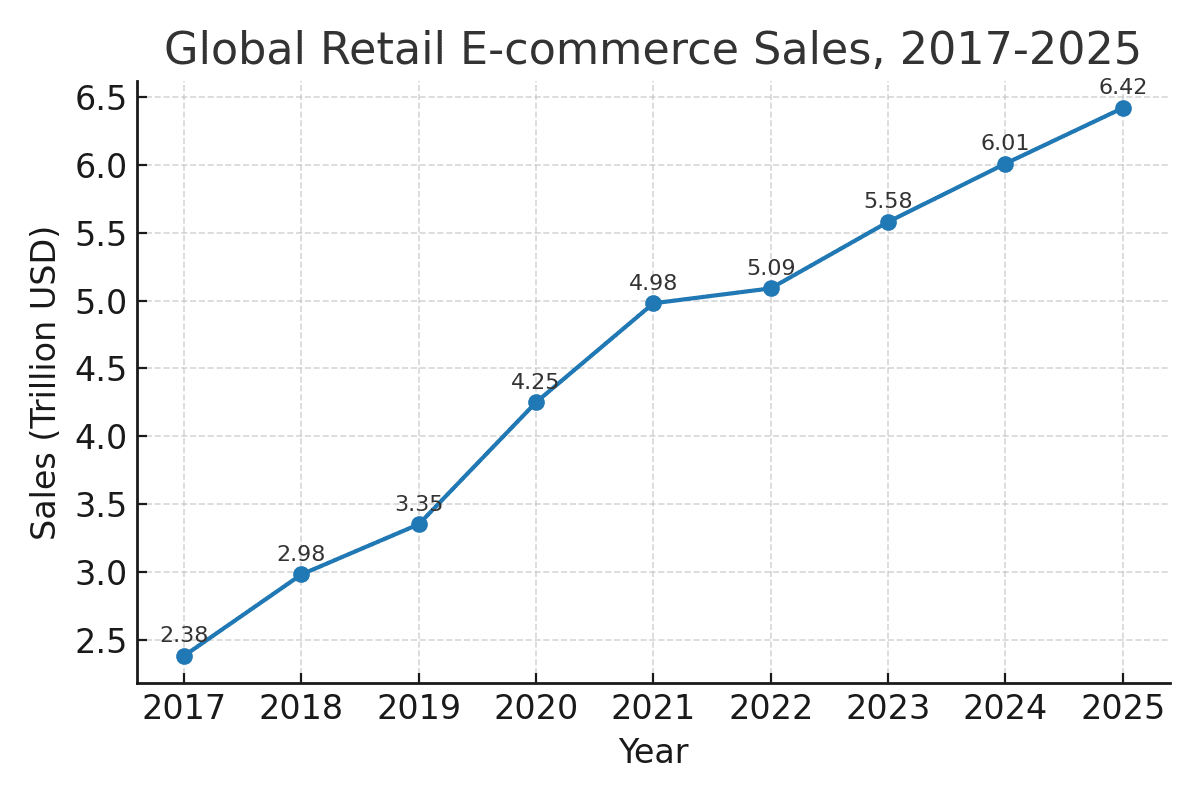
Global retail e-commerce sales have risen dramatically in the past several years, from around $2.4 trillion in 2017 to over $6 trillion in 2024. In 2025, online sales are on pace to approach $6.5–6.8 trillion (roughly 20-21% of total retail worldwide). This rapid growth underscores the tremendous opportunity for new e-commerce entrepreneurs entering the market.
Why is e-commerce so attractive for entrepreneurs and creators? Here are a few key benefits and advantages of an online business:
Finally, it’s worth noting that consumer behavior has permanently shifted toward e-commerce. The COVID-19 pandemic accelerated online shopping adoption by an estimated 5 years in growth. People of all ages are now comfortable buying online, and technologies like mobile apps and voice assistants make it even easier. In short, the customers are already online – meeting them there with your business is often the smartest move you can make as a seller in 2025.
Not all e-commerce businesses are alike. It’s important to understand the different models of online business, because the strategies for success and operational considerations can differ for each. E-commerce models are often categorized by who is selling to whom:
Understanding which category your business fits in will influence your approach. Most new e-commerce entrepreneurs start in B2C, since you can directly reach consumers by launching a website or Amazon store. B2B can also be lucrative if you have a product that businesses need – but expect more complex requirements (like invoices, bulk shipping logistics, or even integration with clients’ procurement systems). Meanwhile, if you’re an influencer or content creator, you might find yourself dabbling in C2B (monetizing your content to brands) alongside a traditional B2C shop.
In addition to “who you sell to,” another way to classify e-commerce businesses is how you source, stock, and sell your products. Your revenue model or fulfillment strategy is essentially how you plan to provide products to your customers and make money. You’ll want to choose a model that fits your resources, budget, and risk tolerance. Here are some of the most popular e-commerce models:
Many e-commerce businesses actually blend models. You might start with dropshipping to test products, then invest in inventory for the best-sellers (moving to wholesale model), then perhaps launch a private-label version of a successful generic product. Or you might both sell products and have affiliate income on the side. There’s no single “right” model – choose what aligns with your resources and market opportunity.
Pro Tip: If you’re not sure which model to start with, consider your risk tolerance and capital. Low capital and low risk? Dropshipping or print-on-demand might be safest. Willing to invest more for potentially higher margins? Private label or wholesale could work. Want recurring revenue? Think subscription. The good news is that with e-commerce, you can pivot and adjust your model as you learn more about what works for your business.
Starting an e-commerce business can feel overwhelming – but it becomes manageable if you break it into clear steps. Below is a step-by-step roadmap to go from idea to launch:
Every successful business starts with selling something people want. Finding the right product (or service) and niche is arguably the most important step. With millions of products already out there, you’ll need to do some research and creative thinking. Here’s how to approach it:
In summary, brainstorm ideas, research thoroughly, and narrow down to a niche + product with demand and profit potential. Don’t skip this validation stage – it can save you from investing in the wrong inventory. It’s okay if your first idea isn’t “the one” – keep researching until you feel confident.
Before you rush to build a website, take a moment to outline a simple business plan. This doesn’t have to be a formal 50-page document. It can be a one-page Lean Canvas or just notes, but it should cover key points:
Writing this plan forces you to think through the business holistically. It will highlight any glaring issues (e.g., you might realize shipping heavy furniture internationally is not feasible without raising prices, etc.).
Remember, a business plan is a living document – you can and should adjust it as you learn more. But starting with a plan vastly improves your odds of success versus winging it.
Now it’s time to build your online presence so customers can find and buy your product. You have two main routes here: sell on an established marketplace (like Amazon, Etsy, eBay) or create your own online store (using a platform like Shopify, WooCommerce, etc.). Many businesses do both eventually, but as a start, consider which suits your product and strategy:
You can choose one or both approaches. For instance, some entrepreneurs start on Amazon to validate the product (fast traffic) and later launch their own branded site to diversify sales. Conversely, some start on their own site to build a brand identity, then expand to marketplaces to reach more customers. There’s no wrong answer – just align with your business goals.
Setting up your store involves a few key steps:
At this point, you should have a functioning online store or live product listings. Congratulations – you’re officially open for business! But as they say, “if you build it, they won’t necessarily come” – now you need to focus on getting customers.
With your e-commerce store ready, marketing is the make-or-break factor for success. “Build it and they will come” does not apply in e-commerce – you have to proactively drive traffic and attract shoppers. In this section, we’ll cover the core marketing strategies to get visitors and convert them into buyers:
SEO means optimizing your website (or marketplace listings) to rank higher in search engine results (primarily Google, and also Bing). When someone searches for “best gaming chair” or “handmade soap gift set,” you want your site or product to appear on page 1 if possible. SEO is a long-term strategy and can take time to show results, but it pays off with “free” organic traffic.
Billions of people use social media daily – platforms like Instagram, Facebook, TikTok, Pinterest, YouTube, and Twitter are fertile ground for showcasing your products and brand personality. Social media marketing can generate both brand awareness and direct sales, especially for visually appealing products or niches with active communities.
The main goal of social media is to create a buzz and connection with your audience. It often takes time to grow followers, but a single viral post or strong influencer collaboration can also spike sales dramatically. Which brings us to a major strategy for 2025: micro-influencer marketing, detailed in the next section.
While SEO and organic social media are often “free” (aside from your time and maybe content creation costs), paid ads can drive traffic quickly by putting your promotions in front of targeted audiences. The most common forms for e-commerce are:
Starting with paid ads, a good approach is to set a modest budget and experiment. Even $5-$10 a day on Facebook/Instagram ads to test an audience can yield data. Watch the metrics: click-through rates, cost per click, and importantly the conversion rate once they land on your site. If you spend $50 on ads and get $200 in sales, that’s a success. If you spend $50 and get $0, tweak either the audience targeting, the ad creative, or perhaps your landing page (maybe the page didn’t convince them).
Beyond immediate sales tactics, think about content marketing and email to nurture potential customers over time:
Some standard email sequences to set up: a welcome series (when someone signs up or makes their first purchase, send a series of 2-3 emails welcoming them, sharing your brand story, and perhaps recommending popular products), and an abandoned cart email (if someone adds to cart but doesn’t check out, trigger an email after a few hours reminding them – this can recover a lot of otherwise lost sales).
One of the most impactful ways to market your e-commerce business in 2025 is through influencer marketing – specifically working with micro-influencers and content creators to promote your brand. Simultaneously, tapping into user-generated content (UGC) from everyday customers can dramatically boost trust and conversions. Let’s break down why these are game-changers and how to do it effectively:
You’ve likely heard of influencers on social media – people with large followings who partner with brands. While mega-celebrities and top YouTubers have massive reach, there’s a growing body of evidence that “smaller” influencers often drive better results for e-commerce brands. Micro-influencers are generally defined as those with roughly 10,000 to 100,000 followers (tiers vary, with nano-influencers even smaller at 1k-10k). They may not be famous, but they have highly engaged audiences in specific niches.
Here’s why micro-influencers are so powerful for online sellers:
To leverage micro-influencers for your store, consider these steps:
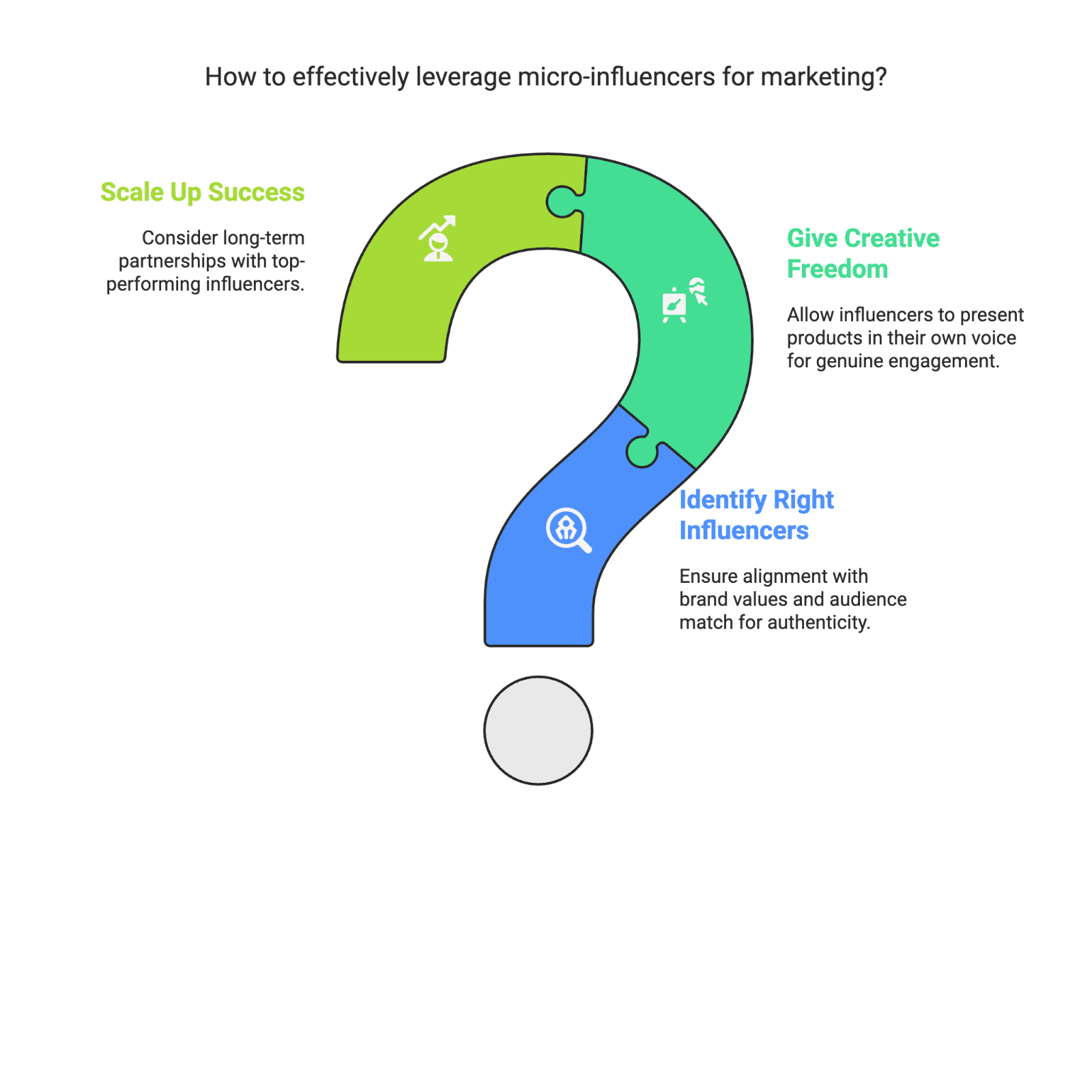
Real-world example: A small fitness apparel brand might send free outfits to 20 micro-influencers who post workout content on Instagram/TikTok. Each posts a workout video wearing the outfit, mentioning the brand with a discount code. Collectively, those posts reach tens of thousands of targeted viewers and drive traffic to the brand’s site. The authentic fitness context and peer-like advice “I love these leggings, they actually stay up during my run!” is more convincing than any polished ad the brand could have made.
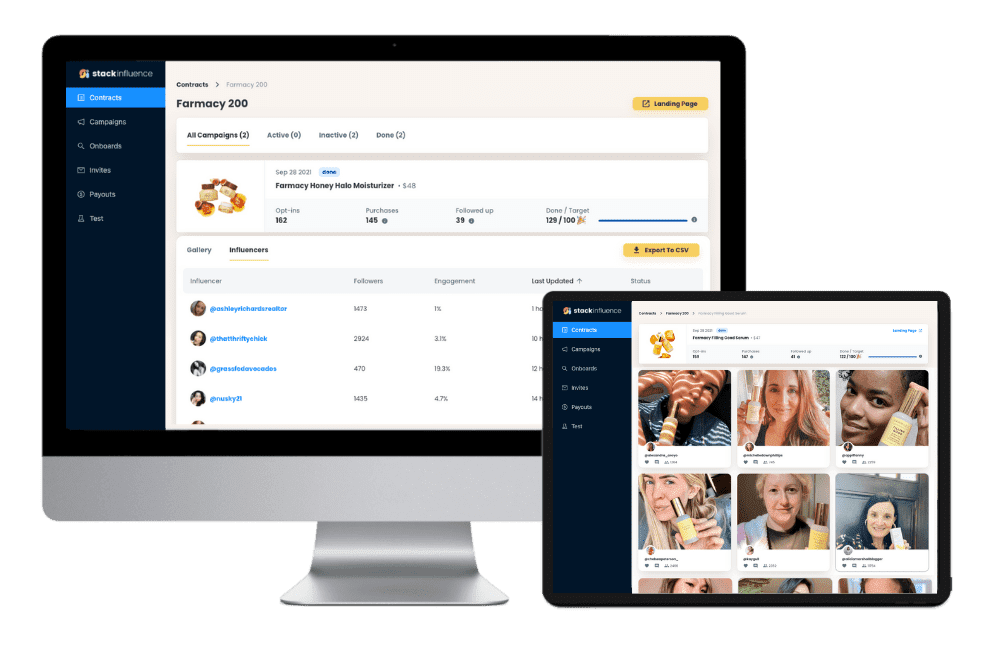
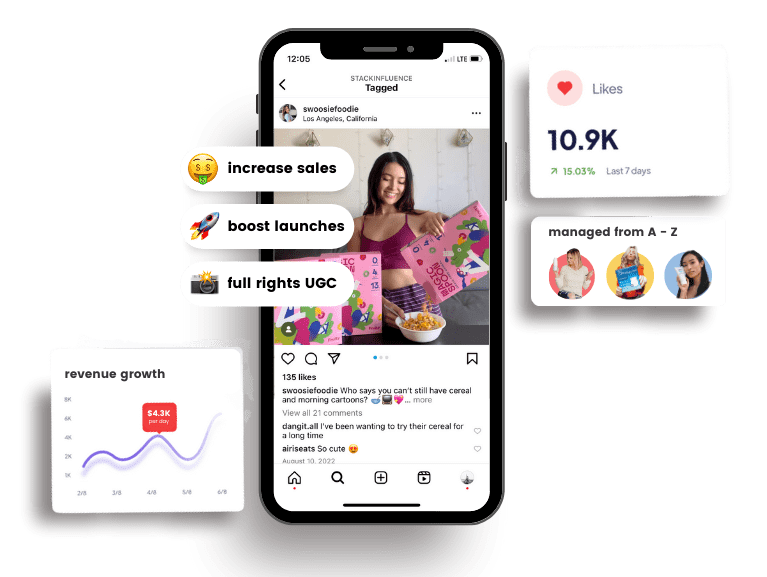
It’s worth mentioning platforms like Stack Influence can simplify running micro-influencer campaigns. These platforms connect brands with networks of vetted micro-influencers at scale. For instance, Stack Influence is a leading micro-influencer marketing platform that helps e-commerce brands automate product seeding campaigns and scale up authentic word-of-mouth marketing. In such platforms, you might specify your target demographics and campaign goals, and they handle matching you with a batch of creators who then receive your product and post content. This can save you time if you want to run larger campaigns without manual outreach to dozens of individuals. As an e-commerce seller, it’s a resource worth exploring to boost your brand awareness and UGC content.
We touched on marketplaces earlier, but given Amazon’s dominance in e-commerce, it’s worth discussing how to succeed as an Amazon seller (or on similar platforms like eBay, Etsy, Walmart Marketplace). Many e-commerce entrepreneurs either start on Amazon or eventually expand there, because of the vast customer reach. Here are some key considerations:
Selling on marketplaces can be highly lucrative due to the sheer volume of shoppers – some entrepreneurs have built million-dollar businesses primarily on Amazon. But remember, you are also building Amazon’s customer base, not your own, when all sales go through them. That’s why a dual strategy is wise: leverage marketplaces for reach and sales, but also nurture your own direct brand (via your website or social channels) so you’re not 100% dependent on any single platform.
Many brands find a synergy where Amazon is one sales channel (often the biggest in revenue), and their own site is another, and perhaps retail or other channels as well – a true omnichannel approach. The key is consistency in brand and product quality across all channels.
Choosing the right platform(s) is half the battle. The other half is how you execute your selling strategy. As a wrap-up, here are some essential tips for small businesses and first-time sellers to thrive in the online marketplace:
Even if you primarily sell on a marketplace like Amazon or Etsy, you can drive extra traffic and sales by promoting on social channels. Create business accounts on platforms like Instagram, Facebook, or TikTok to showcase your products in use. Micro influencers can be a cost-effective way to get the word out – they create content and reviews that expose your product to niche audiences. Many micro influencers will collaborate in exchange for a free product, which is budget-friendly for new businesses. The content they produce (photos, unboxing videos, tutorials, etc.) can also be reused in your own marketing (with permission). This approach builds social proof and can even improve your listing conversion rates – for example, an Amazon listing with great review photos or a video of someone enthusiastically using the product can significantly boost trust.
When selling online, always keep an eye on the fee structures and adjust your pricing accordingly. Calculate the landed cost of your product (product cost + shipping + marketplace fees + taxes, etc.) to ensure you’re making a profit. Small businesses can’t always compete on price with big-box sellers, but you also don’t want to inadvertently lose money on each sale because fees ate the margin. If your product is premium and priced higher, make sure to communicate its value through your listing and marketing.
Positive reviews help build trust on any platform. Encourage satisfied customers to leave reviews (many platforms send automated follow-ups, but a polite request in your insert or thank-you email can help). When you get great feedback, show it off. If it’s on your own site, highlight testimonials on your homepage. If it’s on Etsy, pin it in your shop announcements or share on social media (maybe create a cute graphic of a customer review). Today’s shoppers heavily rely on social proof, and user-generated content like reviews, unboxing photos, or customer Instagram tags can do the selling for you.
The online market is always evolving. New features roll out (e.g., new ad types on Amazon, or algorithm changes on Etsy), trends change (remember when fidget spinners were all the rage?), and consumer habits shift. Be ready to learn and pivot. Follow e-commerce blogs or YouTube channels that share the latest tips for sellers. Join communities (Facebook groups, subreddits, etc.) relevant to your platform for peer advice. The more you stay informed, the quicker you can adapt and stay ahead of the curve.
Remember that building a thriving online business takes time and persistence. You might hit a slow sales week or face an unexpected issue (like an ad account suspension or a supply chain delay). The entrepreneurs who succeed are the ones who keep learning and keep going. Use the wealth of online communities (e.g., e-commerce seller forums, subreddits, Facebook groups) to ask questions and share experiences – the e-commerce community is vast and often very supportive.
Finally, celebrate the small wins. That first sale to a stranger (not just your friend or mom) is a huge milestone. Then your 100th sale, your first $1,000 month, and so on. Each is proof that you’re offering something people find valuable. Double down on that value, continue to optimize, and your business will grow.
Here’s to your success in the exciting world of e-commerce! With the knowledge from this guide and your own creativity and drive, you’re well on your way to launching a wildly profitable e-commerce business – and perhaps one day your store will serve as an inspiration for future entrepreneurs learning the ropes.

By William Gasner
CMO at Stack Influence
William Gasner is the CMO of Stack Influence, he’s a 6X founder, a 7-Figure eCommerce seller, and has been featured in leading publications like Forbes, Business Insider, and Wired for his thoughts on the influencer marketing and eCommerce industries.
Want new articles before they get published? Subscribe to our Awesome Newsletter.
111 NE 1st St, 8th Floor
Miami, FL 33132


© 2025 Stack Influence Inc
© 2025 Stack Influence Inc
The post The Ultimate E-Commerce Business Guide for 2025: From Launch to Growth appeared first on Stack Influence.





