Global sourcing has shifted from chasing the lowest unit price to building resilient supplier ecosystems that balance cost, quality, reliability, flexibility, and risk. Organizations that treat sourcing as a strategic discipline integrate supplier intelligence, procurement, manufacturing, and supply chain management to protect margins, reduce disruption, and strengthen long-term competitiveness.
The suppliers that look cheapest on paper are often the ones that cost you the most in delays, quality problems, and hidden operational risk.
Fashion moves fast. So does automotive manufacturing and technical textile production — and in all three, getting a clean, precise cut isn’t optional. Traditional cutting methods have long been a bottleneck: frayed edges, inconsistent results, and material waste that quietly eats into margins. That’s exactly where laser cutting changes things. Instead of a blade pressing down on fabric, a focused beam of light does the work — without ever making contact with the material. The result is cleaner edges, tighter tolerances, and significantly faster throughput across a wide range of textiles. This guide breaks down how laser fabric cutting actually works in practice, what makes it worth the investment, and the key factors to think through before bringing it into your production line — grounded in real applications rather than theory.
Mechanical cutting has its limits, and those limits show up quickly when the material is delicate, flexible, or just plain unforgiving. Laser-based cutting sidesteps most of those problems and the reasons why are worth understanding before you commit to any particular setup.
At its core, laser cutting works without ever touching the material. A high-energy beam tracks along a set path, heating, melting, or vaporizing the fabric as it goes — no blade, no mechanical pressure, no physical contact whatsoever. That distinction matters more than it might seem. Traditional cutting methods frequently distort or deform fabric simply because something is pressing down on it. Remove that pressure, and you remove the problem. Cuts come out dimensionally stable, edges stay clean, and fraying or unraveling becomes a non-issue. The focused nature of the beam also keeps heat tightly concentrated, which means the surrounding fabric isn’t affected — no yellowing, no hardening along the edges. For intricate patterns or detailed designs where edge quality can make or break the finished product, that level of control is exactly what’s needed.
Key benefits include:
When compared to conventional techniques like knife cutting, die-cutting, or plasma cutting, laser technology offers clear and measurable improvements. The following table summarizes these key distinctions.
| Feature | Laser Cutting | Traditional Knife/Die Cutting |
|---|---|---|
| Cutting Mechanism | No physical contact — a high-energy light beam does the work | Blade or die makes direct contact with the material |
| Edge Quality | Edges seal as they’re cut, no fraying, clean finish straight off the machine | Fraying is common; many materials need a separate sealing step afterward |
| Material Deformation | Zero mechanical pressure means fabric holds its shape throughout | Pressure distorts soft or stretchy fabrics, which throws off accuracy |
| Flexibility & Design | Design changes happen in software — complex or intricate patterns aren’t a problem | New shapes mean new dies, which costs time and money; small batches rarely make economic sense |
| Waste & Efficiency | Automatic nesting makes the most of each sheet; faster on complex cuts | Higher material waste is typical; setup and processing slow down considerably as complexity increases |
Successfully cutting fabric with laser cutter technology depends on understanding the interaction between the laser and the specific textile. Not all fabrics react the same way, and optimizing the process requires careful control of several variables.
CO₂ lasers handle non-metal materials well, and fabric is where they really prove their worth. Three things control the outcome: laser power, cutting speed, and focus position. Nail all three and the results are clean and repeatable. Miss on any one of them and problems follow fast — scorched edges, incomplete cuts, melted fibers. In a production environment, none of that is acceptable. The bigger challenge is that no single setting works across the board. Thin cotton and thick synthetic fabric respond to the beam in completely different ways, so each material needs its own configuration — dialed in around its specific weight, weave structure, and fiber makeup.

These materials are highly susceptible to heat damage. They require low power settings e.g.,10-30W and high cutting speeds to minimize the heat-affected zone and prevent scorching or melting. A common strategy for achieving a good result without burning is to start with a high-speed, low-power setting and gradually adjust.
These materials require more energy to cut through. They benefit from higher power levels e.g.,50-100W and slower cutting speeds to ensure a complete, clean cut.
These materials melt rather than burn, which actually works in your favor — a properly tuned laser seals the edge as it cuts, eliminating fraying without any additional finishing. The tradeoff is heat management. Push the power too high, and the edges come out hard or discolored, which creates its own set of problems. Finding the right balance takes some testing, but it’s worth the effort. For trickier materials where heat buildup is harder to control, running compressed air or nitrogen as an assist gas makes a real difference — it cools the cutting zone as the beam works, keeping yellowing and charring to a minimum.
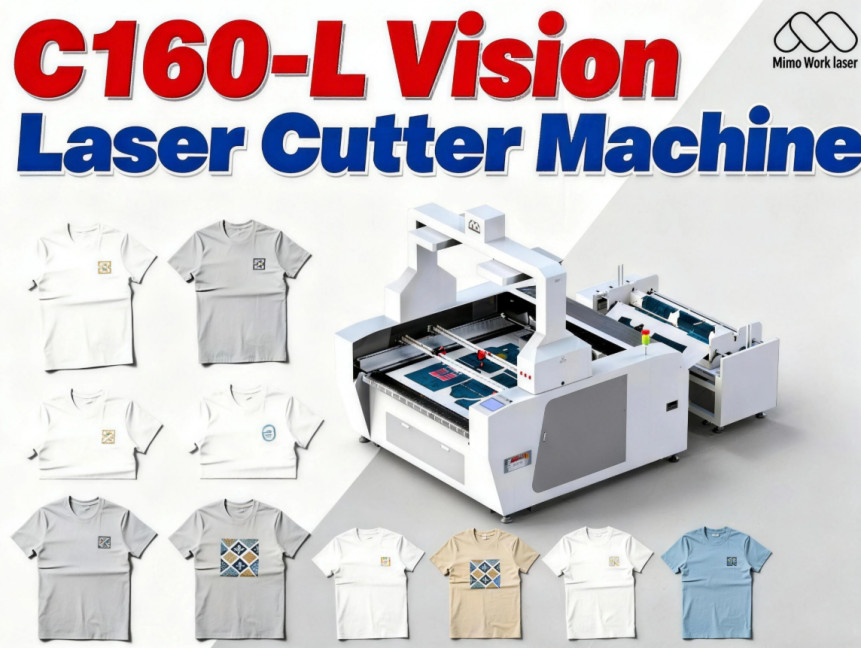
Vision recognition is changing how fabric gets cut. Mimowork’s in-house camera system reads the fabric as it lies on the cutting bed — eliminating guesswork and cutting down on waste through sharper accuracy and faster throughput.
For materials with prints, patterns, or specific weaves, accurate cutting requires the laser to follow the pattern precisely. The MimoVISION / CCD Camera System can identify registration marks or the pattern itself, and adjust the cutting path in real-time to ensure each cut piece is perfectly aligned. This is crucial for high-value materials where misalignment leads to waste.
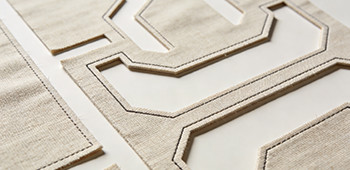
Vision systems can automatically identify the cutting area, enabling “panoramic” or “large-format” cutting. The system can map out the entire cutting area and automatically position the cuts for maximum material utilization. For cutting small patterns on a large roll, a high-resolution small-format vision system is recommended for accuracy. For bulk processing of large, uncut fabric, a large-format system is faster and more cost-effective.
While highly effective, the process is not without its challenges. The primary issue is the heat generated by the laser. If not managed properly, it can cause problems like:
Choosing the right system comes down to a few key factors: how much you’re producing, what materials you’re working with, and what you’re willing to spend. Get those clear, and the right fit becomes a lot easier to spot.
The two main types of fabric laser cutters are flatbed systems and those with integrated conveyor systems.
These are ideal for precision cutting of small to medium-sized pieces, intricate designs, and shorter production runs. The fabric is laid flat on a honeycomb or pin table, providing excellent support for detailed work. This is a great option for prototyping, custom work, and small-batch manufacturing.
For high-volume production, an automated conveyor system is essential. These systems allow for continuous roll-to-roll cutting. The fabric is fed onto the cutting bed, processed, and then the finished pieces are moved off, allowing new material to enter. This significantly reduces manual labor and increases throughput. The choice often depends on the scale of your operation, with large-scale bulk fabric cutting for garments and other textiles being best served by high-efficiency automated systems.
A modern fabric laser cutter is more than just a laser tube. Its performance is enhanced by a suite of customizable software and hardware components. When integrating cutting fabric with laser cutter technology, consider these critical elements:
Mimowork provides a complete digital workflow for the textile industry.
The foundational laser cutting control software that makes importing design files and adjusting parameters simple and intuitive.
An automatic nesting (layout optimization) software that calculates the most economical layout to maximize the use of expensive fabrics, delivering significant material savings compared to traditional methods.
These are features designed to enhance specific workflows. For fabric processing, options like the CCD Camera Recognition System (MimoVISION) for pattern alignment and the 1:1 Projection Preview System (MimoPROJECTION) for cut preview and positioning are invaluable. Other options include specialized cutting tables, such as a pin table for delicate fabrics or a honeycomb table for improved airflow and debris removal.
For high-volume operations, automated loading and unloading cut down on manual handling and keep the machine running with less downtime. Adding a Multi-Laser Head Array multiplies throughput without expanding your footprint. And under the hood, the components that matter most — the laser source, focusing lenses, and drive motors — are what ultimately determine how accurately and reliably the machine performs day to day.
The versatility of cutting fabric with laser cutter technology has led to its adoption across a wide range of industries.
Laser cutting has found a natural home in fashion and activewear. For performance fabrics like sublimation polyester and spandex, it delivers clean, fray-free edges without disturbing the print underneath — something mechanical cutting simply can’t match. This makes it especially useful for custom team jerseys and fitted activewear, where both the cut line and the graphic need to come out intact. The result is a finished piece that holds its shape, keeps its design, and doesn’t require extra edge finishing.
Automotive and furniture manufacturing both work with materials that leave little room for error — leather, vinyl, and multi-layered composites all require clean cuts that hold up under use. Laser cutting handles this well: stitching patterns for car seats come out consistent across every piece, and custom upholstery shapes for sofas and chairs can be cut without fraying or causing the layers to separate. When the material stack is complex, that kind of edge quality isn’t a bonus — it’s a requirement.
Can a laser cutter cut all types of fabric?
Laser cutters handle a wide range of materials — cotton, polyester, nylon, leather, and felt, among them. The hard limit is anything containing chlorine, PVC being the most common. Cutting it releases gases that are toxic to operators and corrosive to the machine itself. Before running any unfamiliar synthetic through the cutter, check the material safety data first.
Will laser cutting cause my fabric edges to turn yellow or brown?
Edge discoloration shows up most on white and light fabrics, and it’s usually a heat problem. Faster speeds and lower power reduce the heat input, and getting the focal point right keeps energy concentrated where it needs to be. Compressed air or nitrogen assist gas helps too — both cool the cut zone and carry heat away before it spreads into the surrounding material.
Is laser cutting fabric expensive compared to traditional methods?
Laser cutters cost more upfront than a basic knife cutter — but the gap closes faster than most expect. No dies to make or replace, less wasted material when nesting is optimized, and less labor when the process runs automatically. For jobs that change frequently or involve complex shapes, the economics shift further in its favor.
What is the best type of laser for cutting fabric?
A CO₂ laser is the industry standard for cutting non-metallic materials like fabric. It operates at a wavelength (10.6 micrometers) that is readily absorbed by organic materials, making it highly efficient for textiles. Mimowork’s fabric cutting systems are standardly equipped with high-quality CO₂ laser sources, whether glass tubes or RF metal tubes, delivering stable and reliable output.
How do I prevent my fabric from moving during the laser cutting process?
To prevent shifting, which can ruin a cut, securing the fabric is essential. Mimowork systems utilize a High-Power Vacuum System to firmly hold the material in place on the worktable with strong suction. Additionally, the MimoPROJECTION 1:1 Projection Preview System allows for a precise layout preview before cutting, further ensuring processing accuracy.
In today’s fast-paced textile market—whether it is fast fashion, technical automotive interiors, or high-end upholstery—traditional cutting methods are rapidly becoming a costly bottleneck. Transitioning to a non-contact CO₂ laser system isn’t just a machinery upgrade; it’s a strategic shift toward eliminating frayed edges, reducing material waste, and achieving unmatched precision across delicate or technical fabrics. For manufacturers looking to future-proof their production lines, exploring specialized systems from industry leaders like MimoWork Fabric Laser Cutting Solutions is a great starting point. Their highly adaptable machines integrate advanced vision recognition (MimoVISION) and automated conveyor setups, transforming complex textile cutting into a predictable, high-yield asset.
Strategic global sourcing is the discipline of designing and managing supplier networks to balance cost, quality, reliability, flexibility, and risk across international markets. It differs from traditional purchasing by focusing on total cost of ownership, supply resilience, and long-term capability rather than simply choosing the lowest-price supplier for individual orders. This approach considers manufacturing capacity, quality systems, geopolitical exposure, and partnership potential as core evaluation criteria.
Resilience and risk management matter because disruptions such as geopolitical events, transportation constraints, regulatory changes, and component shortages can erase any savings gained from lower unit prices. Modern sourcing decisions must account for how quickly and reliably suppliers can deliver under stress, how diversified the supply base is by region and capability, and how well suppliers can support recovery plans when problems occur. Without resilience, cost savings are fragile and often short-lived.
Procurement strategy should be built around the specific outcomes the business is targeting — faster product launches, higher quality, more flexible inventory, or expanded OEM capabilities. This means different organizations will prioritize different supplier attributes, from engineering support and traceability to lead-time flexibility and replenishment stability. When procurement is aligned with these objectives, sourcing choices support growth, margin, and customer satisfaction rather than simply fulfilling orders at the lowest price.
Specialized sourcing partners such as WIDQ extend a company’s internal capabilities across supplier identification, qualification, negotiation, quality control, and production management. They bring local market knowledge, validated supplier networks, risk mitigation frameworks, and coordinated communication that many internal teams lack. For organizations expanding international sourcing or optimizing complex supplier bases, these partners help integrate supplier development, procurement execution, and manufacturing coordination into a single global sourcing strategy.
Digital procurement tools improve sourcing by expanding visibility into supplier performance, automating routine tasks, and providing data for better decision-making. They can surface potential suppliers, track delivery and quality metrics, and streamline workflows. However, they do not replace human expertise in areas like factory audits, negotiation, cultural context, and relationship management. The strongest sourcing outcomes come when digital tools support experienced professionals rather than attempt to automate judgment-heavy decisions.