


Sell custom products with Printify
TikTok for Business has become a game-changer in eCommerce marketing. With over 1.99 billion active TikTok users, it’s one of the most powerful platforms for visibility, engagement, and conversion. And the in-app TikTok Shop is bringing products closer to customers than ever.
TikTok generated $7.3 billion in ad revenue in 2025, up from $7.05 billion the year before – for eCommerce and print-on-demand sellers, that growth signals a platform that’s serious about commerce.
Unlike other social platforms, TikTok thrives on authenticity and entertaining videos. The unwritten rules? Keep your brand voice laid-back and genuine, embrace user-generated content, and use music and trending hashtags to stay relevant.
In this guide, we’ll explore six essential steps to help you manage your account, build engagement, and grow your eCommerce presence confidently.
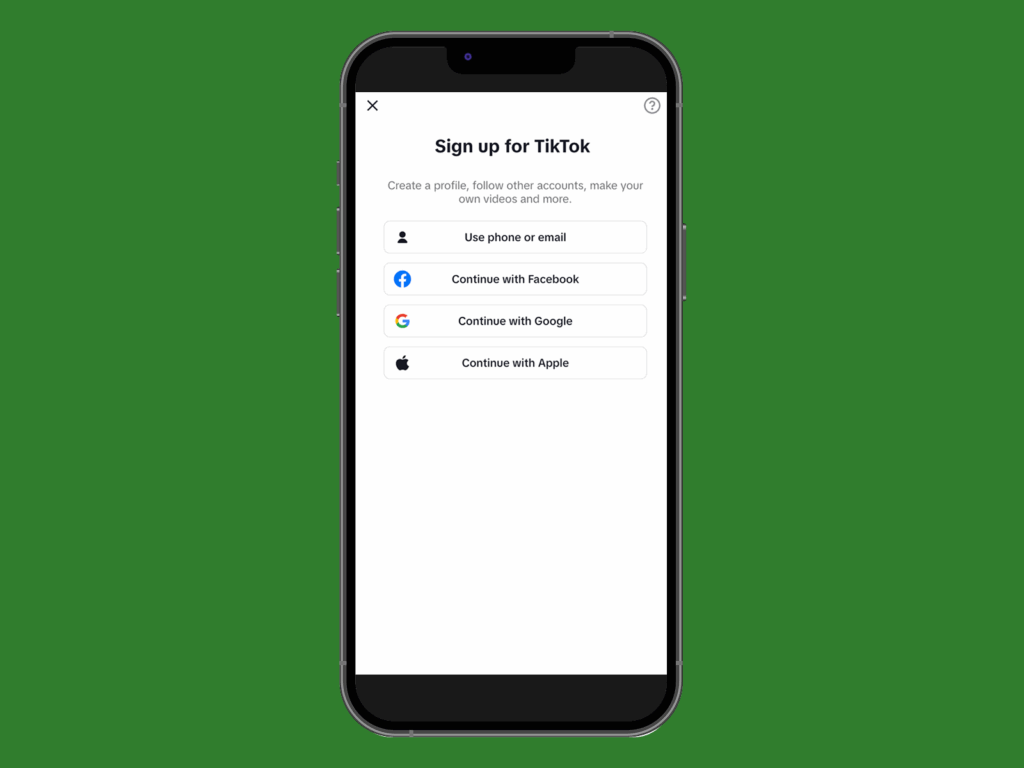
Before you can start promoting your products, you’ll need to set up a business account to access TikTok’s marketing tools and reach the right audience from the start.
Step 1: Download and open TikTok
If you haven’t already, download the TikTok app and sign up or log in using your business email or linked social media accounts.
Step 2: Switch to a business account
Step 3: Select your business category
Pick a category that best describes your business. This helps TikTok show your content to the most relevant users. Some common TikTok categories include:
Once you’ve completed these steps, your TikTok business account is ready. TikTok’s built-in analytics tools show which content formats are gaining traction, when your audience is most active, and where drop-off happens.
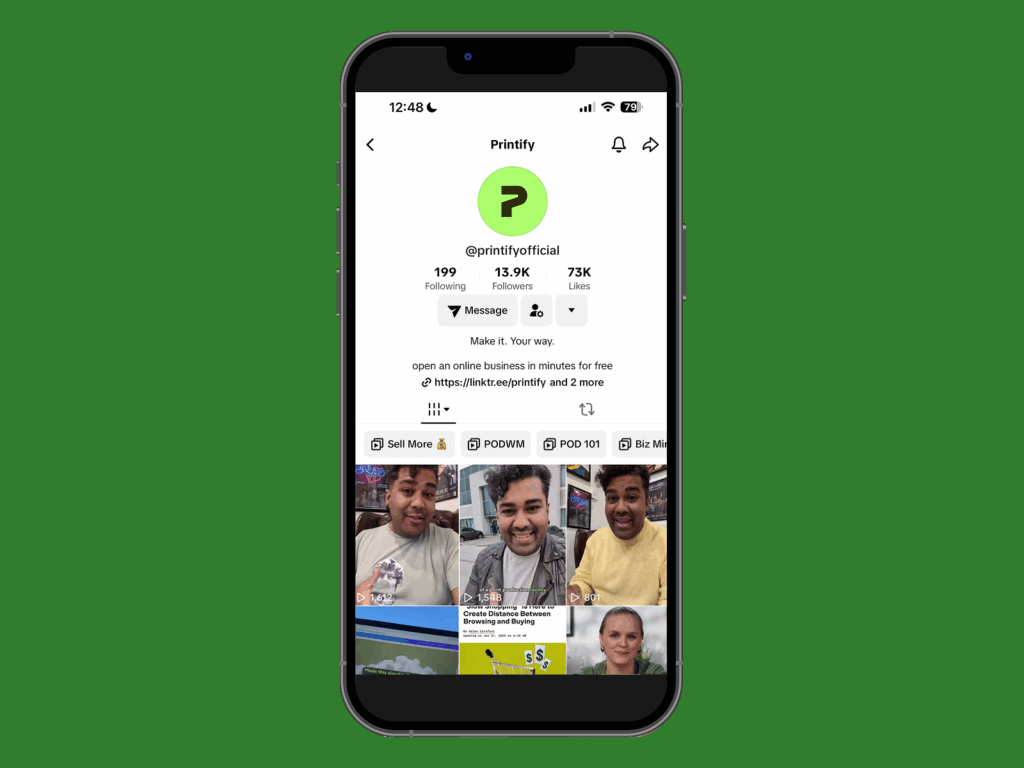
Before you create content, make sure your business account is optimized. With 63% of TikTokers under 30, you’ve got to think – and act – like your audience. That means everything on the TikTok app needs to be short, sharp, and engaging. This includes your profile page.
Brand your profile photo and personal brand consistently
Your TikTok profile image and business name are the first things users see, so keep them consistent with your branding across platforms. Use the same color palette and style as your other social platforms, and aim for 200 × 200 pixels with simplified details that read well at thumbnail size.
To improve visibility and engagement, make sure your TikTok videos include clear captions and descriptions.
Make your bio short and catchy
The maximum TikTok bio length is 80 characters – about 10 to 20 words, but try to make it half that. Two angles work well:
For POD sellers, your bio bridges the gap between a digital design and a real product at someone’s door. A line like “Designed by us. Printed to order. Shipped worldwide.” signals legitimacy fast. Pair it with a matching profile photo and a consistent link to build instant trust.
Link with intent
Linking directly to your eCommerce store works, but that’s not always the most effective way to track performance or guide users based on what your content is doing.
If your TikTok content focuses on brand awareness or business insights, consider linking to another social media platform or an article about your business.
If you’re spotlighting products, a dedicated catalog or landing page is often a smarter choice. And if you’ve set up a TikTok Shop, the clickable link to your shop tab does double duty – it ties your content to a frictionless in-app checkout.

TikTok has redefined digital advertising, favoring content that feels real over traditional product pitches. Today’s younger audiences are sharp, skeptical, and quick to spot anything that feels overly polished or sales-y.
When creating TikTok ads, lean into a less commercialized approach – one that speaks their language. Prioritize transparency, authenticity, and content that reflects real life. That’s where genuine value – and connection – live.
The “sample-first” strategy
The habit that separates TikTok sellers who grow from the ones who stall: order your own product, film yourself opening it, and post the result. When viewers see you react to a real product, doubts about quality, fit, and color quietly disappear – shortening the path to a purchase.
A few formats that consistently work for POD sellers:
A practical workflow: When you publish a new design, order a sample immediately. Samples take 5-7 days to arrive, so by the time your listing’s been live for a week, you’ve got footage in hand and a head start on your content calendar. Bonus: buy the product through your own TikTok account and write an honest review – it feeds the algorithm and gives future shoppers social proof.
Align your strategy with your business goals
Start by identifying the type of content you’ll create for a results-driven approach. These TikTok content ideas for business can help you match each piece of content to a specific objective:
Select your target audience
Before investing time in content, confirm TikTok’s audience demographics actually match yours. Globally, 54.6%of TikTok users are men and 45.4% are women, with 80% aged 18-34.
Contrary to popular belief, TikTok isn’t just for teens – it’s steadily gaining popularity among older age groups, making it a valuable space for a wider range of businesses.
Thanks to TikTok’s algorithm, content is curated around niche interests: dancing, fashion, arts and crafts, cooking, fitness, and more. To make your content resonate, align your style with the formats and trends your specific audience already enjoys.
If you’re marketing globally, factor in language preferences and cultural nuances – tailoring your message helps you connect with viewers around the world.
Choose relevant hashtags
Explore trending tags and use the right keywords or hashtags to help TikTok understand and promote your content to your ideal audience.
Stick to hashtags that reflect your brand and content, and avoid stuffing unrelated or overly generic ones. Strategic use of trending tags can help you gain more reach and attract new followers.
Check out our dedicated guide on TikTok hashtags for a deeper dive into hashtag strategy.
Team up with TikTok influencers
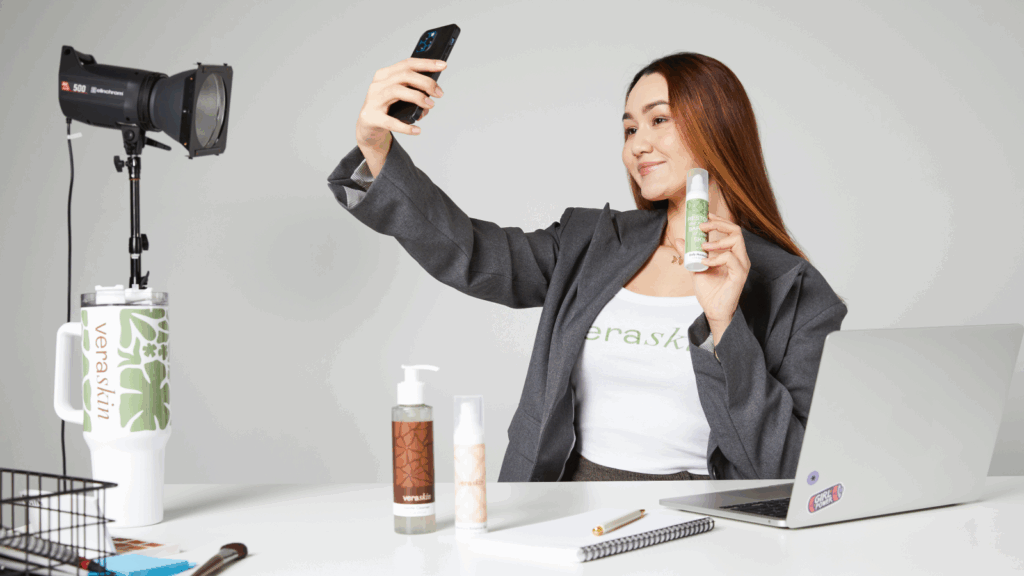
TikTok thrives as a social platform built around communities of shared interests – many of which are shaped by popular influencers.
To tap into this network, create content that interacts with well-known creators and connects your brand to the wider TikTok community. Duets, shared music clips, and trend-inspired posts are great ways to authentically join the conversation.
Alternatively, consider influencer marketing through paid collaborations to promote your products or services in a way that feels natural and resonates with their followers.
Turn comments into conversations
Engage with active TikTok users who post questions or reactions in your comments. These user interactions tell you what’s working in your content and what’s not.
Like the entertaining comments and reply to the ones with questions or concerns. Use the feedback to determine whether your structure, prompts, or video framework needs optimization.
Develop a posting strategy and content calendar
TikTok recommends posting content one to four times a day. This lets you test different types of content and what works best. Posting more than that risks flooding a user’s feed with too much marketing content.
Post TikTok videos consistently at times that match your audience’s time zone. On weekdays, the best time to post on TikTok is early in the morning or late in the evening. For weekends, aim for the afternoon.
Plan ahead with a content calendar to stay on top of TikTok trends. TikTok’s creative tools make it easy to jump on a trend fast – a sound, a template, and 60 seconds is often all it takes.
While TikTok doesn’t allow post scheduling in-app, you can use third-party tools like Later, Hootsuite, or Metricool to schedule posts in advance and stay consistent.

TikTok is an entertainment platform first
Always consider how your marketing gets people’s attention. Unlike on other social media platforms, TikTok users expect your brand to entertain, not offer deals. Share your process of creating custom merch, show off your best designs, and be playful and fun without shifting from your brand voice.
Follow trends and challengesTikTok will never run out of new trends to hop onto. When a trending sound blows up, a new hashtag takes off, or a viral challenge hits the feed – move fast. Join in early and add a clever, on-brand spin that ties back to your business.
Trends on TikTok typically last around two weeks, so the sellers who win are the ones who spot them early, not after they’ve peaked.
TikTok tends to favor videos that feel real and unpolished over highly produced content. Users aren’t looking for flashy formats or hard sells – they respond to content that feels genuine, relatable, and low-key.
To stand out, focus on high-quality content with clear storytelling, strong relevance, and visual clarity that keep viewers watching.
A few guidelines experienced sellers come back to:
TikTok’s built-in creative tools – the in-app editor, effects library, and green screen feature – let you produce scroll-stopping content without ever leaving the app. No third-party software needed.
Think simple and authentic, not scripted. Bring out your office pet or duet with a follower – authenticity builds trust and connects you with users who value originality.
For more inspiration, see our roundup of TikTok content ideas for business.
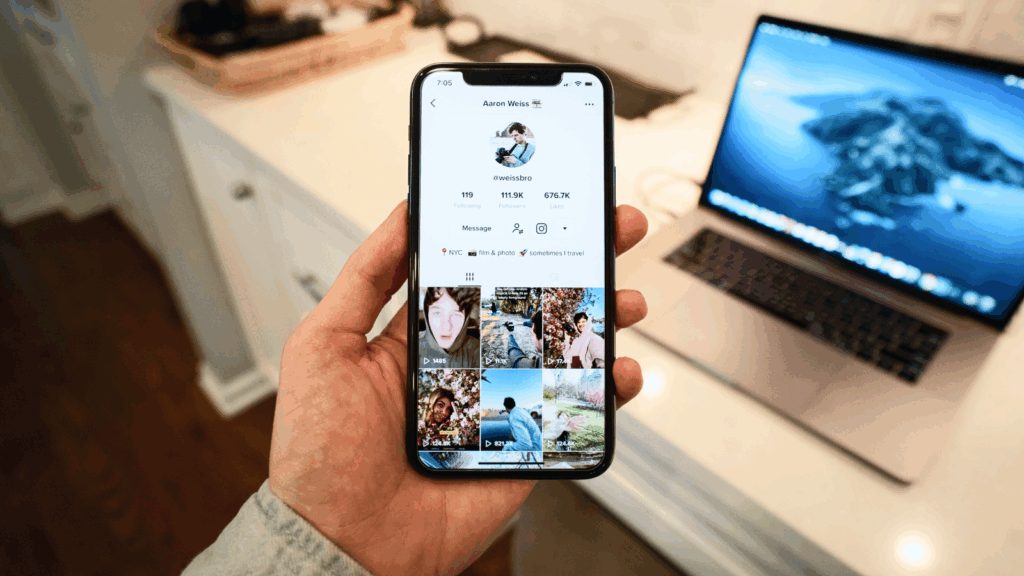
TikTok offers several ad formats, including In-Feed Ads, TopView, Brand Takeovers, Branded Effects, and Hashtag Challenges. To get started, make sure you’re using a TikTok business account. Then, create a TikTok Ads Manager account, set your budget and goal, and connect your store to track conversions.
Keep your ads fun and engaging – TikTok rewards creative storytelling over hard selling. Focus on content with replay value, a clear hook, and links in captions rather than in the video itself.
Amplify with GMV Max
If you’re selling on TikTok Shop, the most important paid lever in 2026 isn’t a manual ad campaign – it’s GMV Max, TikTok’s automated ads tool built for shop sellers.
You set a daily budget and a target return on ad spend (ROAS), and TikTok distributes that spend across your organic videos, affiliate content, and product cards – pushing more budget toward what’s already converting.
A few practical tips before you turn it on:
Your analytics dashboard will show ROAS by content type, so you know exactly which videos are pulling their weight.
GMV Max works best paired with fresh content and a real affiliate program – it amplifies what’s working, but won’t create demand from scratch.
If you’re going viral – or planning to – Printify makes it easy to ride the wave with zero inventory stress. It’s a smart, scalable way to monetize your TikTok momentum.
Whether or not you already have eCommerce products to sell, you can expand your catalog and start creating trending seasonal merch on the spot with a print-on-demand (POD) business.
Already running a TikTok Shop? Printify’s step-by-step guide to connecting Printify with TikTok Shop walks you through the whole setup.
The platform is the same, but the playbook is different for POD sellers. Without inventory, speed-to-content matters more – sample unboxings and consistent posting build trust fast. POD sellers also lean heavily on TikTok Shop, where GMV Max ads outperform manual campaigns.
To use TikTok for Business: Create a TikTok business account and select your business category. Post authentic content, follow trends, and use the Ads Manager to run promotional campaigns. Track engagement through views, comments, and shares – that data tells you what’s resonating and what to adjust.
Yes. TikTok is a powerful tool for promoting products, building a brand, and connecting with your target audience through short-form videos. It’s also a low-cost way to test ideas with new audiences before scaling.
Creating a business account on TikTok is free, and so are the platform’s creative tools – the in-app editor, commercial music library, and analytics dashboard. You’ll only need to pay if you run paid ads or partner with influencers.
If your audience is active on TikTok, yes. It can be a valuable platform for driving traffic and sales, especially if you’re selling visually appealing or trendy products. For a sense of whether it’s right for you, spend a week scrolling your niche on the platform. If you discover competitors, partners, and active conversations around what you sell, that’s a strong sign it’s worth showing up.
A regular TikTok account is designed for personal use, while a TikTok business account gives you access to analytics, commercial music, and ad tools tailored for brands. The business account also makes it easier to track follower count growth, content performance, and audience demographics over time.
Most sellers start to see meaningful traction within 30-60 days of consistent posting. Early videos won’t all land – treat them as data points rather than failures, and double down on the formats that get a boost from the algorithm. For example, if a sample-reveal video outperforms a lay-flat shot, lean into the former more.
Beyond TikTok’s own Business Help Center, the Printify blog covers everything fromTikTok content ideas tohashtag strategy andcontent calendars. For POD sellers specifically, joining a Printify Sellers Club connects you with merchants who’ve already navigated the early growth curve. That peer input is often more useful than any single guide.
TikTok keeps unlocking new opportunities for eCommerce growth through branded content, in-app shopping, and tools like GMV Max that make paid amplification accessible to small sellers.
Keep your content engaging, build trust with sample-first videos, and use TikTok’s ad tools to scale what’s working. Whether you’re writing your first bio or hundredth video, the hope is the same: turn viewers into customers, one authentic post at a time.
The post TikTok for Business: A POD seller’s guide for eCommerce in 2026 appeared first on Printify.





