


Mid-sized DTC brands spending $100K to $500K a year on travel should pick one of three setups: Itilite or Navan for unified travel-plus-expense-plus-cards on one vendor, Brex Travel or Ramp Travel if their card stack is already there, or Routespring if they want a travel layer that plugs into the card they already have.
The platform that wins your business is the one that does not force you to switch the card your CFO has spent two years optimizing for category cashback.
DTC brands aka Direct-to-consumer brands have a travel pattern that does not look like a typical SaaS company. The marketing team flies to NRF in January, Shoptalk in March, and Cannes in June. The product team is on a plane to Vietnamese factories or Italian leather suppliers. The founder is meeting agencies in Los Angeles and investors in New York, and the finance team is reconciling charges across whatever cards happened to be in the team’s wallets when month-end arrives.
For mid-sized DTC brands (roughly 100 to 2,000 employees), the right travel management software is the one that handles event-heavy travel, international sourcing trips, and a finance team that already lives in Brex or Ramp without forcing a card switch. This guide covers 8 platforms for mid-sized DTC brands worth knowing in 2026, what each one ships today, and how to pick by current setup.
A DTC brand’s scorecard is different from a typical mid-market software company. The travel cadence is more event-driven, the team is more mobile, and the finance team is allergic to anything that feels like 2015 enterprise software.
| What to Check? | Why does it matter for a DTC brand? |
|---|---|
| Group and event booking | Trade-show team travel happens 3 to 5 times a year |
| International + multi-currency | Sourcing trips to Asia and Europe, factory visits, fashion weeks |
| Card flexibility | DTC brands often run Brex, Ramp, or Amex; switching cards is real friction |
| Fast support, mobile-first | Founders and marketing leads travel constantly and need answers fast |
| Modern UX | DTC teams reject anything that feels like 2015 enterprise software |
| Per-trip or transparent pricing | Predictable for finance, scales with the brand |
Going live in a few weeks is the bar. A 6-month implementation is a non-starter for a brand running on Shopify and Klaviyo and shipping a new collection every 8 weeks.
| # | Platform | Pricing | Best for | DTC standout |
|---|---|---|---|---|
| 1 | Itilite | $10/trip; $6/user/mo expense | DTC brands wanting one vendor for travel + expense + cards | In-house TMC, AI voice, under 30-second human support |
| 2 | Navan | Free Business plan up to 200 employees; expense $15/user/mo above 5 users; custom enterprise typically $10–$25/user/mo | DTC mid-market on a unified T&E + card stack | AI booking assistant, multi-currency |
| 3 | Perk | Starter free + 5%/booking; Premium $99/mo + 3%; Pro $299/mo + 3% | DTC brands with heavy EU travel | FlexiPerk + 24/7 support every plan |
| 4 | Brex | Card free; Premium software $12/user/mo | DTC brands already running Brex cards | Card + banking + travel + bill pay in one |
| 5 | Ramp | Free with Ramp account; Plus $15/user/mo | DTC brands already on Ramp | Free travel, AI auto-categorization |
| 6 | Engine | Free; FlexPro $200/mo or $2,000/yr | Hotel-heavy DTC travel (trade shows, retail openings) | 1M+ properties, consolidated billing |
| 7 | Egencia (Amex GBT) | Custom (contact sales) | DTC brands going international at scale | Egencia AI + global Amex GBT network |
| 8 | Routespring | Economy $0/mo + $8/booking; Business $999/mo for 500 bookings | DTC brands keeping their existing card | Payment-agnostic, plug into your card |
Itilite suits DTC brands that have outgrown booking through scattered tools but do not want to plug a 12-month implementation into the roadmap of their next quarter. The product runs travel, expense, and corporate cards from one account, and most teams go live in a few weeks. The booking tool and the TMC agent network live inside one product, so there is no second-vendor TMC dependency to manage on top of the software.
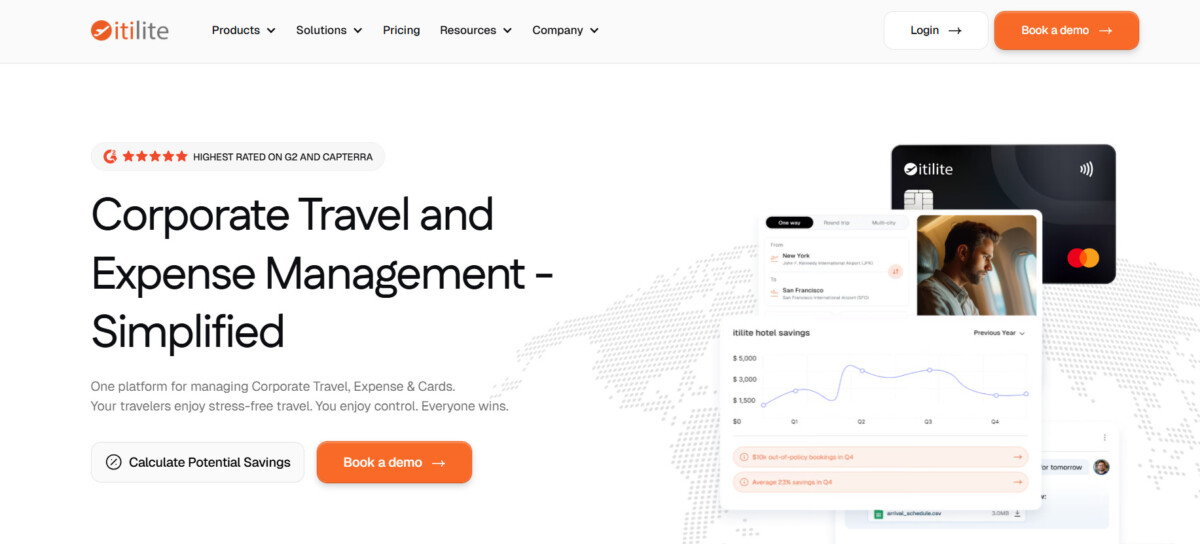
Latest Launch: Iris is the AI travel analyst, launched in October 2025, and answers spend, policy, and savings questions in plain English. Itilite also rolled out an AI voice feature that handles bookings, changes, and urgent rebooks through voice rather than menus. Mastermind benchmarks the program against companies with similar travel patterns.
What stands out:
Best for: DTC brands at 100 to 2,000 employees that want one vendor across travel, expense, and cards.
Pricing: $10 per trip travel. $6 per user per month expense (annual). No setup fee.
Navan is one of the most-named DTC challengers to Concur, and the brand recognition matters when finance is making the procurement case to the CEO.
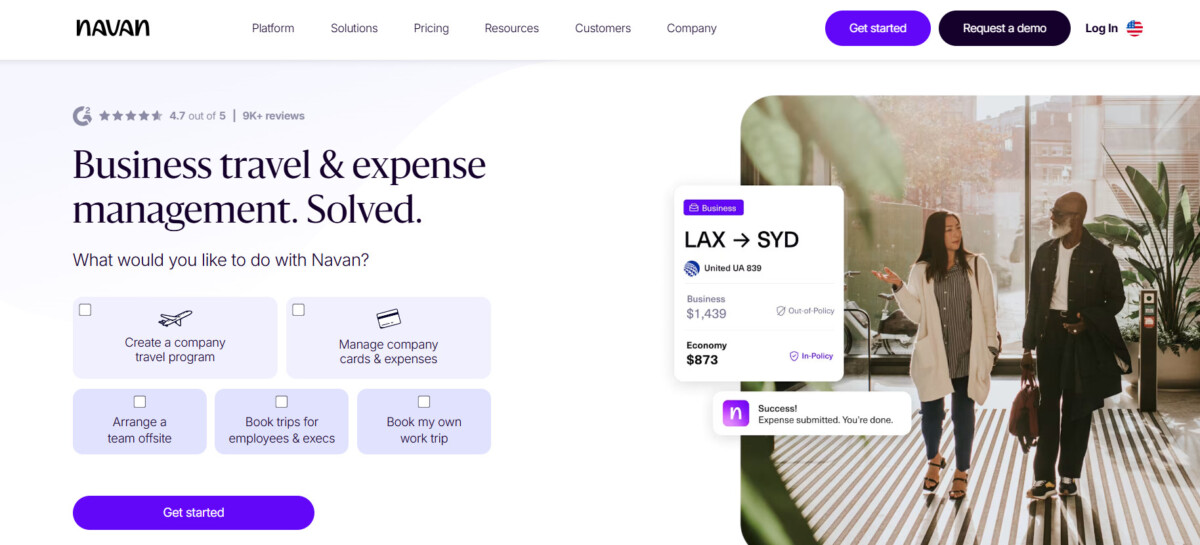
The 2026 move: Navan Edge launched in March 2026. Ava, the AI assistant, moved from chatbot to disruption-management agent that can rebook flights, alert hotels of late arrivals, and shift dinner reservations on the traveler’s behalf.
What stands out:
Where it falls short:
Best for: DTC brands at 50 to 200 employees consolidating travel and expense on a modern stack.
Pricing: Free Business plan for up to 200 employees. Navan Expense free for the first 5 active users, then $15 per user per month. Custom pricing for 300+ employees.
Perk rebranded from TravelPerk in November 2025. EU coverage matters for DTC brands sourcing in Italy, France, or the UK and attending European trade shows.
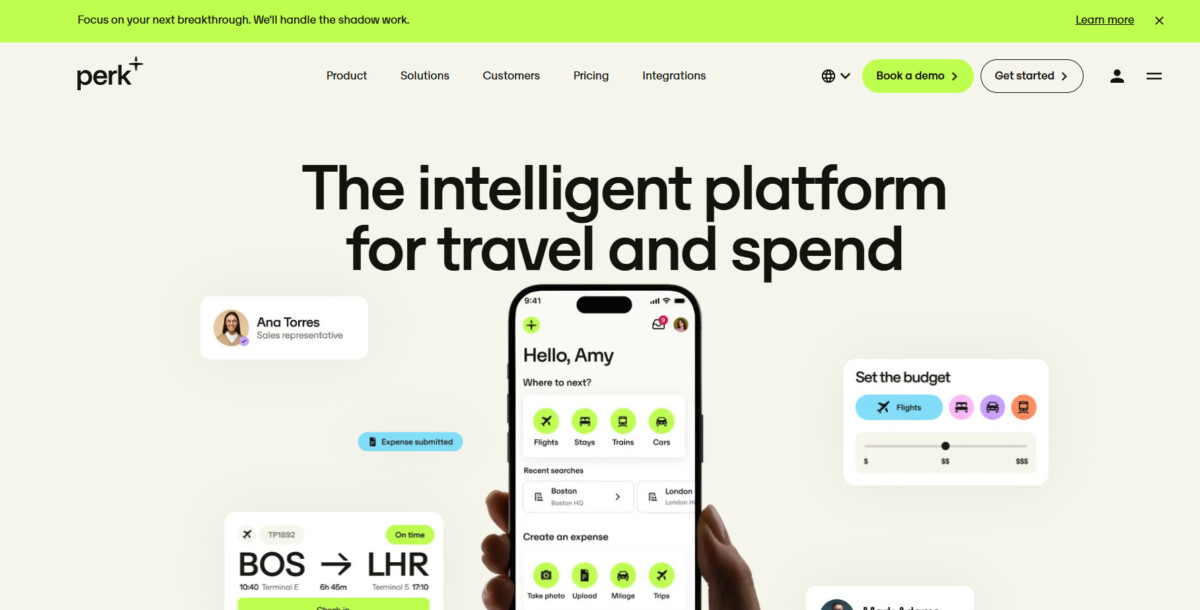
The 2026 move: The rebrand was paired with an updated booking flow and a stronger AI assistant. FlexiPerk remains the differentiator: cancel any flight, hotel, car, or train and recover 80% of the cost for a 10% premium on the trip cost.
What stands out:
Where it falls short:
Best for: DTC brands with frequent EU travel where cancellation flexibility offsets the per-booking fees.
Pricing: Starter free + 5% per booking ($2 min, $30 max). Premium $99/month + 3%. Pro $299/month + 3%.
A lot of mid-sized DTC brands started on Brex cards in their Y Combinator or seed days and stayed. Brex Travel is built into the same account.
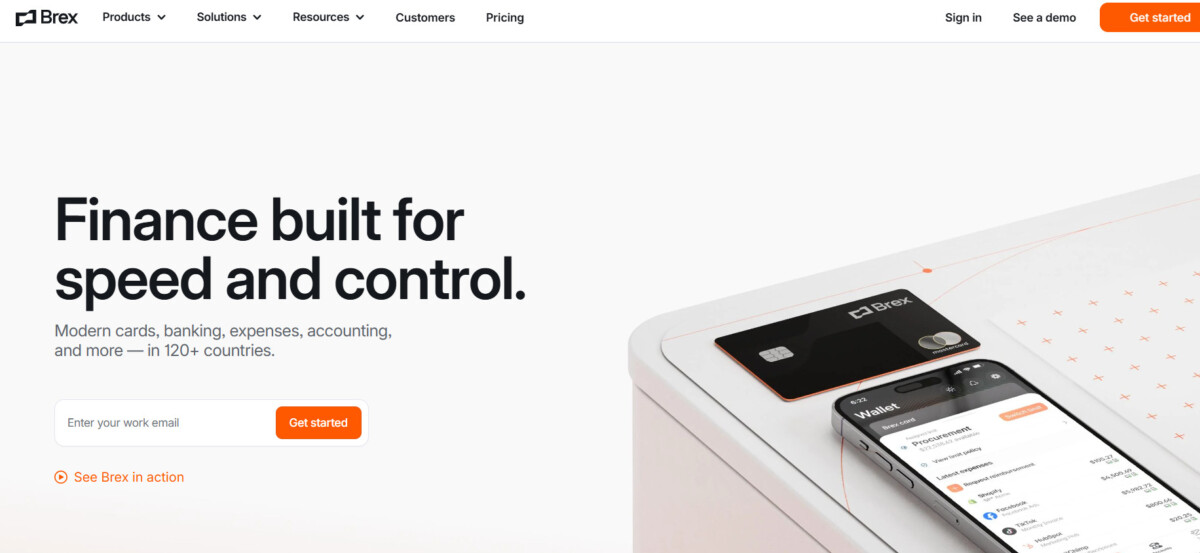
The 2026 move: Brex consolidates the Brex Card, business banking, Brex Travel, and bill pay into one finance OS. The treasury layer offers up to $6 million FDIC coverage across the Vault.
What stands out:
Where it falls short:
Best for: Venture-backed DTC brands (50 to 1,000 employees) already running Brex.
Pricing: Brex Card is free. Software tiers: Essentials free, Premium $12 per user per month. Enterprise pricing on request.
The other half of the venture-backed DTC card market is on Ramp. Ramp Travel is bundled into the same account, so booking, the card, and expense reporting live together.
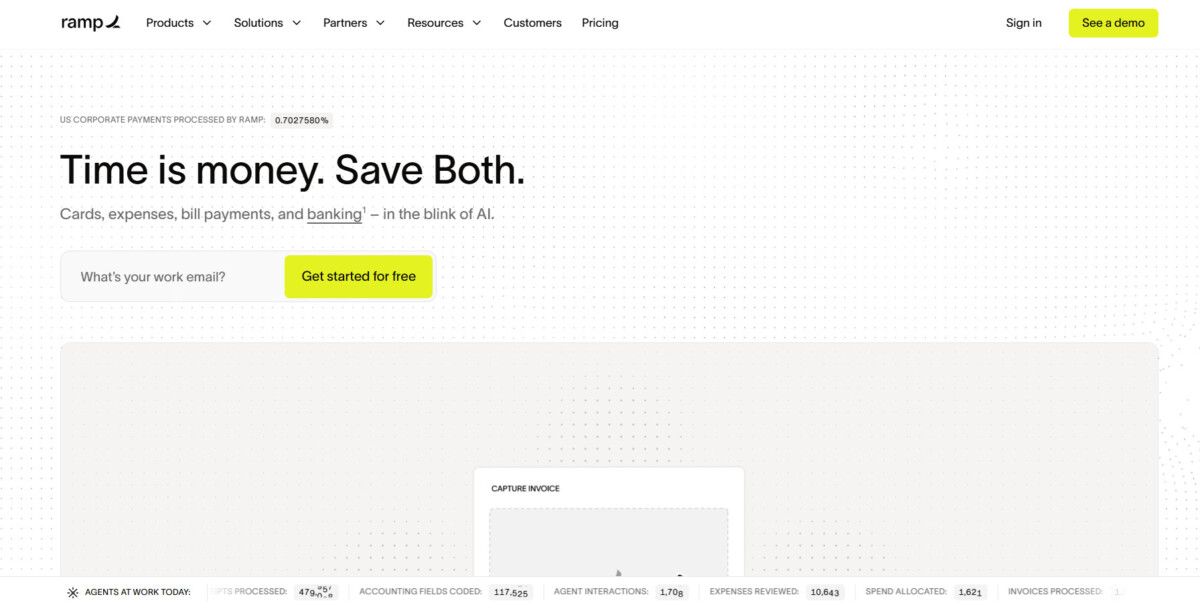
The 2026 move: Ramp Procurement launched in 2025, closing the loop from intake to AP. AI auto-categorization now matches receipts to card swipes without manual review.
What stands out:
Where it falls short:
Best for: US-centric DTC brands replacing legacy expense and AP on a card-first stack.
Pricing: Free with a Ramp account. Ramp Plus $15 per user per month.
Engine fits the DTC pattern where hotel bookings dominate the calendar: trade shows, pop-ups, retail launches, and team offsites. The free-to-join model has not changed since the rebrand.
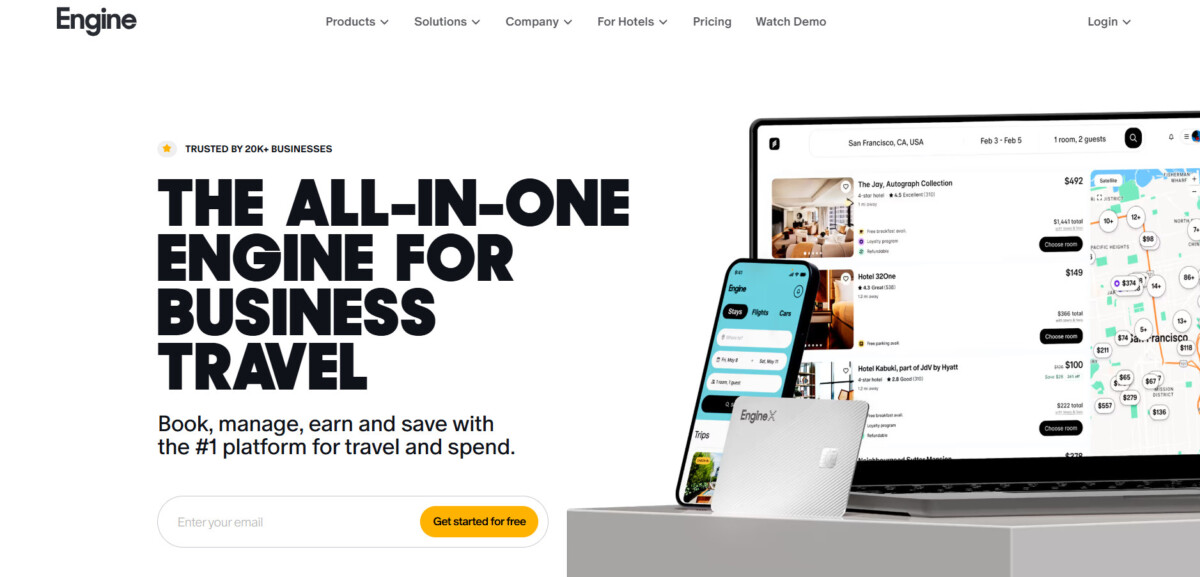
The 2026 move: Engine has expanded beyond hotels into flights and car rentals while keeping the free-to-join model and the consolidated billing setup that finance teams actually like.
What stands out:
Where it falls short:
Best for: DTC brands where hotel bookings dominate and a separate expense system already works.
Pricing: Free. FlexPro at $200 per month or $2,000 per year covers all travelers with full flexibility.
Egencia is the corporate travel arm of Amex Global Business Travel. The 2026 relaunch matters for DTC brands sending teams overseas regularly enough that duty-of-care becomes a real concern.
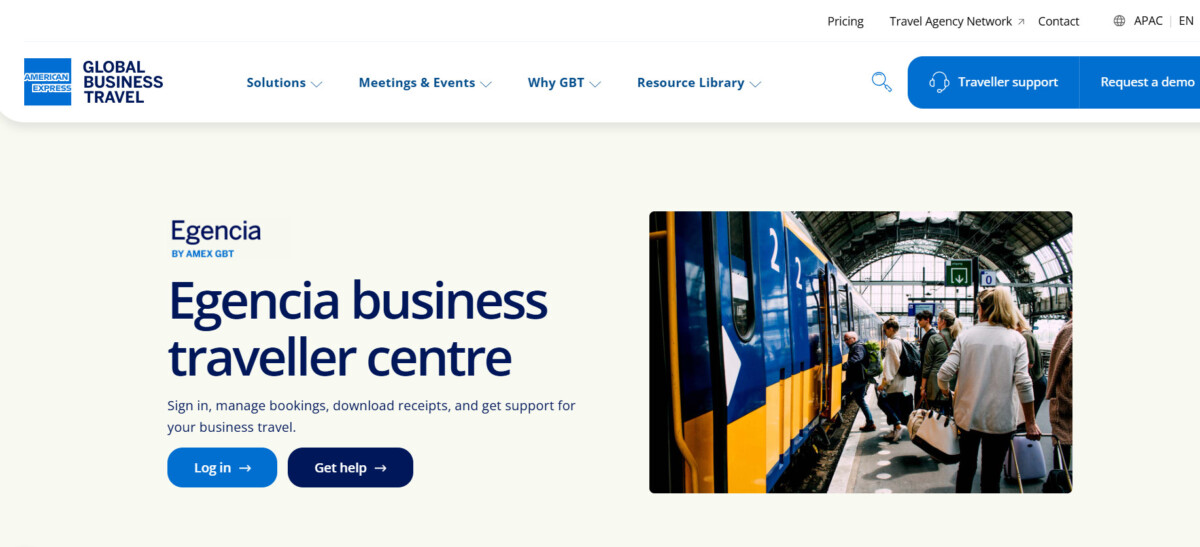
The 2026 move: Next-gen Egencia launched in Q1 2026 with agentic AI search and a Concur Expense integration. Average booking time is now under 3 minutes. The AI assistant works inside Microsoft Teams, which DTC brands using Microsoft 365 will appreciate.
What stands out:
Where it falls short:
Best for: DTC brands going international at scale (300+ employees) with duty-of-care and global travel program needs.
Pricing: Custom. Contact sales.
Routespring is the answer for DTC brands that have a card setup that already works and do not want to switch. Plug Routespring into the existing card.
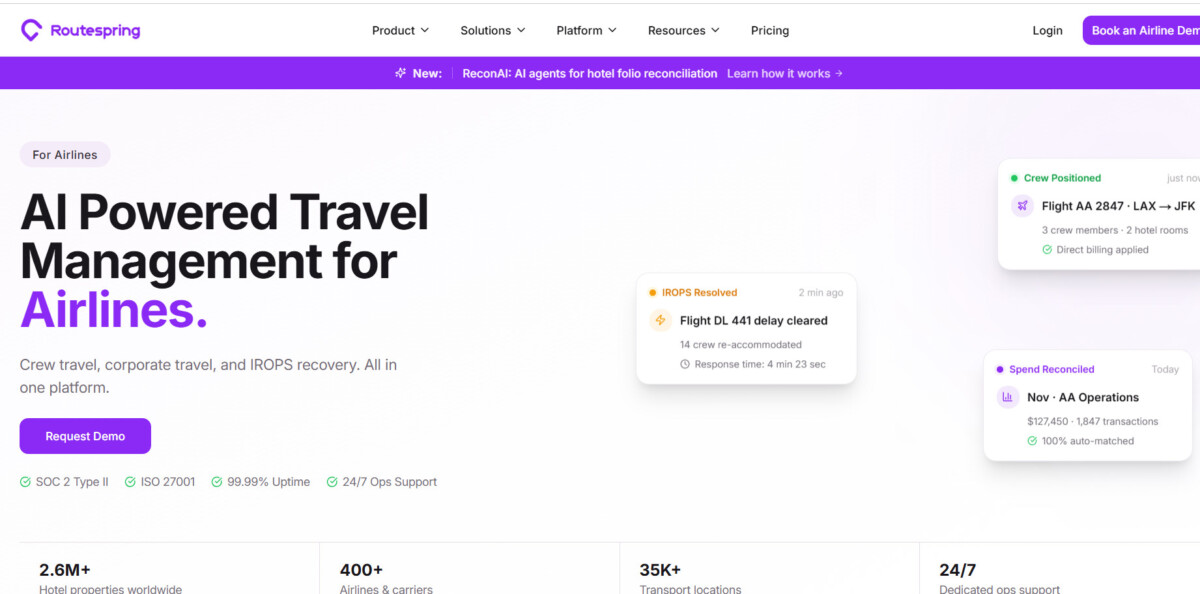
The 2026 move: Routespring keeps the payment-agnostic positioning and added booking AI features without disrupting the core “use your own card” model.
What stands out:
Where it falls short:
Best for: DTC brands keeping their existing card setup who want a travel layer without the card switch.
Pricing: Economy $0 per month + $8 per booking. Business $999 per month for 500 bookings, then $2 per additional booking. First $4,999 per month for unlimited.
The right pick depends on team size, travel pattern, and current card setup.
Early-stage DTC (under 50 employees, mostly US travel): Engine for hotel-heavy patterns at trade shows and retail openings. Brex Travel if you are already on Brex cards. Ramp Travel if you are on Ramp.
Growth-stage DTC (50 to 300 employees, expanding internationally): Itilite for one vendor across travel, expense, and cards with fast setup. Navan for the unified T&E pitch with AI booking. Perk for heavy EU travel.
Scale-stage DTC (300 to 2,000 employees, global operations): Itilite or Egencia. Itilite for a modern stack with in-house TMC support. Egencia for duty-of-care depth via the Amex GBT network when overseas teams need it.
Already on Brex or Ramp and don’t want to switch: Brex Travel or Ramp Travel keeps you on one account. Routespring is the alternative if you want a dedicated booking platform that plugs into the card you already have.
The best travel management software for a mid-sized DTC brand depends on existing card stack and travel pattern, but Itilite is the strongest unified pick for 100 to 2,000 employee brands wanting one vendor across travel, expense, and cards with fast setup. Navan is the strongest pick at 50 to 200 employees on a free Business plan. Brex Travel or Ramp Travel is the default if the brand already runs those cards. Perk is the pick for heavy EU travel where FlexiPerk cancellation flexibility matters. Egencia is the pick at 300+ employees with global operations and duty-of-care requirements.
A mid-sized DTC brand should expect to spend $0 to $25 per user per month on travel management software, depending on the platform and tier. Free options exist (Navan free for up to 200 employees, Engine free to join, Ramp Travel free with a Ramp account, Routespring Economy at $0 per month plus $8 per booking). Per-trip pricing models like Itilite at $10 per trip can be more economical for brands with under 50 trips per month. Enterprise pricing with full expense and card integration typically lands in the $10 to $25 per user per month range. Total annual spend for a 200 person DTC brand traveling moderately usually runs $30K to $80K across software fees and per-trip charges.
An all-in-one platform like Brex or Ramp bundles travel booking into the same account as the corporate card and expense management, which simplifies reconciliation but locks travel to that card. A payment-agnostic platform like Routespring or Perk plugs into whatever card the brand already uses, which preserves card flexibility but requires a separate expense workflow. The choice comes down to whether the brand wants finance consolidation (all-in-one) or card flexibility (payment-agnostic). DTC brands already running Brex or Ramp typically stay all-in-one. DTC brands running Amex Business Platinum for category rewards typically go payment-agnostic.
A mid-sized DTC brand should expect 4 to 8 weeks to roll out modern self-serve travel management software like Itilite, Navan, Ramp Travel, or Routespring, including demo, contracting, traveler onboarding, and policy configuration. Brex Travel and Engine deploy faster (one to three weeks) because they bolt into existing account relationships. Enterprise platforms like Egencia take 8 to 16 weeks because the implementation includes deeper policy work, traveler-tracking setup, and integration with HRIS and expense systems. Any platform promising under two weeks for a 200 person brand is either skipping the policy work or selling against capabilities it hasn’t delivered.
A DTC brand needs travel management software when finance starts spending more than 6 hours a month reconciling travel charges, when at least two team members are traveling for work in any given week, or when a trade-show event requires booking 5+ travelers across multiple hotels and flights. Brands under 25 employees traveling four to six times a year typically don’t need it yet; a corporate card and Google Flights covers the load. The transition point is usually around 50 to 75 employees, or whenever the founder realizes the team is overpaying for last-minute trade-show hotels because nobody owns travel as a function.





