


27th
November, 2025
In today’s B2B marketing landscape, businesses are increasingly turning to affiliate-based partnerships to drive growth. These partnerships involve another party – which could be an individual content creator, a customer advocate, or another company – promoting your product in exchange for a performance-based reward. Unlike traditional channel partnerships (like resellers or distributors), B2B affiliate-based partnerships let you maintain control of your brand and only pay for results. In other words, you’re leveraging partners to extend your reach and credibility without handing over the entire sales process. The result is a low-risk, high-reward approach that is simpler to manage and more cost-effective than channel sales programs.
As you can see, affiliate-based partnerships pack a punch – delivering greater brand exposure, trusted referrals, and efficient growth. It’s no surprise that companies are investing more into these programs. In the U.S. alone, affiliate marketing spend climbed from $6.2 billion in 2018 to about $10.7 billion in 2024, a huge increase that reflects its effectiveness. Now, let’s explore the types of B2B affiliate-based partnerships and how each model works.

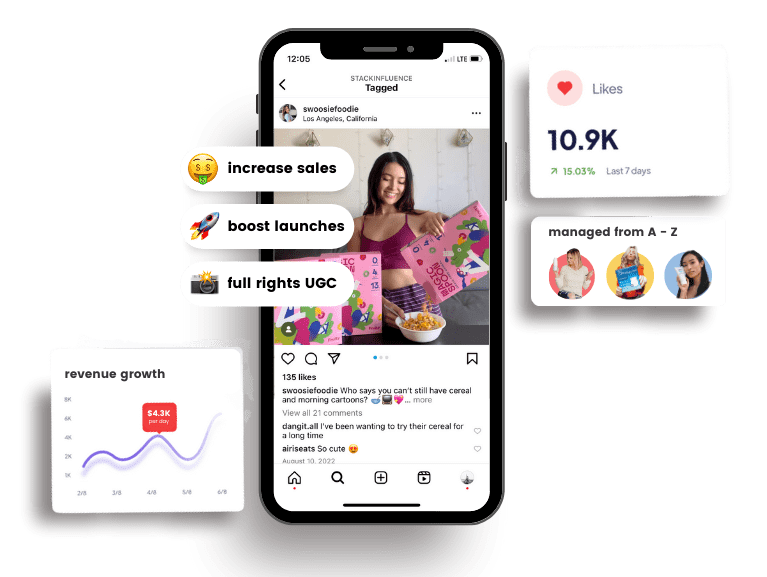
Affiliate marketing is the classic form of performance-based partnership. In a B2B affiliate program, you partner with independent marketers – often content creators, bloggers, consultants, or even influencers – who promote your product to their audience. When their promotion leads to a conversion (such as a sale or lead), they earn a commission. This “win-win” model motivates affiliates to drive results, and you only pay for actual success.
Think of affiliate partners as an external salesforce or network of connectors for your brand. They might feature your product in a well-read industry blog, review it on a YouTube channel, share it on social media, or include it in an email newsletter. Because these affiliates have built up trust and rapport with a niche audience that overlaps with your target market, their endorsements can carry significant influence. You maintain control over your branding and can set the commission structure and goals – whether that’s paying per sale, per qualified lead, free-trial signup, etc. This makes affiliate marketing highly customizable and low-risk: you compensate partners only when they deliver the desired outcome.
Example: One notable B2B affiliate program is HubSpot’s affiliate partnership. By leveraging a robust affiliate network, HubSpot was able to increase affiliate-driven signups and revenue by over 50%. Affiliates earned commissions (up to 30% recurring for software subscriptions) for referring new paying customers. This performance-based approach helped HubSpot expand its reach efficiently. More broadly, affiliate marketing investment reached $9.1 billion in 2021 (up 47% from 2018) and drove an estimated $71 billion in e-commerce sales that year, underscoring how powerful this channel has become for driving revenue.
Affiliate partnerships are especially popular in e-commerce and tech. For instance, Amazon’s massive affiliate program (including the Amazon Influencer Program) enables countless creators and publishers to earn commissions by recommending products. Amazon sellers benefit from these affiliates who send traffic to Amazon product pages in exchange for a cut of the sales. This has created an entire ecosystem of product review sites, micro-influencers, and content creators who act as affiliates, effectively outsourcing a portion of Amazon’s marketing. The scalability of affiliate marketing is huge – it’s possible to have dozens, hundreds, or even thousands of affiliate partners promoting your B2B product across the web.
Overall, affiliate marketing partnerships put your brand in front of more of your target audience and drive low-cost acquisitions on a pay-for-performance basis. It’s an ideal program to start with if your goal is increasing sales and lead volume while closely tracking ROI. Just be sure to recruit affiliates whose content and audience align with your brand, and provide them the tools (unique links, promo codes, creative assets) to promote you effectively.

Influencer marketing isn’t just a B2C game – it’s very much alive in B2B as well. An influencer partnership means collaborating with individuals who have expertise and a following in your industry niche (or in adjacent niches) to promote your brand. These could be content creators, industry thought leaders, niche bloggers, YouTubers, or LinkedIn personalities. The idea is that these influencers have established credibility and an audience that pays attention to their content. When they endorse or feature your product, it acts as a powerful third-party validation, lending your brand credibility by association.
Influencer partnerships in B2B often take the form of sponsored content, guest webinars, product reviews, case studies, or social media shout-outs. For instance, you might sponsor a LinkedIn post by a popular industry expert who integrates your product into their narrative, or have a micro-influencer on YouTube create a tutorial that shows your SaaS tool in action. Because followers view influencers as trusted sources of information, these promotions feel more organic and authentic than a traditional ad. In fact, 69% of consumers say they trust influencer recommendations (and friends/family) over info directly from brands. In a B2B context, that trust translates to higher willingness among prospects to consider your solution after hearing about it from a respected peer or expert.
One big trend is partnering with micro-influencers – influencers with smaller, highly engaged followings (say 5K to 100K followers). Especially in B2B, a micro-influencer who is deeply knowledgeable in a specific domain (e.g. a cybersecurity blogger, or a manufacturing process vlogger) can have an outsized impact. Micro-influencers often boast higher engagement rates than mega-influencers. For example, on Instagram, micro-influencers (10–100K followers) see about 0.99% engagement, the highest across all influencer tiers including celebrities. Their audiences might be smaller, but they are niche and attentive, which is perfect for targeting B2B buyers. Additionally, micro-influencers are typically more cost-effective to work with and are viewed as more relatable and authentic. They often produce content that feels like user-generated content (UGC) – casual, genuine posts that followers trust. This is a big plus, since user-generated content can boost conversion rates by roughly 28% due to the authenticity factor.
Example: To illustrate B2B influencer marketing, consider Hootsuite’s partnership with a LinkedIn micro-influencer. Hootsuite teamed up with the founder of “Pretty Little Marketer,” a community of social media professionals, to promote its Social Media Career Report on LinkedIn. The influencer, Sophie, had a focused audience of marketers and freelancers. Her authentic post highlighting Hootsuite’s report garnered over 5,000 likes and nearly 300 shares– massively amplifying Hootsuite’s reach among relevant prospects. This kind of engagement is hard to achieve with direct brand posts, but an influencer’s voice made the content more compelling. It ultimately drove a wave of inbound interest in Hootsuite’s report (and by extension, its brand).
B2B influencer partnerships can also include things like podcast sponsorships (where a host with an industry podcast gives a personal testimonial for your product), expert roundups (featuring quotes from influencers in your content), or inviting influencers to co-create content (like e-books, research reports, or events). The key is to choose influencers whose audience aligns with your target customers and whose personal brand complements yours. For instance, a software startup targeting developers might partner with respected developers who have a YouTube channel or a Twitter following in that space. A company selling to finance executives might work with a well-known FinTech blogger or a LinkedIn Top Voice in finance.
One special case of influencer partnership is when you engage your customers as influencers. Satisfied customers can be thought leaders too – they might speak at conferences on your behalf or share testimonials on social media. Turning your best customers into micro-influencers for your brand is a powerful strategy that blends referral and influencer marketing.
From an ROI standpoint, influencer partnerships can yield excellent results when done right. Many companies track metrics like impressions, engagement, traffic, and lead generation from influencer campaigns. Globally, influencer marketing (across B2C and B2B) has grown into a $32+ billion industry by 2025, and B2B brands are increasingly carving out budget for it. In 2025, about 67% of B2B brands used influencer marketing primarily to increase brand awareness, and 54% to build credibility – which shows these partnerships are seen as key for top-of-funnel impact. Additionally, one study found companies are getting on average $5+ in earned media value for every $1 spent on influencer marketing, underlining a solid ROI.
To maximize success with B2B influencer partnerships, approach them as long-term relationships rather than one-off transactions. It’s often beneficial to nurture an “always-on” influencer program where you continuously engage a group of relevant influencers, as opposed to a single sponsored post and done. Research by TopRank Marketing found that 99% of B2B marketers who run always-on influencer programs consider them effective, indicating the value of consistency. Over time, influencers can essentially become ambassadors for your brand. And remember to give influencers creative freedom – their value lies in their authentic voice, so while you can provide guidelines, allow their personality and honest perspective to shine through. That authenticity is what resonates with audiences and makes influencer partnerships such a powerful form of affiliate-based marketing.
In summary, influencer partnerships bring credibility, broaden your reach, and supply you with persuasive content (like reviews, demos, testimonials) that you can’t easily create on your own. They are especially potent for increasing awareness and trust in early stages of the buyer’s journey. By partnering with the right content creators and micro-influencers, B2B brands can humanize their marketing and build stronger connections with potential customers.

Not all partnerships involve individuals – some of the most impactful B2B affiliate-based partnerships are brand-to-brand collaborations, especially among technology companies. In a technology partnership, two companies join forces to promote each other’s complementary products or even integrate them for a better combined solution. These partnerships often involve software or tech services that share a similar customer base. By working together, the companies aim to enhance the user experience, gain access to each other’s audience, and ultimately drive sales for both parties.
There are a couple of common forms this can take:
A classic example of a high-level technology partnership is the Microsoft and Adobe alliance. These two enterprise giants formed a strategic partnership to integrate their cloud platforms, so that Adobe’s marketing software (Adobe Experience Cloud) works hand-in-glove with Microsoft’s cloud and CRM platforms (Azure and Dynamics 365). The rationale was that many big-business customers used both Microsoft and Adobe products; by aligning their systems, they delivered a more unified experience. They also engaged in joint go-to-market efforts. The result was a win for customers (who gained efficiency and new capabilities from the integration) and for the companies (who could co-sell and tap into each other’s client bases). In fact, Microsoft’s CEO and Adobe’s CEO shared stages at events to promote their partnership, emphasizing how it improved outcomes for mutual customers. This kind of deep collaboration is essentially a form of affiliate partnership at the enterprise level – each company “promotes” the other’s services because together they create additional value.
Another everyday example: Many SaaS companies run app marketplaces or directories of “partners” – these are often integration partners who have built add-ons or connectors to the core product. For instance, e-commerce platforms like Shopify or BigCommerce have numerous app partners (for email marketing, loyalty programs, etc.). By partnering with these apps, the platforms can advertise “we integrate with all these other tools you might need,” attracting more merchants to their ecosystem, while the app partners gain distribution to the platform’s customer base. It’s a symbiotic relationship. They may also do co-marketing like featuring each other in blog posts, case studies, or events.
From a customer perspective, technology partnerships are great because they offer a more complete solution. As a business customer, if two of your vendors team up to ensure their products work well together, you’re more likely to stick with both rather than seek alternatives. It reduces friction. For the partner companies, these alliances can accelerate market penetration – e.g., a smaller tech firm partnering with a larger one might get introduced to enterprise clients it couldn’t reach alone, and the larger firm fills a feature gap via the smaller partner’s tech.
It’s worth noting that tech partnerships sometimes involve referral or revenue-share components too. For example, a company might refer a client to a partner’s product to fill a need, and receive a finder’s fee (referral partnership), or they might act as a reseller for the partner’s solution as part of a bundle. The lines can blur between pure integration partnerships and channel sales. What makes it “affiliate-based” in our context is that it’s often performance-tied or co-promotional rather than a formal reseller arrangement. Each partner benefits by gaining users or revenue when the other’s product is adopted.
To ensure a tech partnership succeeds, alignment is key. The two parties should have complementary (not competitive) offerings and a shared vision of how working together creates mutual value. It also helps to have support from both sides’ leadership and dedicated partner managers who will push the joint initiatives forward. Many companies sign a partnership agreement outlining co-marketing plans, integration responsibilities, data sharing (if any), and referral commissions (if applicable).
Example: Stack Influence (our company) often serves as a technology and service partner for brands looking to activate micro-influencer campaigns. We integrate with e-commerce platforms and marketing tools to track influencer-driven sales and user-generated content. By plugging into a brand’s existing tech stack and collaborating on campaign strategy, Stack Influence and the brand form a partnership that amplifies the brand’s reach (through our micro-influencer network) while enhancing the brand’s ability to track ROI on those collaborations. It’s a modern spin on a B2B partnership: our platform’s technology complements the brand’s marketing toolkit, and together we achieve results (like higher engagement and conversion from influencer content) that neither could alone.
In summary, technology partnerships provide a pathway for co-innovation and co-marketing. They allow B2B companies to offer more holistic solutions, improve their product by integration, and tap into new customer pools via a partner’s market presence. Whether you’re a startup teaming up with a bigger player or two mid-sized firms collaborating, these partnerships can significantly boost growth and customer satisfaction. As a bonus, when you delight customers with a seamless combined offering, you’re likely to see stronger retention – because switching away would mean losing the integrated benefits. It’s all about creating a scenario where 1 + 1 = 3 for the customer and the partner businesses.
In the evolving B2B landscape, affiliate-based partnerships have become a cornerstone of smart growth strategies. Whether through affiliate marketers, referral advocates, influencers, or tech alliances, these partnerships enable you to reach new audiences, build trust, and drive performance in ways that traditional marketing channels struggle to match. The types of B2B affiliate-based partnerships we covered often overlap and can work in tandem – for instance, an influencer can act as an affiliate, or a technology partner might also send referrals. The most successful companies mix and match these partnership types to create an ecosystem fueling their business (indeed, running multiple partner programs can multiply your results).
As you consider your partnership strategy, keep the focus on mutual value: choose partners who benefit as you benefit, and empower them with the support and incentives to succeed. With the right approach, your partners essentially become an extension of your growth team – bringing in quality leads, sales, content, and integrations that accelerate your success.
Finally, remember that building partnerships is as much about relationships as it is about transactions. Nurture your partners, communicate openly, and recognize their contributions. A little goodwill goes a long way in sustaining productive, long-term collaborations.

By William Gasner
CMO at Stack Influence
William Gasner is the CMO of Stack Influence, he’s a 6X founder, a 7-Figure eCommerce seller, and has been featured in leading publications like Forbes, Business Insider, and Wired for his thoughts on the influencer marketing and eCommerce industries.
Want new articles before they get published? Subscribe to our Awesome Newsletter.
111 NE 1st St, 8th Floor
Miami, FL 33132



© 2025 Stack Influence Inc
© 2025 Stack Influence Inc
The post Types of B2B Affiliate-Based Partnerships appeared first on Stack Influence.





